When Mum toppled into the bath again last night in the process of toilet dismount, the family went into action. A trip to the hardware store revealed some options of which this fold-away rail proved to be ideal.
While Mum protested that she’d just be more careful, it’s better to be safe than sorry. Imagine if she was home alone and couldn’t get out of the bath, or if she hit her head on the tiles! I do Nymbl exercises a few times each week to improve my balance, but I have the odd wobble at times too, so the rail will have long-term use particularly if I am still living independently and make it to 94 like Mum.
A radio interview this morning with tech billionaire Bryan Johnson outlined his efforts to reverse his own aging. Good luck with that. I’m just grateful to have family with excellent DIY skills – and all the tools!
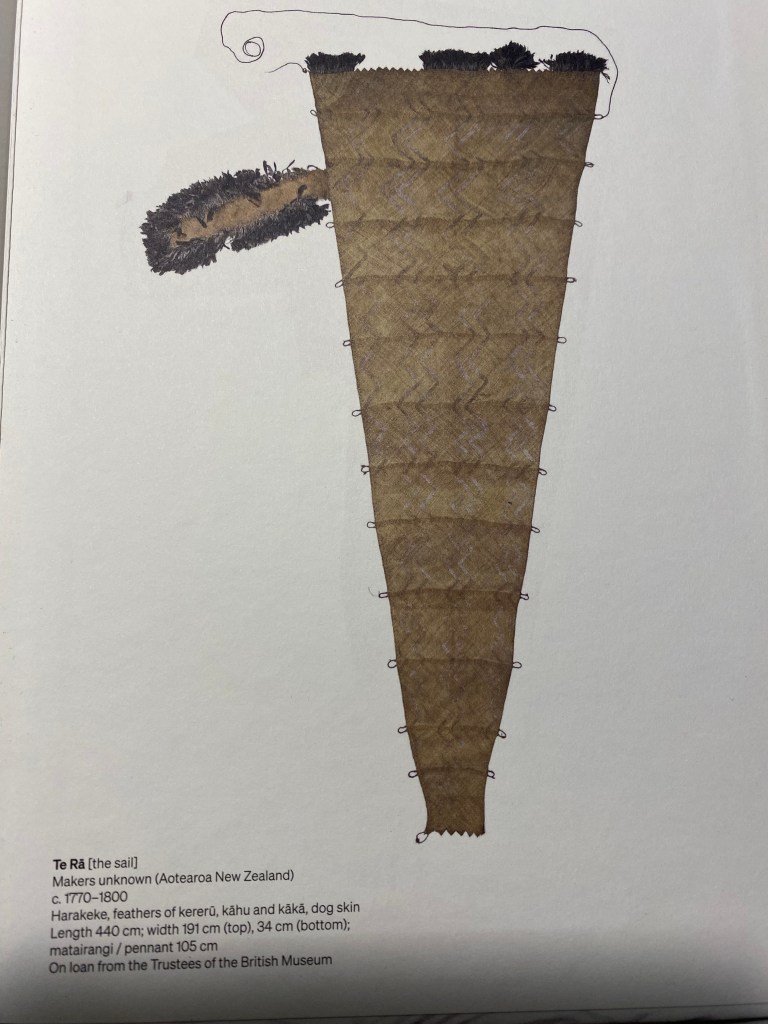
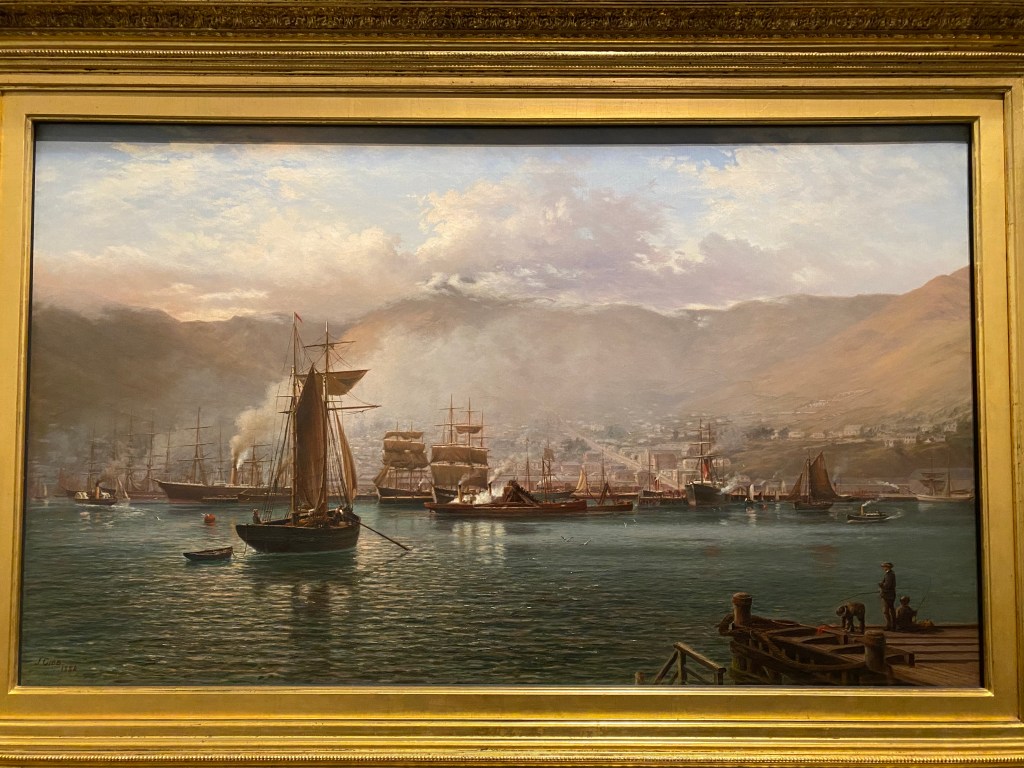
Today, I went to see Te Rā at the Christchurch Art Gallery Te Puna o Waiwhetū for the third time. This time, I had the space to myself mostly and was able to chat to the attendant who was very knowledgeable about the 200 year old Māori sail and similarly in awe of it. She said that lots of people, like me, have wondered if the sail is upside down. The small yacht I used to have had the pointy ends of its sails at the top. Having the larger part at the top would have made my yacht capsize (which it did anyway, as my mutineering brother would tell you). Sails of the kind we are more accustomed to are shown in this John Gibb painting of Lyttelton Harbour in 1886 (site of said mutiny nearly 100 years later) which is in a nearby exhibition space.
The attendant and I agreed that Te Rā would have been on a double-hulled vessel and perhaps the vessel would have been heavily loaded for stability. A model in the nearby exhibition demonstrates a similar sail: broad end at the top, pointed end down. It is of an Hawaiian wa’a kaulua, a working model, used ‘as a teaching aide for techniques in deep sea voyaging’. It was ‘collected by [a] naval officer…in 1791 during a provisions stopover’.
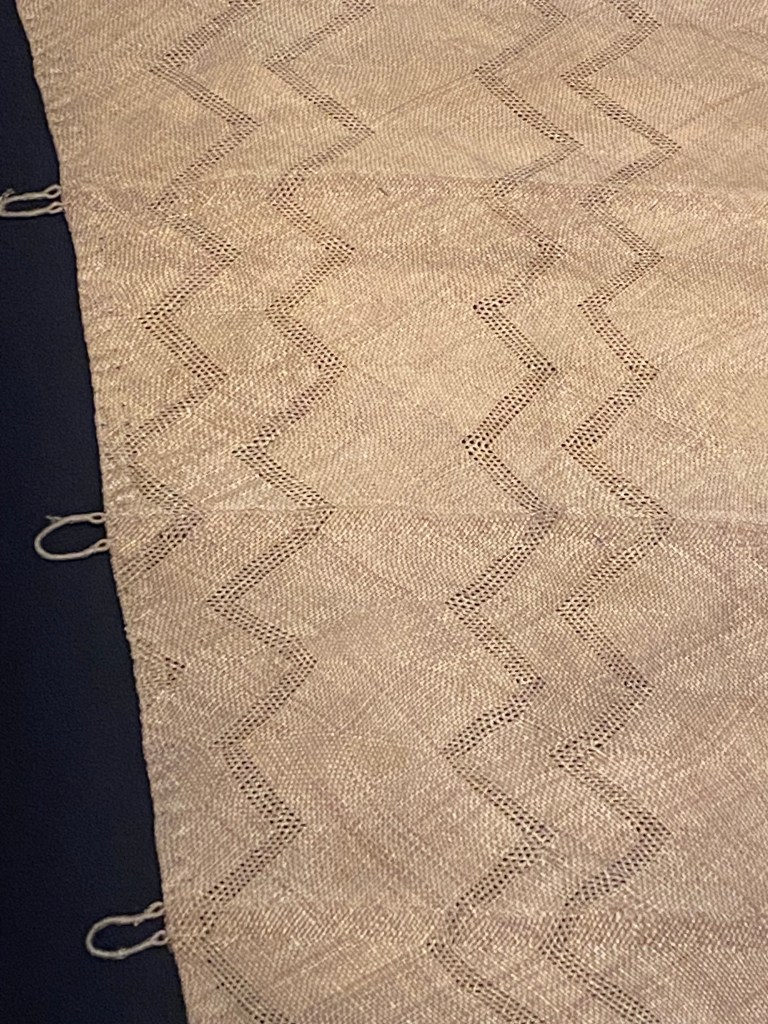
This makes me wonder how Te Rā was ‘collected’ around the same time. Was it plunder? It seems unlikely that such a valuable item made with painstaking skill would be willingly sold. This close-up shows the zigzag pattern which eased the force of the wind against the sail. The horizontal creases show where the sail was folded for storage in the museum.
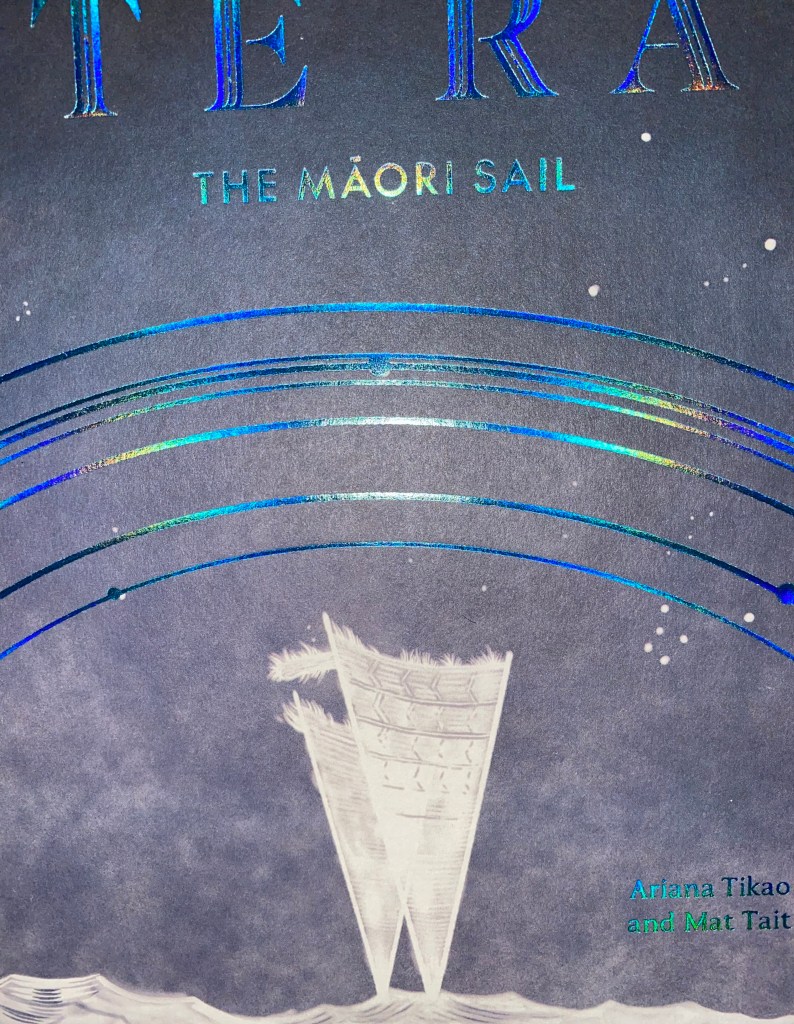
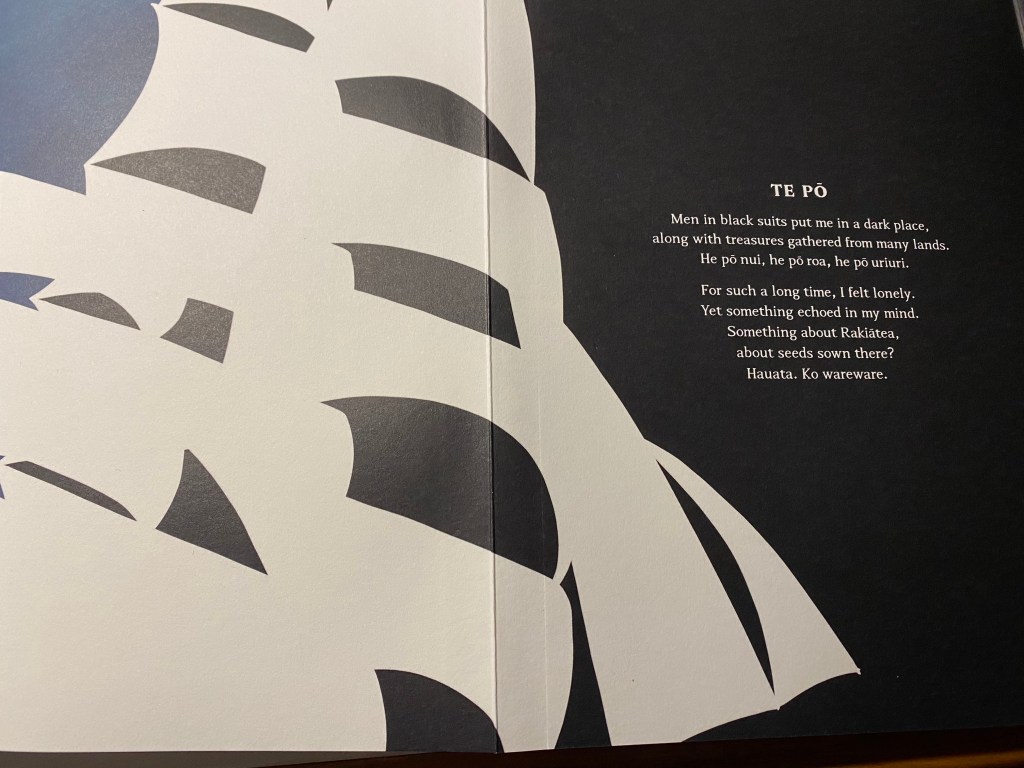
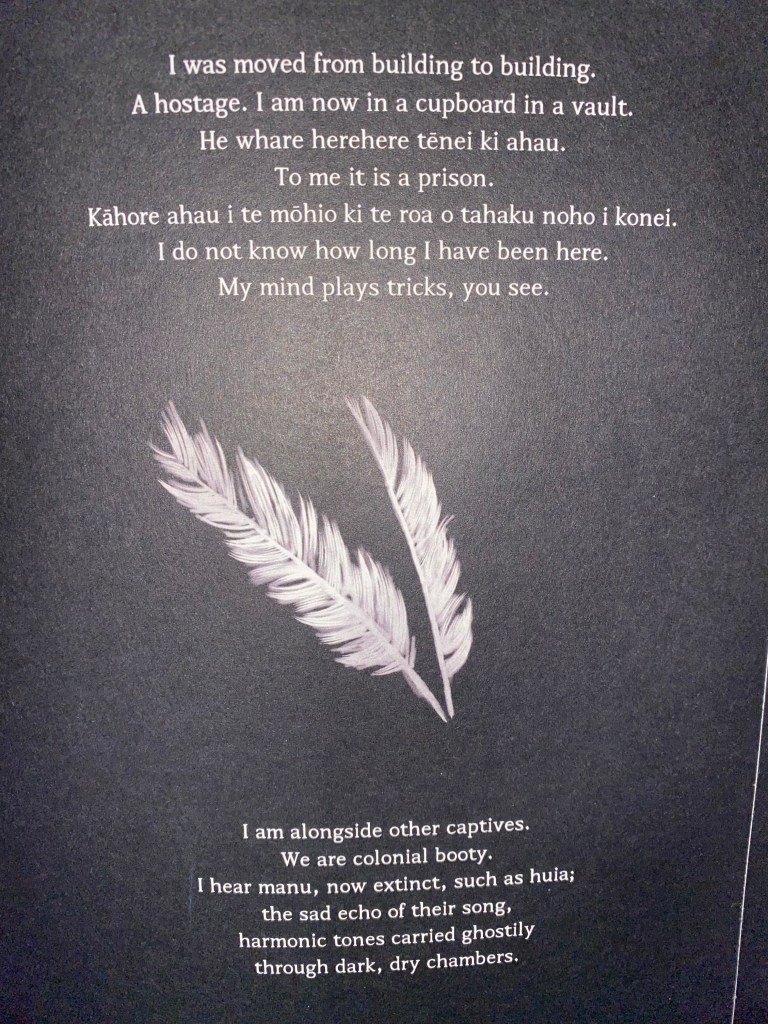
A book about Te Rā, which I bought last time I visited, shows two sails. Were there two on one vessel? This beautiful illustrated book tells Te Rā’s story in verse in the first person, personifying Te Rā in traditional totemic narrative as an ancestor.
There is, apparently, no record of how Te Rā was acquired by the British Museum. The sail has been studied in detail by expert Maori weavers who travelled to London and a replica was made (it is currently in Whangārei according to my research) which will be displayed with the original when the exhibition moves to Auckland in November, the attendant told me.
It is very hard to think of this beautiful taonga returning to storage in the British Museum, so far from home.
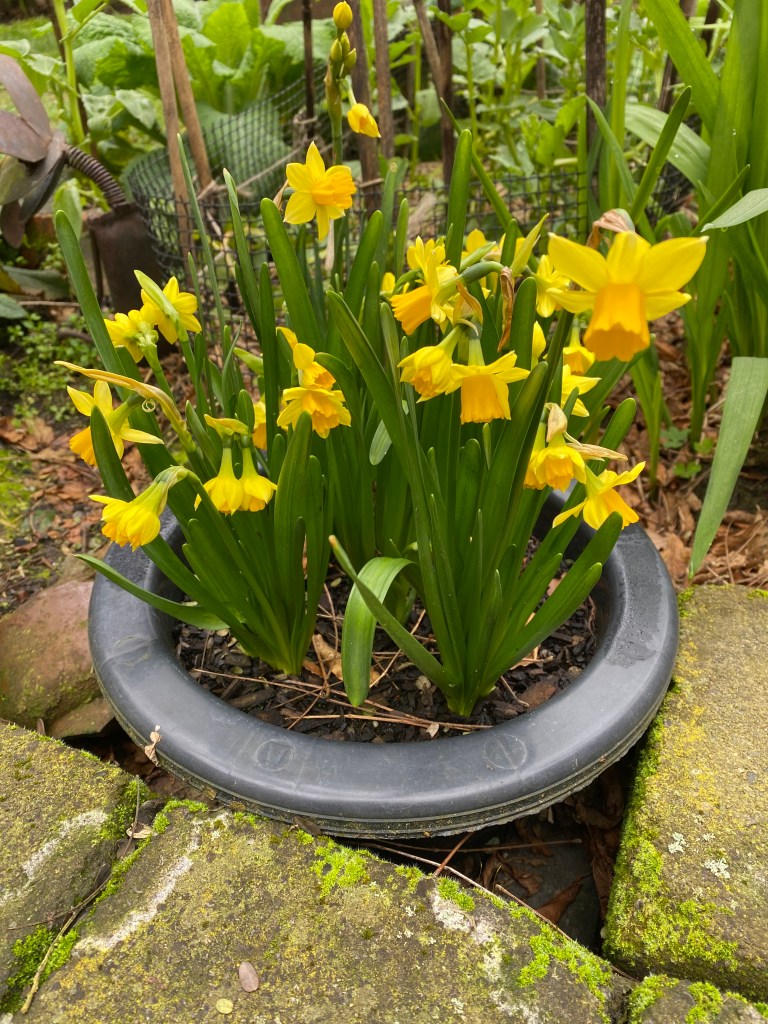
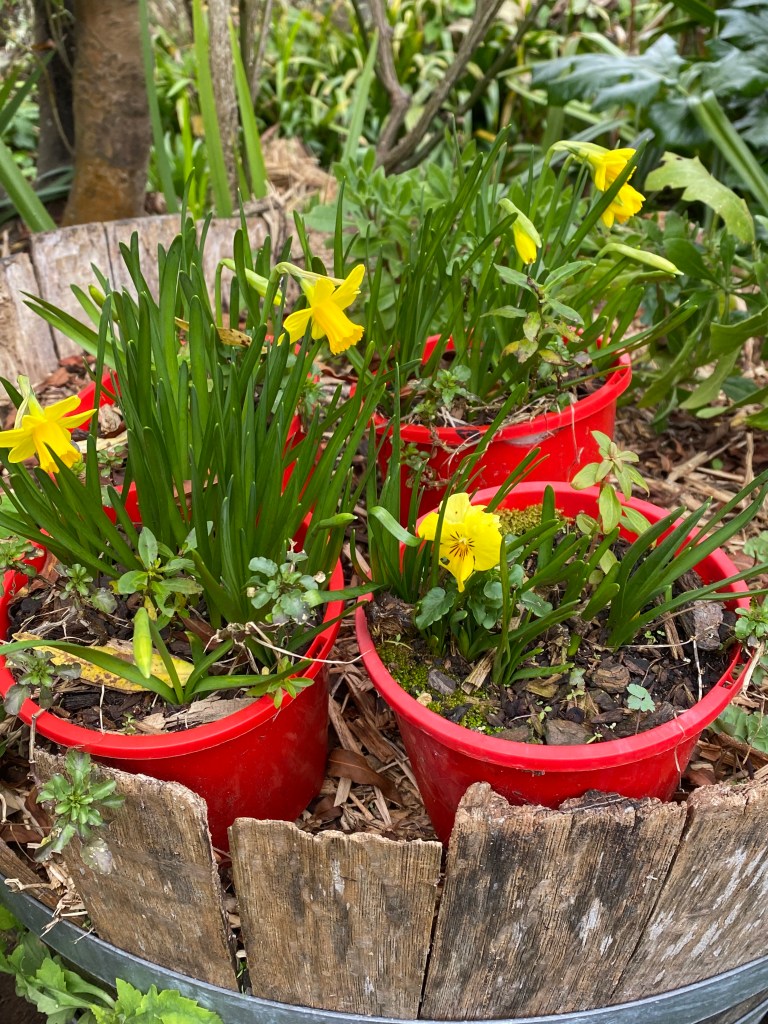
The beginning of Hone Tuwhare’s poem pops into my head on a grey day like today when the air is cold and heavy with humidity. Then I appreciate, as a substitute for sunshine, the signs of Spring appearing in the garden, especially the colour yellow.
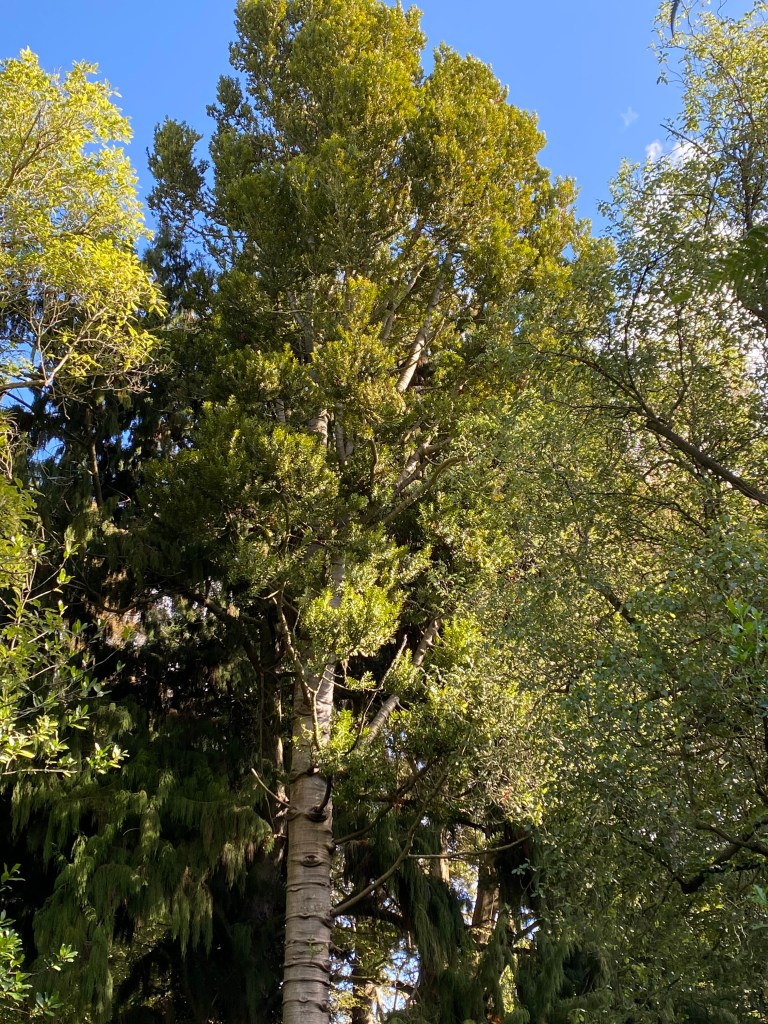
The New Zealand garden in the Botanic Gardens is a good place for ‘forest bathing’, I discovered yesterday. The canopy is thick, the species varied and, even though it is a planted environment, it almost smells like native bush in the wild. The air is different: fresh, cool and rich with leaf litter. There are streams and a lake with ducks. A large wood pigeon flew into a rimu tree with a whump. This kauri has grown to an impressive height.
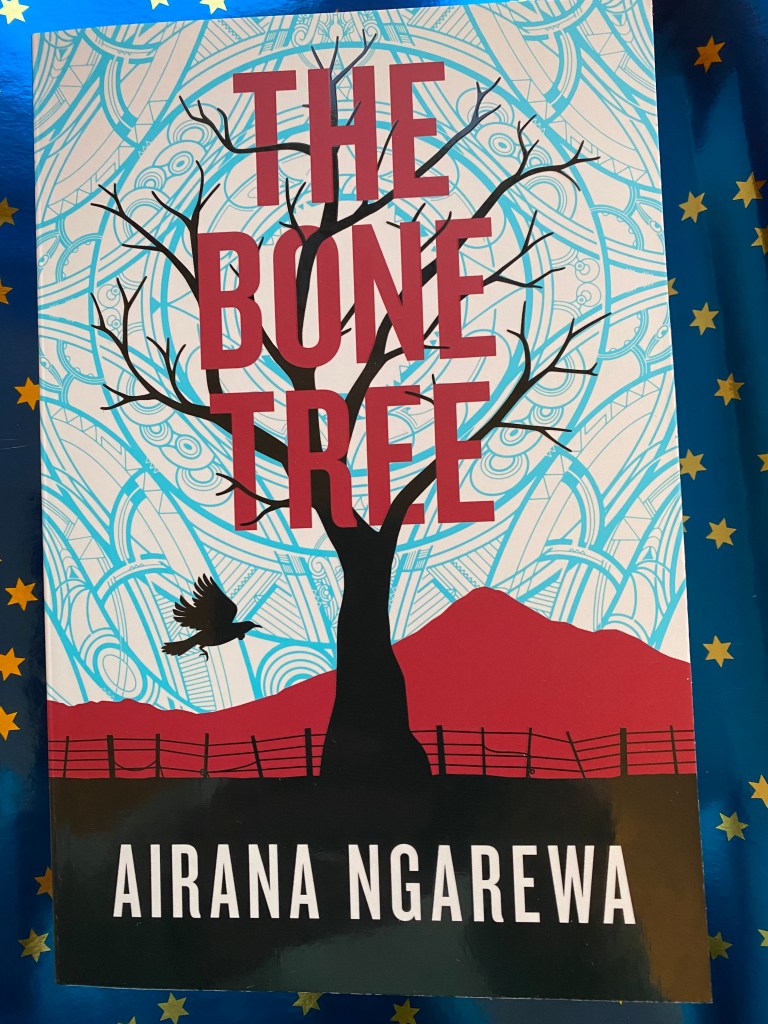
A different kind of tree features in the book I have read over the last two days. The story is a grim one of poverty and neglect, but also hopeful. In the back of my mind as I read, was an interview with a politician on tv this week. With elections looming, he was pushing the ‘same for all’ and the ‘Māori privilege’ myth. If he doesn’t know the reality of the lives of many indigenous people in NZ, he should. He chose to ignore the statistics, evidence and research quoted by the interviewer. This makes his stance immoral. He could be enlightened by reading this book. The narrator’s name is Kauri.
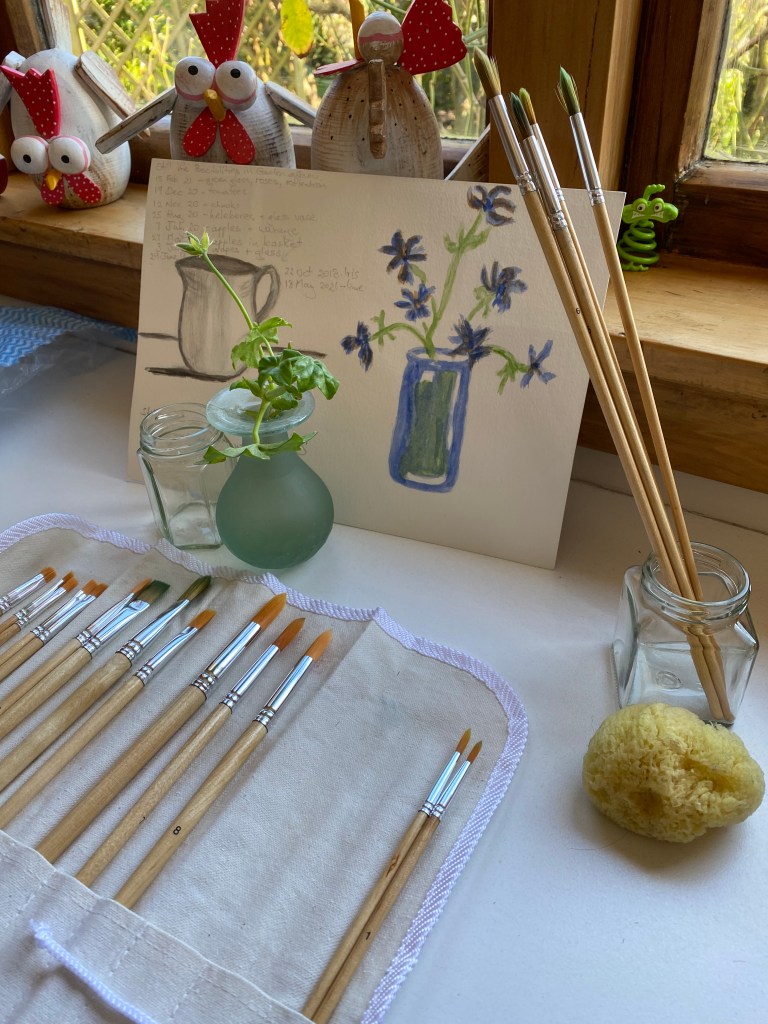
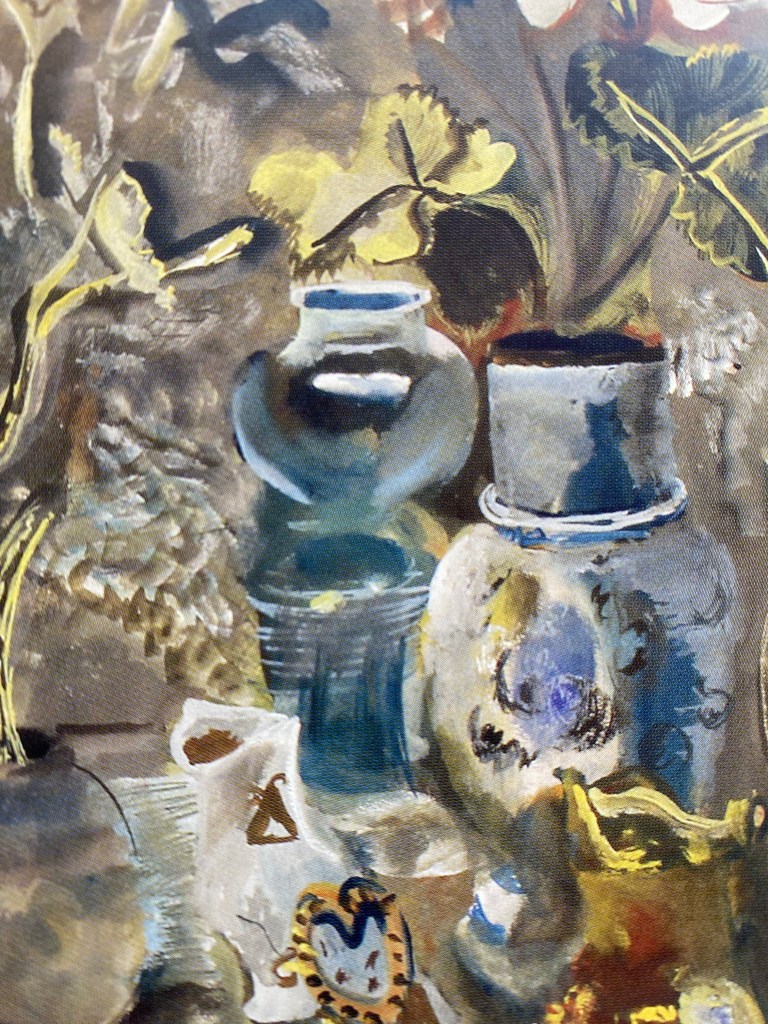
The second session of watercolour painting yesterday went better than the discouraging first. I was slightly better pleased with my effort, having decided to attempt still life images with flowers and the shapes of vases and jugs. The translucency of glass interests me – with inspiration from Frances Hodgkins.
Chairs and Pots, 1937China Shoe, 1942
Well, I will have fun trying anyway!
The shapes of chickens might be achievable as well, such as these images which appeared on the windows on a frosty morning in the weekend. I had moved the decals a few times and the shapes were revealed in the condensation on the glass.
There’s a lot going on this Frances Hodgkins painting, but you may be able to find the chooks in there. I suppose you would call this a busy scene as opposed to a still life.
A Barn in Picardy, 1914
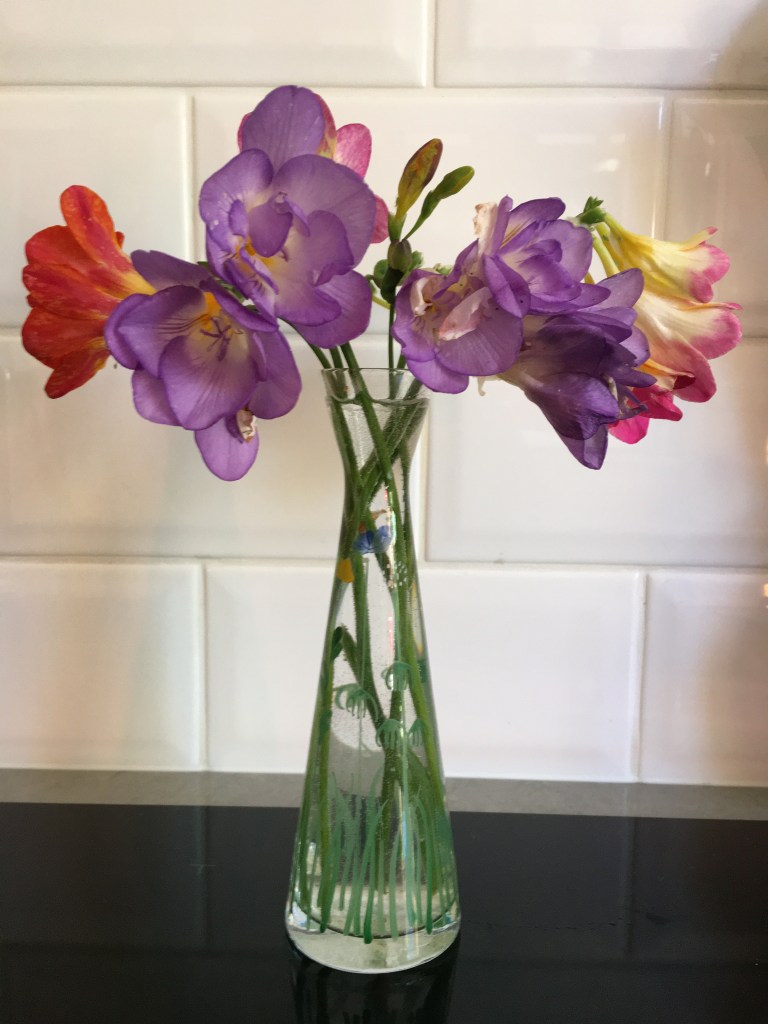
A number of ‘still life’ photographs I have taken at home and in the garden could be useful for inspiration, but I suspect some things are better left as photos!
Here’s a very faded print of the ultimate still life which points out that all our efforts are in vain – which gives me an idea: I could attempt visual metaphors. A dead bee beside the vase of flowers…
................... for lovers of ice cream. Your free on line magazine for sweet frozen treats. Recipes, inspiration, artisanal ideas for your delectation.












 Anne-O-tations