
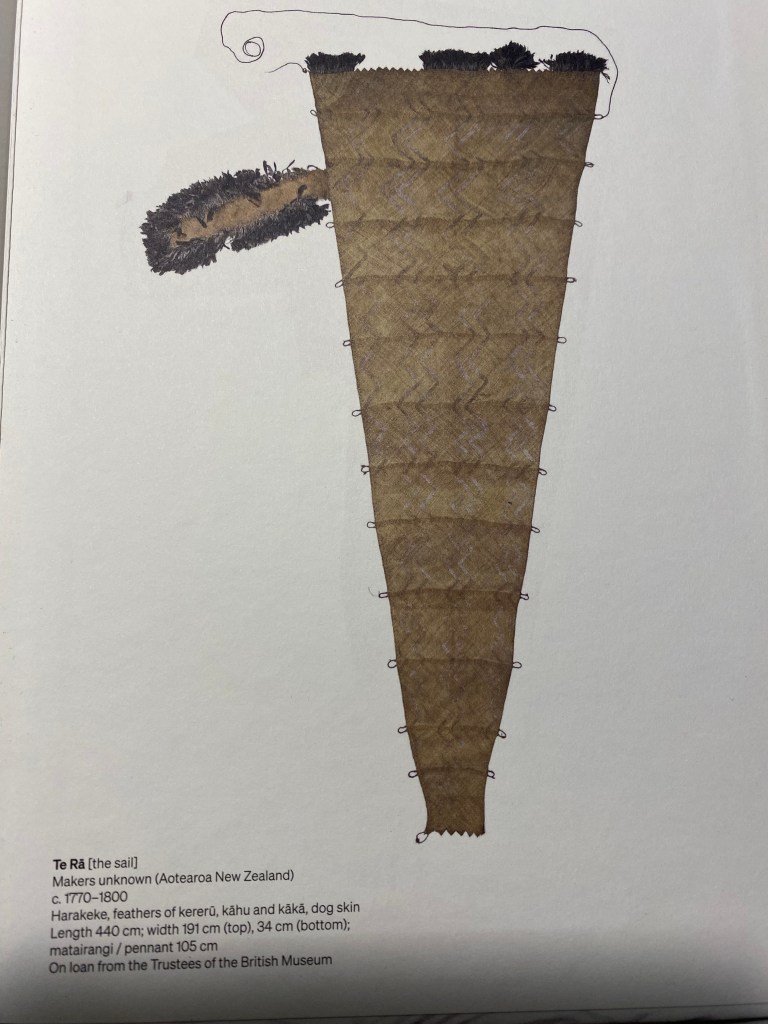
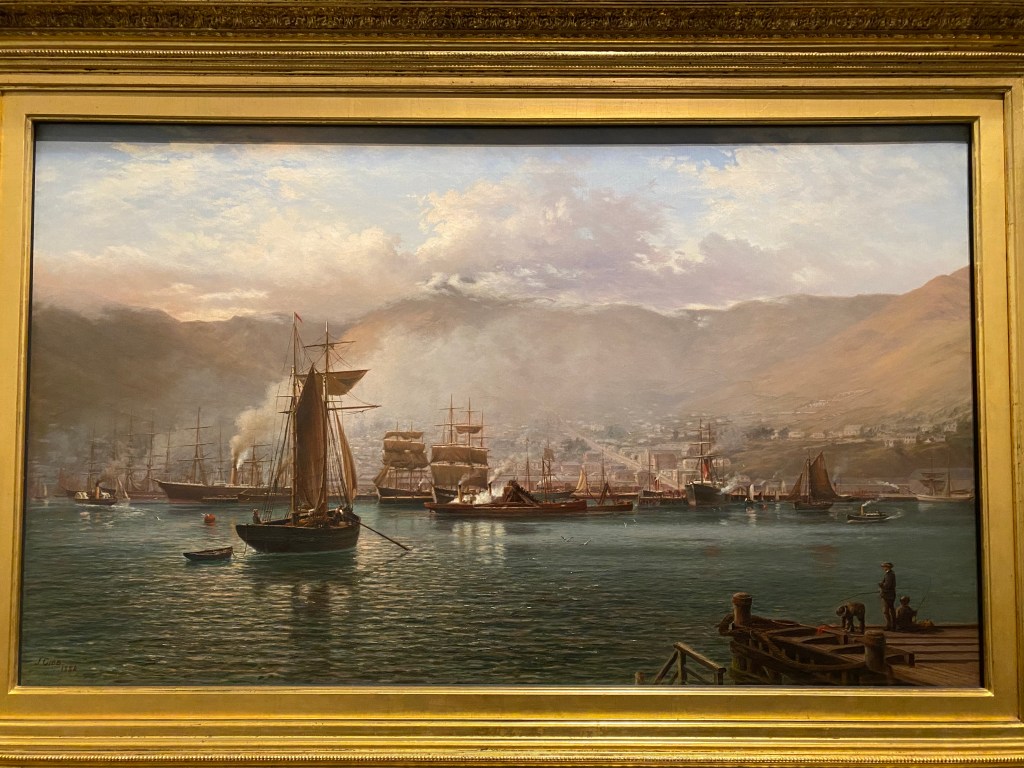
Today, I went to see Te Rā at the Christchurch Art Gallery Te Puna o Waiwhetū for the third time. This time, I had the space to myself mostly and was able to chat to the attendant who was very knowledgeable about the 200 year old Māori sail and similarly in awe of it. She said that lots of people, like me, have wondered if the sail is upside down. The small yacht I used to have had the pointy ends of its sails at the top. Having the larger part at the top would have made my yacht capsize (which it did anyway, as my mutineering brother would tell you). Sails of the kind we are more accustomed to are shown in this John Gibb painting of Lyttelton Harbour in 1886 (site of said mutiny nearly 100 years later) which is in a nearby exhibition space.
The attendant and I agreed that Te Rā would have been on a double-hulled vessel and perhaps the vessel would have been heavily loaded for stability. A model in the nearby exhibition demonstrates a similar sail: broad end at the top, pointed end down. It is of an Hawaiian wa’a kaulua, a working model, used ‘as a teaching aide for techniques in deep sea voyaging’. It was ‘collected by [a] naval officer…in 1791 during a provisions stopover’.

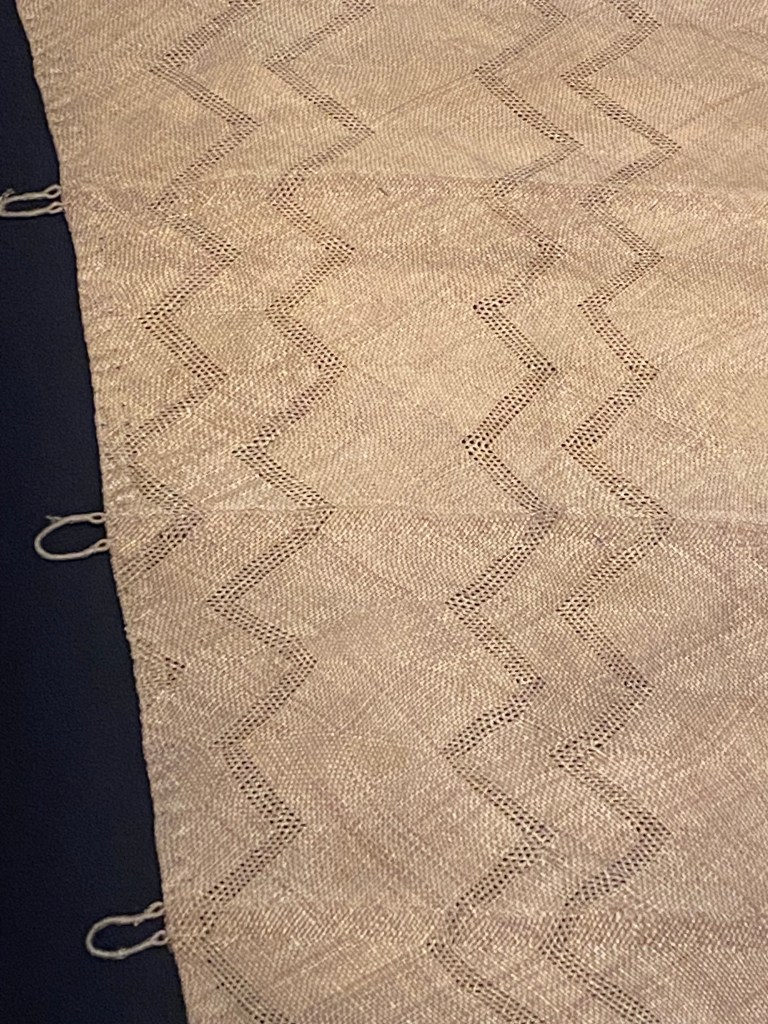
This makes me wonder how Te Rā was ‘collected’ around the same time. Was it plunder? It seems unlikely that such a valuable item made with painstaking skill would be willingly sold. This close-up shows the zigzag pattern which eased the force of the wind against the sail. The horizontal creases show where the sail was folded for storage in the museum.
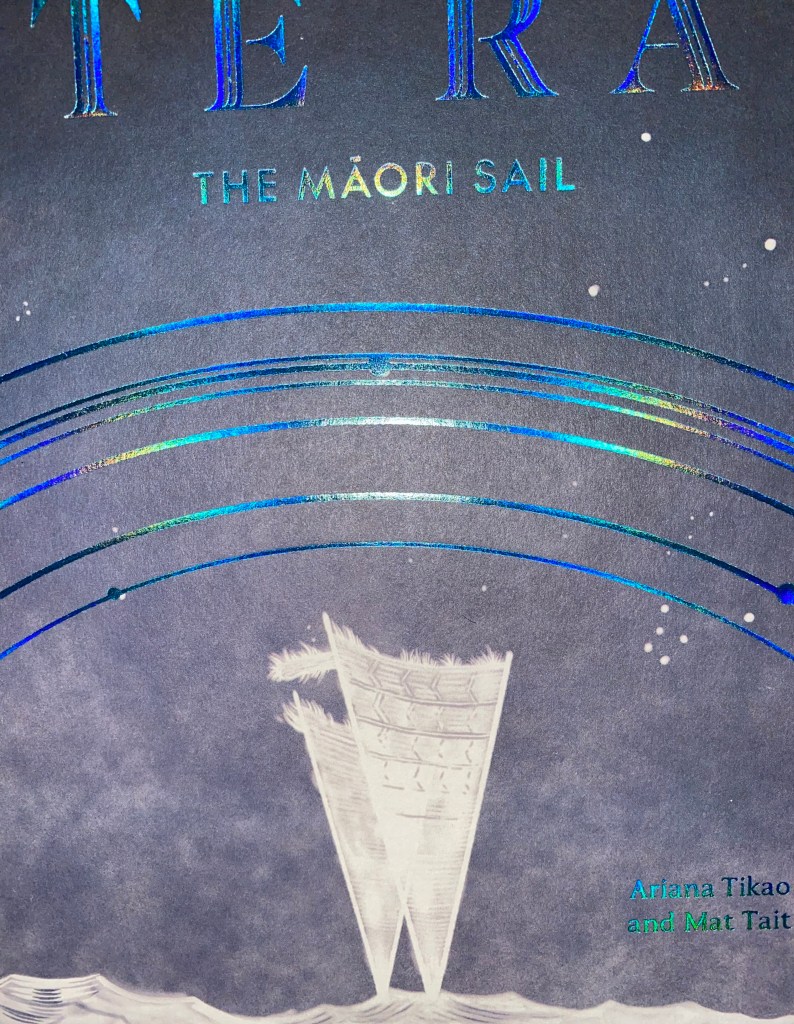
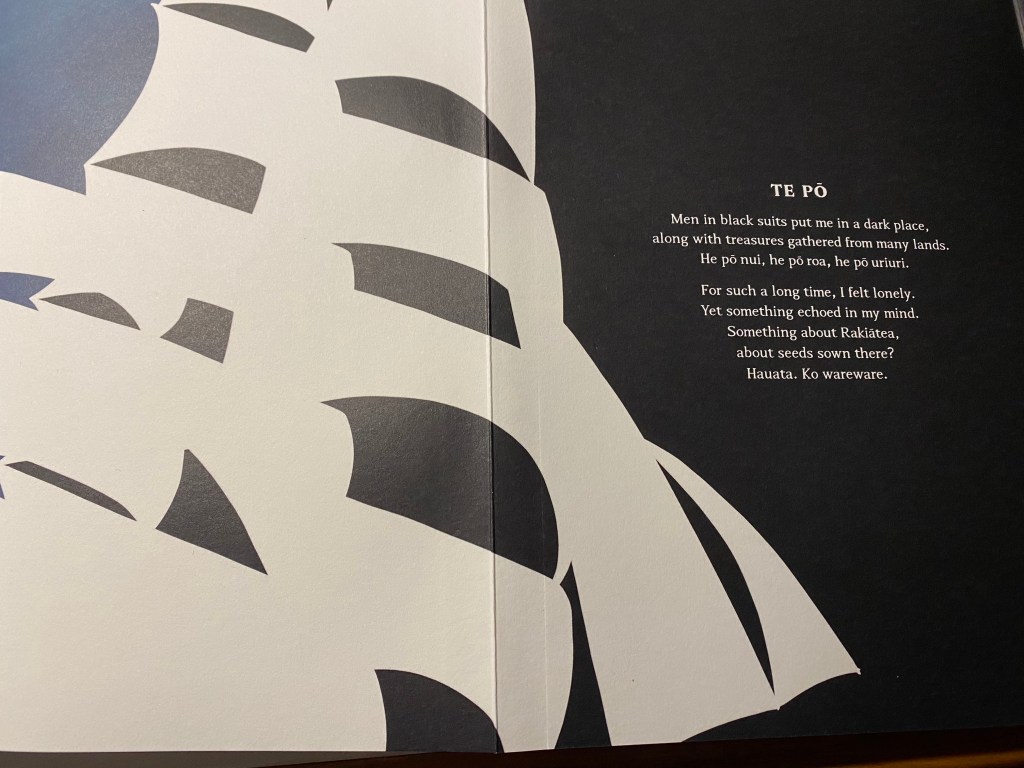
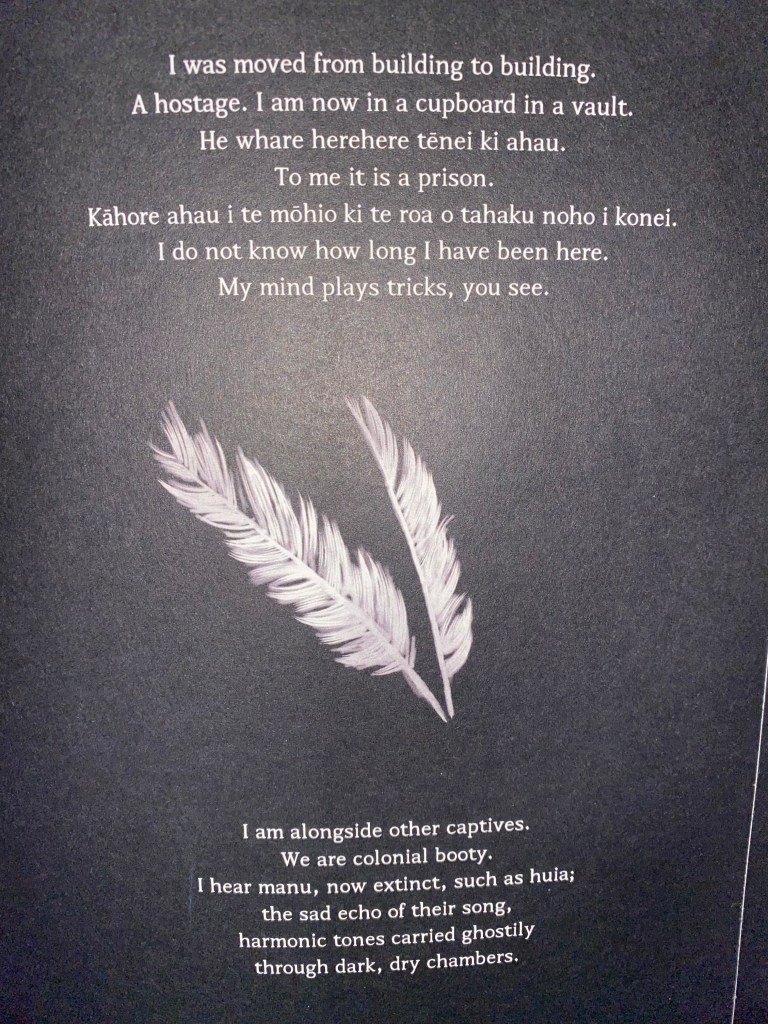
A book about Te Rā, which I bought last time I visited, shows two sails. Were there two on one vessel? This beautiful illustrated book tells Te Rā’s story in verse in the first person, personifying Te Rā in traditional totemic narrative as an ancestor.
There is, apparently, no record of how Te Rā was acquired by the British Museum. The sail has been studied in detail by expert Maori weavers who travelled to London and a replica was made (it is currently in Whangārei according to my research) which will be displayed with the original when the exhibition moves to Auckland in November, the attendant told me.
It is very hard to think of this beautiful taonga returning to storage in the British Museum, so far from home.
 Anne-O-tations