
Cottages, to me, are associated with fairy tales, an essence of country living (even in an urban setting), cosiness, roses, vegetables and sweet peas in the garden, a cat on the windowsill, and a realistic human scale for independent living. I stopped today to photograph this cottage which catches my eye every time I pass by. It seems to peek over the fence at you.
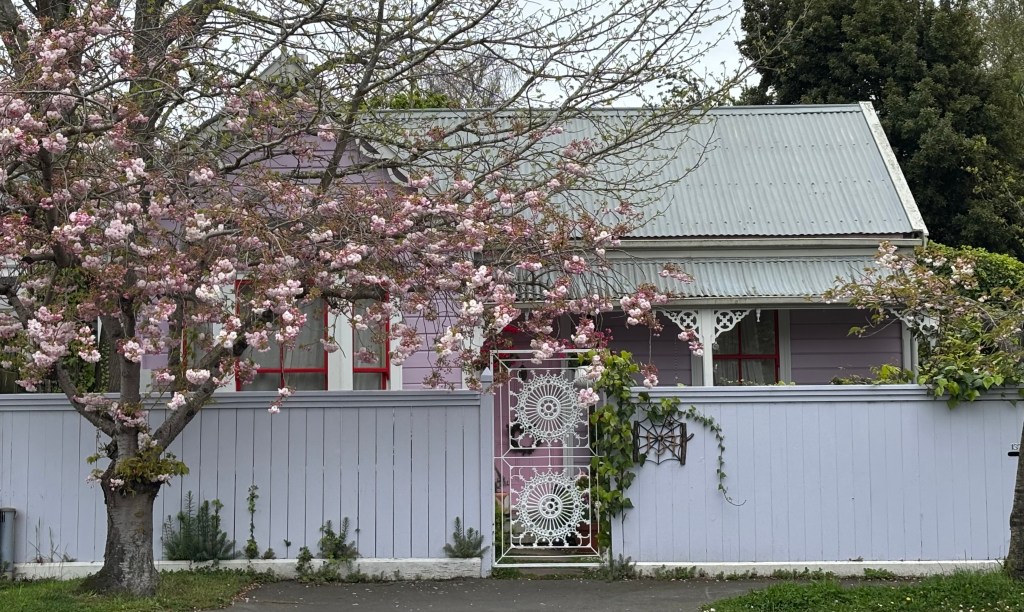
Its quirky features, such as the spider web on the fence, make it stand out from the neighbouring cottages. The lace-doily gate is a recent addition.
On Thursday I took this photo of the cottage-shaped shop at The Colombo with the round Moomin cottage (if a cottage can have several floors!) inside it: a cottage in a cottage in a mall.

I have a book called The Cottage Book given to me years ago and, as I climbed up the Filbert Steps of Telegraph Hill to the Coit Tower in San Francisco in 2001, I realised I was walking past cottages from the book. Another section of the book is about ‘floating cottages’; the house boats at Sausalito which I admired while I was there. George Clarke’s Amazing Spaces has many homes like these built by creative people who enjoy small space living. It’s cosy viewing.


A friend lives in a cottage which was a prefabricated structure and dates from the late 1800s. It has a bullnose verandah, a lean-to kitchen and a charming garden. It ‘gives’ to the street rather than hiding behind high walls.
I like to think of my 1930s house as a cottage, with its individual rooms which link, but are not open plan, but it might best be described as a bungalow (which might be a kind of cottage). The garden, however, is a cottage one.

The delightful houses of Hobbiton are the epitome of cosy cottage life.

Hobbit-sized, just about, (no danger of hitting my head on the beams as Gandalf does) I could fit right in. And like the cottage inside a cottage, there is a little hobbit doll house.

 Anne-O-tations