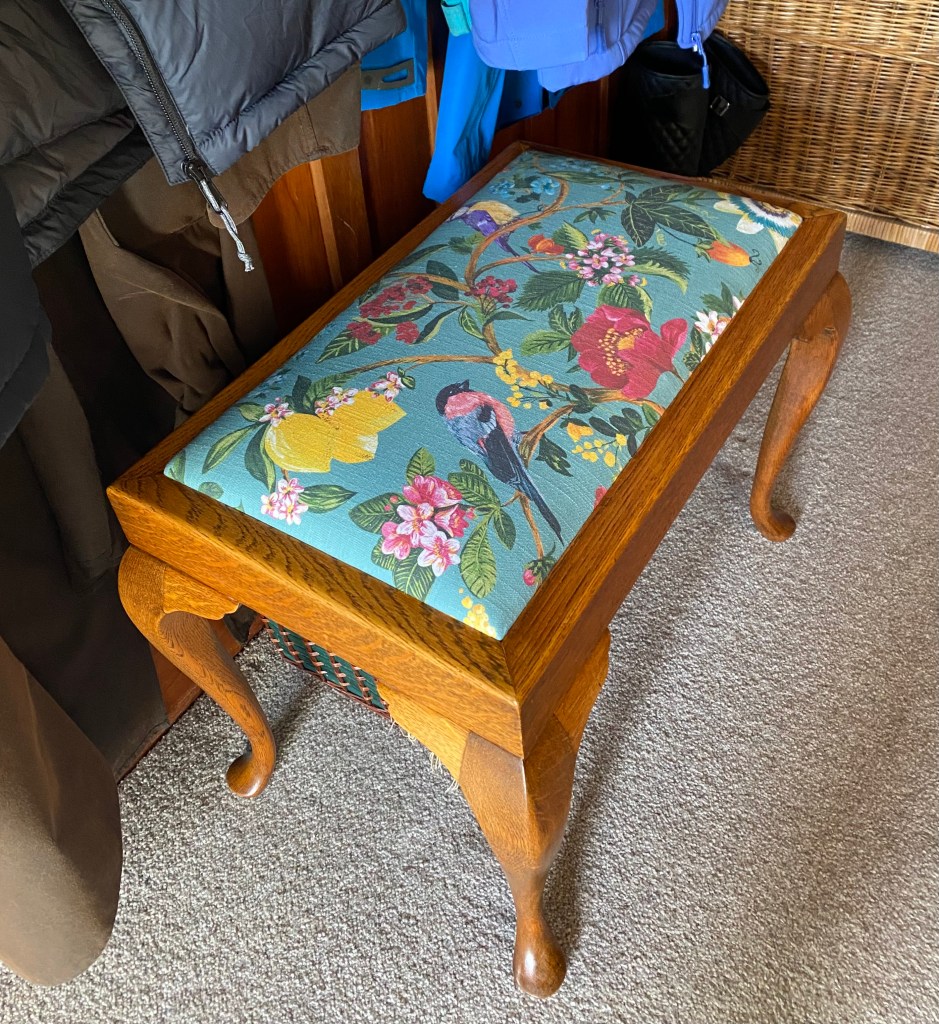
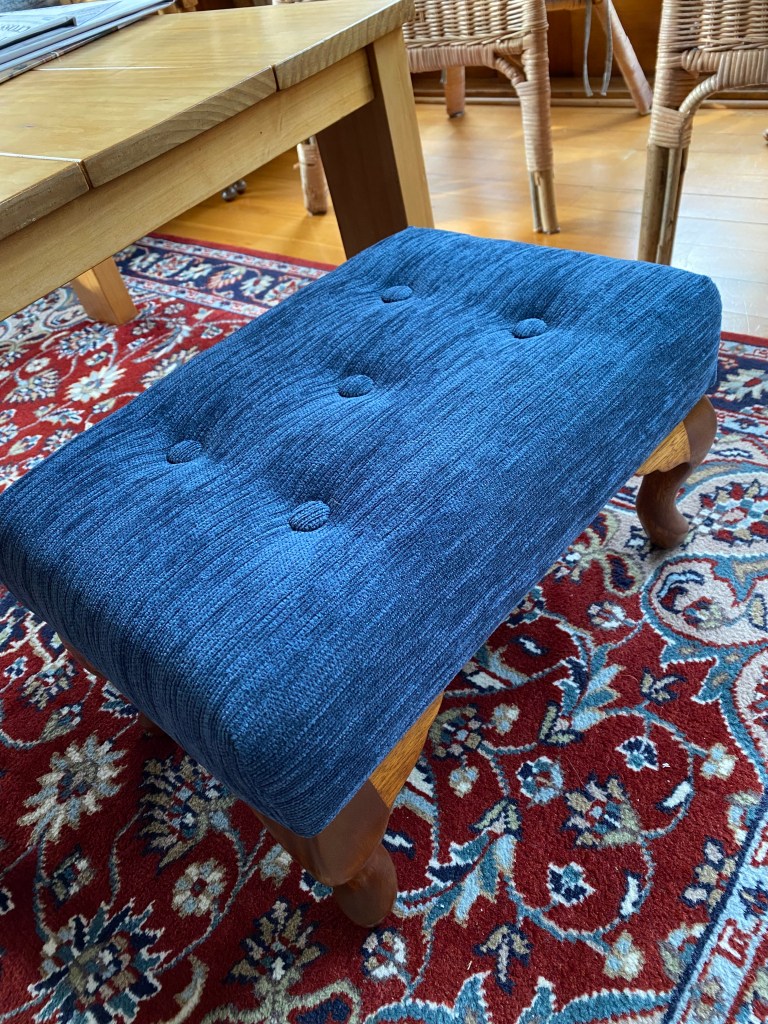
Mum has been hinting for years about getting these two stools re-upholstered. They were very shabby and worn. After visiting the amazing Cushion Couturier shop and discovering they offer upholstery as well as cushions – and even complete interior design – I had no excuse to put it off any longer. Yesterday, the stools were ready to collect; not only re-upholstered but repaired and polished as well.
Piano stoolFoot stool
The piano stool brightens up the hallway with a new, fresh, cotton-linen fabric chosen from the collection of the Cushion Couturier who artfully positioned it to show the best of the design. The foot stool, which I learnt has mahogany legs, is covered with fabric left over from the living room armchairs.
Mum’s not sure where the stools came from; they’ve simply been in the family for years. The piano stool had what looked like a lovingly home-made tapestry top of stitched flowers and was filled with kapok which poked out through the faded and worn fabric. A couple of dowels in the legs had broken. That the upholsterer was able to re-stuff and re-cover the stools and do detailed repairs is very impressive. We are delighted with their new look.
Winter isn’t finished with us yet and the firewood was running out. A fresh load arrived after lunch – we’re using the new wood on this evening’s fire. It took me three hours to stack it, about the same as usual: one hour per cubic metre, which included stopping to talk to neighbours passing by, and to rescue a little waxeye from Felix.
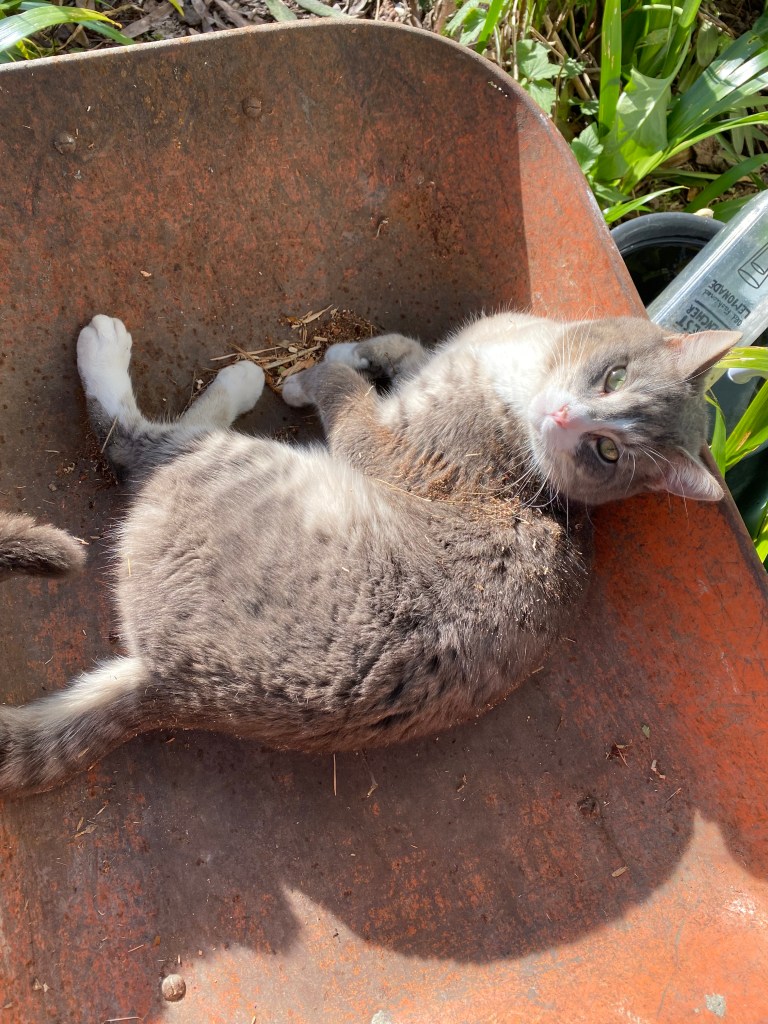
As I walked by with the wheelbarrow, I saw Felix grab the wee bird which was sitting on the fence. I, in turn, grabbed Felix by the scruff and the bird, to my surprise, flew straight out of his mouth and off into the distance. After that, Felix was showing off, playing with twine on the fence, chewing twigs, rolling in the sawdust in the wheelbarrow and climbing a couple of trees.
A happy ending for all: the bird, Felix and us, cosy by the fire.
There’s a profusion of violets in the garden at the moment, and I was delighted to find this morning that the viburnum (possibly the variety viburnum burkwoodii Anne Russell) is beginning to flower. Perfect for the the tiny china vases I found in a Red Cross charity shop this week. I also picked some wintersweet to put in one of two smoky glass vases which were op shop finds several years ago. Simple things like this (and the UK magazine so titled) bring me calmness and delight.
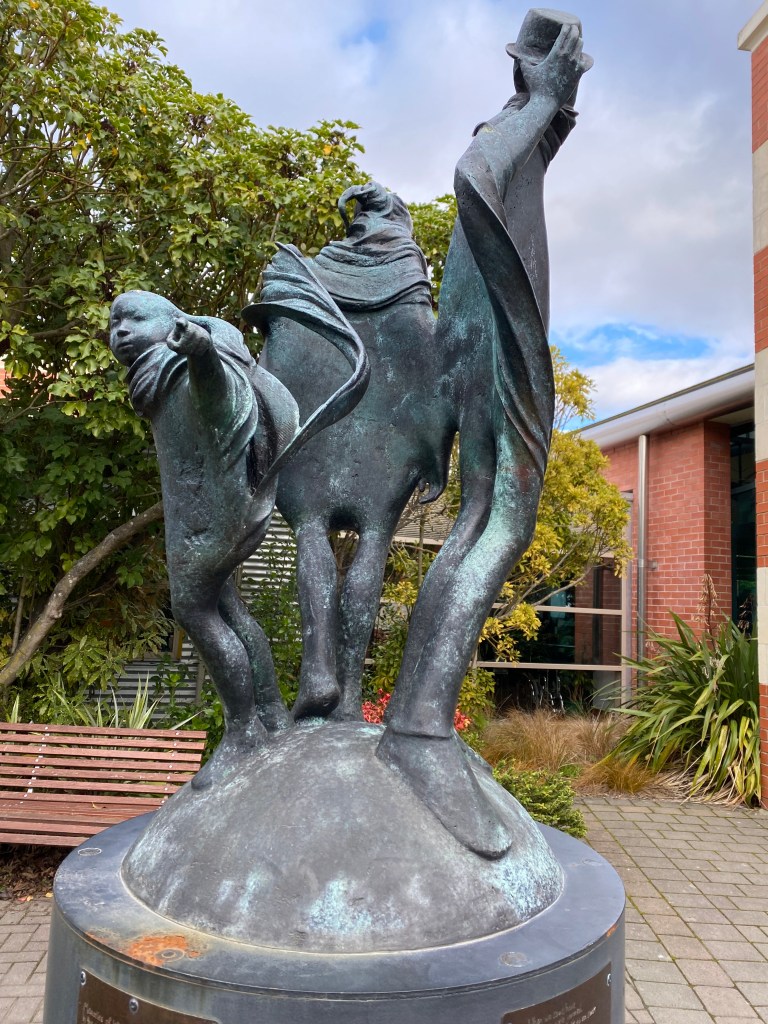
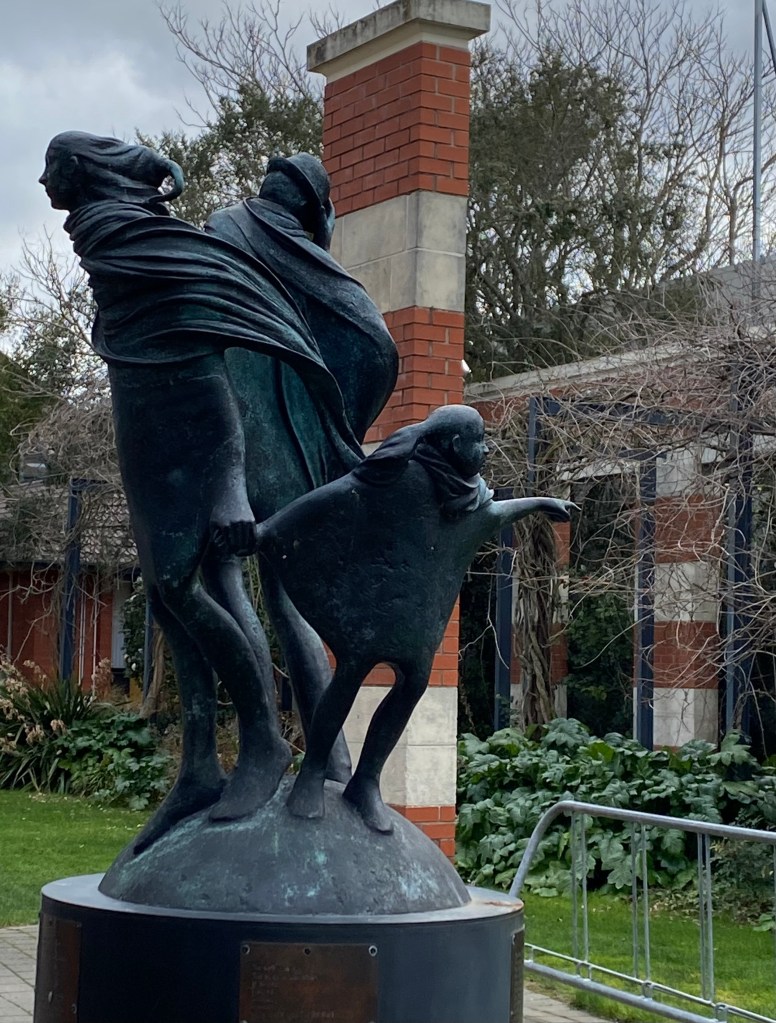
An intriguing and rather unsettling sculpture stands outside the Rangiora Library. I interpreted it as three responses to change. The man is holding onto his trilby hat as if unwilling to give up his social status. The hat and his hand obscuring his face limit his vision (or to hide his guilt, “Did I cause this?”). The woman is battling on through the storm, holding the child’s hand, and struggling with her voluminous clothing. The child is pointing back at what is coming toward them – fearfully, perhaps, but with a direct gaze. They are all precariously balanced on a tilting world.
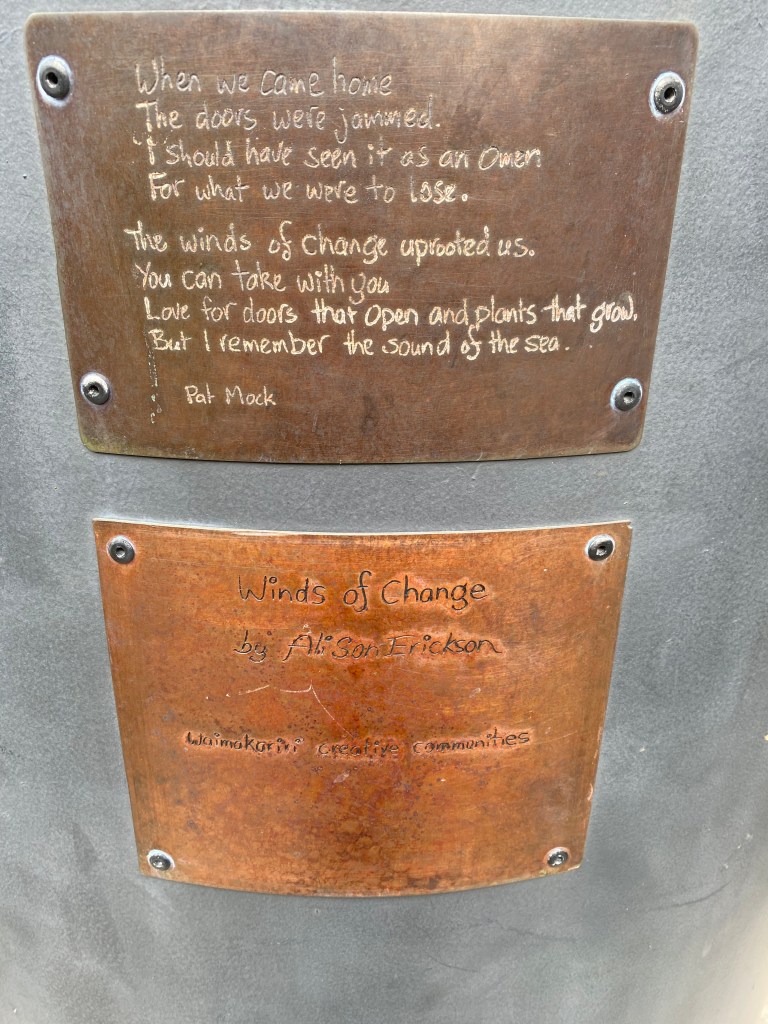
I thought of the earthquakes, of course, particularly as Rangiora is where many people settled after they were displaced from the city. One of the poems around the base of the sculpture is about that.
The lower plaque is the title of the work and the sculptor’s name
I also thought of climate change. Perhaps this well-known local poet, Rangi Faith, was thinking of that too.
After these sobering considerations, I went to look for my friends and we foraged in the local op shops, like the woman in the sculpture gathering things about her against the inevitable
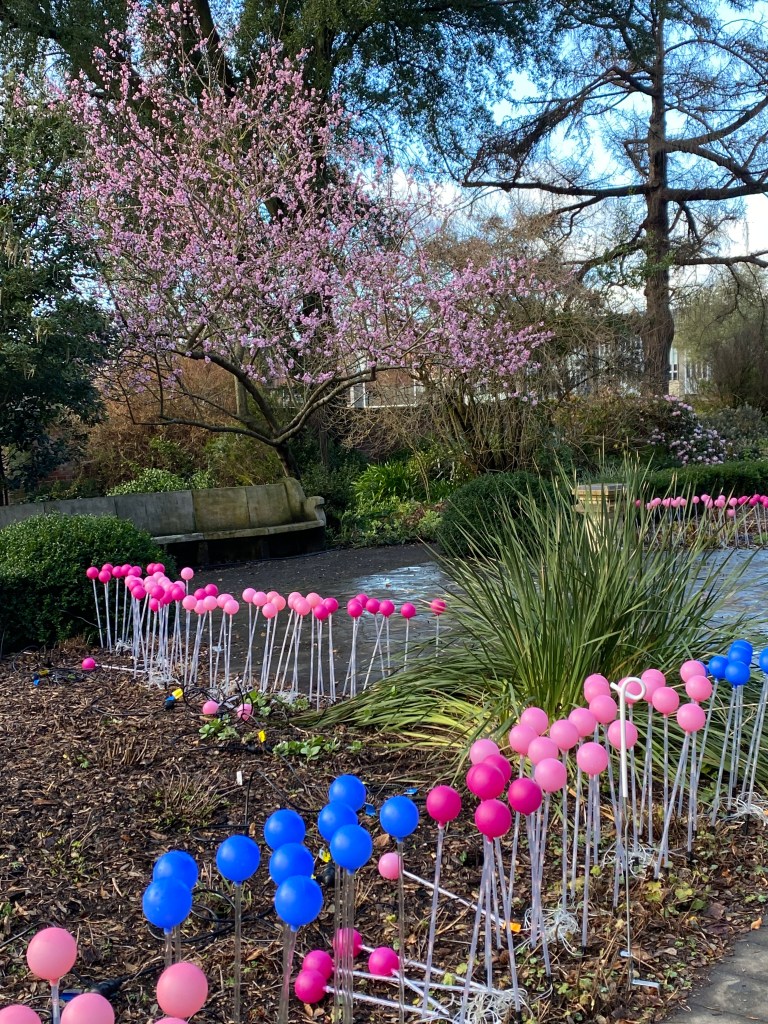
There’s a carousel going up near the Botanic Gardens car park and a sign by the kiosk says ‘Light Show Packing In’. There is evidence of this happening, but there were no people in sight as I walked through the Gardens on this cold showery day. A sign on the kiosk door said, ‘Meeting in Progress’. Perhaps they were all in there keeping warm.
Later, I saw two events vehicles, one of which seemed to be driven by a brown cocker spaniel grinning cheerfully out of the driver’s window.
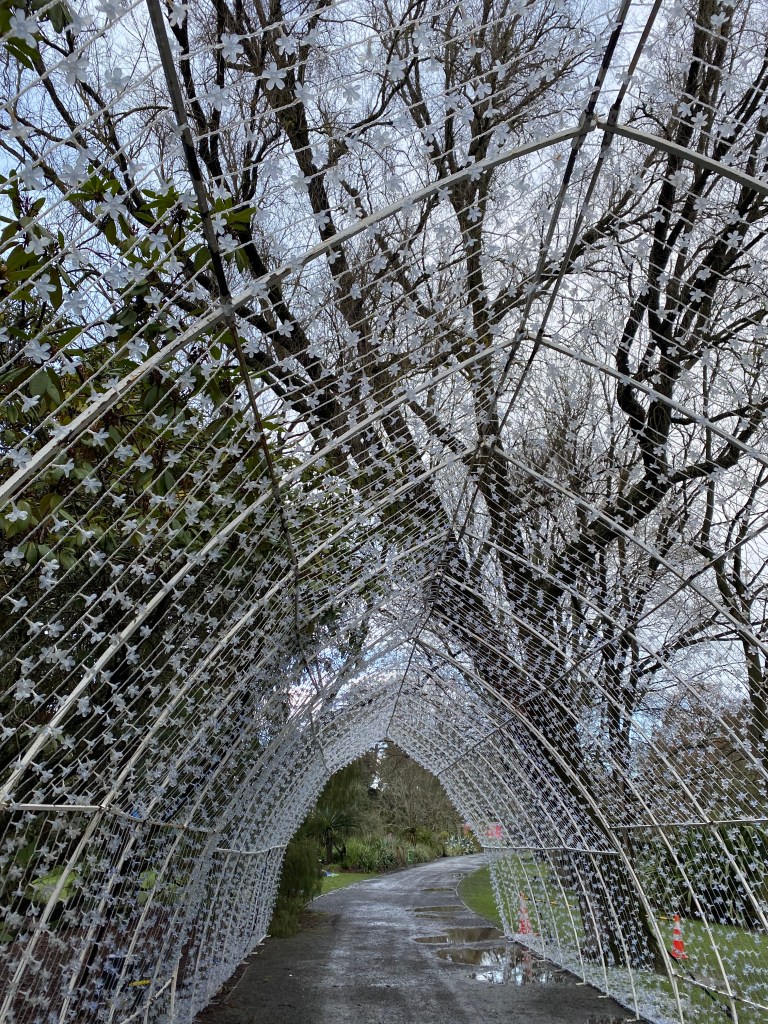
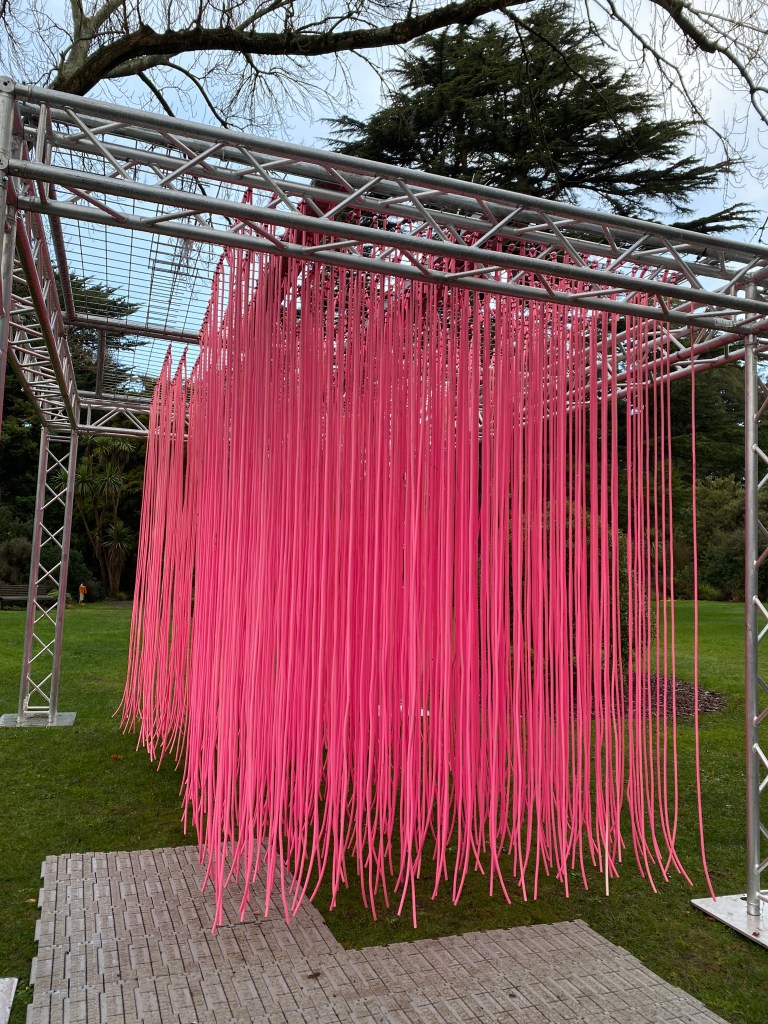
A tunnel of flowery lightsThis one doesn’t need an electrical connectionThe real thing – lit by its own brillianceFestoons? Not a pirate’s chest full of doubloons?Real and fake
The Illuminate Show is running for three weeks from 14 August, Thursday to Sunday, 5.45pm to 9.30pm, to cheer us up at the end of winter. $15 single admission, $52.50 for a group of four.
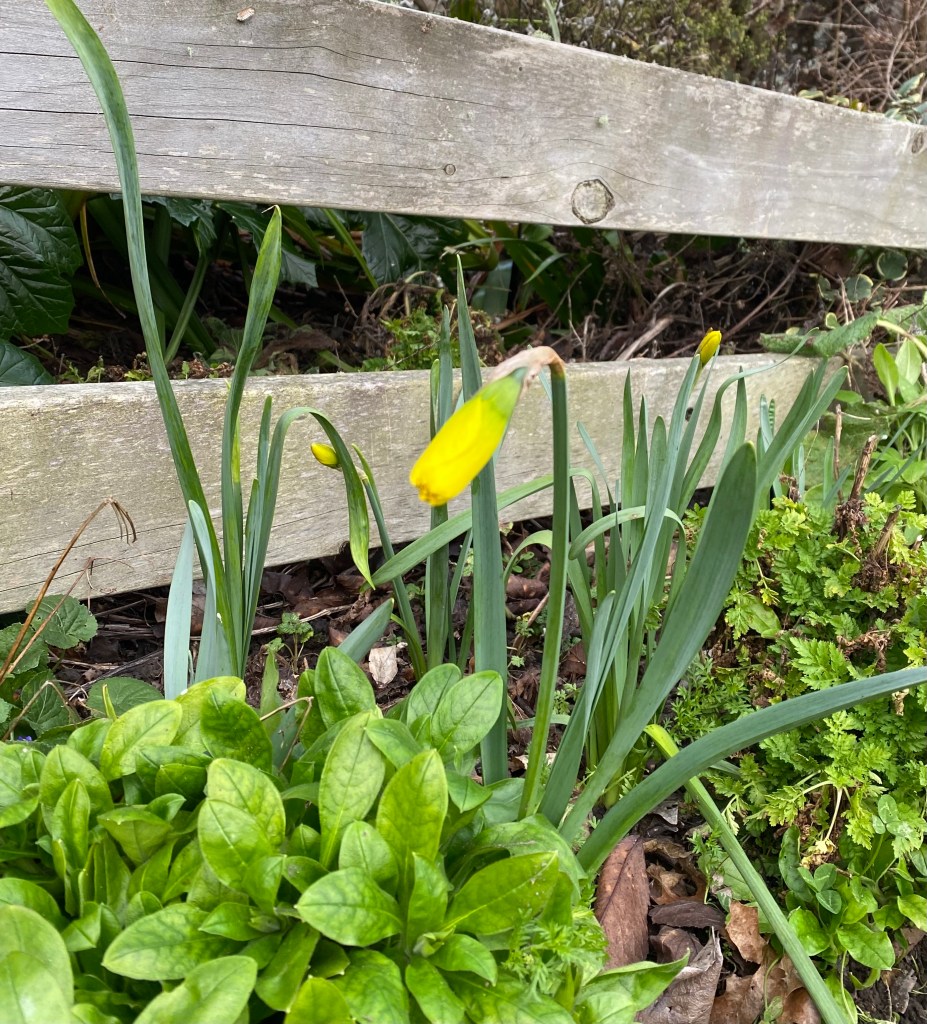
Still, I’m not sure we can say it is spring yet. We’re having some very cold days – just 9 degrees Celsius today – and some frosty mornings.
I looked around the garden to see what else was blooming, and spotted the first rhododendron.
As I got closer to get a good shot, I noticed ants on the buds. The bane of my life. They don’t look very alive. Perhaps the rhododendron killed them just as one nearly poisoned my goat once. I treated the buds with eco-oil just in case the blasted blighters are still rampaging.
Everyday we’re either repelled or attracted by what we experience – or somewhere along the continuum from one to the other. Felix is very cute until he brings in a rat. I began this morning’s paper with anticipation only to put it down with distaste. I link these opposing feelings to the kinds of books I’ve been reading. I was a little repelled (that’s NZ-speak for very repelled) by aspects of a book of short stories titled Surplus Women by Michelle Duff. It’s literary fiction, after all the author won the International Institute of Modern Letter’s fiction prize in 2023. The book reminded me of Margaret Atwood’s short stories collected in Bluebeard’s Egg which I puzzled over at university until it clicked that the women were supposed to behave like that and never see the error of their ways – so we wouldn’t make the same mistakes, perhaps? With both authors the writing itself is the most attractive feature.
I am never without a book and, ever indiscriminatory (within limits), looked forward to slipping into the more comfortable, but somewhat mis-named, genre of ‘cosy crime’ to give me a break. I decided on May Day by Jess Lourey and embarked on a sometimes attractive sometimes repellent adventure set in the small town of Battle Lake, Otter Tail County, Minnesota (all real places). It’s attractive for the hilarity and social commentary and somewhere on the spectrum to repellent for the food, weird Americanisms (‘a couple moments’ instead of ‘a couple of moments’ is just one example) and quirky characters – reminiscent of Janet Evanovich’s Stephanie Plum series, but engaging for its freshness*. I’m too entertained to be bothered by the sneaking suspicion (i.e. awareness) that the writer knows too well – and manipulates – her reader, but that is perhaps the same for all fiction writers; part of the writer’s craft. Of course, May Day turns out to be the first of a Book by Month series. The first was cheap on Amazon, after which the price of each book quadruples. So I looked it up on the library catalogue and have downloaded all ten books in the series for free and have 14 days to finish them. A fest of alternating attraction and distaste. I’m up to July.
*Both Evanovich and Lourey get a lot of laughs out of the antics of elderly folk – but then, so do I. When I took Mum (aged 96) to have a blood test on Thursday she announced in the waiting room that her stockings were falling down and proceeded to hoist up her neat tweed skirt to make the necessary adjustments. (Luckily, there were only three people in the waiting room, a man intently involved with his phone and two others hastily heading out the door. A courier driver at the counter had his back to us and was taking his time.)
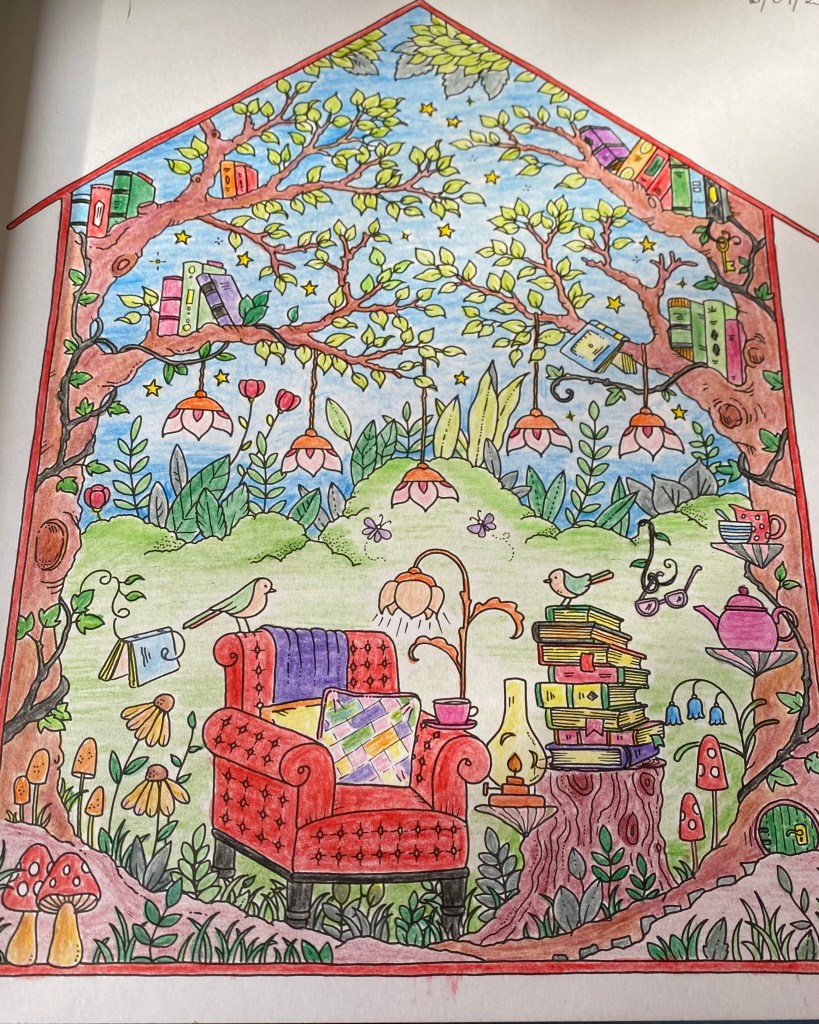
The first page of colouring is complete, although I could add more shading and deepen some colours. For example, the sky could be more evenly shaded and darkened since the stars suggest it is night.
Eventually, I will look for a wider range of colours. The coloured pencils I am using are Crayola blenders, which are double-ended with a slightly different shade at one end which can be blended with the other, and Faber-Castell watercolour pencils which give a paint effect when you go over the top with a wet brush. So far, I’ve used them dry as the illustrations have fine details and I go over the edge quite a lot as it is! I know now that trying to keep inside the lines was part of learning fine motor skills as a child.
I find myself happily colouring in silence rather than listening to podcasts or the radio. There’s just the soft rasp of pencil on paper and a ‘clink’ as I drop it back in its ceramic pot where the pencils ‘chatter’ together as I select the next. The paper is smooth to touch and sturdy, so that pressing harder to deepen the colour doesn’t show on the reverse side.
I am considering attempting a less ‘busy’ illustration to colour next – when I’ve finished the book I’m reading.
When colouring-in books for adults began to appear in shops I was a little scornful, even to the point of imagining the kind of person who might use them. I’ve noticed a pattern in my life: I make a judgement about someone and before long I find it applies to me just as much.
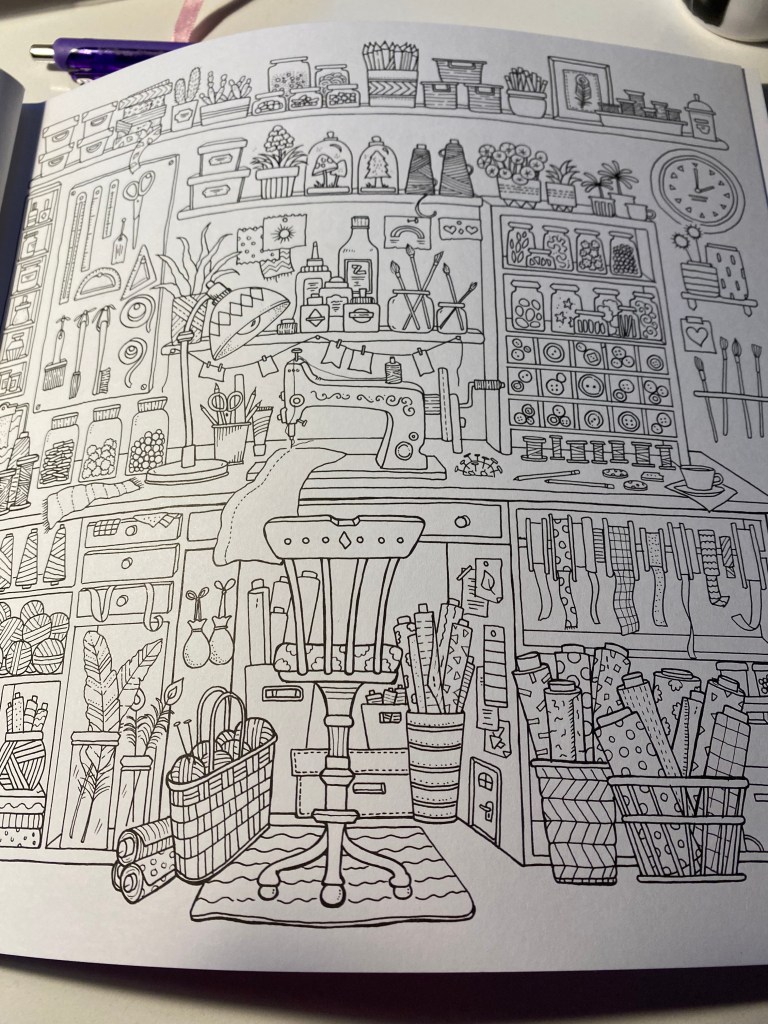
The colouring-in book I bought last week attracted me with its delightful illustrations based on rooms. I have a thing for rooms. It would be like doing a jigsaw, I thought, only it would take up less space, involve choosing and mixing colours, and would last for years. I could listen to podcasts or even audio books while I coloured in.
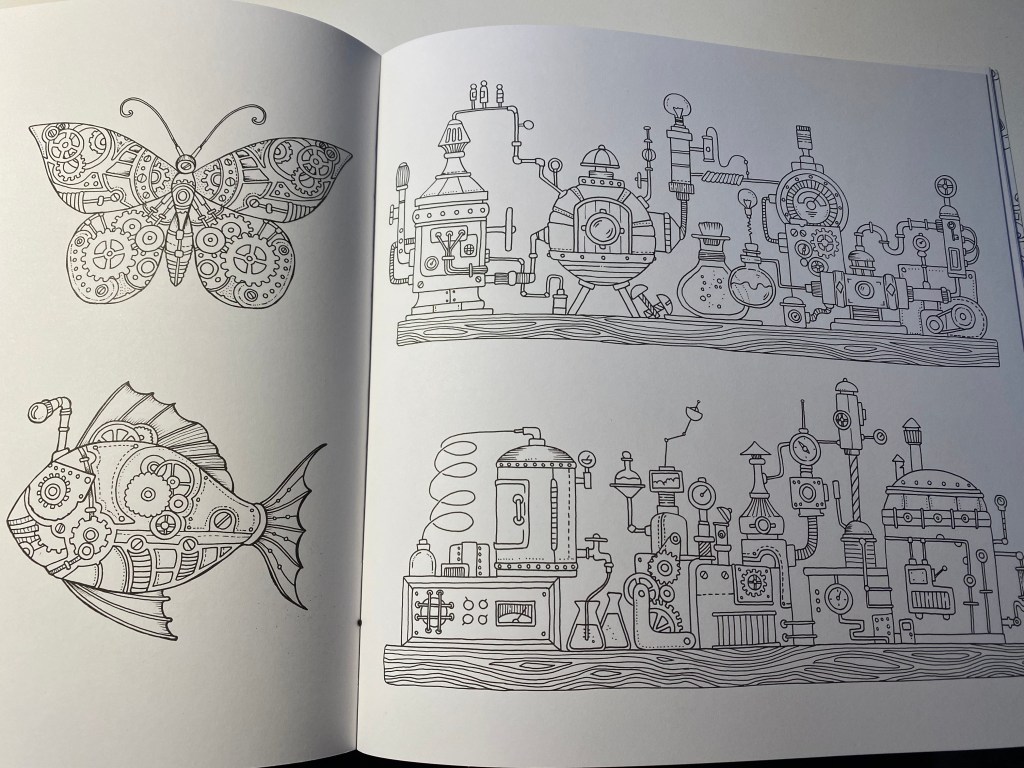
I’m looking forward to colouring these steam punk pages
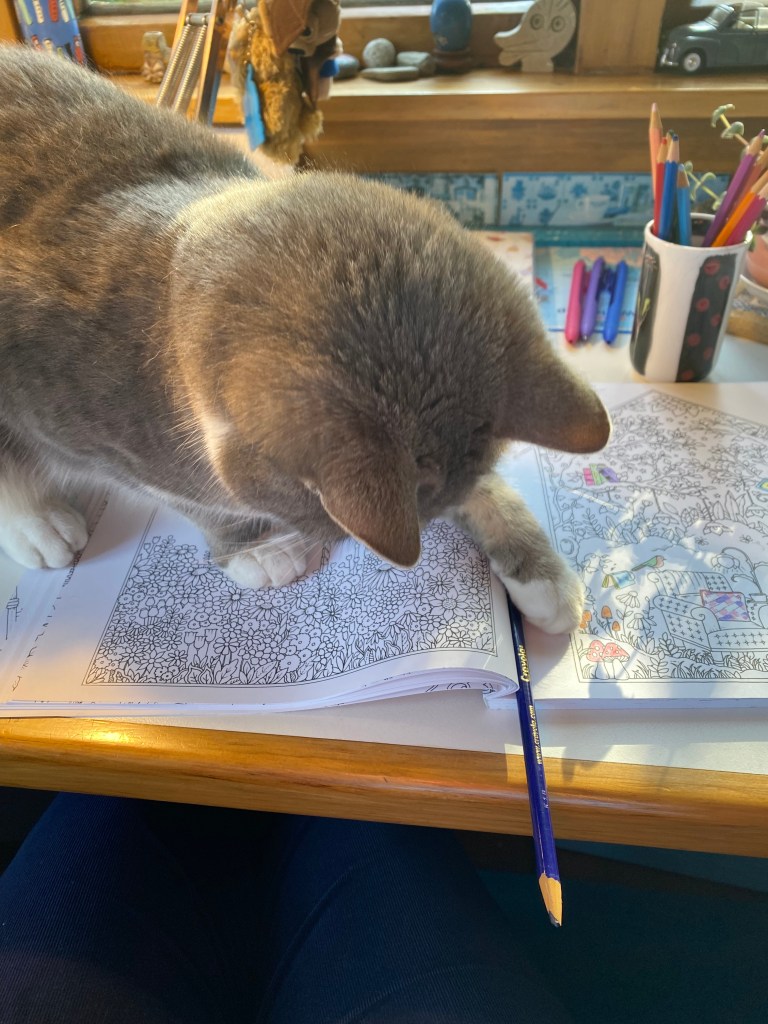
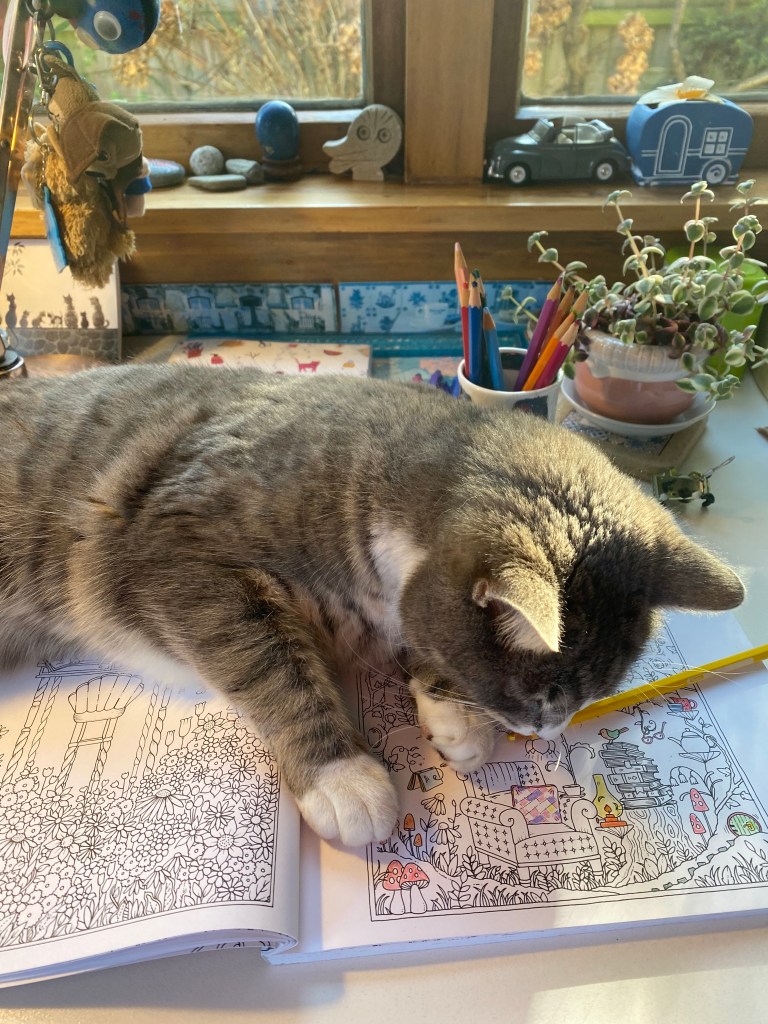
As you can see, even Felix has developed an interest.
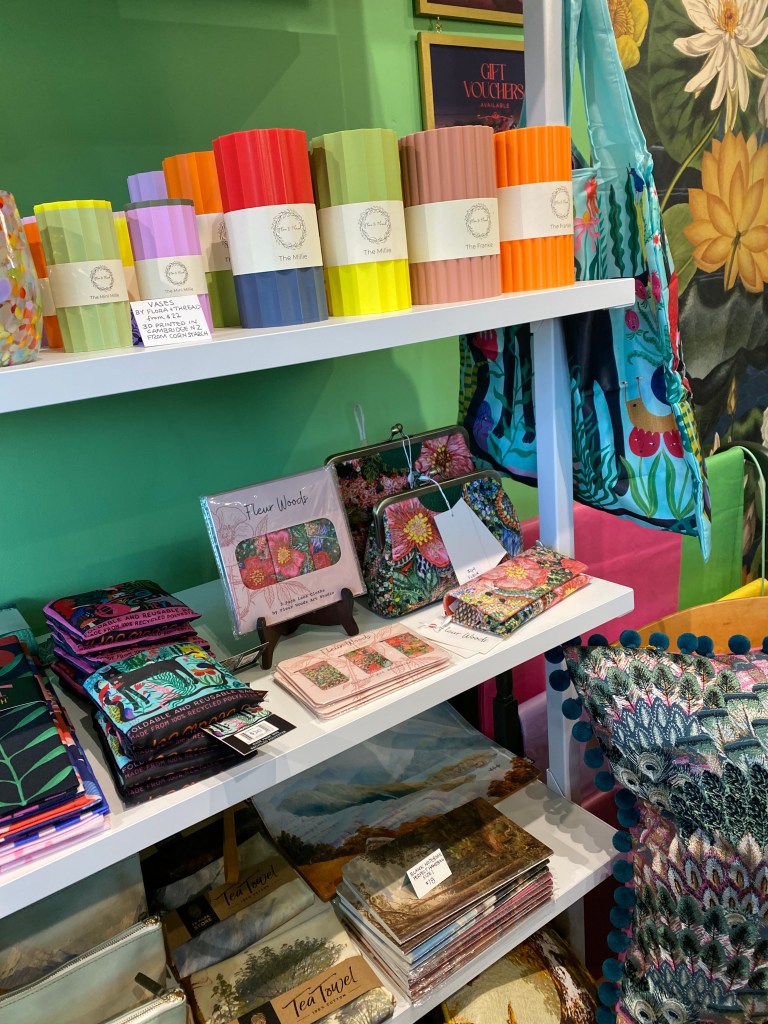
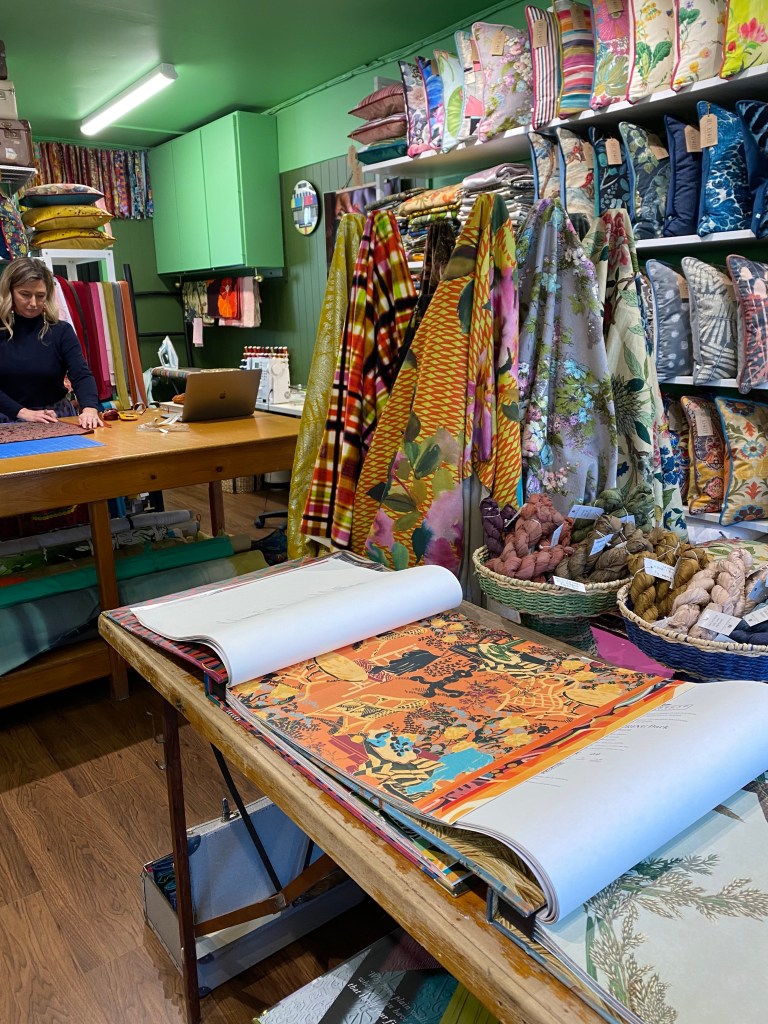
Stepping into this shop is like stepping into a different world, an Aladdin’s cave or Moroccan souk (not that I’ve been in either of those), full of rich textures and vibrant colours; a feast for the senses.
The shop is curated with colourful woven bags, oversize fabric and wallpaper sample books, books on interior design – with a maximalist vibe – yards of braids including bobbles, re-dyed sari fabric for knitting or weaving, and shelf upon shelf of cushions. On a large table are beautiful books about design and crafting by NZ artists published by Koa Press, an independent publisher based in Christchurch. There are nice touches like wooden chairs, stacks of leather suitcases, and old sewing machines. The owner has a work space at the back with an overlocker and sewing machine, and was working as we happily browsed. She paused to chat and answer questions. As well as doing interior design (including the colour scheme and fit-out of the shop) she makes all the cushions. Wow!
................... for lovers of ice cream. Your free on line magazine for sweet frozen treats. Recipes, inspiration, artisanal ideas for your delectation.
















 Anne-O-tations