This morning I tried out the induction adapter plate I discovered at Ballantynes (30% off) this week.
I have given away all my stove-top coffee makers – except one – after replacing my gas hob with an induction hob 10 years ago. I’ve been happily using a plunger (French Press) since. But there’s something ceremonial about a Bialetti stove-top Moka Express – especially my cute little red one with the glass pot.
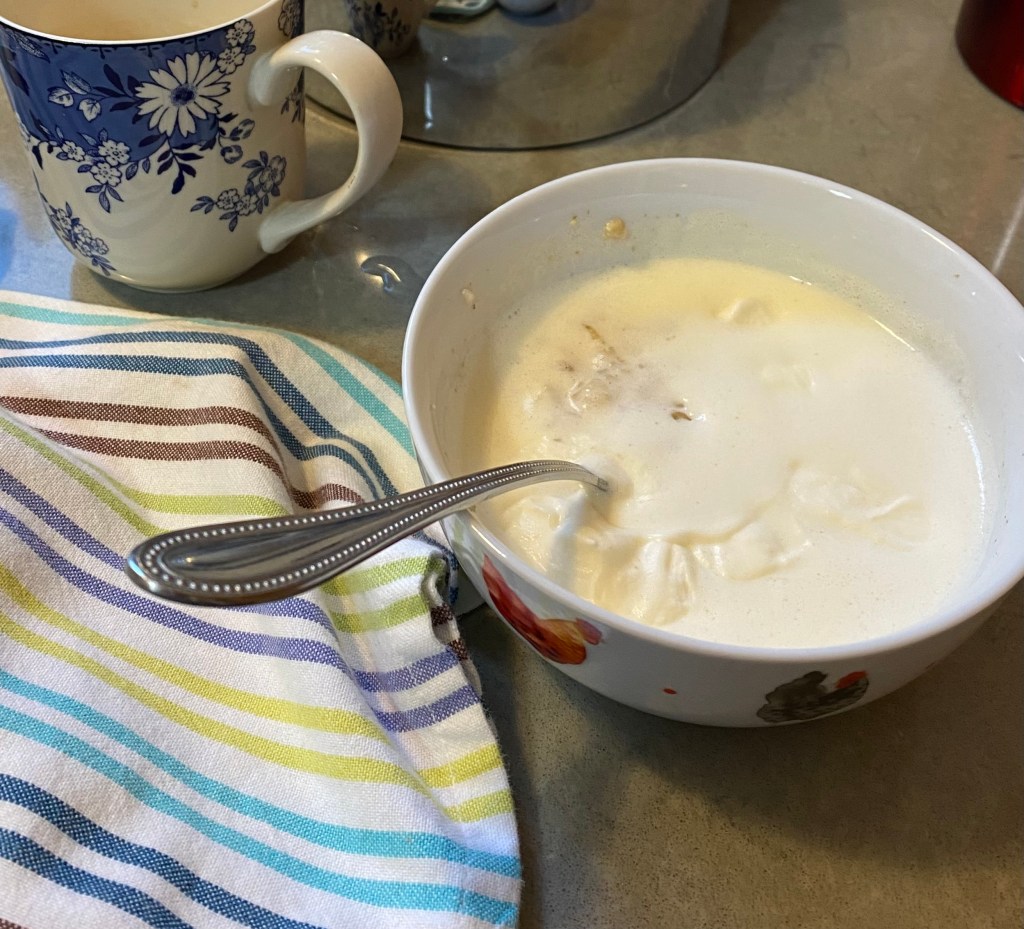
It was quite exciting to watch it working and the pot filling with freshly brewed coffee. That’s the advantage of the glass pot. When it had finished filling from the funnel in the centre (up to the little man’s moustache) I removed it from the heat and poured my first cup – adding frothy milk to the top.
It was delicious – quite strong – and, as you can see, there was enough for a second cup! I’m firing on all cylinders now.
It has been my understanding that a shrub is a small to medium sized bush, several of which together can make a shrubbery. Here is a cranberry shrub:
This is also, apparently, a cranberry shrub:
When the bottles cool, the labels can be affixed.
To the right, are two bottles of grape shrub. Which grows on a vine rather than on a shrub.
Looking for ways to use my grapes and cranberries, I came across recipes for ‘shrub’ – a kind of cordial made with sugar and vinegar or alcohol (I chose vinegar) and which will keep in the fridge for several months. The making of it uses lots of utensils and pots for a rather small result. After steeping overnight, the cooked fruit is sieved which requires patient effort. It looks like the kind of drink which might be useful in winter as an immunity boost, diluted and served hot or cold.
When I finished reading this book I began to think of what I would read next, but I’m haunted by this memoir by Archie Roach, one of the ‘stolen generation’. He has written his story with style, grace and honesty. I was continually reminded of Nelson Mandela who was miraculously upbeat and positive despite the hardships he had endured.
That the state would simply swoop in and round up children and take them away to orphanages and then foster homes seems incredible. And this was my generation. Archie was born in 1956. His account shows that this resulted in not better, but far worse outcomes for the children. I was continually shocked to read of what happened to them and particularly by the fact the indigenous Australians and Torres Strait Islanders were not counted in the census until 1971.
Perhaps it was Archie’s music which saved him, but also the fact that he did find his brothers and sisters and discovered where he had come from and was able to make some re-connections – but with the burden of grief and anger and a realisation that injustices continue. It is amazing that he continued to stress inclusion and love for everyone in his counselling work, his writing and his music.
I was able to find his music online, and listened to it as I read the last few chapters. His voice is as clear and warm as the narration of the book, the chapters of which begin with lyrics of his songs. It was a relief that so many musicians and producers supported him to record and release his music (Tim Finn is mentioned), and that it led to his touring world-wide, making connections with many musicians and particularly with First Nations people (a term which came to be applied to indigenous Australians too) in North America who shared similar stories to his own.
Key to Roach’s recovery was his wife Ruby Hunter who has also recorded albums of her own music. She was also a stolen child, able to reconnect with her people.
More online research told me that Archie had died in July 2022, just three years after the book was published. He was 66 years old. Ruby died in her 50s. Their hard lives did not set them up for longevity. There were news interviews with people who knew them following Roach’s death – presented by slick white news presenters. There was a memorial to them both unveiled, with white officials congratulating each other, and First Nation Australians on the fringes. With the failure of the ‘Yes’ vote in 2023, I remain somewhat cynical about the sincerity of the gesture.
Tonight is classical music night on the Arts channel. I notice how two dimensional both the sight and sound of it are compared to the New Zealand Symphony Orchestra concert I went to on Saturday. From my gallery seat to the side I could look down onto the stage and follow the music closely as it moved from section to section: percussion and drumming, woodwind, brass, piano, organ, and strings – including two harps. Gemma New, the conductor, is slight yet her graceful, balletic movements encompassed the whole orchestra with powerful effect.
The concert was stirring and fascinating from beginning to end. The Gareth Farr piece was rousing at the start, particularly as it featured the dramatic percussion and drumming for which he is well known. That was followed by the world premier of a work featuring a guest flautist and by a composer who came up from the audience to take a bow. The final work was Mussorgsky’s Pictures at an Exhibition, a great audience pleaser and everyone – including me, was buzzing at the end. I was moved to tears, overwhelmed by the mightiness of it all; of talented individual people making powerful, affecting music together, literally in concert. It was the ‘real thing’.
I suspect the huge energy emanating from the orchestra has helped sustain my high energy levels all week.
Finally, I found a space in my busy (!) afternoons to begin watercolour painting again. I’m pretty crap at it, but found that the greatest benefit was how calming it is to do, and time passes very quickly as I dabble away. My brush strokes are too heavy, the colours too dark and the book makes it look too easy! Yet it is enjoyable, almost meditative.
The carrots turned out quite well, probably because I drew the shapes first. Maybe I’m just better at colouring in. The cloud is a blob and the eucalyptus lacks the delicacy of the illustration in the book, to put it mildly. Perhaps drawing the lines first would be a good idea. I noticed that Quentin Blake does that with his illustrations for the BFG, sketching first, then applying a wash of watercolour. I did a funny wee sketch on the beach this week in which the proportions of the Port Hills are all wrong and the edge of the sea just looks weird. I quite like the little figure of the dog walker though, even if he looks as if he’s wearing an aqualung and the dog looks kind of pig-like.
Today’s efforts are similarly mixed. I gave up on trying to create the delicate petals of flowers but had greater success with a bunny and a lemon, both using previously sketched outlines. Colouring in may be the way to go!
It’s strange to consider that being busy is not helping my energy levels! When I was teaching, it was important to have ‘meaningful teaching moments’ rather than just keeping students occupied with ‘busy work’. I’ve realised that I do a lot of busy work because I am procrastinating.
Lisa O’Neill (see previous post) calls it ‘procrastination paralysis’ and writes: “Reading this book might be changing your life, but is there something you have been putting off? A phone call? A small job? PUT THE BOOK DOWN AND GO DO IT!”
A friend of O’Neill termed the phrase ‘actionator’ to describe Lisa, who gives strategies for overcoming procrastination and quotes Benjamin Franklin who said, ‘Failing to plan is planning to fail’.
This morning – unplanned – I pruned the grapevine to reveal squillions of grapes in various stages of ripeness. But was this just busy work? I haven’t got to the watercolour painting yet, and there is more on my mental list…
Sometimes energy can seem elusive. Where’s it gone? Where does it come from? I’m not into self-help books as a rule, but this particular book seemed to do the trick: I’ve been feeling energised for the last few days – although maybe I feel it seeping away a bit now…
I have posed the photos of the front and back covers of the book on my watercolour gear which has been cluttering up my desk for days, because I’m hoping to gather up the energy to restart that hobby. Oops! ‘Cluttering up’ probably gives negative, energy-draining vibes to that hope.
Anyway, I enjoyed the book very much. It was well-organised, straight-talking, funny, and made a lot of sense: it has common sense, is sensible, and simply made sense. It helped that the author is a kiwi, which perhaps accounts for her straight-talking.
A major plus for this book is that it is supportive and not critical. It acknowledges the things which drain our energy and is helpful and comforting. I loved the advice to wear your favourite clothes everyday. The author is honest and open about herself: “As an opinionated, extroverted show pony, being seen and not heard and only speaking when I was spoken to took enormous effort!” That, to me, resonates with how women are expected to behave – as people pleasers. “We decide to settle for a role as a background character in other people’s stories. I am here to tell you that you are the main character. Enough of this back-seat shit!”
The book is divided into sections: Physical Energy, Emotional Energy, Mental Energy and Spiritual Energy. In the Emotional Energy section O’Neill writes about people who can drain our energy. She calls them ‘contaminators’ as opposed to people who give us energy, who she calls ‘contributors’. I’ve often felt a bit guilty that there are friendships I haven’t maintained or when I just can’t warm to someone. This book analyses why that might be so. That is helpful.
In Mental Energy, the author acknowledges that everyone is different, even neurodiverse. “Getting your head to work for you is one of the best things you can do. You need to start with awareness. What are you like? Are you negative? Impulsive? Intense? Work out what you are like, and then you have two choices: own it or change it. What you think, you become, and what you feel, you attract.”
O’Neill uses the hilarious image of our thoughts as goldfish. “…they swim in one ear, do a lap and swim out the other. Sometimes they want to continually do laps!” That made me laugh out loud and want to hold on to that image. Although some things in the book are not my thing (diet supplements, chakras) there’s a lot in it I want to remember and refer to again. I might have to buy a copy when I return this one to the library. I found it on the Recent Returns shelves – maybe another lucky person will find it that way too.
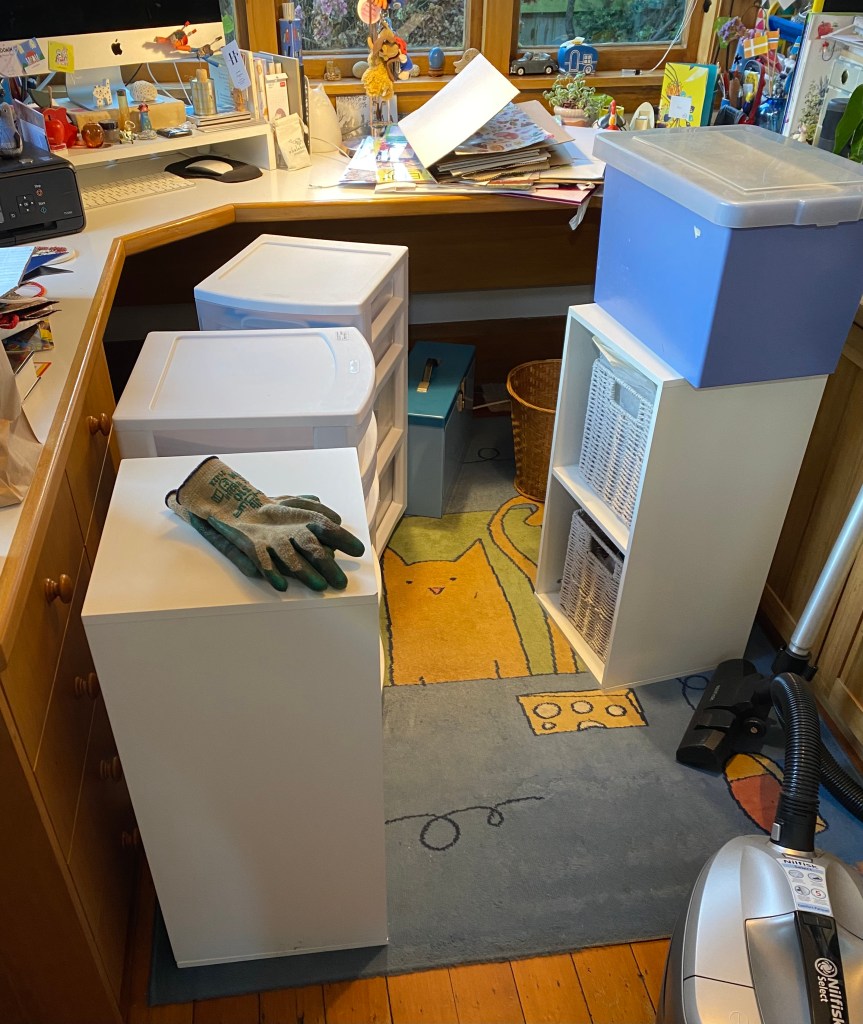
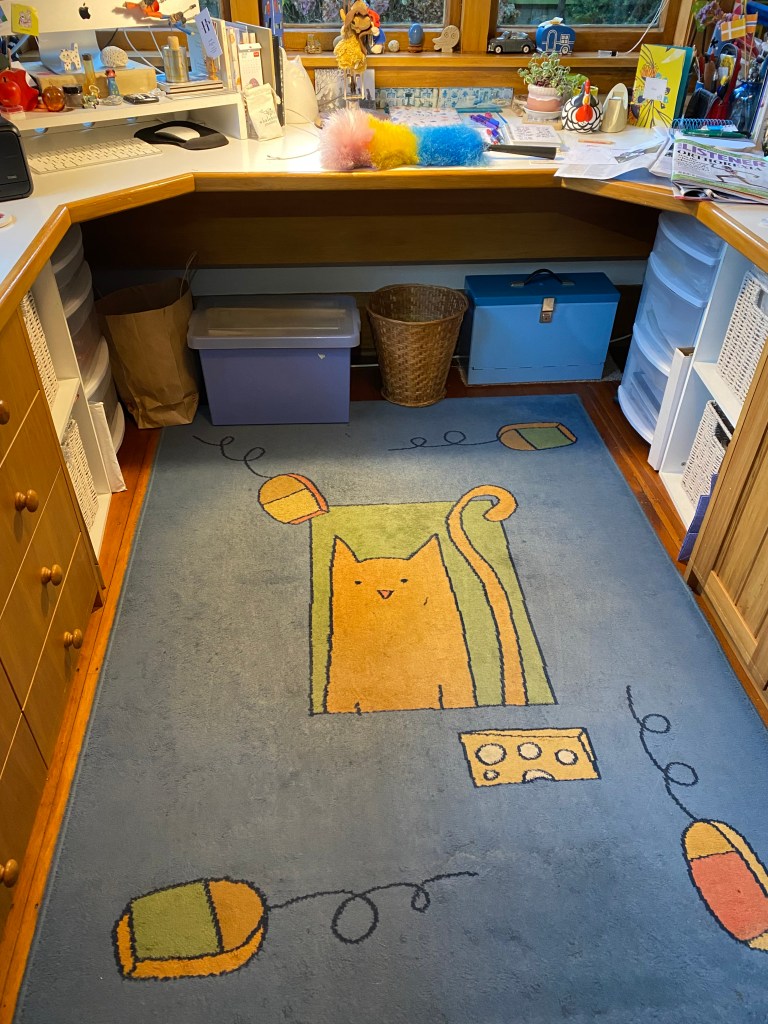
I was in a frenzy of activity today having discovered weevils in a new, unopened packet of wholemeal flour. Closer investigation found them in the bran and the plain flour – and an unopened bag of sugar. It’s not a good feeling to throw food out, but not a good feeling to pretend the bugs aren’t there and use the food anyway! Particularly if you’ve researched the bugs and seen the pictures – magnified a million times. Yuck. At least the food could go in the compost. Then I lifted out the flour bins, cleaned them and dried them in the sun, vacuumed and disinfected the whole space behind, sprayed for insects, put down diatomaceous earth for good measure, and went shopping for airtight containers – and supplies to fill them.
What lurks within?Clean bins and airtight containers.
So much for being in the time of the sixth mass extinction. I’ve had infestations of ants, passion vine hoppers and now weevils! The insect world appears to be thriving.
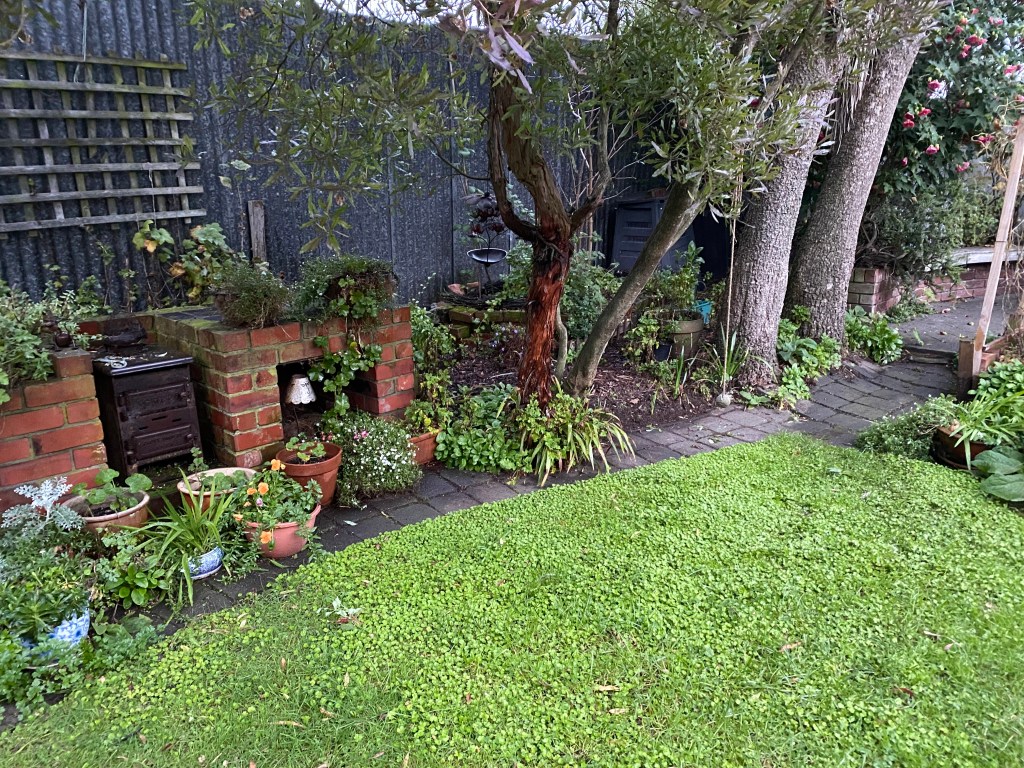
Laissez-faire would seem to be the approach I have to gardening. Especially at the moment when summer is ending and autumn beginning. Things look a bit wild. There are Japanese anemones falling about and over paths, the Cecile Brunner is overrunning its support again, the raspberry canes are looking shabby – yet producing lovely autumn fruit, the beans have finished and the leaves are yellowing, there are often toadstools, but…mushrooms? I discovered them inside the frame of the old greenhouse when I went out to pick leafy greens for a salad.
I picked three of them, leaving the fourth to do its thing, whatever that is. They look just like the ones you buy, with pale brown gills inside. Will I poison myself if I add them to a stir fry for dinner?
................... for lovers of ice cream. Your free on line magazine for sweet frozen treats. Recipes, inspiration, artisanal ideas for your delectation.