Optimism is needed when you grow your own food. I bought a pack of six ‘Moneymaker’ tomato plants when it was really too late in the season, but my garden rotation diagram suggested tomatoes were good to plant after the beans had finished and, generally, I’m optimistic. It was the last pack in the garden centre, and the stems of the plants were bent sideways. Warning signs. However, I planted them with stakes and the plants straightened up in a few days and grew quickly.
By the end of summer, there were large trusses of fruit – all green and showing only slight signs of ripening. Since then we’ve had several frosts. I’ve been picking the tomatoes which are beginning to look yellow and putting them on the kitchen window sill. Many have ripened: good to use in casseroles and soups and in the frittata I made yesterday.
Frittata is a great way to use garden produce. This one has kale, spinach and silver beet from the garden as well as sliced (formerly green) tomatoes.
The stems of the tomato plants have turned to mush almost – as I expected the tomatoes would too – after all, it’s Winter Solstice and the shortest day tomorrow. Many tomatoes were on the ground before I rescued them today and put them on the windowsill.
These tomatoes remain after I picked up the ones on the ground.
Intermittently, over the next hour or so, we began to hear little thuds. Some of the tomatoes were rolling off the windowsill onto the bench, into the sink and one made it as far as the floor. And they’re not the variety called ‘Tumbling Tom’!
I took a picture of this painting in the From Here on the Ground exhibition at the art gallery this morning. It shows the Nurses’ Home where Mum lived while training in the early 1950s. She remembers the beauty of the building with its terrazzo floors and elegant arches. More recently, we would admire it when we visited the heritage rose garden which was planted in 1950 in the foreground of this painting. Mum is sad the Nurses’ Home was demolished to make way for the hospital extension. However, she enjoyed very good care in the new part of the hospital after breaking her hip.
Sunlight aka The Nurses’ Home, Hagley Park 1938. Artist: Cecil Kelly
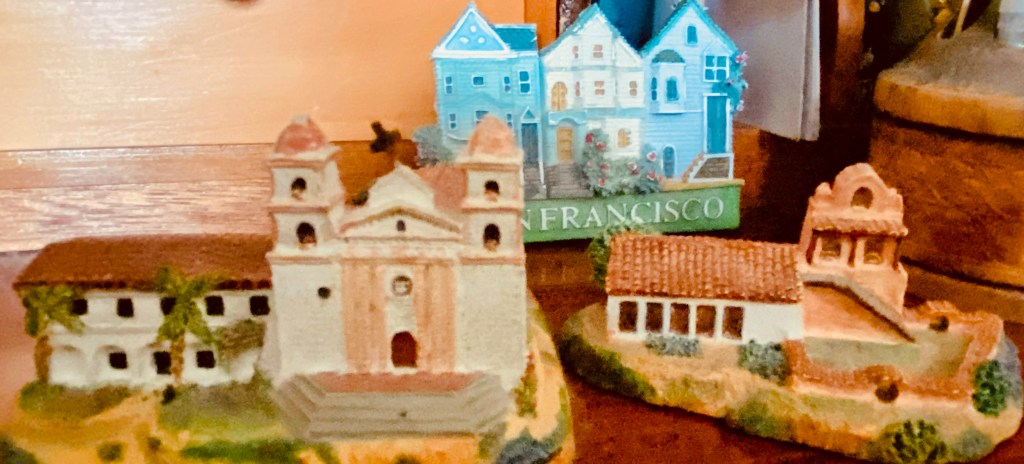
The Nurses’ Home was built in 1931 in Spanish Mission-style. Mum doesn’t remember connecting it with the buildings in Santa Barbara where she visited family in the early 2000s. She has these souvenirs.
Spanish Mission buildings in Santa Barbara are distinctive to the place, as are the ‘painted ladies’ to San Francisco.
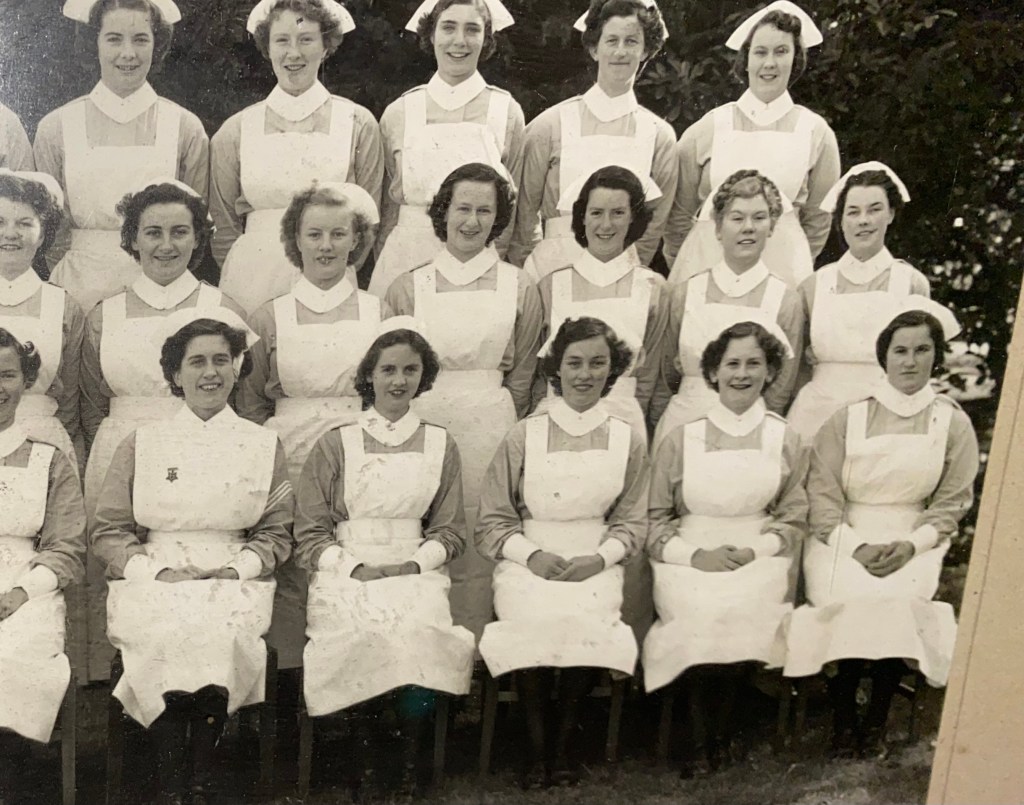
Here’s part of Mum’s year group of trainee nurses. They wore pink uniforms to indicate they were in their first year. Can you spot Nola?
Nola: third from the right in the second row with Adrienne on her right and Eleanor on her left.
Today, Mum has taken up knitting again after many years. We found some bags of wool in the back of the wardrobe and a roll-up knitting-needle holder, and here she is casting on the first row on very small needles, following a pattern in a book I found in the library for her.
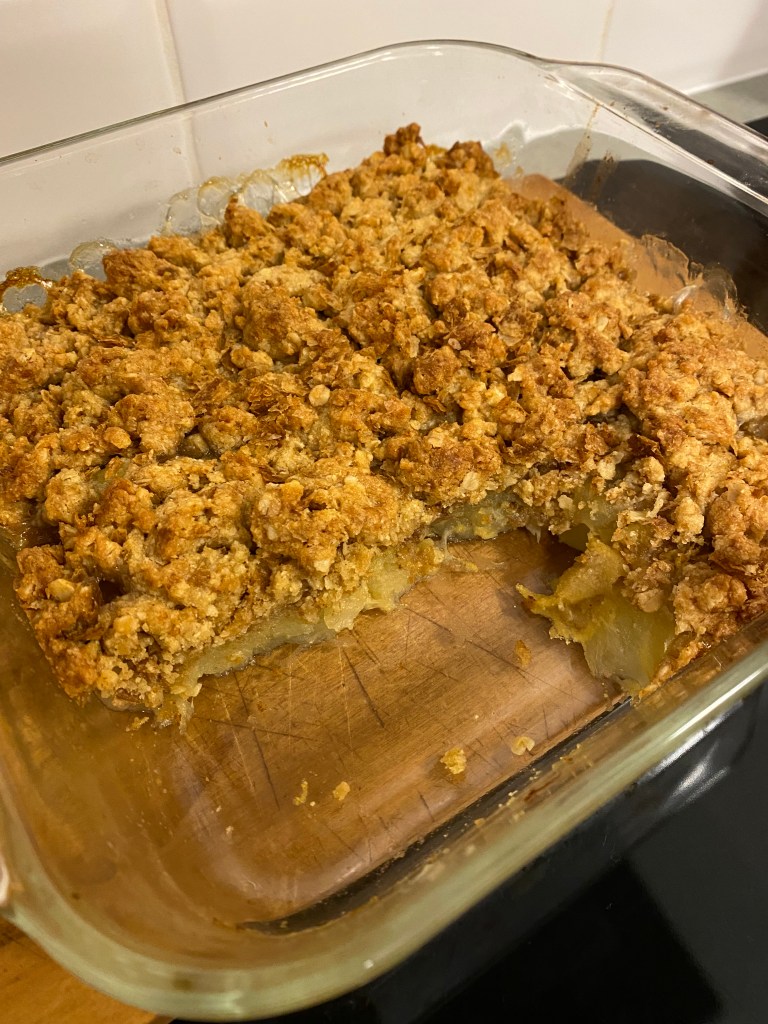
Today, I was concerned that the feijoas I had picked up from under the young feijoa tree were going to be wasted. I needed (yes, really) to make a dessert, and was planning an apple crumble when it occurred to me that the feijoas might go well with it. I googled, and before I could put even a single letter, or even a space, after ‘feijoa’ up popped a feijoa and apple crumble recipe. Can it read my mind? I wondered (one of those spooky internet moments). I guess there are simply thousands of people all over the country looking for easy ways to use their feijoas which are abundant at this time of the year. I used the first one in the list, but there were hundreds of them. I had a cup less of feijoa pulp than the recipe required, but it is delicious anyway.
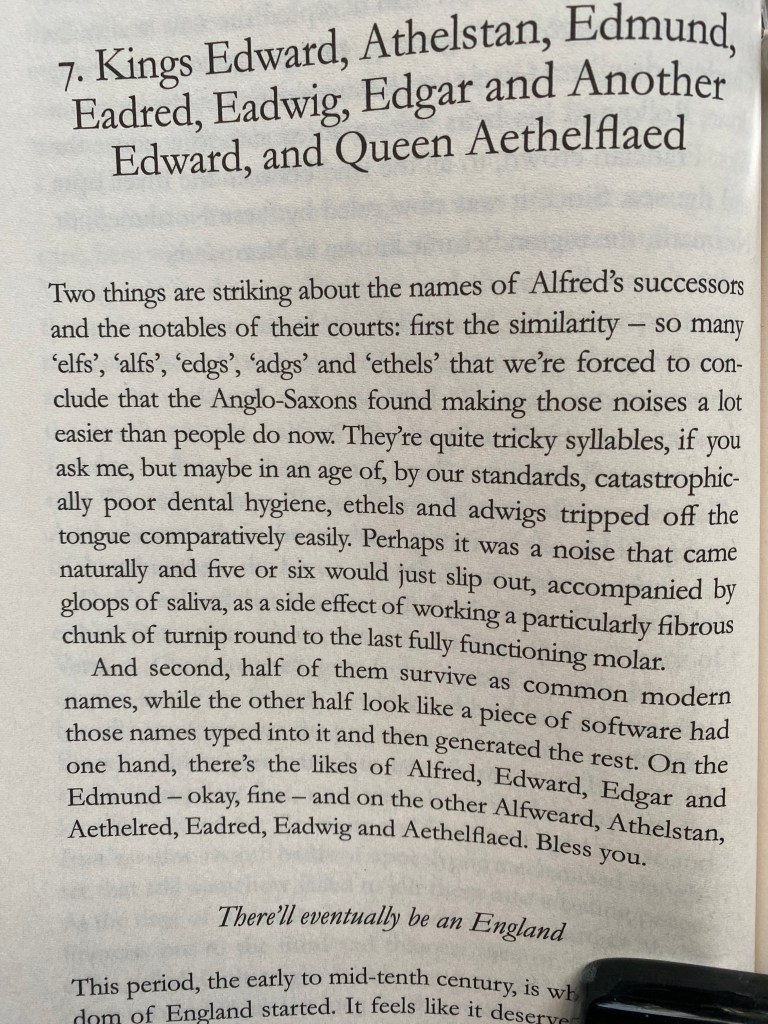
An appearance by David Mitchell to promote his book on The Graham Norton Show prompted me to order it from the library. It is proving to be an excellent complement to other history books I have been reading and the courses I am attending this term about women leaders in history. I had though Joan of Arc was the first woman to wear armour and go into battle, but it seems Aethelflaed (see fragment of notes in photo below) did that too – and, we now know that Viking women operated as warriors too – not to mention the Amazons. However, this is not the subject of this book which is about the men, mainly, who became kings by various means – not usually pleasant (either the kings or the means). And, he stresses, King Arthur was not real. He was an ideal which none of the kings lived up to, but loved to use for propaganda purposes.
Unruly is a refreshing book to read. Although David Mitchell has an academic background and a life-long interest in history, he is also a comedian with a somewhat cynical and humorous take on human behaviour, getting quite worked up about some of it, as you will know if you have seen him on QI or Would I Lie to You. There are many laugh-out-loud moments in this book.
It’s nice of him, I guess, to apologise for the lack of women coming to the forefront in history. Mainly, they are married off (at around the age of 12) to cement alliances with ‘noble’ families or the rulers of other countries. Unruly gives a fuller picture to the books I have read which focussed on women in history such as Femina, Unquiet Women and The Good Wife of Bath. He is blunt and forthright about the men who fought their way to the top, as you might expect from the clever title. Basically, most were a bunch of thugs who wreaked havoc on the lives of ordinary people in their quest for power and domination. The ‘harrying of the north’ is a case in point, where William I (the Conqueror) ‘went around slaughtering people and burning villages, crops and crop stores. The hope was that the area would no longer be able to support the king’s enemies’. This sounds sickeningly similar to the headlines in the news this morning. I really do get the sense from all this that human nature has not changed one bit. It’s kind of nice, in a perverse way, to learn that William the Conqueror eventually exploded. You’ll have fun finding out how if you read the book.
As you can see, the author is happy to refer to himself and to make parallels with modern times – a refreshing change from more ‘academic’ writing. However, like these serious tomes, it has coloured plates, an index, and a list of further reading. In the Acknowledgements he says his intention is to produce ‘a history book that aims to be funny but not spoof, irreverent but not trivial’. He has achieved that.
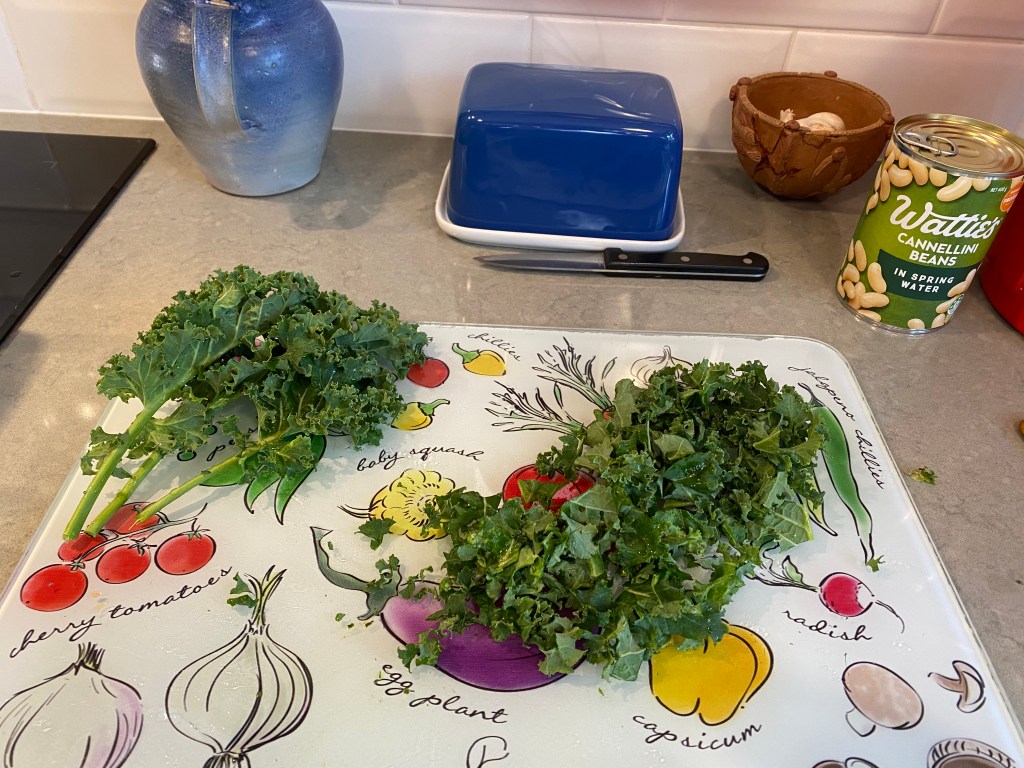
Minestrone is a favourite soup on these cold days. It’s great to use fresh local vegetables from the fruit and veg shop round the corner, and my own garden produce. The tomatoes and curly kale are from the garden. To serve this soup, I like a sprinkle of parmesan on top.
Lots of vegetables (and pasta)Curly kale fresh from my garden
On Thursday, at Foundation, I had a salad which had in it braised brussel sprouts, potato, kale, orzo and red onion, among other healthy things, and various additional options from which I chose halloumi. It was a salad variation on minestrone and a great winter choice.
People say winter begins on the first of June. To me, it feels as if it’s been winter since May. We’ve had numerous frosty mornings and have been using our log burner in the evening – and sometimes during the day – since mid-April. The washing doesn’t get completely dry on the line – except yesterday, when we had a 21C day. I found interesting explanations of the seasons in Aotearoa New Zealand here. You can take your pick of Astronomical, Meteorological, Solar or Mother Nature. The last one makes a lot of sense to me. Of course, it varies depending on where in NZ you live.
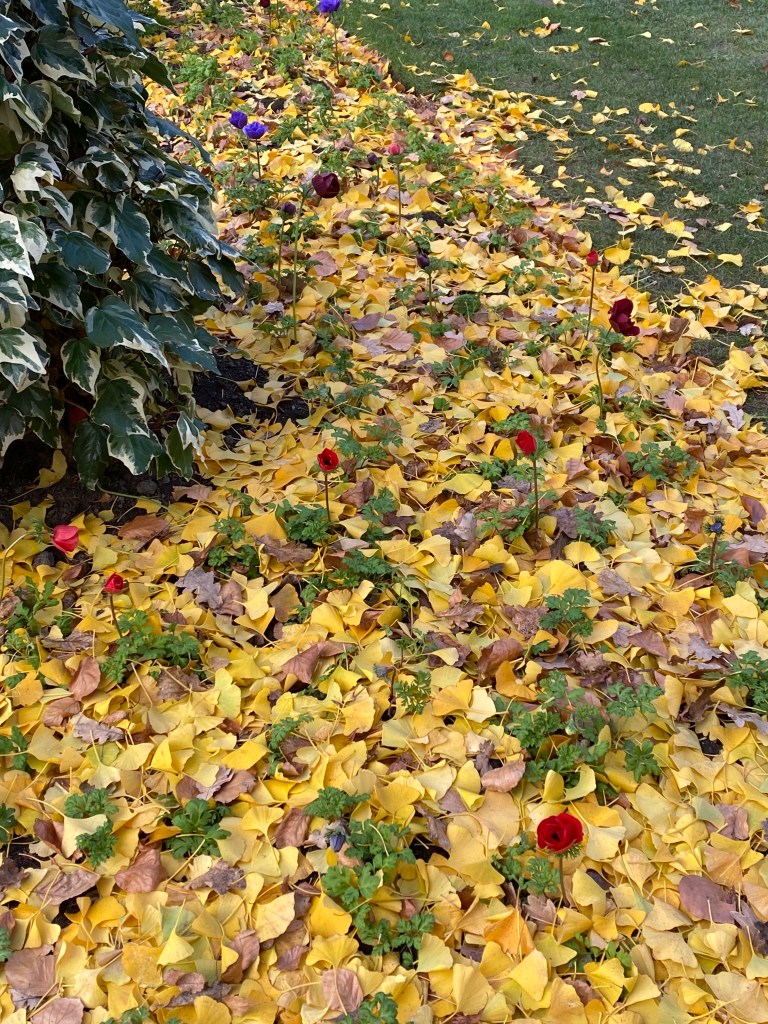
In the Botanic Gardens today I observed simultaneous fallen leaves and new growth. I can picture the seasons here like a Venn diagram with a huge overlapping of the circles in the middle.
Anemones popping up through a layer of fallen gingko leaves
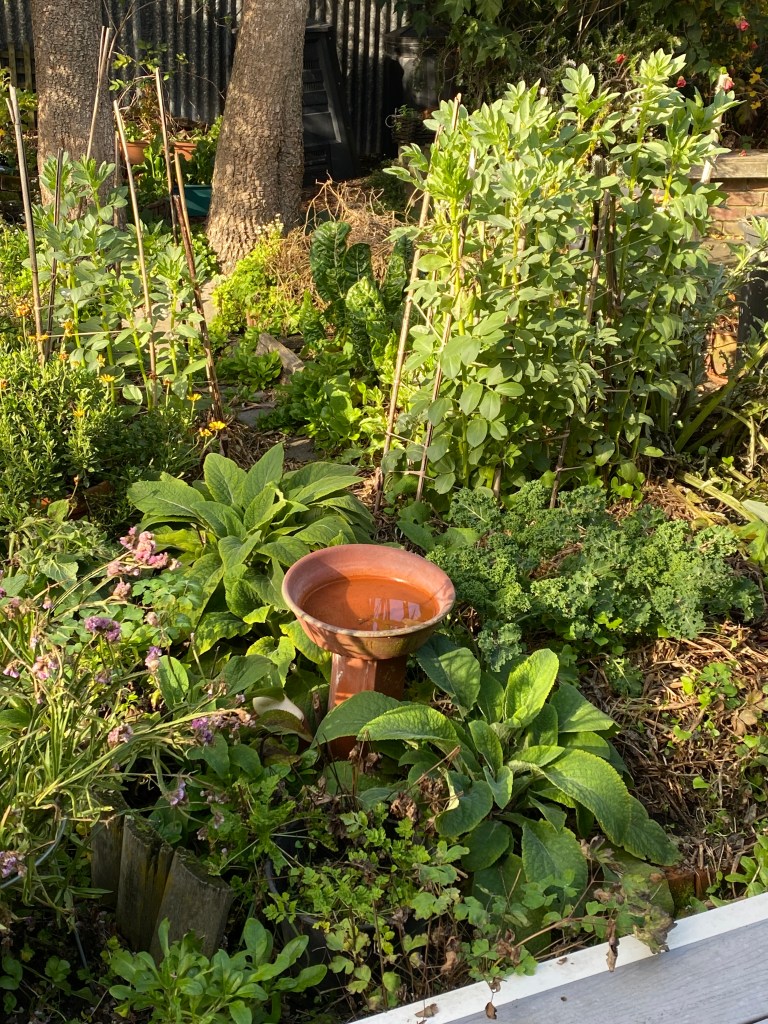
At home, just after midday, flocks of birds descended on the garden and took turns to drink and bathe in the bird bath. One blackbird hogged it for ages, while others waited – often impatiently – for their turn. It was entertaining to watch, but impossible to photograph, but here’s where they were:
I intend to change the water – Felix drinks out of it too!
I identified finches, wax eyes, a sparrow or two, one thrush, a fantail and several blackbirds. The smaller birds took occasional baths or drinks, but seemed mainly interested in the broad bean plants where I suppose they were eating greenfly or aphids.
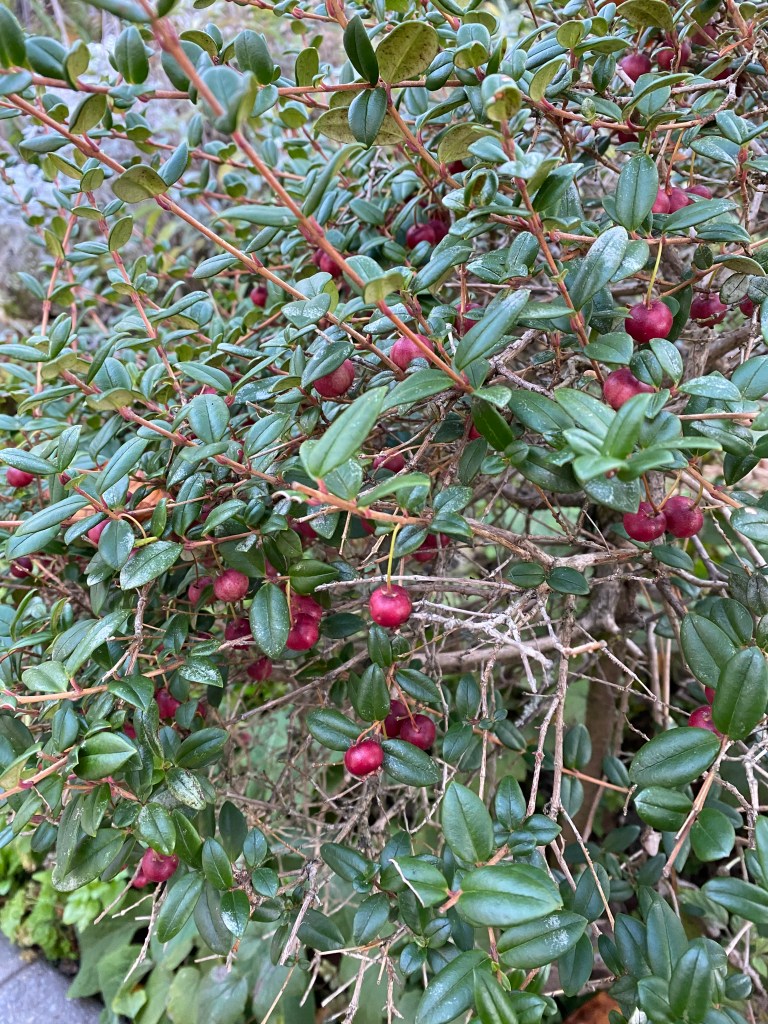
From my study window I often see birds eating the abundant myrtle berries. They seem to take it in shifts, with blackbirds eating first, then flocks of wax eyes – never at the same time. It’s good to know they have plenty to eat as the weather grows colder.
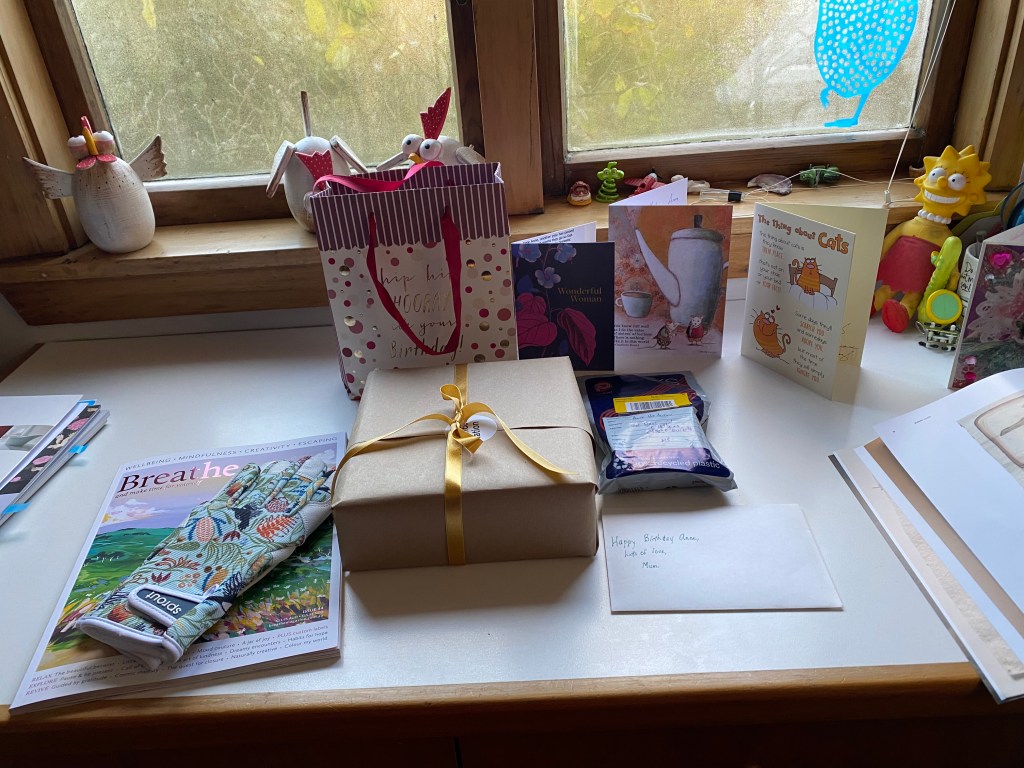
Anticipation is a great thing. Most parcels sat unopened until the day.
On this frosty, but sunny morning, parcel-opening is a delight.
A heck of a lot of men have been born on this day. The first woman on the list is Eliza Ann Gardner b. 1831, an African-American abolitionist. (We won’t mention Rudy Giuliani b. 1944.) There’s Dame Thora Hird (‘Last of the Summer Wine’ – how appropriate), Kylie Minogue, Gladys Knight (Empress of Soul – ‘Midnight Train to Georgia’ could be the tune for today), and writers Ian Fleming, Maeve Binchy and Bernadine Evaristo (Booker Prize winner and teacher. I’m currently reading a book written by one of her PhD students). Some good company here.
I am on the cusp of the next decade, like a 19 year old about to step into the 20s and leave being a teenager behind.
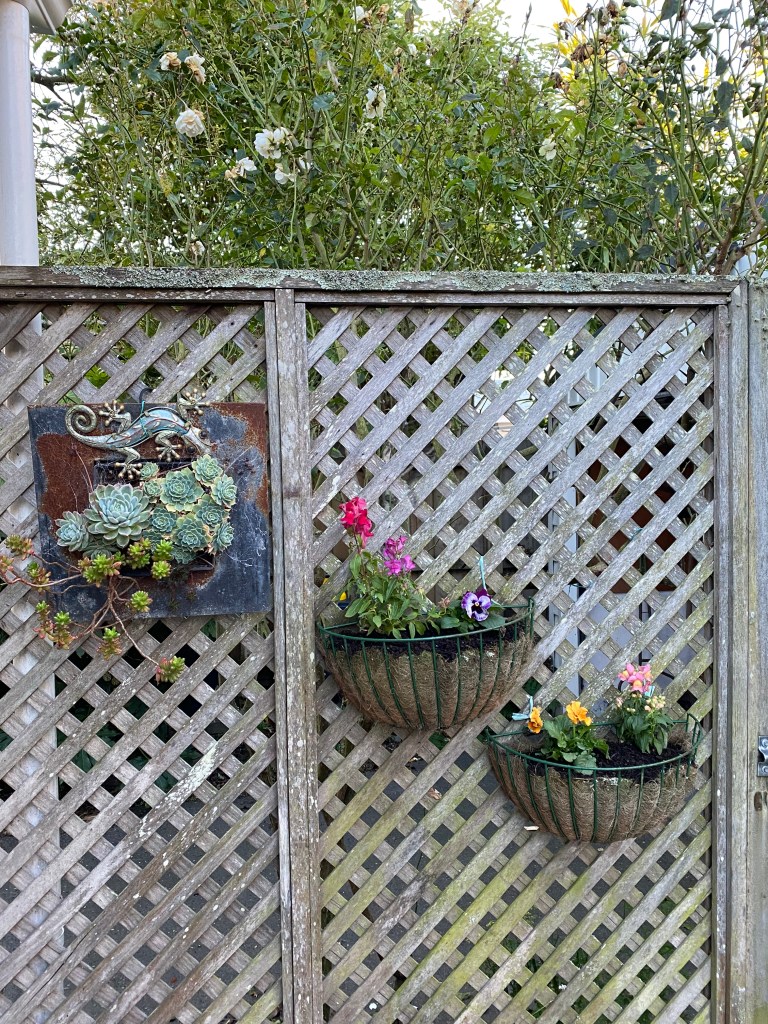
The baskets on the trellis needed refreshing to cheer us up as we look out the window and winter sets in. I chose antirrhinums (aka snapdragons) and reliable pansies. Both are frost-hardy – there’s a -2C frost forecast tonight.
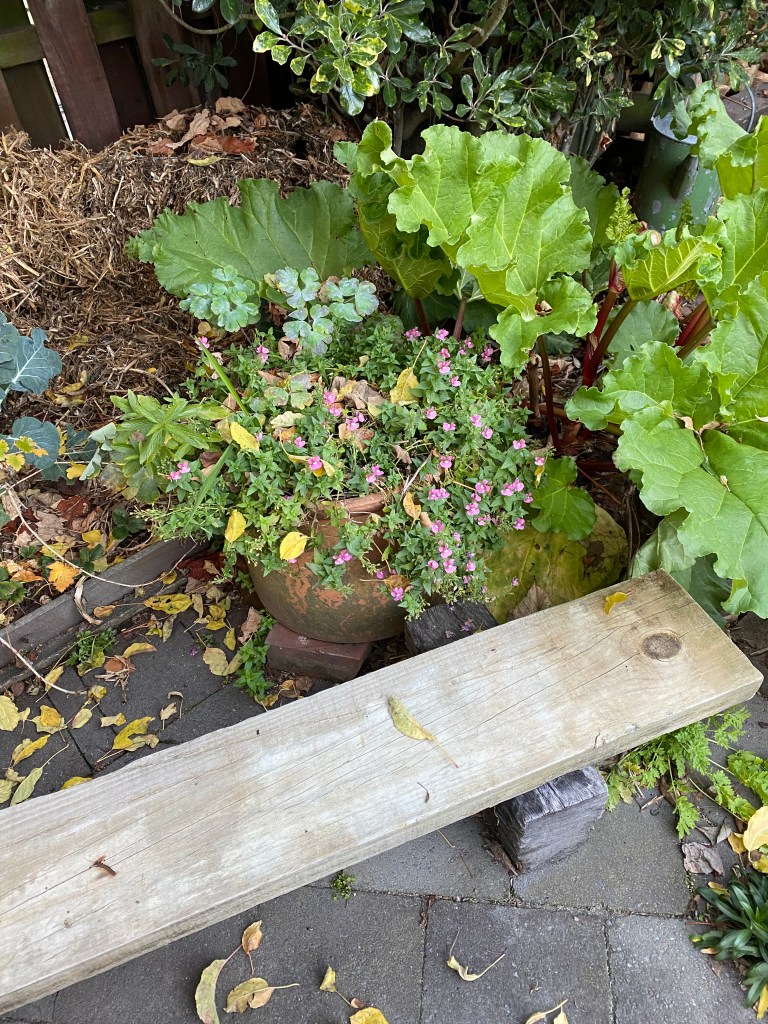
I chose a bright polyanthus (below, right) to cheer up a shady corner where I’d planted another months ago. It seems to be doing well, so I thought it might like company.
I went around the garden looking for more cheering colour and found a surprising number of fruiting or flowering plants.
Late afternoon sun on tree tops. Apples, lemons and abutilon still flowering.Nemesia flowering – and the red stalks of rhubarbBig, fat cranberriesAn abundance of berries on the NZ myrtle which the blackbirds are lovingFlowers on the fatsia japonica (aka false castor oil plant)
In the house, the fruit bowl brings colour inside. NZ persimmons, mandarins and kiwi fruit are in season and the feijoas are a surprise first harvest from my tree.
Occasionally, I comment on books which have impressed me. This one worked its way to the top of my pile of library books this week. After a few pages I thought I wouldn’t continue reading it (sometimes the inclination is to read less confronting books), but I got caught up in the story and finished it yesterday feeling more knowledgeable about Eastern Europe, specifically the Bosnian conflict, and utterly impressed by the writing, particularly the characterisation of the two protagonists, Sara and Lejla, one of whom (Sara) narrates the story. I had google maps open to follow their road trip from Mostar to Vienna.
Other books (such as Kamila Shamsie’s Best of Friends) are about women who have grown up in conflict zones, migrated and then assessed the past and their altered selves. There must be millions of women across the world with similar stories.
I think it’s the first translated book I’ve read which is translated by the author herself. She lives in Belgrade where, apparently, Serbian is the first language, but ‘everyone’ speaks English.
There are numbered chapters, but between them are square bracketed chapters which are flashbacks. Memories become increasingly significant as the story progresses and the reader pieces much of it together before the characters do, or before they admit the truth – although there’s that double thing, where the narrator as writer is fully aware. Towards the end it is evident that she is writing the story for her friend to read as a comfort or, perhaps, a cure for her torment – as well as for her own healing. The ending is a masterpiece in more ways than one, and I feel enriched for having persevered with this astounding and haunting book.
................... for lovers of ice cream. Your free on line magazine for sweet frozen treats. Recipes, inspiration, artisanal ideas for your delectation.












 Anne-O-tations