I am learning to look. I’m trying to take my time, look and engage with my immediate world more than I have been used to doing when working. Walking gives me time to observe and enjoy, and when I’m on my bike I have to watch where I’m going!
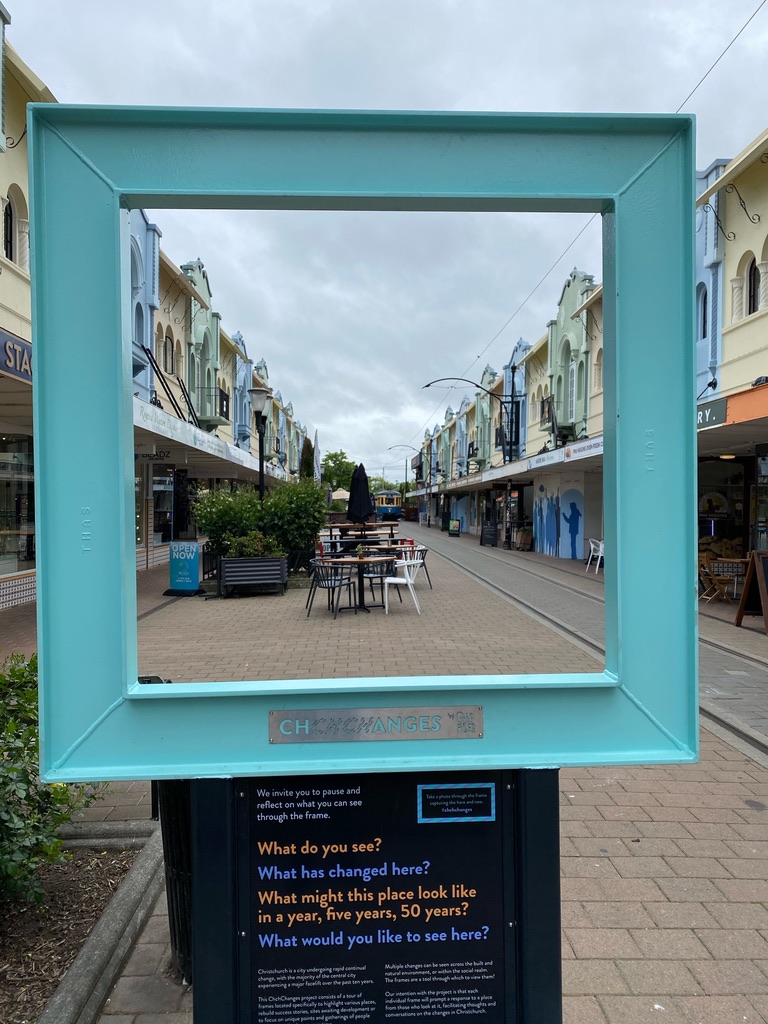
Gap Filler has put frames around the city to encourage us to look. On my way for an eye test, appropriately, I came across this frame in New Regent Street. I took a photo looking down the street to an approaching tram, and another looking out of the street across Gloucester Street to Cathedral Junction.
The first photo shows us the street pretty much as we’ve always known it, even though it has been restored and renovated. It looks deserted – but it is mid-morning, mid-week and a rather dull day. The second photo shows – well, you can see for yourself. I’ve peered at the intriguing stickers on the frame, but am none the wiser about their origin or meaning. I enjoy the enigma.
The questions below the frame ask the viewer to look closely at what has changed and to imagine what it could look like in the future. Will the car park in the second photo be developed into something…another building? A park or art space? The questions inspire the inner eye; the imagination, the vision.
Inside a temporary pedestrian walkway beside a construction site, these posters demand attention.
I’d read a newspaper article that morning about some members of Extinction Rebellion who were proud of their convictions for trespassing on an oil rig. This global organisation is an interesting one to watch, or even join. Their poster art is powerful.
On the way home my eye was caught by these brilliant orange tulips foregrounding established trees in their fresh spring green. I like to consider the messages about how we see our collective selves in this varied mix: the design on the lawn edging on the left, the Mana Motuhake waka in the centre, the two fountains and the red telephone box.
Victoria Square
I had been worried that my vision was blurry, but the eye test revealed there is little change in either distance or close vision and that my left eye has even improved, so new lenses are not required. I’ll clean my glasses more often and enjoy the view.
A while ago, during the quiet and meditative time of the high covid alert levels, I found myself in the FreshChoice supermarket at Merivale, a ‘desirable’, ‘chic‘ suburb. I was amazed at the variety and the seductiveness of the lovely things on the shelves and decided I would return to get a ‘fix’ when I felt I needed it. Not to buy – why would I want all that stuff? Just to stand amongst it and marvel. Like a therapy session of cow-cuddling or goat yoga or sound-bathing.
The supermarket around the corner from my house has recently rebranded as FreshChoice – the same company as the old SuperValue, but a more upmarket look. The FreshChoice at Merivale, however, is at least 10 times bigger.
When I returned, my feeling for the place changed from comfort to discomfort. This time, because I was taking photographs, I looked more closely. The deception became clear. And I had a flash of insight into our ability to allow ourselves to be deceived and in denial (explaining, to some extent, why we’re in trouble in terms of our survival on the planet). Working hard to satisfy the expectations of the neighbourhood, the designers have created a high-spec farmers’ market vibe, reminiscent of indoor markets overseas (and now here too). The word ‘market’ is used and ‘grocer’ and ‘butcher’ in the signage above the various sections. The place has the feel of a theme park. Attempting to appease the shopper’s conscience about plastic, vegetables and fruit are artfully displayed in wicker baskets, yet nearby there are plastic punnets of tomatoes and strawberries. Mirrors are used to make the produce seem more abundant. And the quantity and variety is overwhelming. Do people stuff their walk-in pantries, only to throw things out when they pass the use-by date?
Confession: I did buy a couple of things, justified as gifts for a niece’s birthday.
Outside in the mall, there was a school holiday activity: cup cake decorating. I’m struggling to think of a more wasteful, tasteless item of food than a cup cake. Emphasis on appearance not substance. And so I feel I must check how I’m dressed before I venture to this part of town, even though it’s barely 15 minutes walk away. I don’t have to worry about appearances when I do my regular shop at Pak’nSave (economical on spelling and on cost). The Merivale supermarket is all about appearance. I was astounded to discover there is such a thing as collagen coffee and I felt an unexpected pang for people driven to such desperate measures.
I looked more closely at my local FreshChoice. I’ve been in hundreds of times, but just to look for the odd thing I need, not to admire the decor. Does it have a similar design to the Merivale one? It does: wicker baskets, black and white tiles and an exposed-brick wall. I couldn’t remember there being a brick wall before the supermarket was upgraded and asked the check-out operator about it. “It’s not real,” she said and pointed to a corner where a large flap of the wallpaper was peeling away.
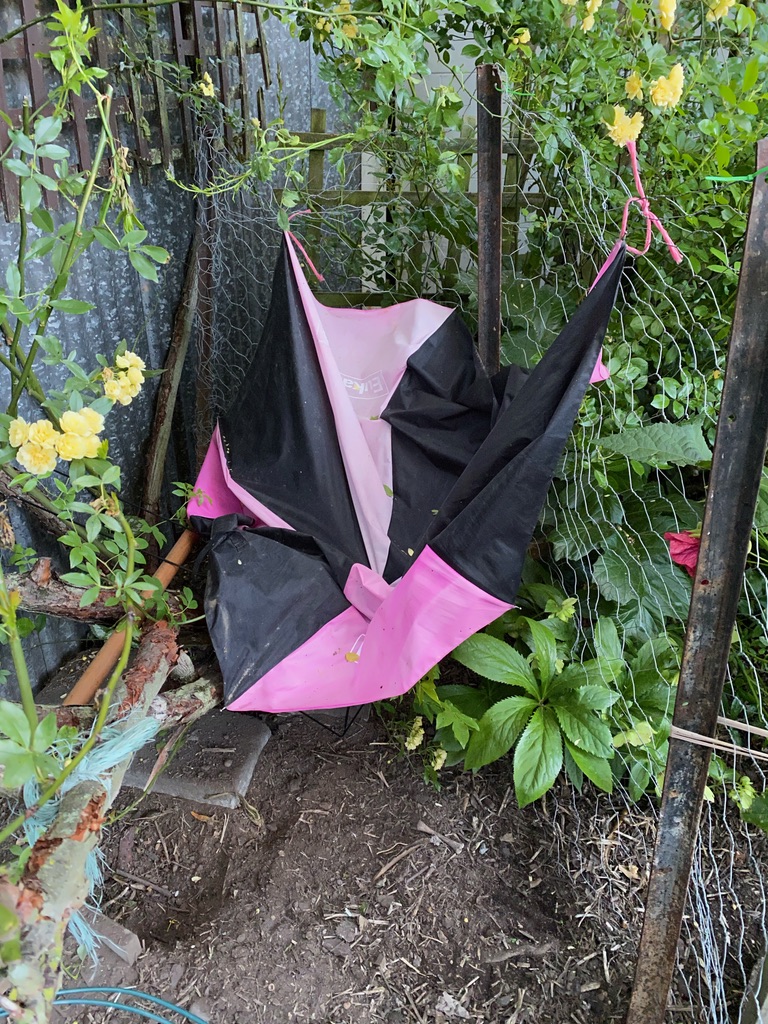
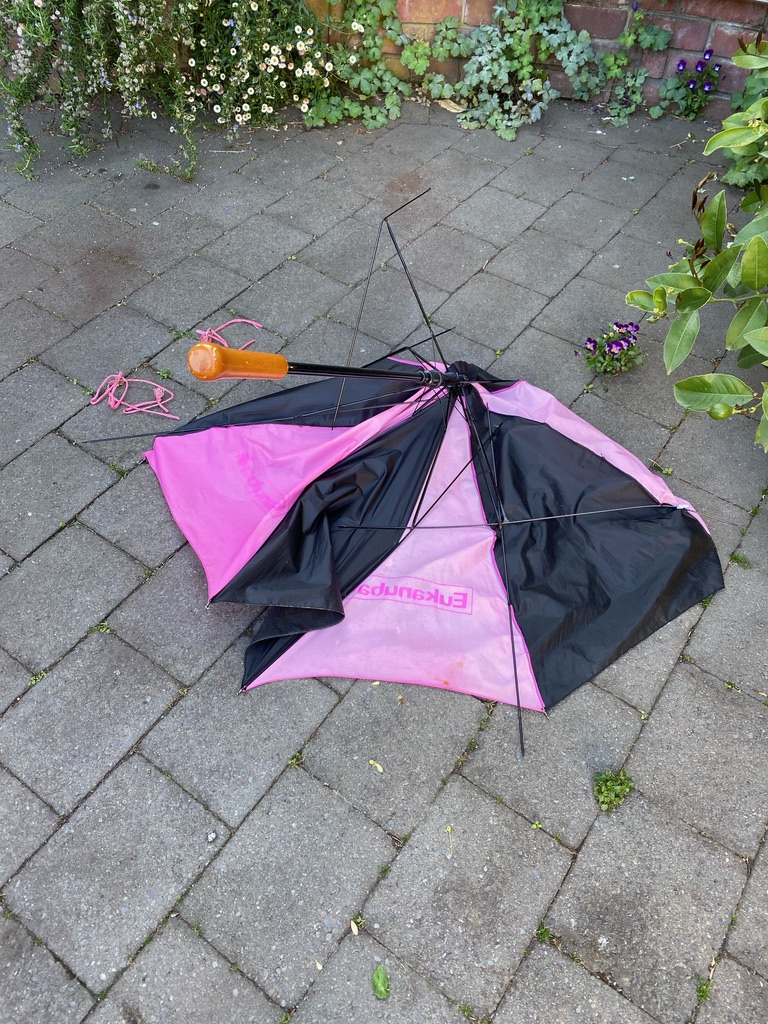
Perhaps because I picked up, on a whim, Dorothy L. Sayers’ Busman’s Honeymoon at the library the other day, the early morning sight of the chooks’ umbrella crushed in their run looked like the scene of a crime.
Crime scene: 7:17am
The chooks huddled in behind me muttering their suspicions as I examined and photographed the scene. Their perches had been rendered inaccessible by the collapse of their umbrella roof.
There had been no wind in the night nor anything else of a natural sort I could think of which would explain the catastrophe. After I’d shut the chooks in their run last evening, I did see next door’s cat skulking around as usual, but she’s a slight little thing. The umbrella was practically inverted.
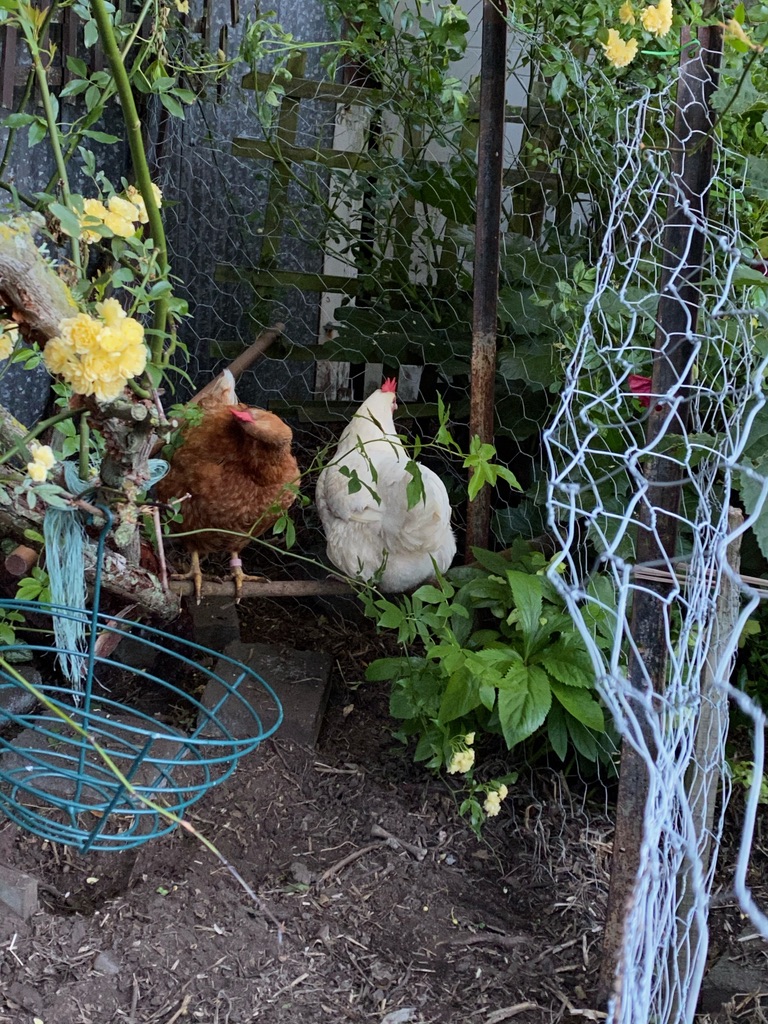
I removed the umbrella, which involved untying the many pieces of string securing it. The chooks immediately reclaimed possession of their living room.
Ownership asserted: 7:20am
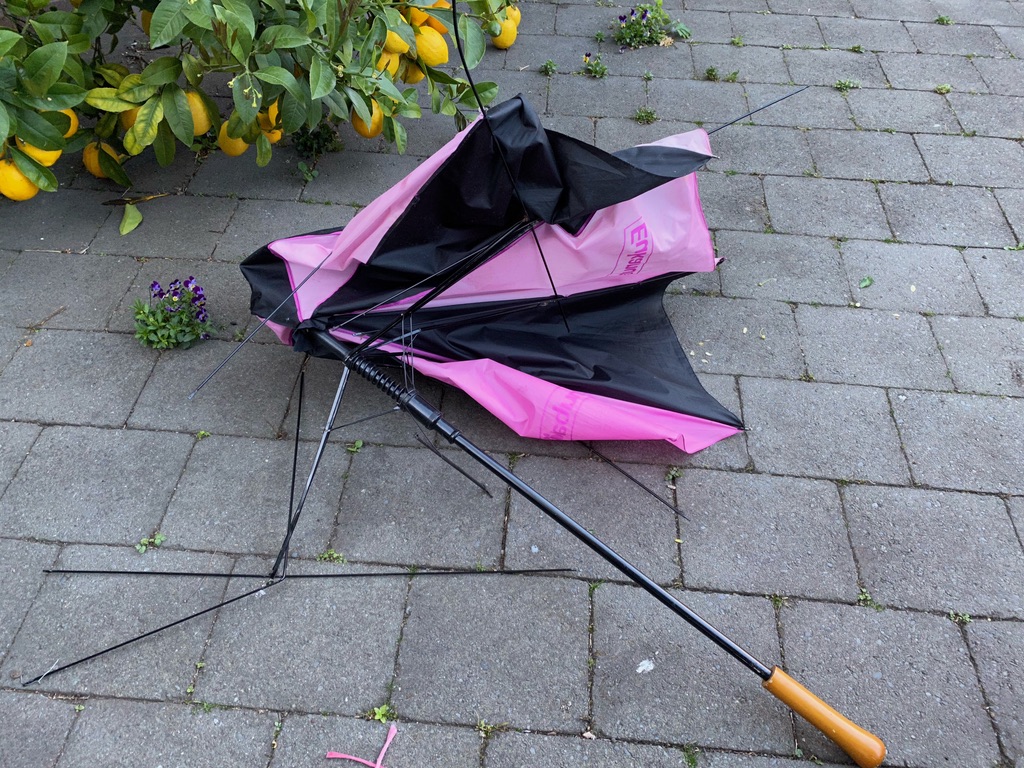
With its spokes broken and twisted, whichever way you look at it, the umbrella is past help.
I wouldn’t make a detective – I completely forgot to look for footprints – or paw prints – in the dusty soil. But, looking closely at the photo of the crime scene I can see what looks suspiciously like a chicken bone. This will have emerged from the chooks’ recent excavations where compost had been dug in before the area was a chicken run. I quickly palm any such evidence of my carnivorous lapses (which now rarely include chicken) to conceal my crime, but I must have missed this one. Is it a clue? Was it an inside job?
Scarier thought: That’s pretty much the spot where my cat Skipper was buried a few years ago… Should my inspiration be further from the diverting Dorothy L. Sayers and closer to the frightening Edgar Allen Poe?
It was with wonder and excitement that I realised I was taking from my letterbox a fresh, new copy of New Zealand Listener. Suddenly it was as if the mad, crazy world had righted itself. Today, the next issue arrived and it is beginning to feel real.
The magazine is as substantial as ever, with familiar columnists giving all manner of perspectives and global updates, in-depth features, quips and quotes, caption competition, cartoons, extensive reviews, and my favourite back page about two journalists who have given up the city for the ‘good life’. Like dessert, that’s the article I save for last.
It was a blow when the news came early this year that Bauer Media, which owned the magazine, was to stop publishing it – along with a number of other magazines which were part of its stable. Usually I pass my copies on to a friend, but she accepted my reasoning when I explained I wanted to hold on to the last few copies in case they were the last ever!
I pined and wondered what was happening to the staff, and particularly to my rural pair. Then news came that the magazine had been bought by another media company and that the former editor was reinstated and gathering back her staff. It seems they are just fine at ‘Lush Places’ and my rural pair’s first column ended with the birth of a lamb which they and their neighbours welcomed to the world. The column ended simply, “Welcome back to ours”.
We get lots of birds in the garden, particularly since we’ve had the bird feeder. Blackbirds, sparrows, chaffinches and wax-eyes look out for the hens’ food too, coming down for wheat and other treats on the lawn. The chooks don’t seem bothered and they all happily peck away together – although observing a kind of social distancing. Blackbirds and sparrows drink and have baths in the water trough. Some venture into the garage at times where the hens’ food dishes are put to discourage scavenging, and the chooks don’t turn a feather. However, when seagulls fly overhead the hens go still and tilt their heads upward, necks extended, on alert.
Perhaps the number of birds can be explained by the fact that spring is the season for lots of birds to be about. It’s hard to say, since I was away at work during the day last year – and we didn’t have chooks then. And we no longer have either a cat or a dog to make the birds nervous.
A couple of ducks landed on the roof with a huge thump a couple of weeks ago. One flew down onto the lawn and was quickly seen off by a very indignant Popcorn who fluffed herself up and raced at it at full speed.
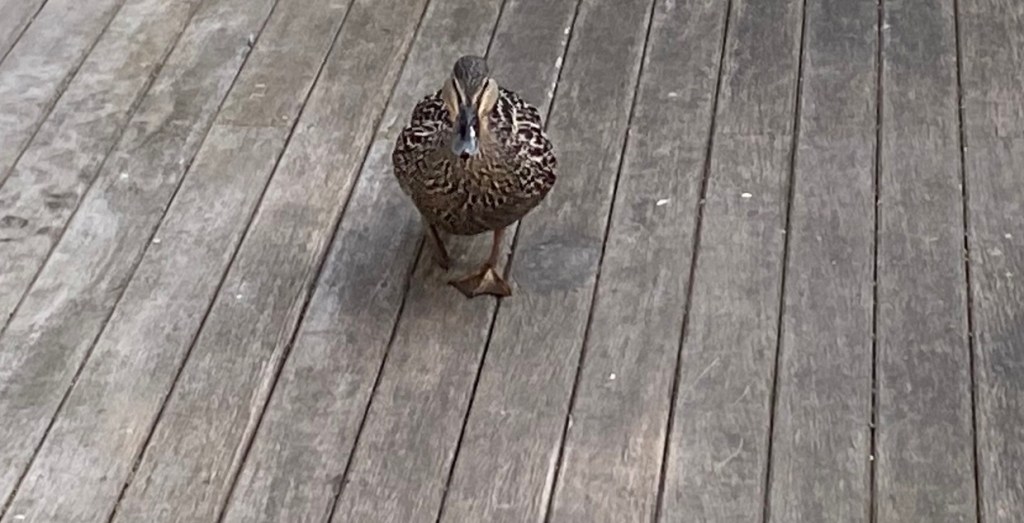
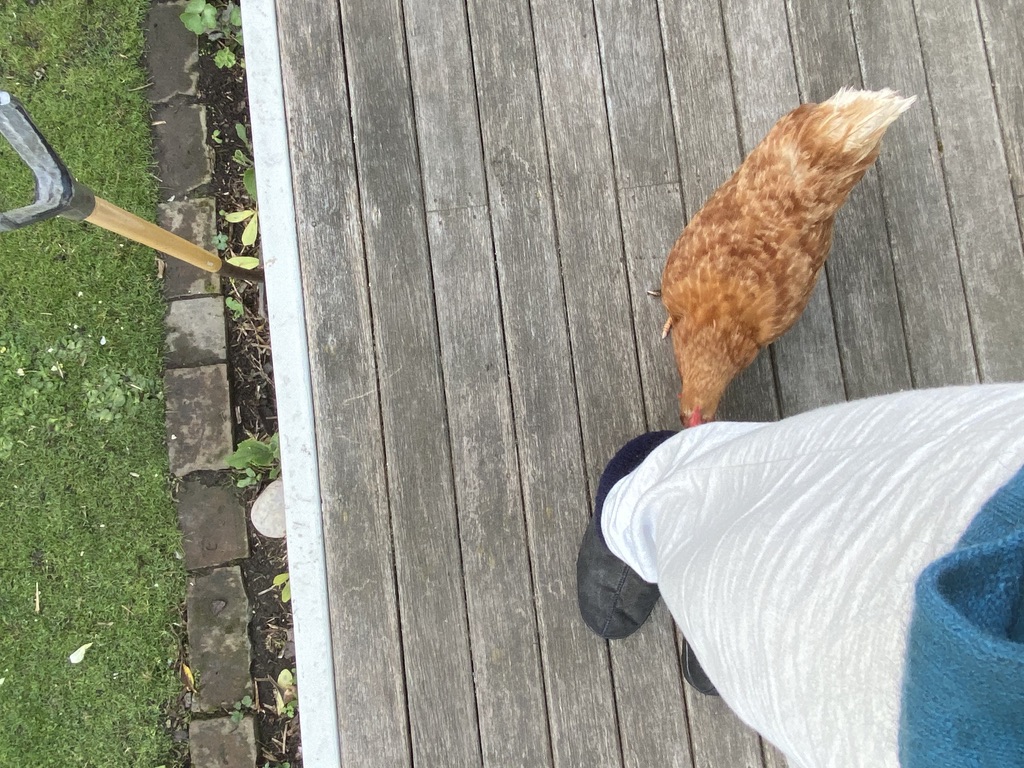
This morning, a female mallard was on the lawn. She had attractive white scallop shapes on her brown feathers. Dora and Popcorn seemed unperturbed. However, when she walked along the deck, Dora hid behind me, pecking at the sheepskin on my slippers as if urging me to do something about this outrage. (This is all anthropomorphic interpretation, of course.)
The duck came closer.
Dora gave up trying to get me to do something, and advanced towards her, at which the duck turned and walked back along the deck, then down onto the lawn.
I tried a bit of clapping and shooing, half-heartedly, with no effect. It’s not easy to be taken seriously when you’re wearing pyjamas and fluffy slippers. (Or to take early morning photos without the phone cover getting in the way).
Popcorn seemed to be ignoring her.
Duck and Popcorn observing social distancing.
I began to think that they had developed a tolerance for all the birds who visit, including ducks. However, later I saw from inside the house that the duck had taken things a bit far by going towards a favourite part of the garden and both hens rushed it at once. The duck flew clumsily up, turned and landed on the garage roof where she walked up and down briefly before disappearing over the roof tops.
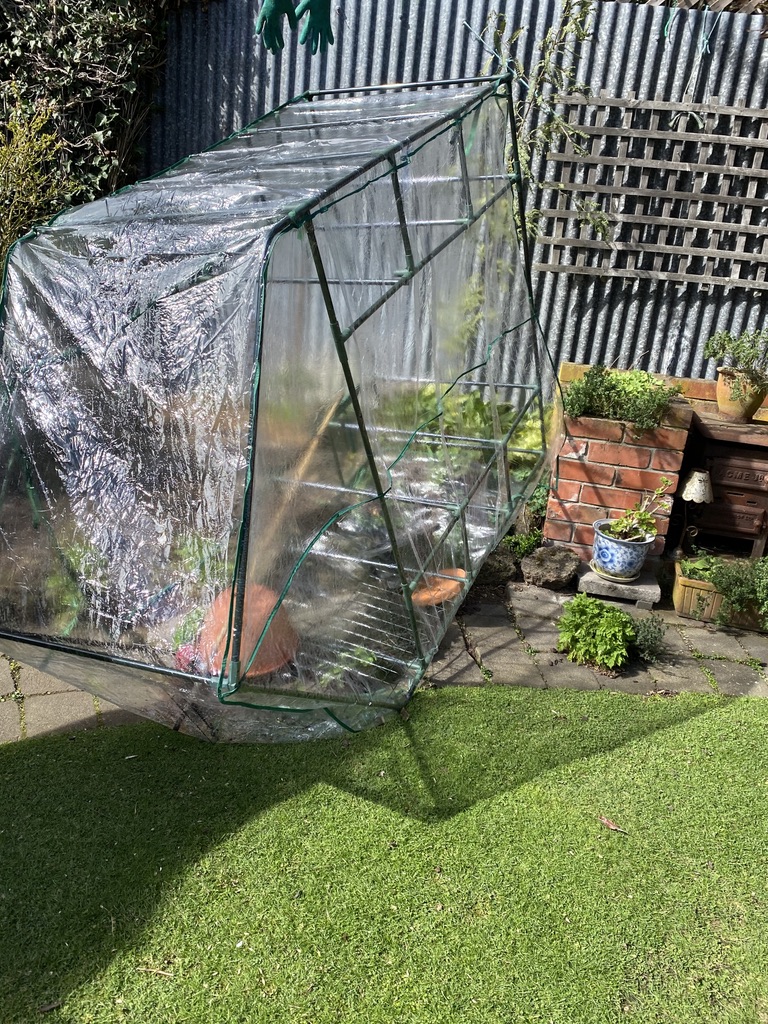
The nor’wester wasn’t quite the cyclone bearing down on Miami, but it toppled the greenhouse. And it was enough to put the wind up Dora who rushed up behind me and, quite unprovoked, pecked me on the leg.
Those spooky looking hands at the top of the photo are my gardening gloves hanging on the line. They look for all the world like manifestations of the wind giving the glasshouse a casual push.
Fortunately, the tomato plants are fine. The seedlings are a bit battered but okay. The basil was fine too, until it got the second fright of its young life when Dora rushed in like a robber’s dog.
It must have been quite a sight: me struggling against the wind to put the inflating greenhouse up, reinserting the piping where it had popped out of its sockets, rescuing upturned plants, and fending off the chooks at the same time.
Once again it’s upright – now inelegantly anchored with heavy paving stones (on newspaper so they don’t damage the plastic or the piping) and logs. Then, because the wind was catching the top of the structure I tied it to the fence. The knot is in the doorway so I can undo it easily. There was potting mix on the walls which I hosed off. Finally, I re-sowed the salad-mix lettuces.
Knot so good. The crazy stick-figure knot reminds me to improve my rope-tying technique. I have a book: Knots – An Illustrated Practical Guide to the Essential Knot Types and their Uses.
And the wind has died away, as if there is no more fun to be had.
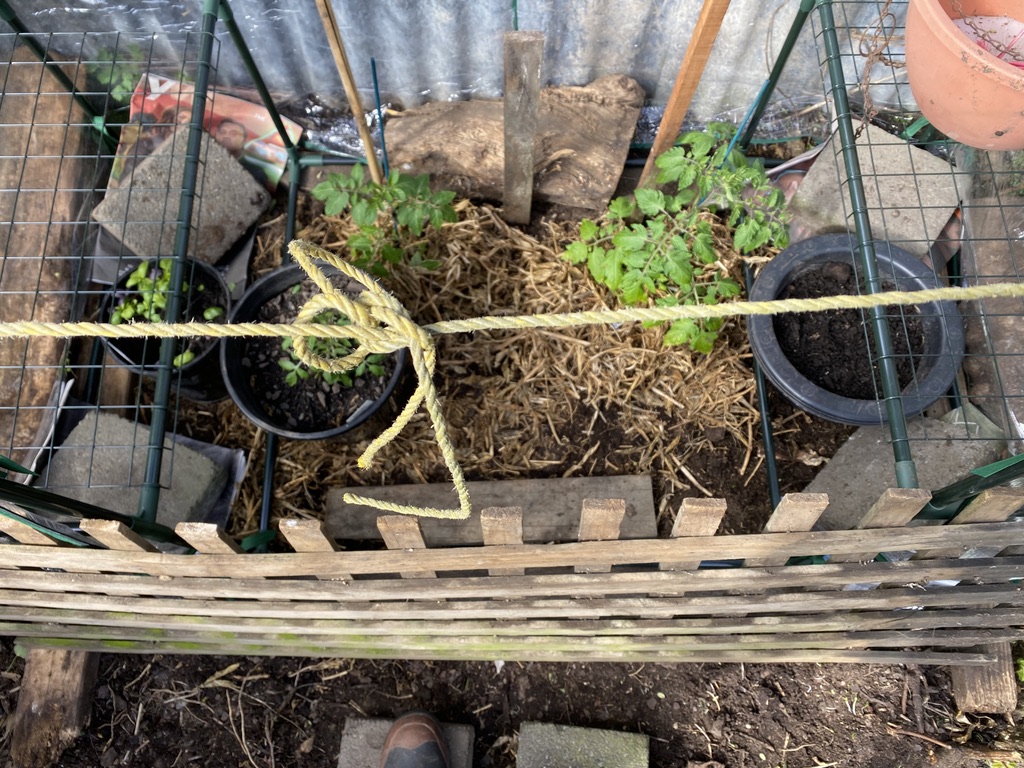
The next day, having ascertained that the greenhouse could be viable, I bought plants which I normally wouldn’t purchase for at least another month. Here is the greenhouse, complete with cover, and with two tomato plants in the ground. I have to wait a little longer for the “lunch-box” pepper plants I prefer to be available.
In pots on either side I’ve planted a “tumbling tom” tomato with which I have had success before, and basil. There is also a pot in which I sowed salad-mix seeds. Two containers of seedlings – sweet peas and lobelia – are safe on another shelf ready for planting outside. The terracotta-coloured pot has a chain attached and I’m considering planting something edible in this pot and hanging it from the ridge pole to make use of the upper space.
We had a frost the morning after I planted, so I was pleased to see that the plants seemed unaffected by the cold outside.
To take this photo, I had to wait for the condensation to clear. It was warm inside the greenhouse. When the sun is on it, I unzip the flap and put the piece of trellis (leaning on the left) lengthwise across the doorway to keep the hens out. If it is warm enough and the moisture on the plastic has evaporated, I roll up the door and secure it with the ties.
“Northwesterlies, gusty at times” are forecast. The greenhouse, although nestled into the fence, is not secured – so fingers crossed it stands its ground.
Spring is here and I’m keen to get more plants in. Tomatoes and peppers would be good – but it’s still too early. Unless you have a green house.
I have a small garden, but it occurred to me that I could fit a tiny green house in a sunny spot by the back fence.
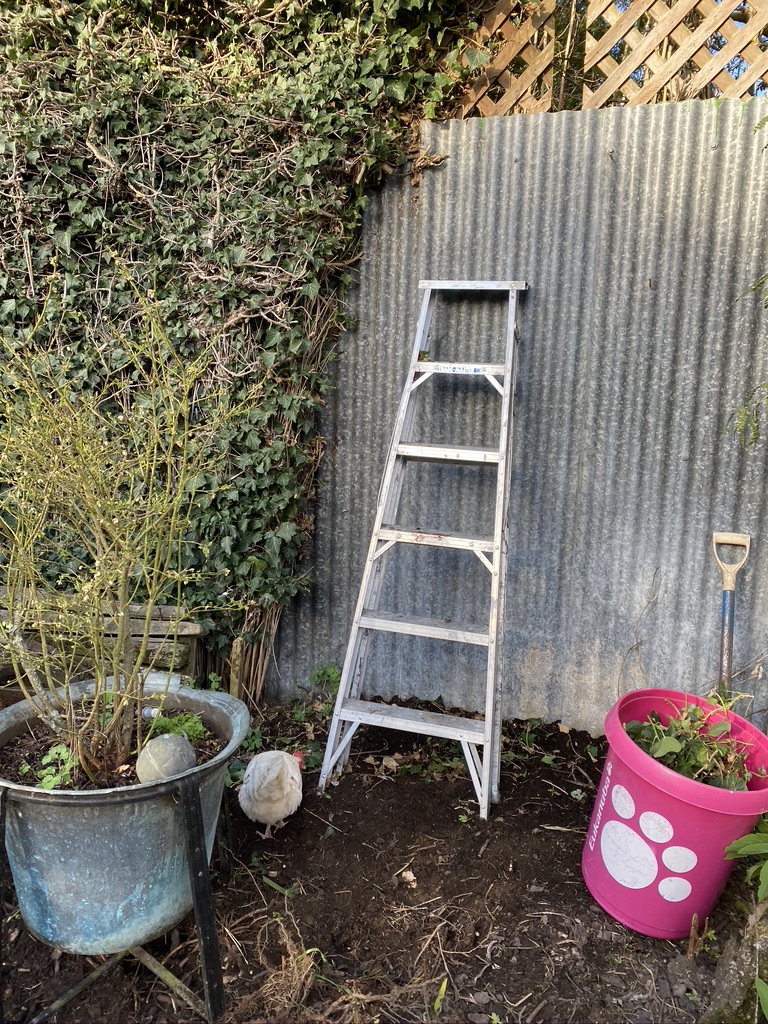
The chosen sunny spot
Expecting it to be an expensive purchase, I was thrilled to find an $80 flat-pack green house on the Mitre 10 website. As it was only available in the Ferrymead branch, I drove to the other side of town and then browsed in the garden section while my flat-pack item was unloaded from the Mainfreight truck. Then I headed home along the estuary and the river; the scenic route.
Perhaps I was subconsciously daunted by the assembly part of the venture. First I had lunch to get my strength up. Then I cleaned the bathroom. Then I cleaned my car. The chimney sweep came and cleaned the chimney. We chatted.
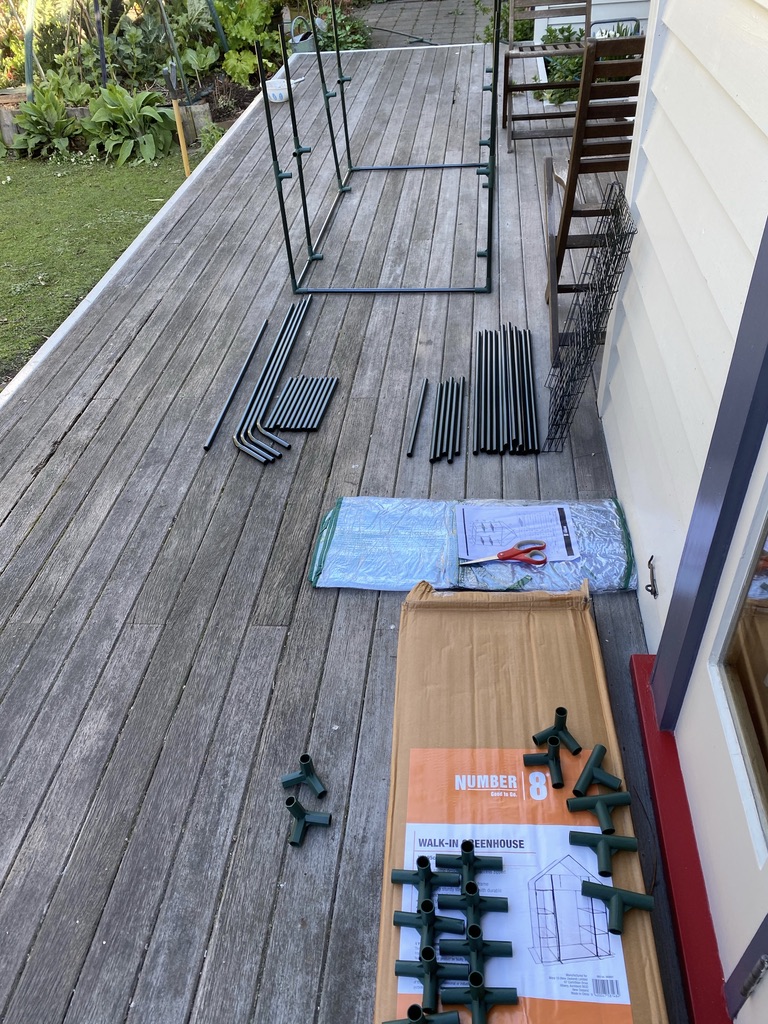
Finally, I unpacked the box and set out the contents.
There was a diagram by way of instructions, with numbers and letters. As I began to put it together I started to enjoy myself.
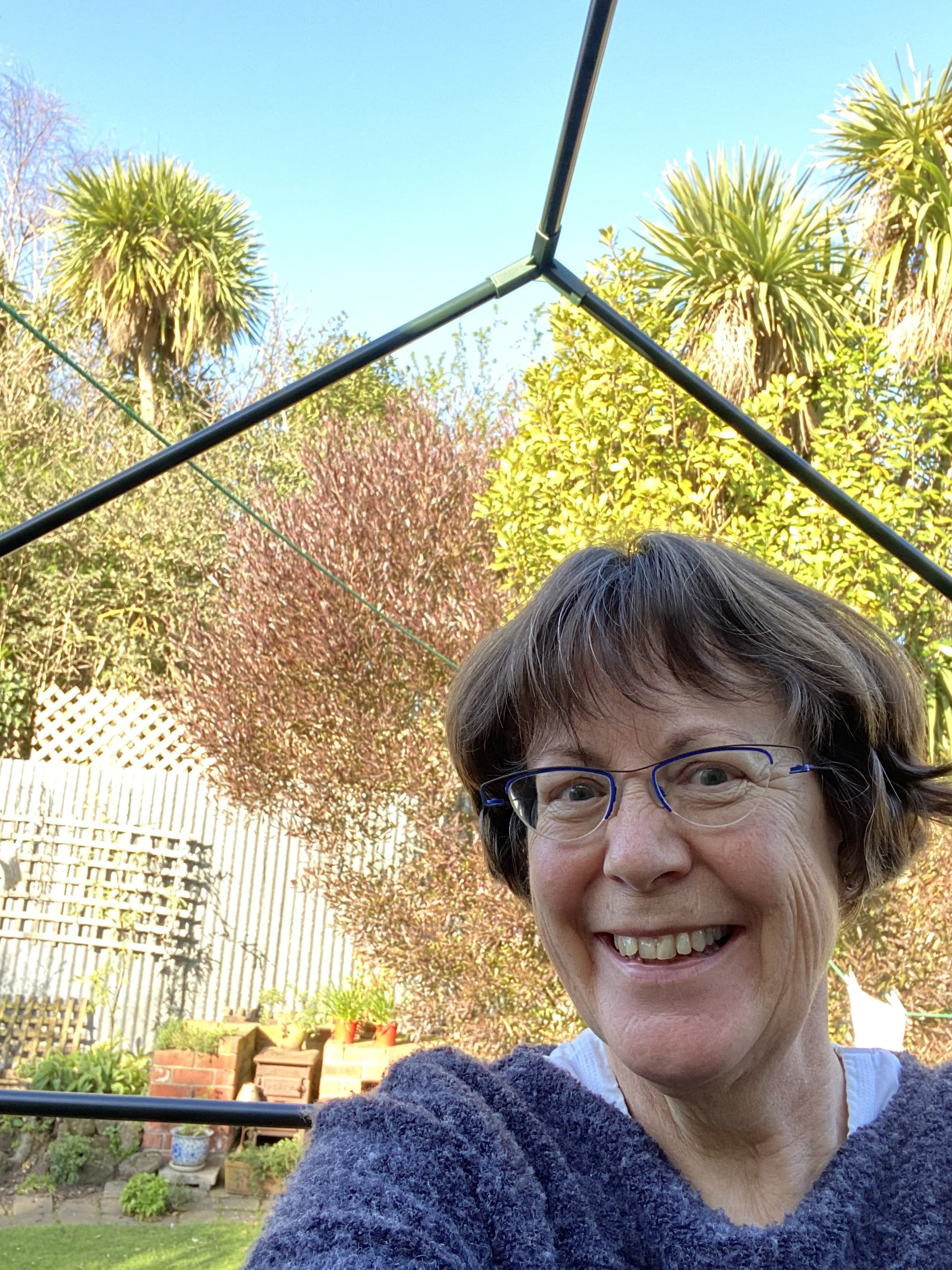
I worked methodically, pleased that there was no-one watching or commenting on progress and making ‘helpful’ suggestions. For a moment, I thought I had the dreaded ‘piece left over’, but it turned out to be the ridge pole, with which the structure was complete.
Time for a roof shout.
Next I had to clear the space. This involved trimming back the horrible ivy which showered me with grit and pollen. I moved the blueberry which is growing in an old copper with a metal stand. Orville’s Dream (garden sculpture) was moved as well. A couple of raspberry plants and an aquilegia were shifted.
Inspector Popcorn.
Then I walked the green house into position. I found some old pieces of treated timber to hold it off the ground.
Dora and Popcorn give their approval.
Now it is ready for the cover to be fitted and the shelves to be put in place. And the planting. But that’s for tomorrow.
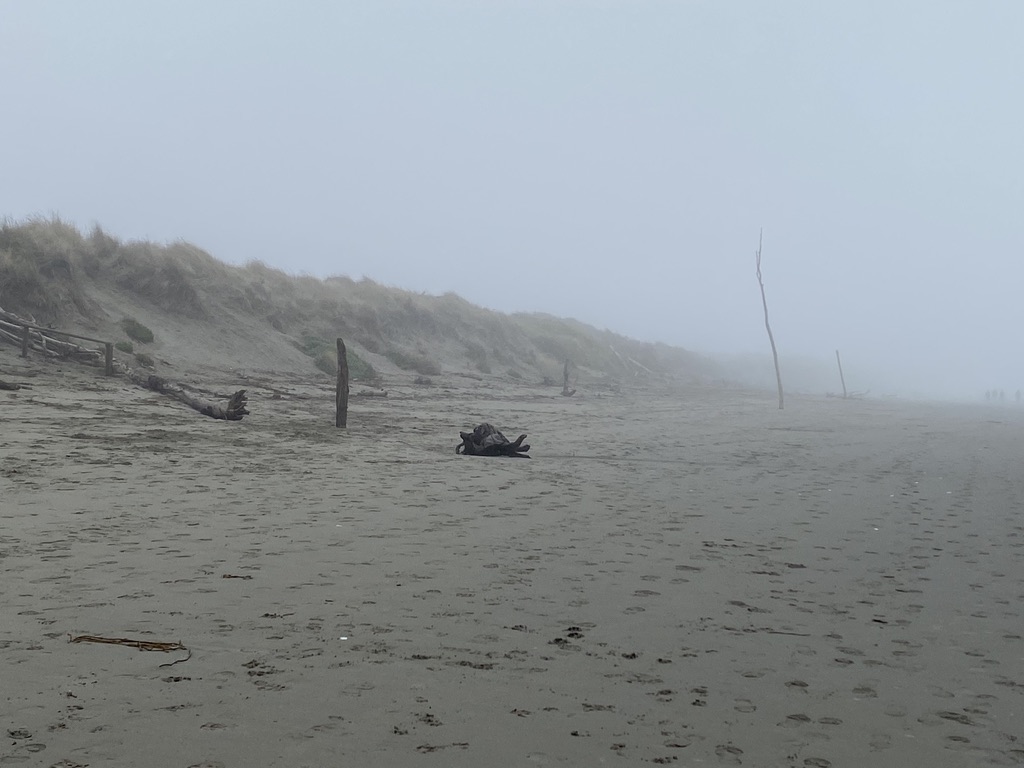
Once a week, all year round, my friend and I drive 20 minutes east to the beach. In winter, while others head west to go skiing, we enjoy the changing moods of the sea and sky. This week we paddled for the first time since autumn.
A little chilly, but refreshing. August 2020
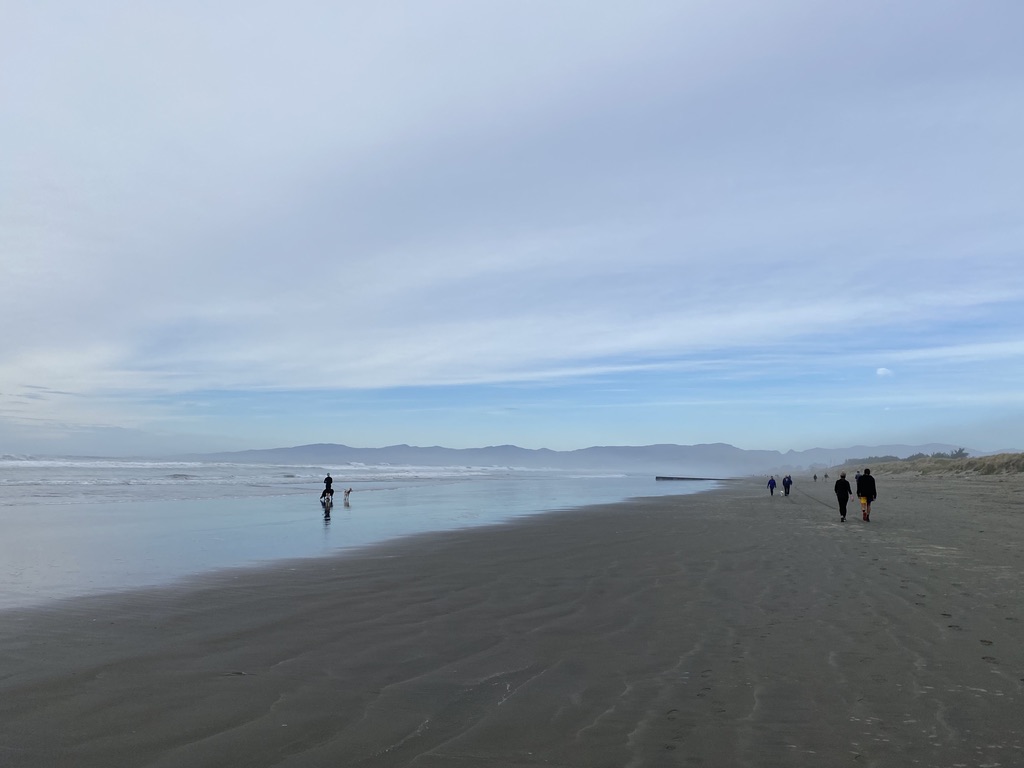
The sky was blue and clear so we had a clear view of the Port Hills and the Kaikoura mountains. Yet, just a week earlier, you could hardly see a thing!
The footprints told us others were out walking too. August 2020
We’ve encountered all sorts of weather over years of winters, including stinging wind-blown sand and biting southerly winds. In August 2016, there was snow on the Port Hills, but a beautifully clear day.
The beach is different every visit. It depends on the tide, weather, and what has happened over the week, such as high tides or storms which wash up drifts of seaweed and shells, push the sand into banks against the sand dunes or wash the beach smooth and clean of debris.
July 2020
Aug 2015
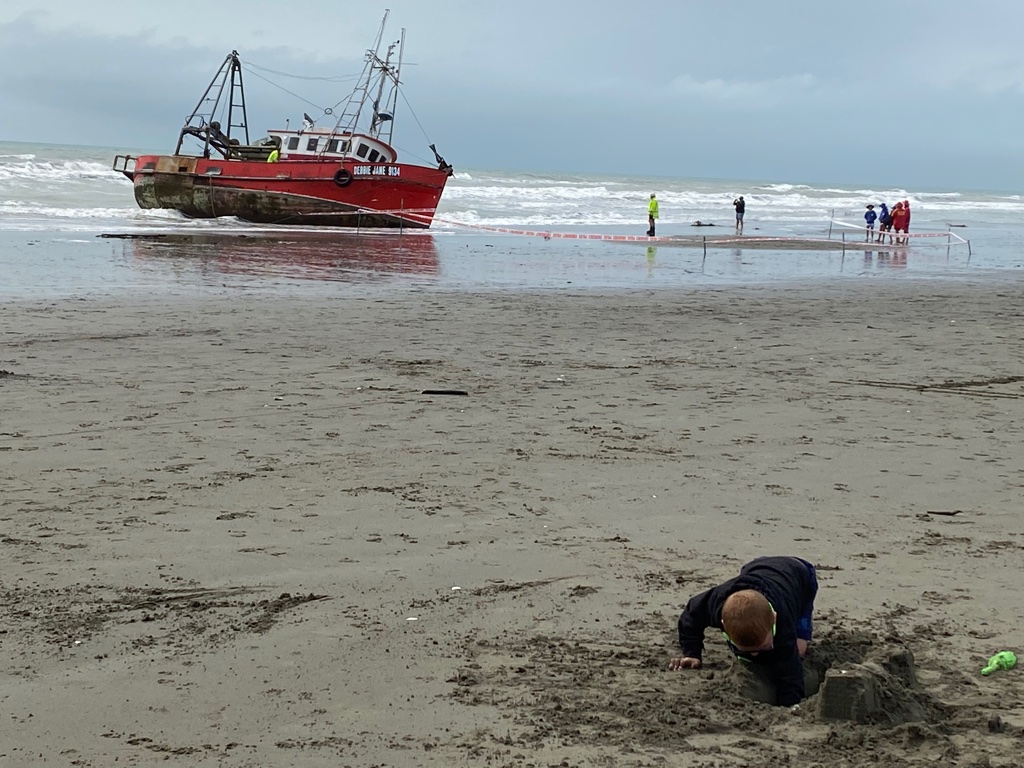
One morning, we found a fishing boat had washed up overnight.
22 December 2019
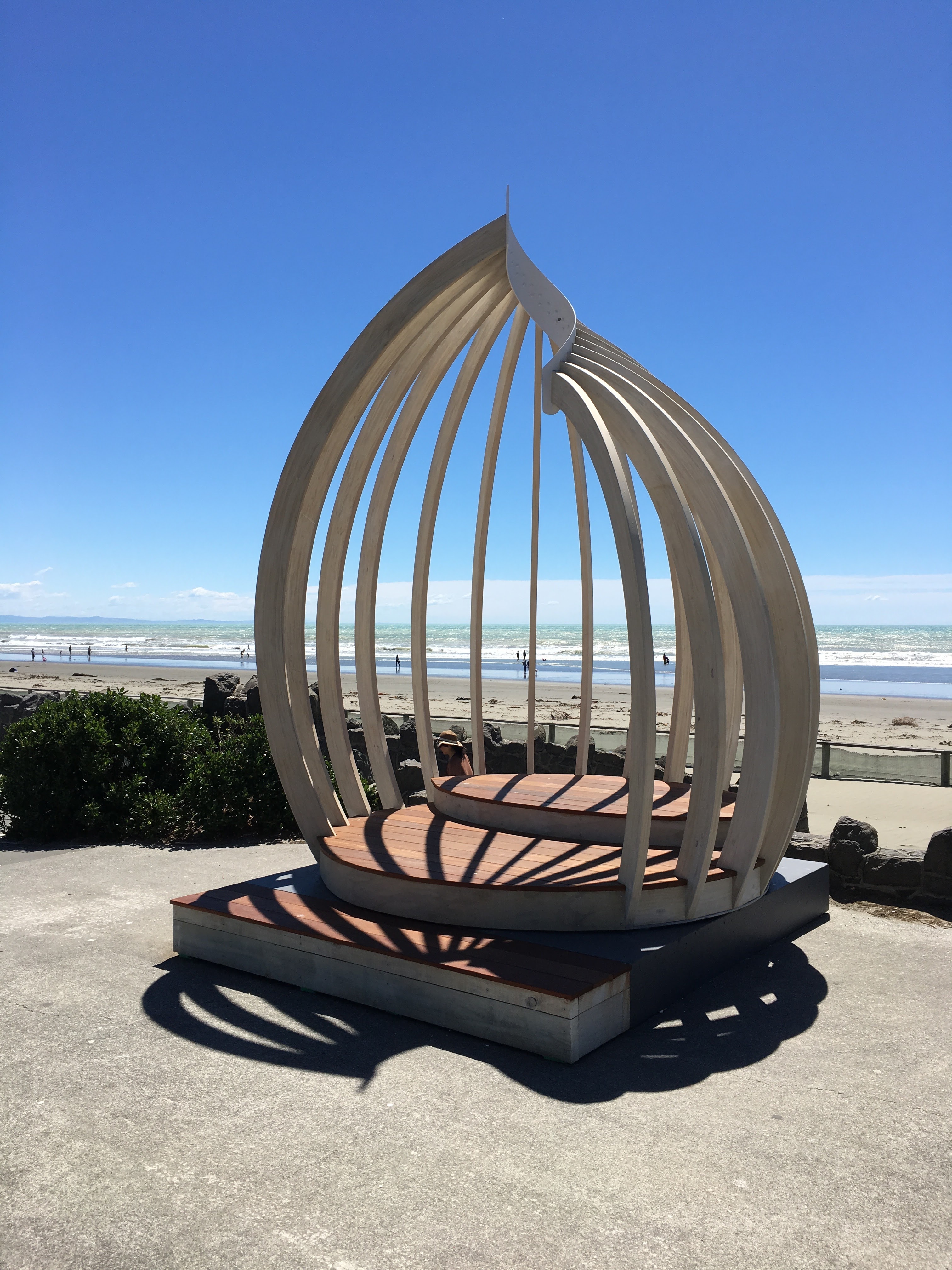
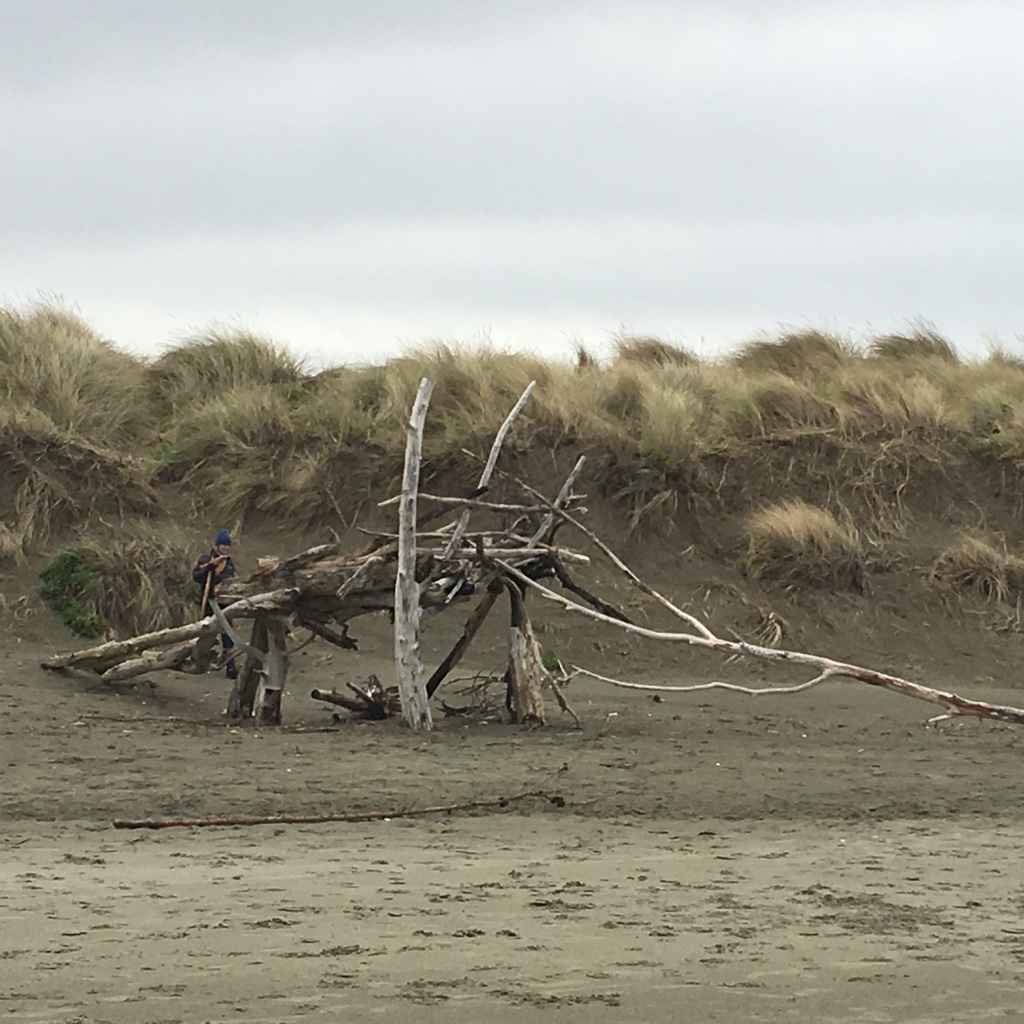
Sometimes artists exhibit their work at the beach while other people find driftwood irresistible for creative expression.
Jan 2017
Nov 2018
July 2019
Some would like to live at the beach, even in winter! Aug 2020
This week I saw these two works by Russell Clark in the Christchurch Art Gallery. They celebrate the sea and its exhilarating effect on us, using light, perspective, shape and texture.
The painting on the left is View from the Pier. The sculpture is called Beach Figure. The texture of the garment reminds me of driftwood and sand shaped by the wind.
Nature does some interesting sculpting too.
Dec 2018
Dec 2018
Mar 2020
Aug 2015
Mar 2018
Dec 2018
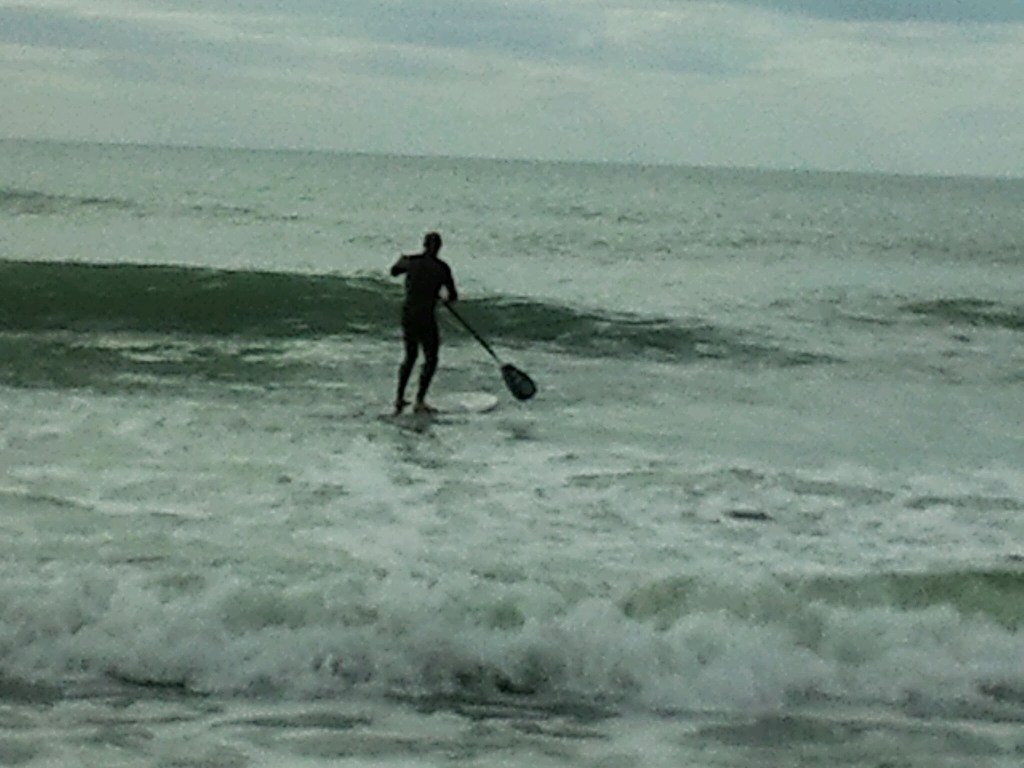
We, and many others, find the atmosphere of sea, sky and fresh air uplifting. There are people out walking, running, cycling, surfing, and exercising their dogs and horses all year round.
Dec 2018
Dec 2018
Aug 2019
Jan 2020
Aug 2020
Nov 2018
April 2012
Dec 2015
Dec 2015
Both sea and sky have changing moods.
May 2020
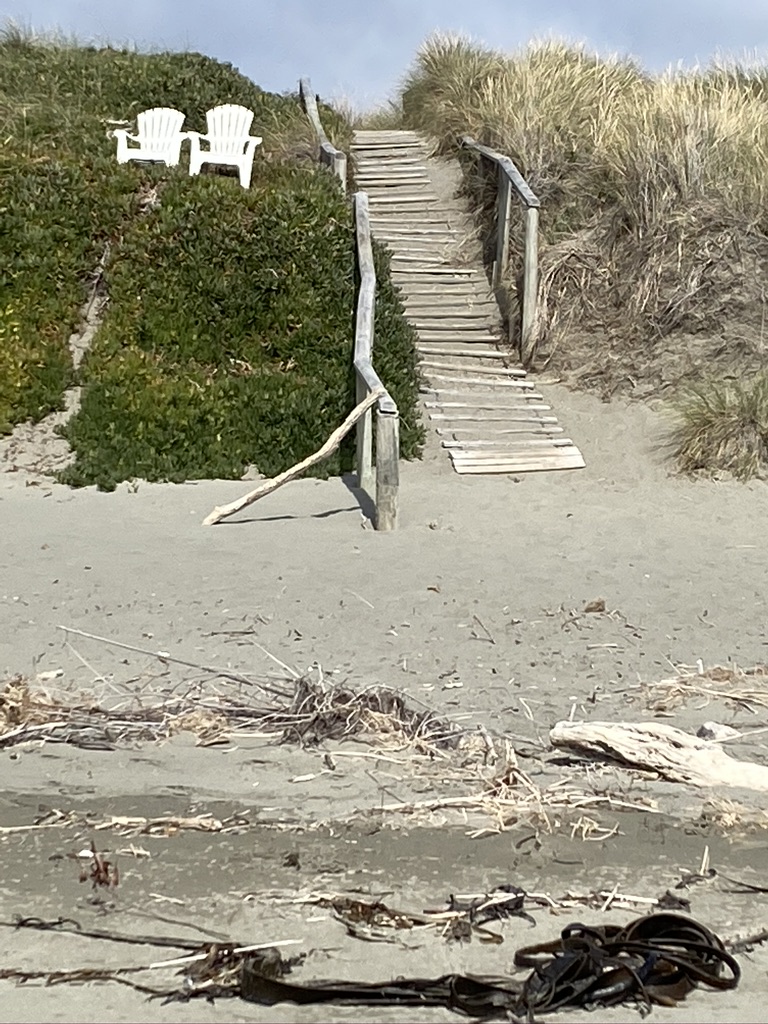
Often, we walk up the dunes to find a view from the top which takes our breath away.
There is one more session of Arguments, Fallacies and Trickery, the philosophy class I’m attending at the WEA. We have been looking at aspects of reasoning and how language can be used to manipulate our responses to issues and ideas.
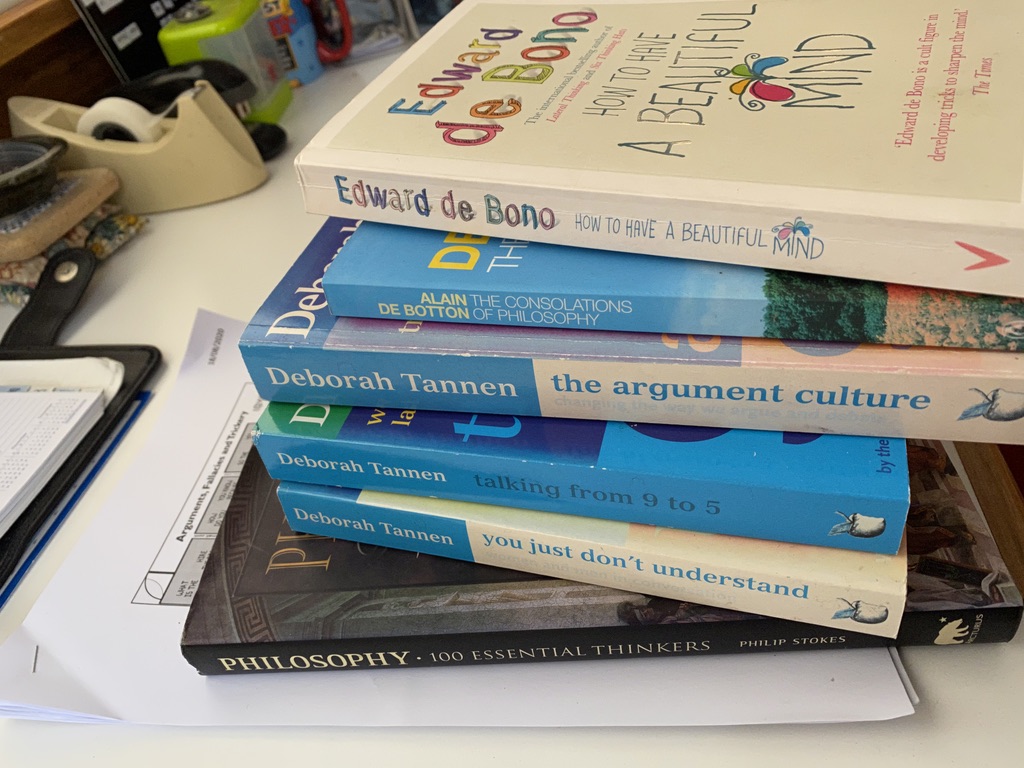
The course has led me to dig out the books I have – some unread – about philosophy, thinking, and language used in argument.
I’ve been examining how I express – or fail to express – a point of view, and have found I often let my feelings get in the way. Edward de Bono‘s six thinking hats lets us acknowledge feelings (red hat). I often berate myself for not offering a view, particularly when someone makes an unsupported assertion in conversation. My reading is helping me to clarify my ideas and my thinking processes so that I can experiment with careful, considered responses. A friend uses the “commend, recommend, commend” technique which is a useful starting point and easy to remember when you are put on the spot. The “commend” part helps to see the other person’s point of view, which can help to quell the anger response which tends to result in a standoff, with polarised views. De Bono develops this in his chapters: “How to Agree”, “How to Disagree” and “How to Differ” in How to Have a Beautiful Mind (2004). The aim of his book is to encourage the readers to use their minds – beyond intelligence or knowledge – just as they might exercise the body.
We have become accustomed to a different, cooperative, collaborative style of leadership in Jacinda Ardern which emphasises kindness. Every achievement from gun control to environmental protection was sweeter for having been collaborative and responsive to events and needs. When asked if she found the coalition negotiations frustrating, Ardern said that, on the contrary, it was an aspect of leadership which she enjoyed. I am disappointed to see the old “oppositional” model being ramped up by the latest opposition leadership. Of course, the name “the opposition” sets up this style of discourse. It is calculated, of course, particularly with an election in October, because many people respond to it with relish, whichever “side” they are on.
Deborah Tannen in The Argument Culture (1998) begins the book by addressing “our tendency to engage in ritualized, knee-jerk opposition…our tendency…to approach public dialogue, and just about anything we need to accomplish, as if it were a fight.” It is a tendency of Western culture, she contends, which “has served us well in many ways but in recent years has become so exaggerated that it is getting in the way of solving our problems. Our spirits are corroded by living in an atmosphere of unrelenting contention – an argument culture.”
How much worse it is now with social media and the internet generally adding to this culture. How easy it seems to slip into old habits and “go on the attack” (war imagery pervades our language) instead of looking for positive ways of responding which enable common ground and agreed solutions. When the Dalai Lama was asked what is the secret to living a good life, he replied: “Be kind.” It is such a simple and obvious thing to do.
Edward de Bono says we should always be looking for alternatives – as in his lateral thinking for which he became famous in the 1970s. It is disturbing that this technique, and the thinking hats, might be dismissed as no longer fashionable – “old hat” – when we need them more than ever.
There was a pro-life rally in the central city in the weekend and I felt a surge of anger as I saw men in pro-life t-shirts. It was some time before my thinking led to common ground. Probably, pro-life and pro-choice both want a society in which it is safe for a woman to bear a child in most circumstances. When looking for alternatives to the currently polarised views, I wondered if both sides could direct the energy created by perceived injustice into making a society in which women are not degraded, fearful and intimately scrutinised. In which they are not held responsible for the crimes of others. In which bringing notice to themselves does not make them vulnerable or subject to the controlling actions of others. In which they have access to fair pay and resources. In which they have the support of law – begun, in part, by the recent legislation in which abortion is a health issue, not a criminal one. It could be a way to move forward.
My re-thinking is a work in progress. (Double meanings intentional.)
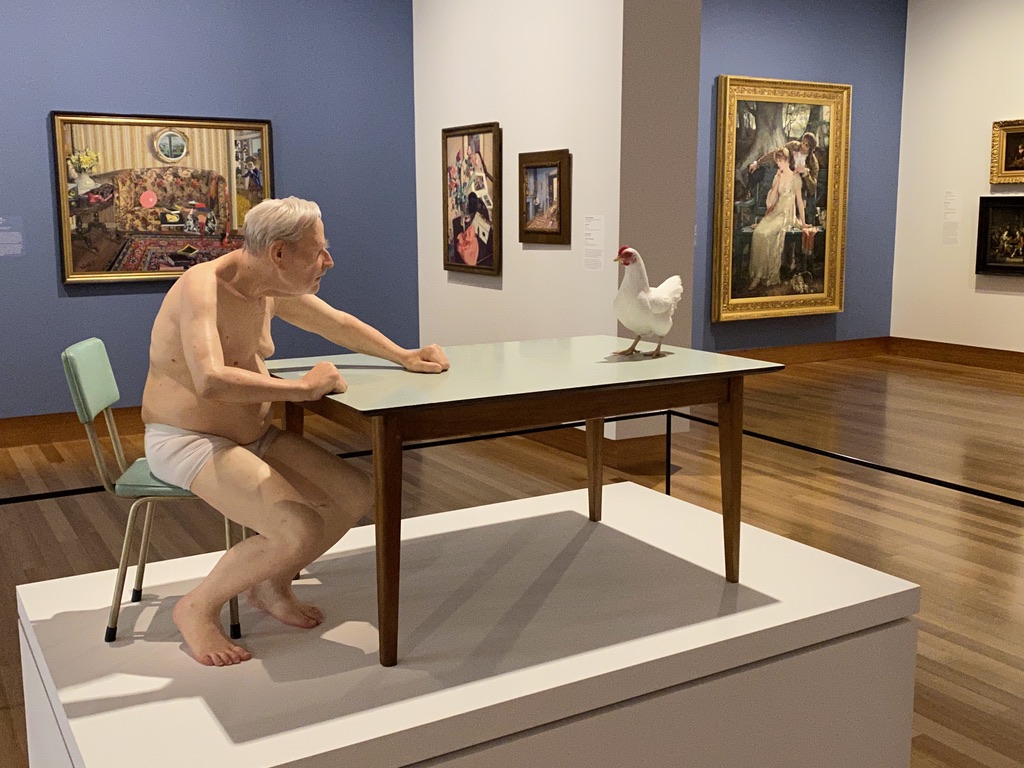
Finding common ground? Ron Mueck, chicken/man, Christchurch Art Gallery. Less subtle is the power play in the painting on the right.
................... for lovers of ice cream. Your free on line magazine for sweet frozen treats. Recipes, inspiration, artisanal ideas for your delectation.





















 Anne-O-tations