
A plan to visit the Musee Carnavalet was cancelled when I visited the website and found the museum is closed for renovations. However, you can do a virtual visit, which I will save until I’m home and able to use a screen larger than that of my phone.
Instead, it was a quiet day. An exhibition of photographs in the Jardin du Luxembourg impressed me.

As with the tapestries, I looked at the each photo as the photographer might have done. What was he seeing? What did it say? What does it say to me? With these two photos my experience of Paris helped me to consider what it is like to live here surrounded by massive walls of stone and history. How does that affect our relationship to the environment and how is our identity changed by what has gone before?

The first photo is composed of a wall with a slice of sky visible. The second, dominated by massive columns, shows a metal chair diminished by distance and a partly obscured person. A window is shadowed on a wall.
The young photographer spoke enthusiastically to me about photographing in Africa and South Korea and how those places have altered his perceptions of the world and his/our place in it. Spiritual insights were part of these transforming experiences. He liked how spiritual life was linked to the natural environment and open and visible in these countries, not shut in by stone walls as it is here as if to exclude.
Back to the mundane: I sat in the garden reading and eating a cinnamon cream filled eclair – beautifully wrapped – from my favourite artisan boulangerie, from which I have bought only savoury breads and quiches, until now. I wondered what the joggers made of my choice as they wobbled past.
A flat white – the first I’ve had while away – was available at a little Salon de Cafe nearby.
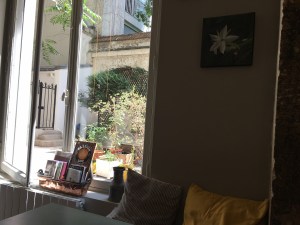
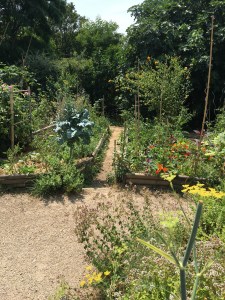
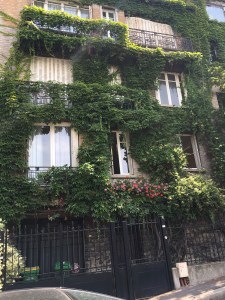
Then I retreated to read in the comfort of my first floor room where, with the window open, I could hear chatter from the street below and see people going by, parents with children, a few cars and scooters; everyday life for the people who live here.

These living streets are what our city council would like, to bring the inner city of Christchurch to life. Businesses on the ground floor and living above. These apartments are on five floors with dormers making an additional sixth floor. And there’s that slice of sky.

I was disconcerted by news of a 4.1 tremor at home. What would that sort of event do to this street?
How will I adjust to going home?
Increasingly, my lack of conversational French is frustrating and it will be a relief to talk freely again as I was able to do with the photographer this morning who, thankfully, spoke English. A conversation on that level is not possible otherwise.
I’ve printed my boarding passes.
One day left in Paris.

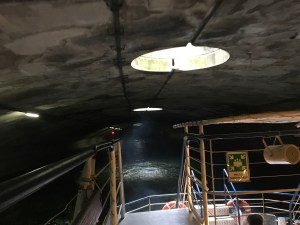


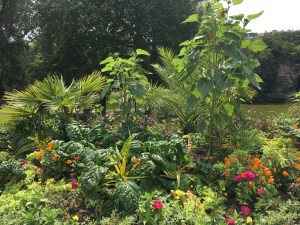


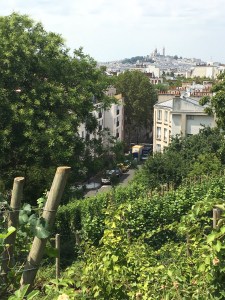















 We docked at picturesque villages, and could watch bird life – gulls, egrets, cormorants, white herons and grey herons – as we moved up or down river.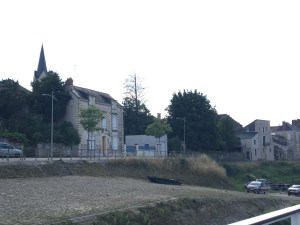
 Charolais cattle and chateaux featured in views, and wind farms.

 We went through a lock as we arrived at, and left, St Nazaire.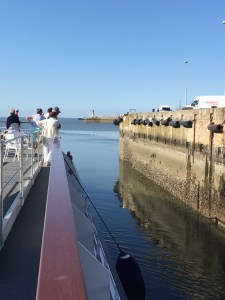
 Here we are heading out to the Atlantic before turning into the Loire again towards Nantes:
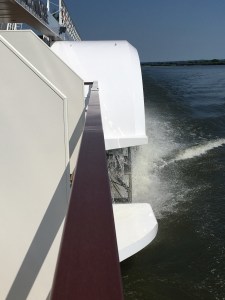
 Paddles powered our bateau. Here, they can be seen from the reception area and from my balcony:
 Here is my cabin:
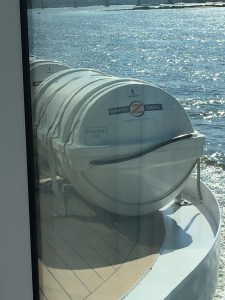
 Here are the life rafts!
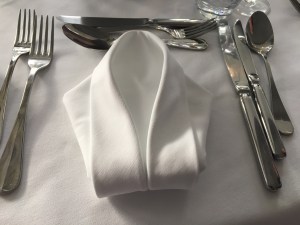
 We had beautiful meals, exercises on the sun deck, a great concert by two local Breton folk singers, and well-paced, informative visits to chateaux, vineyards and gardens.
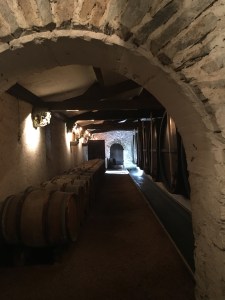
 We could book a visit to the wheelhouse. It’s a serious business negotiating sandbars, channels, bridges and tides.
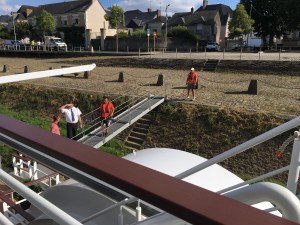
 We saw the crew in action as we docked or set off.
 A different cocktail was featured every day.
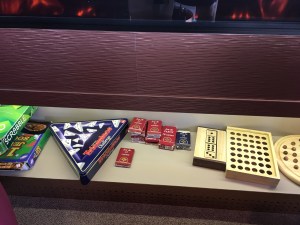
 There were books and games in the bar too.
 The crew went a little crazy on football night – as did the whole town. This is one of the chefs:
 But were highly professional otherwise.
 Now the cruise has returned to Nantes, and we disembark tomorrow.
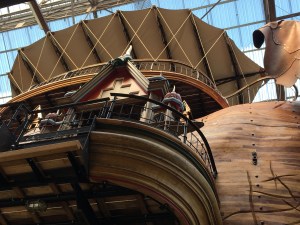
 In steampunk style, creative people have assembled an array of attractions in late 18th century style but on a massive scale.
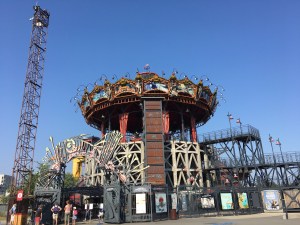 The carousel has three levels.First creatures of the seabed:
 Then, creatures which swim in the water:
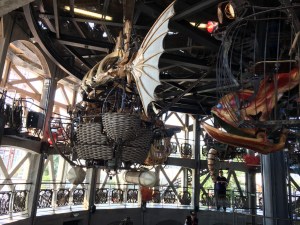 At the top, things which float on the water surface. I rode on this boat, operating the tiller, while it bucked up and down on the waves, emitting water vapour.
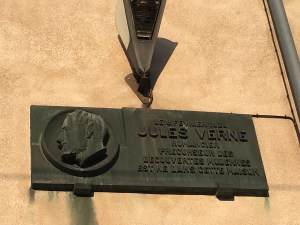
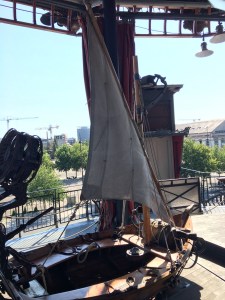 It seems very fitting for the town where Jules Verne lived.
 I had been looking forward to seeing the huge elephant.
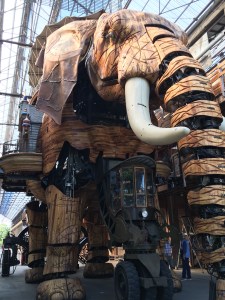 He can carry many passengers.
 Not today, however. Perhaps he’d blown a fuse?
 There were other fantastic creatures which you could see operating. An aviatrix in scarf, helmet, goggles and gloves flew a canvas and wood flying machine – too difficult to photograph. This creature is inspired by tropical plants:
 Here are some others:
 The people who develop and make the machines are planning this next:
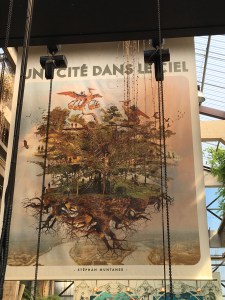 Already you can climb up into this part of it:
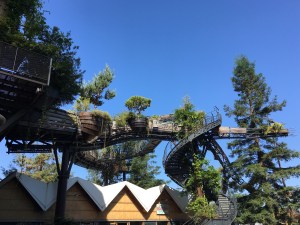 They are creating an imaginary world as Jules Verne did, inspired by the ships which visited the port bringing specimens of strange animals, insects and plants and stories of fantastic forests and undersea creatures.
 a circular stone staircase,
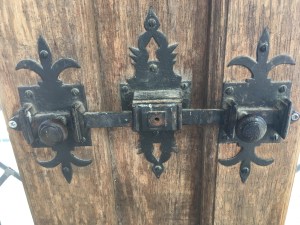
  charming detail in down pipes and window latches,
 and bees and butterflies in the garden.
 Chenonceau had an immediate, warmer appeal. Perhaps it was the donkeys
  The kitchen garden – also full of bees and butterflies –
 or the Bentley in the garage,
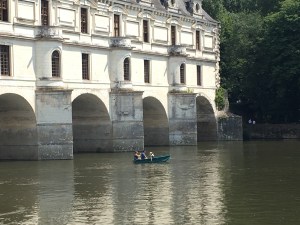
  the way it is built over a river (the Cher),
 the ancient trees,
 or the floral art in nearly every room.
 Despite the hot day, the chateau was pleasant inside with its long, bridge-like layout and windows open on each side.
 It had warmth and charm,
 some grandeur,
 but didn’t overwhelm. This is probably because it has been a women’s retreat, not designed to impress in a fist-shaking kind of way as Chambord was. The flowers had a softening effect.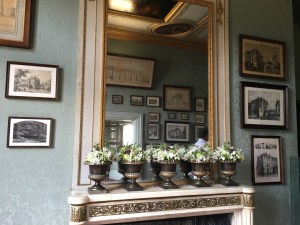
 People were boating and could pass under the chateau.
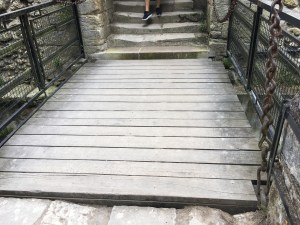
 There is a drawbridge.
  An ideal holiday bach, don’t you think?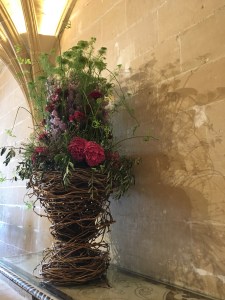
 Anne-O-tations