Spicy bun time

The approach of Easter is time to get out the bread maker and make spicy buns. I use Mum’s hot cross bun recipe – always a family favourite – adapted to the bread maker dough function. It’s very satisfying to turn the dough mix out onto a floured board and shape the buns into rounds. It takes about 30 minutes for them to rise and 20 minutes or fewer to bake. Here is the result:

I don’t bother with crosses on top. In previous years we have enjoyed these buns so much that I’ve continued making them through winter, varying the flavourings such as using crystallised ginger instead of sultanas and mixed peel. Yum.

Space

I have finished Orbital by Samantha Harvey which I had to steel myself to read due to the dread and horror I feel at the thought of being in outer space. I was recommended it as ‘beautifully written’ and that is true. It also gives a devastating assessment of the human condition from the perspective of a crew on an international space station.

Sometimes they look at the earth and could be tempted to roll back all they know to be true, and to believe instead that it sits, this planet, at the centre of everything. It seems so spectacular, so dignified and regal. They could still be led to believe that God himself had dropped it there, at the very centre of the waltzing universe, and they could forget all those truths men and women had uncovered (via a jerking and stuttering path of discovery followed by denial followed by discovery followed by cover-up) that the earth is a piddling speck at the centre of nothing. They could think: no negligible thing could shine so bright, no far-hurled nothingy satellite could bother itself with these shows of beauty, no paltry rock could arrange such intricacy as fungus and minds.

So they sometimes think it would be easier to unwind the heliocentric centuries and go back to the years of a divine and hulking earth around which all things orbited – the sun, the planets, the universe itself. You’d need far more distance from the earth than they have to find it insignificant and small; to really understand its cosmic place. Yet it’s clearly not that kingly earth of old, a God-given clod too stout and stately to be able to move about the ballroom of space; no. Its beauty echoes – its beauty is its echoing, its ringing singing lightness. It’s not peripheral and it’s not the centre; its not everything and it’s not nothing, but it seems much more than something. It’s made of rock but appears from here as gleam and ether, a nimble planet that moves three ways – in rotation on its axis, at a tilt on its axis, and around the sun. This planet that’s been relegated out of the centre and into the sidelines – the thing that goes around rather than is gone around, except for by its knobble of moon. This thing that harbours us humans who polish the ever-larger lenses of our telescopes that tell us how ever-smaller we are. And we stand there gaping. And in time we come to see that not only are we on the sidelines of the universe but that it’s of a universe of sidelines, that there is no centre, just a giddy mass of waltzing things, and that perhaps the entirety of our understanding consists of an elaborate and ever-evolving knowledge of our own extraneousness, a bashing away of mankind’s ego by the instruments of scientific enquiry until it is, that ego, a shattered edifice that lets light through.

They sail at their in-between distance of low earth orbit, their half-mast view. They think: maybe it’s hard being human and maybe that’s the problem. Maybe it’s hard to shift from thinking your planet is safe at the centre of it all to knowing in fact it’s a planet of normalish size and normalish mass rotating about an average star in a solar system of average everything in a galaxy of innumerably many, and that the whole thing is going to explode or collapse.

Maybe human civilisation is like a single life – we grow out of the royalty of childhood into supreme normality; we find out about our own unspecialness and in a flush of innocence we feel quite glad – if we’re not special then we might not be alone. If there are who-knows-how-many solar systems just like ours, with who-knows-how-many planets, one of those planets is surely inhabited, and companionship is our consolation for being trivial. And so, in loneliness and curiosity and hope, humanity looks outwards and thinks they might be on Mars perhaps, the others, and sends out probes. But Mars appears to be a frozen desert of cracks and craters, so maybe in that case they’re in the neighbouring solar system, or the neighbouring galaxy, or the one after that.

We send out the Voyager probes into interstellar space in a big-hearted fanciful spasm of hope. Two capsules from earth containing images and songs just waiting to be found in – who knows – tens or hundreds of thousands of years if all goes well. Otherwise millions or billions, or not at all. Meanwhile we begin to listen. We scan the reaches for radio waves. Nothing answers. We keep on scanning for decades and decades. Nothing answers. We make wishful and fearful projections through books, films and the like about how it might look, this alien life, when it finally makes contact. But it doesn’t make contact and we suspect in truth that it never will. It’s not even out there, we think. Why bother waiting when there’s nothing there? And now maybe humankind is in the late smash-it-all-up teenage stage of self-harm and nihilism, because we didn’t ask to be alive, we didn’t ask to inherit and earth to look after, and we didn’t ask to be so completely unjustly darkly alone.

Maybe one day we’ll look in the mirror and be happy with the fair-to-middling upright ape that eyes us back, and we’ll gather our breath and think: OK, we’re alone, so be it. Maybe that day is coming soon. Maybe the whole nature of things is one of precariousness, of wobbling on a pinhead of being, of decentring ourselves inch by inch as we do in life, as we come to understand that the staggering extent of our own non-extent is a tumultuous and wave-tossed offering of peace.

Until then what can we do in our abandoned solitude but gaze at ourselves? Examine ourselves in endless bouts of fascinated distraction, fall in love and in hate with ourselves, make a theatre, myth and cult of ourselves. Because what else is there? To become superb in our technology, knowledge and intellect, to itch with a desire for fulfilment that we can’t quite scratch; to look to the void (which isn’t answering) and build spaceships anyway, and make countless circlings of our lonely planet, and little excursions to our lonely moon and think thoughts like these in weightless bafflement and routine awe. To turn back to the earth, which gleams like a spotlit mirror in a pitch-dark room, and speak into the fuzz of our radios to the only life that appears to be there. Hello? Konnichiwa, ciao, zdraste, bonjour, do you read me, hello?

Harvey, Samantha 2024 pp 49-52 (Vintage ebook edition)

It’s a book of 204 pages (ebook version) and I might just about have exceeded the 10% limit allowed before copyright is infringed with this extract. But it was the bit that particularly resonated with me, although perhaps the descriptions of Earth from Space were more beautifully written and the parallel account of a fishing family in the Philippines sheltering from a deadly typhoon which the astronauts are tracking added another layer and dimension of reality (we can’t all be billionaires joy-riding into space).

As good as it is, I am happy to put aside my horror and dread and escape into some Earth-based crime fiction.

Coffee Induction Ceremony

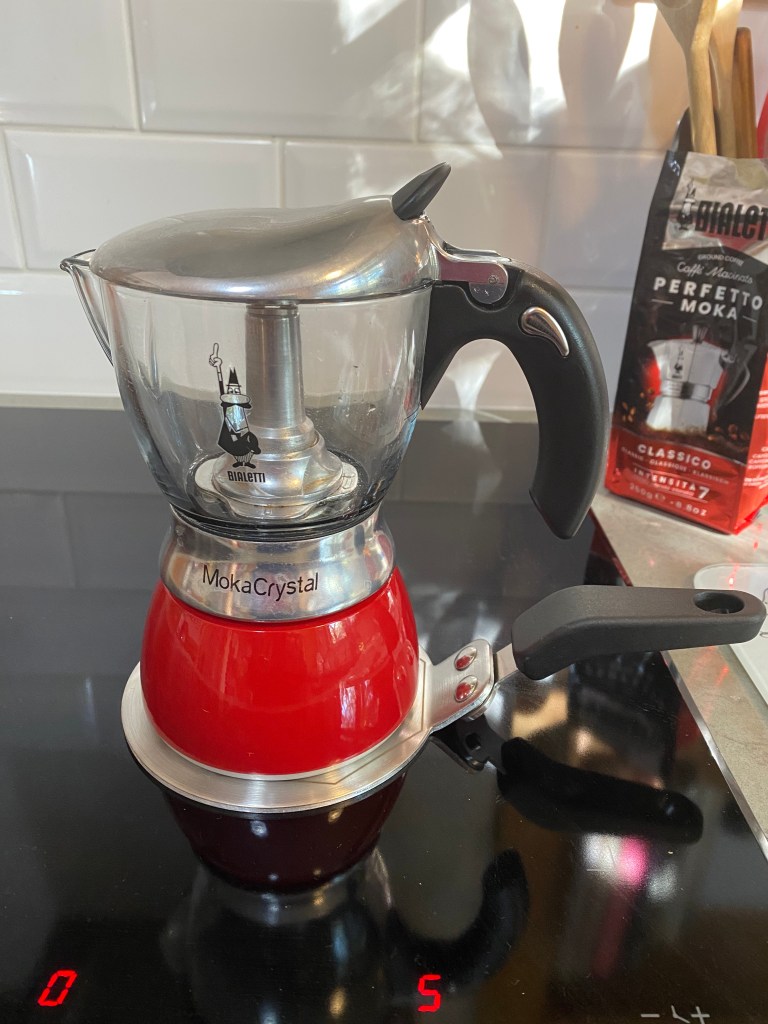
This morning I tried out the induction adapter plate I discovered at Ballantynes (30% off) this week.

I have given away all my stove-top coffee makers – except one – after replacing my gas hob with an induction hob 10 years ago. I’ve been happily using a plunger (French Press) since. But there’s something ceremonial about a Bialetti stove-top Moka Express – especially my cute little red one with the glass pot.

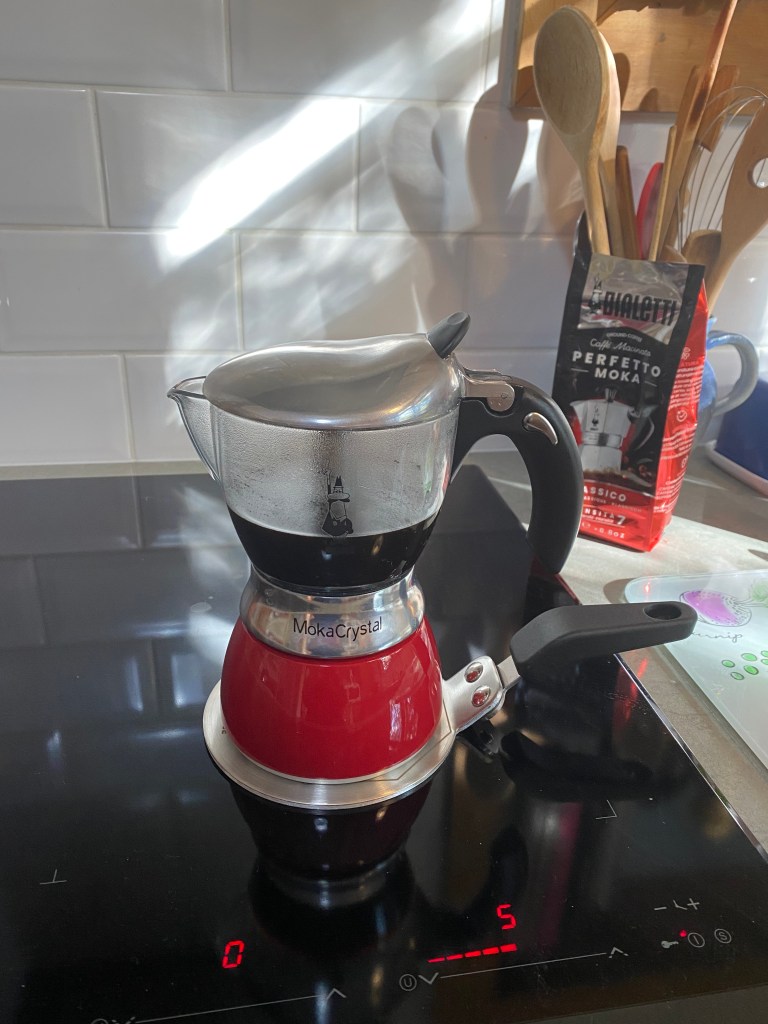
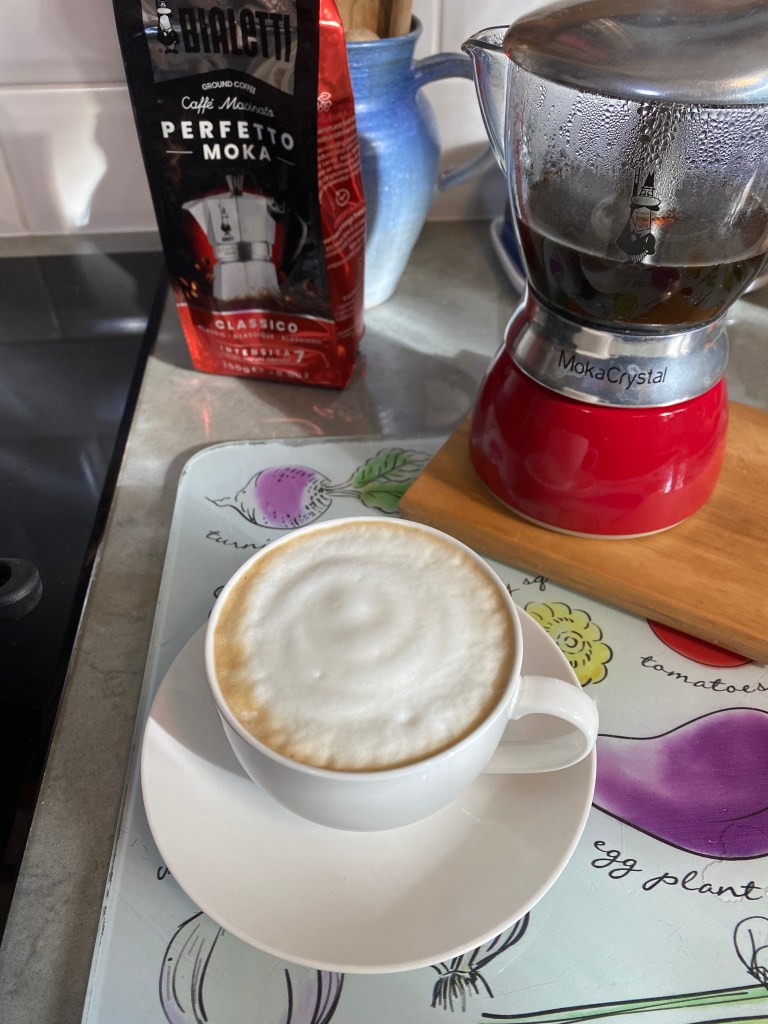
It was quite exciting to watch it working and the pot filling with freshly brewed coffee. That’s the advantage of the glass pot. When it had finished filling from the funnel in the centre (up to the little man’s moustache) I removed it from the heat and poured my first cup – adding frothy milk to the top.

It was delicious – quite strong – and, as you can see, there was enough for a second cup! I’m firing on all cylinders now.

Shrub

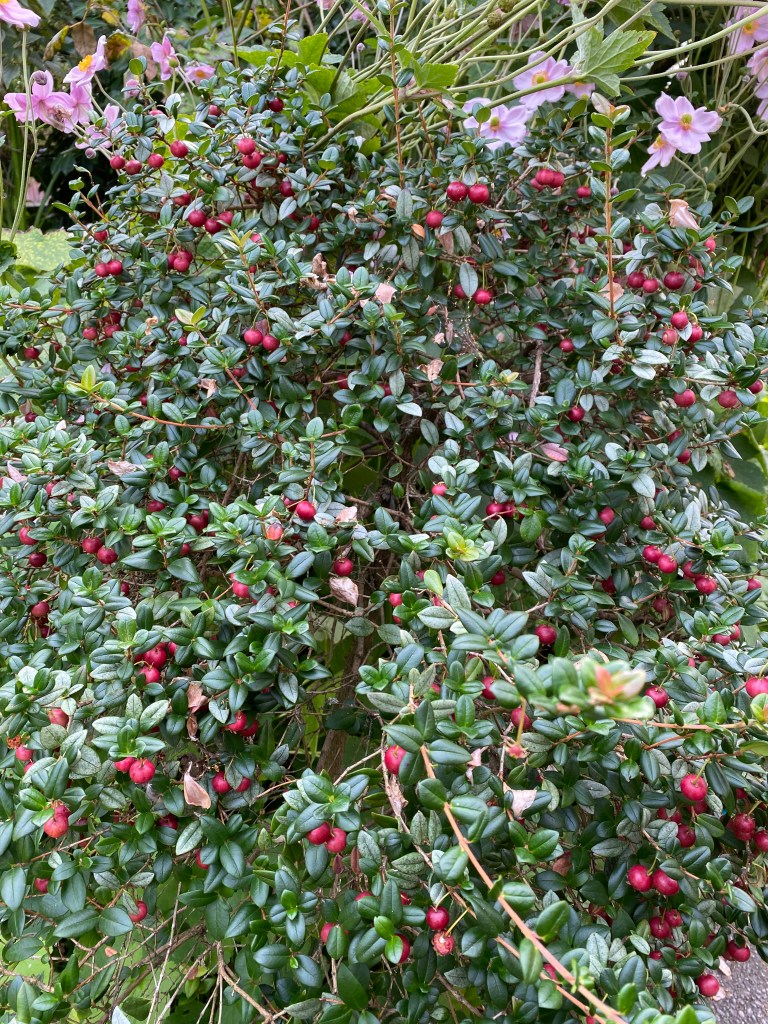
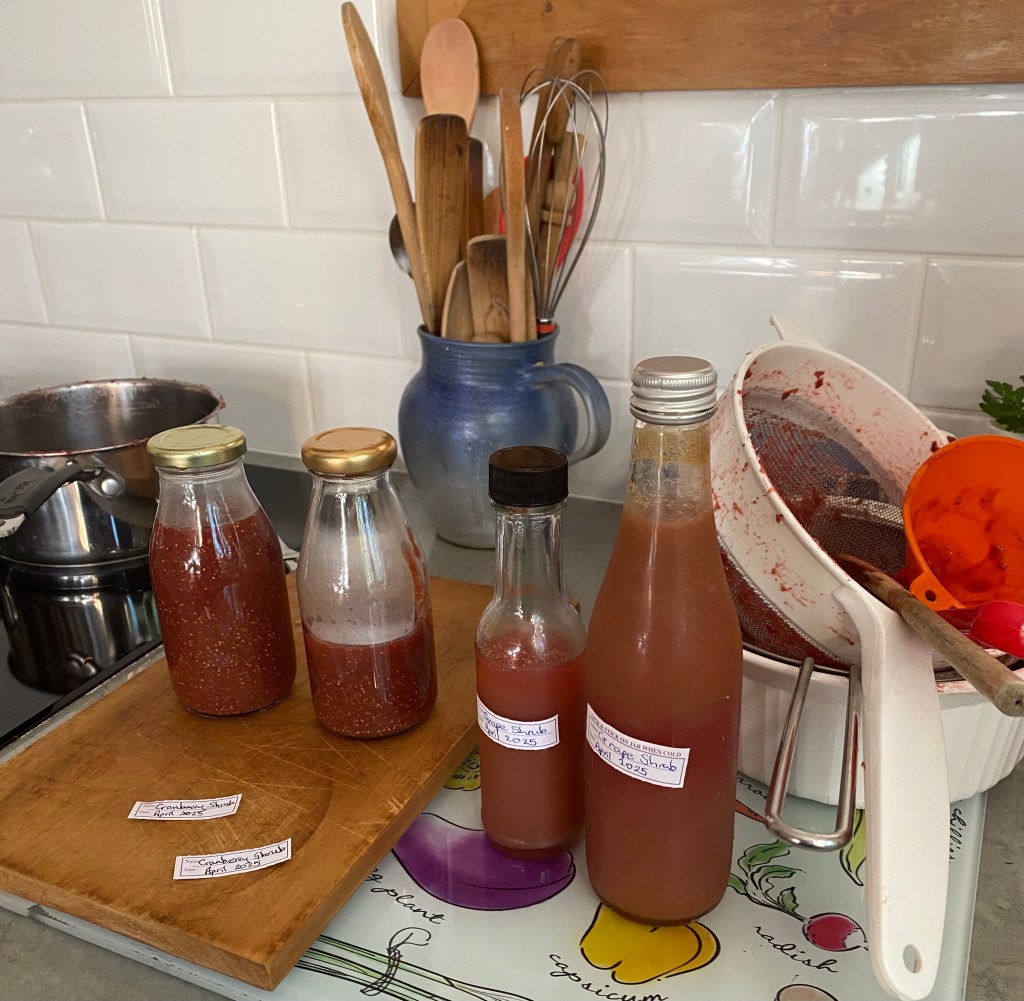
It has been my understanding that a shrub is a small to medium sized bush, several of which together can make a shrubbery. Here is a cranberry shrub:

This is also, apparently, a cranberry shrub:

When the bottles cool, the labels can be affixed.

To the right, are two bottles of grape shrub. Which grows on a vine rather than on a shrub.

Looking for ways to use my grapes and cranberries, I came across recipes for ‘shrub’ – a kind of cordial made with sugar and vinegar or alcohol (I chose vinegar) and which will keep in the fridge for several months. The making of it uses lots of utensils and pots for a rather small result. After steeping overnight, the cooked fruit is sieved which requires patient effort. It looks like the kind of drink which might be useful in winter as an immunity boost, diluted and served hot or cold.

Haunting

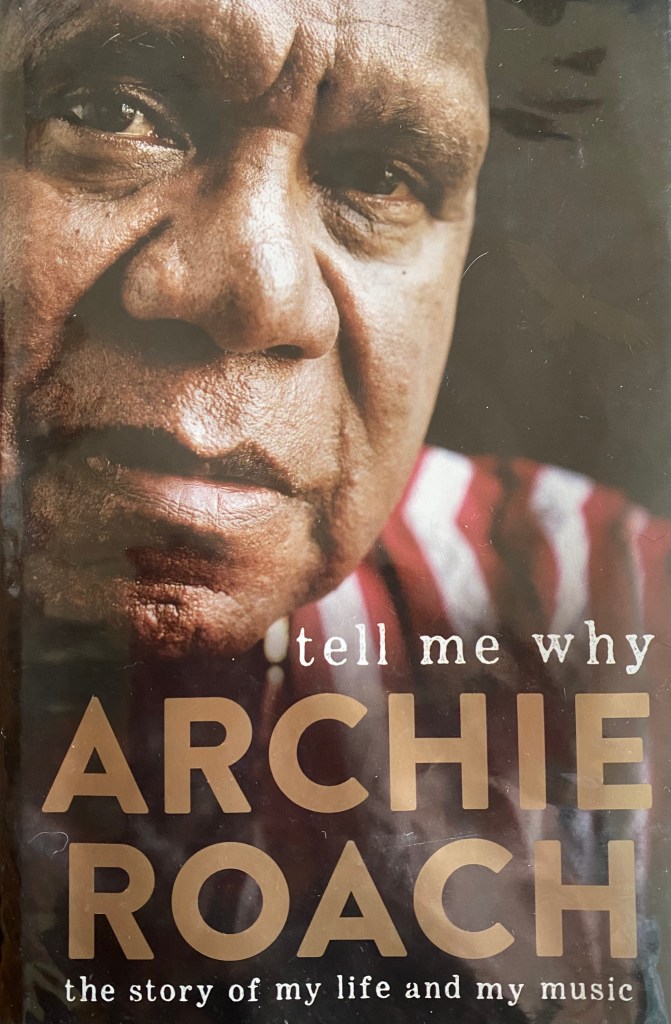
When I finished reading this book I began to think of what I would read next, but I’m haunted by this memoir by Archie Roach, one of the ‘stolen generation’. He has written his story with style, grace and honesty. I was continually reminded of Nelson Mandela who was miraculously upbeat and positive despite the hardships he had endured.

That the state would simply swoop in and round up children and take them away to orphanages and then foster homes seems incredible. And this was my generation. Archie was born in 1956. His account shows that this resulted in not better, but far worse outcomes for the children. I was continually shocked to read of what happened to them and particularly by the fact the indigenous Australians and Torres Strait Islanders were not counted in the census until 1971.

Perhaps it was Archie’s music which saved him, but also the fact that he did find his brothers and sisters and discovered where he had come from and was able to make some re-connections – but with the burden of grief and anger and a realisation that injustices continue. It is amazing that he continued to stress inclusion and love for everyone in his counselling work, his writing and his music.

I was able to find his music online, and listened to it as I read the last few chapters. His voice is as clear and warm as the narration of the book, the chapters of which begin with lyrics of his songs. It was a relief that so many musicians and producers supported him to record and release his music (Tim Finn is mentioned), and that it led to his touring world-wide, making connections with many musicians and particularly with First Nations people (a term which came to be applied to indigenous Australians too) in North America who shared similar stories to his own.

Key to Roach’s recovery was his wife Ruby Hunter who has also recorded albums of her own music. She was also a stolen child, able to reconnect with her people.

More online research told me that Archie had died in July 2022, just three years after the book was published. He was 66 years old. Ruby died in her 50s. Their hard lives did not set them up for longevity. There were news interviews with people who knew them following Roach’s death – presented by slick white news presenters. There was a memorial to them both unveiled, with white officials congratulating each other, and First Nation Australians on the fringes. With the failure of the ‘Yes’ vote in 2023, I remain somewhat cynical about the sincerity of the gesture.

The real thing

Tonight is classical music night on the Arts channel. I notice how two dimensional both the sight and sound of it are compared to the New Zealand Symphony Orchestra concert I went to on Saturday. From my gallery seat to the side I could look down onto the stage and follow the music closely as it moved from section to section: percussion and drumming, woodwind, brass, piano, organ, and strings – including two harps. Gemma New, the conductor, is slight yet her graceful, balletic movements encompassed the whole orchestra with powerful effect.

The concert was stirring and fascinating from beginning to end. The Gareth Farr piece was rousing at the start, particularly as it featured the dramatic percussion and drumming for which he is well known. That was followed by the world premier of a work featuring a guest flautist and by a composer who came up from the audience to take a bow. The final work was Mussorgsky’s Pictures at an Exhibition, a great audience pleaser and everyone – including me, was buzzing at the end. I was moved to tears, overwhelmed by the mightiness of it all; of talented individual people making powerful, affecting music together, literally in concert. It was the ‘real thing’.

I suspect the huge energy emanating from the orchestra has helped sustain my high energy levels all week.

Calming watercolour

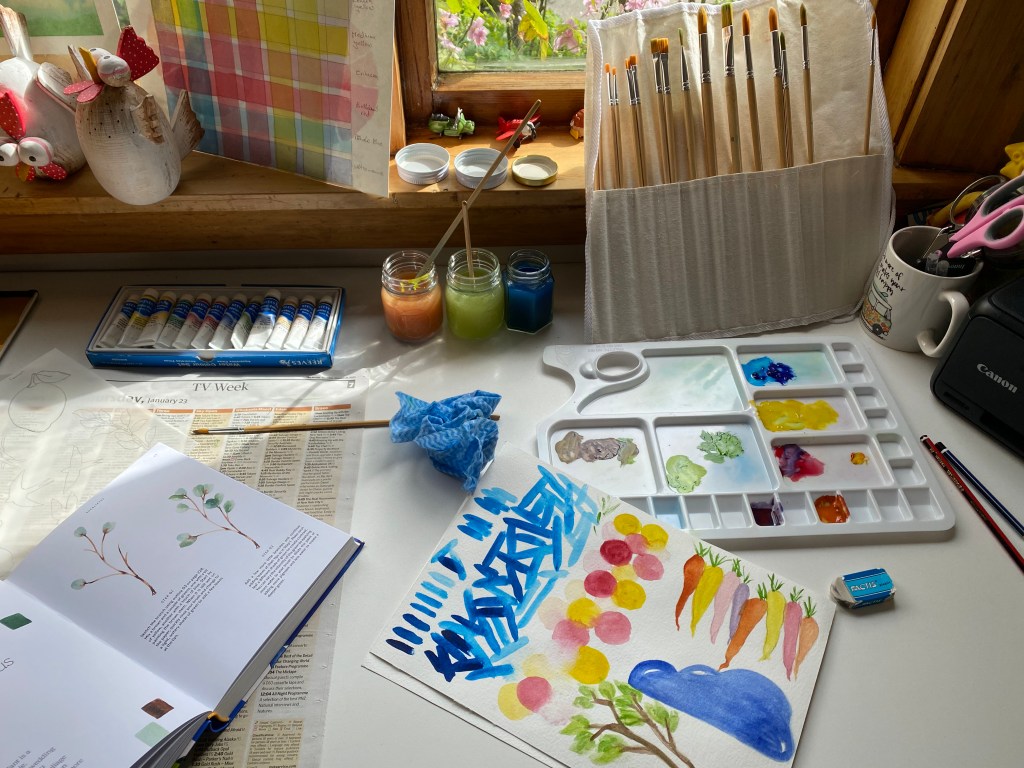
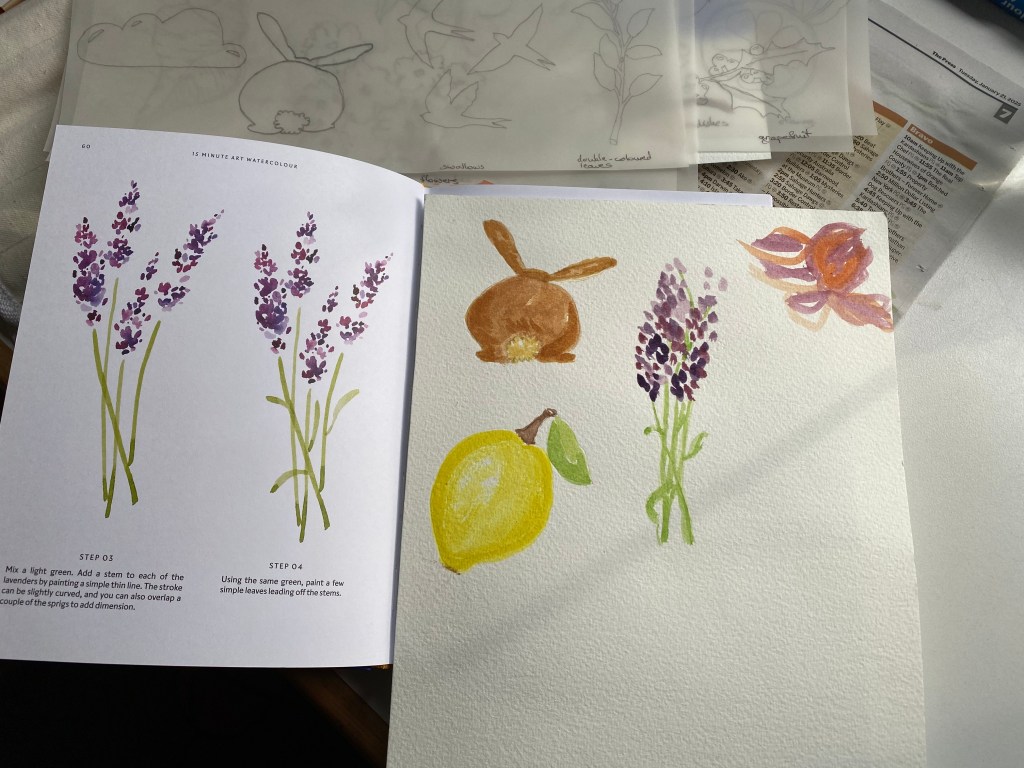
Finally, I found a space in my busy (!) afternoons to begin watercolour painting again. I’m pretty crap at it, but found that the greatest benefit was how calming it is to do, and time passes very quickly as I dabble away. My brush strokes are too heavy, the colours too dark and the book makes it look too easy! Yet it is enjoyable, almost meditative.

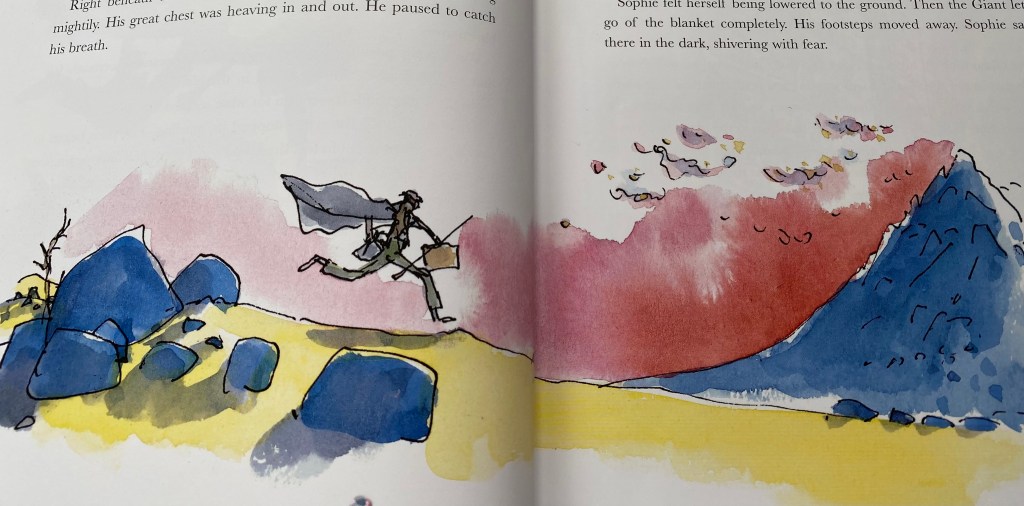
The carrots turned out quite well, probably because I drew the shapes first. Maybe I’m just better at colouring in. The cloud is a blob and the eucalyptus lacks the delicacy of the illustration in the book, to put it mildly. Perhaps drawing the lines first would be a good idea. I noticed that Quentin Blake does that with his illustrations for the BFG, sketching first, then applying a wash of watercolour. I did a funny wee sketch on the beach this week in which the proportions of the Port Hills are all wrong and the edge of the sea just looks weird. I quite like the little figure of the dog walker though, even if he looks as if he’s wearing an aqualung and the dog looks kind of pig-like.

Today’s efforts are similarly mixed. I gave up on trying to create the delicate petals of flowers but had greater success with a bunny and a lemon, both using previously sketched outlines. Colouring in may be the way to go!

Busy, busy, busy…

It’s strange to consider that being busy is not helping my energy levels! When I was teaching, it was important to have ‘meaningful teaching moments’ rather than just keeping students occupied with ‘busy work’. I’ve realised that I do a lot of busy work because I am procrastinating.

Lisa O’Neill (see previous post) calls it ‘procrastination paralysis’ and writes: “Reading this book might be changing your life, but is there something you have been putting off? A phone call? A small job? PUT THE BOOK DOWN AND GO DO IT!”

A friend of O’Neill termed the phrase ‘actionator’ to describe Lisa, who gives strategies for overcoming procrastination and quotes Benjamin Franklin who said, ‘Failing to plan is planning to fail’.

This morning – unplanned – I pruned the grapevine to reveal squillions of grapes in various stages of ripeness. But was this just busy work? I haven’t got to the watercolour painting yet, and there is more on my mental list…

Energy

Sometimes energy can seem elusive. Where’s it gone? Where does it come from? I’m not into self-help books as a rule, but this particular book seemed to do the trick: I’ve been feeling energised for the last few days – although maybe I feel it seeping away a bit now…

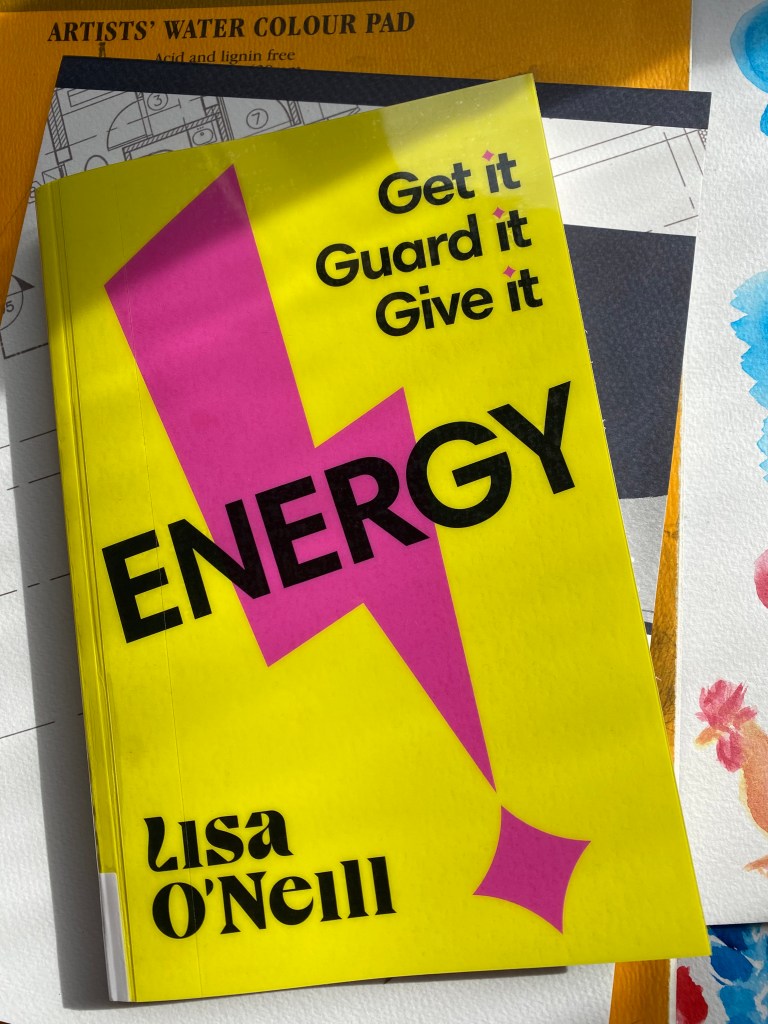
I have posed the photos of the front and back covers of the book on my watercolour gear which has been cluttering up my desk for days, because I’m hoping to gather up the energy to restart that hobby. Oops! ‘Cluttering up’ probably gives negative, energy-draining vibes to that hope.

Anyway, I enjoyed the book very much. It was well-organised, straight-talking, funny, and made a lot of sense: it has common sense, is sensible, and simply made sense. It helped that the author is a kiwi, which perhaps accounts for her straight-talking.

A major plus for this book is that it is supportive and not critical. It acknowledges the things which drain our energy and is helpful and comforting. I loved the advice to wear your favourite clothes everyday. The author is honest and open about herself: “As an opinionated, extroverted show pony, being seen and not heard and only speaking when I was spoken to took enormous effort!” That, to me, resonates with how women are expected to behave – as people pleasers. “We decide to settle for a role as a background character in other people’s stories. I am here to tell you that you are the main character. Enough of this back-seat shit!”

The book is divided into sections: Physical Energy, Emotional Energy, Mental Energy and Spiritual Energy. In the Emotional Energy section O’Neill writes about people who can drain our energy. She calls them ‘contaminators’ as opposed to people who give us energy, who she calls ‘contributors’. I’ve often felt a bit guilty that there are friendships I haven’t maintained or when I just can’t warm to someone. This book analyses why that might be so. That is helpful.

In Mental Energy, the author acknowledges that everyone is different, even neurodiverse. “Getting your head to work for you is one of the best things you can do. You need to start with awareness. What are you like? Are you negative? Impulsive? Intense? Work out what you are like, and then you have two choices: own it or change it. What you think, you become, and what you feel, you attract.”

O’Neill uses the hilarious image of our thoughts as goldfish. “…they swim in one ear, do a lap and swim out the other. Sometimes they want to continually do laps!” That made me laugh out loud and want to hold on to that image. Although some things in the book are not my thing (diet supplements, chakras) there’s a lot in it I want to remember and refer to again. I might have to buy a copy when I return this one to the library. I found it on the Recent Returns shelves – maybe another lucky person will find it that way too.