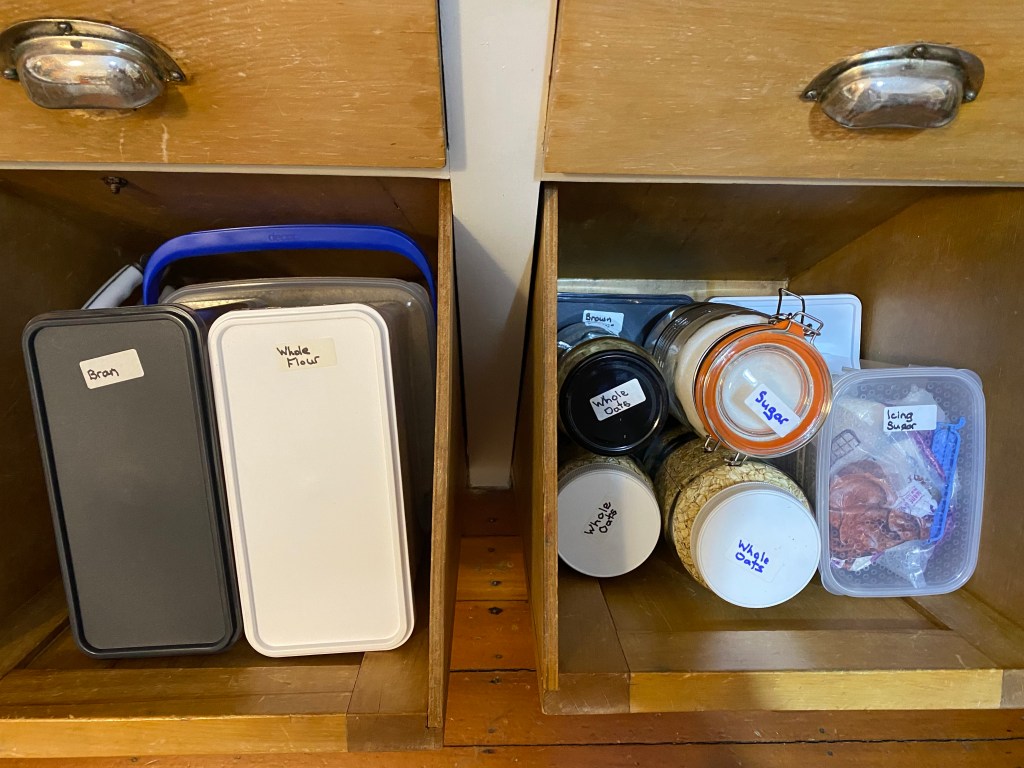
I was in a frenzy of activity today having discovered weevils in a new, unopened packet of wholemeal flour. Closer investigation found them in the bran and the plain flour – and an unopened bag of sugar. It’s not a good feeling to throw food out, but not a good feeling to pretend the bugs aren’t there and use the food anyway! Particularly if you’ve researched the bugs and seen the pictures – magnified a million times. Yuck. At least the food could go in the compost. Then I lifted out the flour bins, cleaned them and dried them in the sun, vacuumed and disinfected the whole space behind, sprayed for insects, put down diatomaceous earth for good measure, and went shopping for airtight containers – and supplies to fill them.
What lurks within?Clean bins and airtight containers.
So much for being in the time of the sixth mass extinction. I’ve had infestations of ants, passion vine hoppers and now weevils! The insect world appears to be thriving.
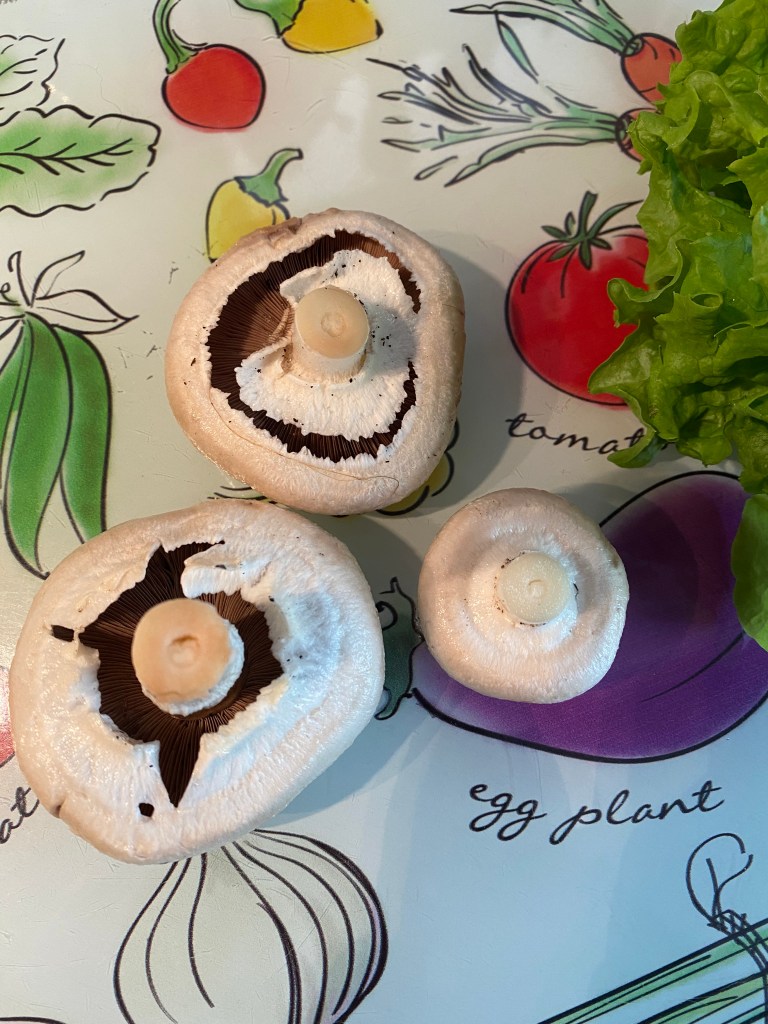
Laissez-faire would seem to be the approach I have to gardening. Especially at the moment when summer is ending and autumn beginning. Things look a bit wild. There are Japanese anemones falling about and over paths, the Cecile Brunner is overrunning its support again, the raspberry canes are looking shabby – yet producing lovely autumn fruit, the beans have finished and the leaves are yellowing, there are often toadstools, but…mushrooms? I discovered them inside the frame of the old greenhouse when I went out to pick leafy greens for a salad.
I picked three of them, leaving the fourth to do its thing, whatever that is. They look just like the ones you buy, with pale brown gills inside. Will I poison myself if I add them to a stir fry for dinner?
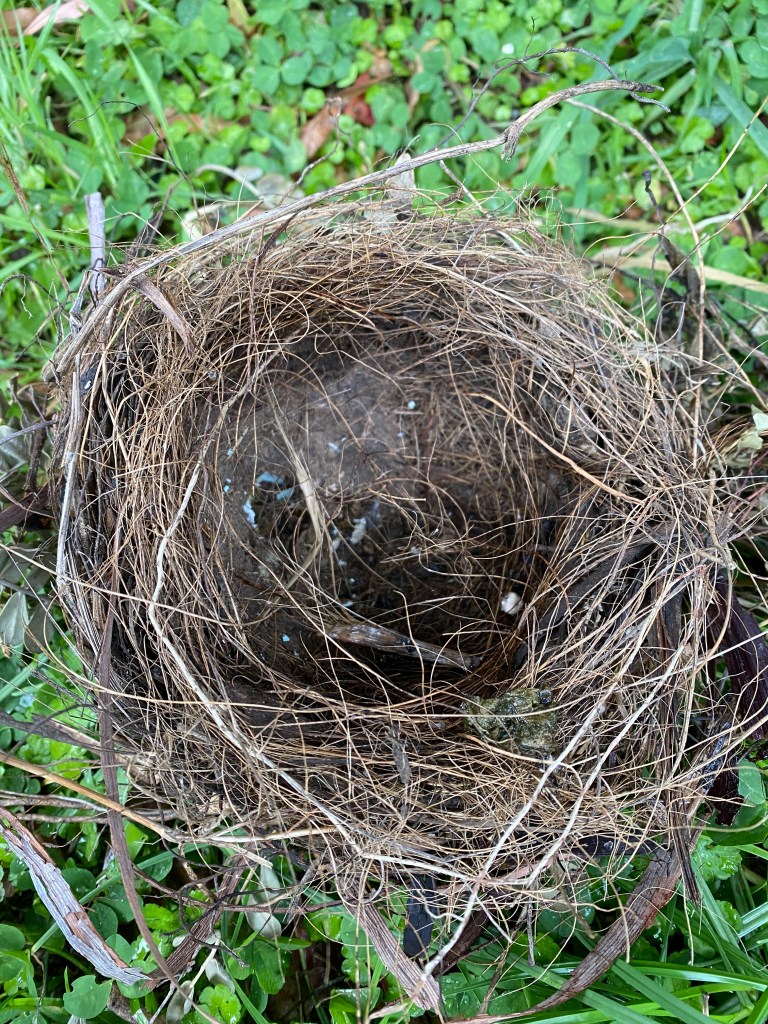
A blackbird’s nest was on the lawn this afternoon. There had been heavy rain and some wind. A great number of tī kōuka leaves came down in the rain and I wonder if the nest was in one of those trees. Although the nest has done its job, as the fragments of shell inside show, it seems a shame that such momentous effort should be brought to earth. The inside is packed firmly with mud, while the outside frame is looser (more so since being dislodged) with large pieces of bark, twigs and leaves circling the edge.
I can identify leaves from akeake, kōwhai, karo and tī kōuka (cabbage tree), as well as dried flower stalks, from the garden. The size of the nest, its heft, the use large pieces vegetation in the construction, and the colour of the eggshell fragments indicate that it is a blackbird’s nest.
We see blackbirds often and have come to enjoy their company, particularly their song, and their antics in the birdbath – plus the occasional argy-bargy with Felix. Not so much their scattering of dirt and leaves across the paths – but then, they probably keep the number of snails down. They do a good job of cleaning out the guttering.
VIII I know noble accents And lucid, inescapable rhythms; But I know, too, That the blackbird is involved In what I know.
Wallace Stevens, from ‘Thirteen Ways of Looking at a Blackbird’
The full Wallace Stevens poem is in the side bar of the page about the blackbird’s nest on the site New Zealand Birds. I’m impressed to find poetry included on a scientific site.
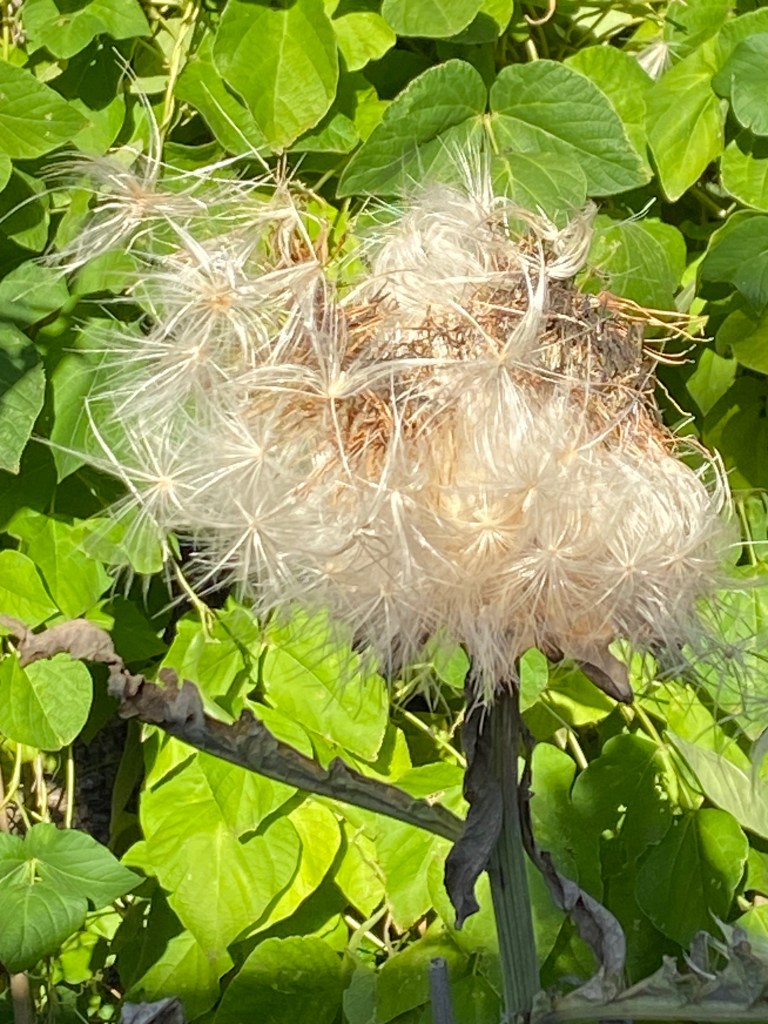
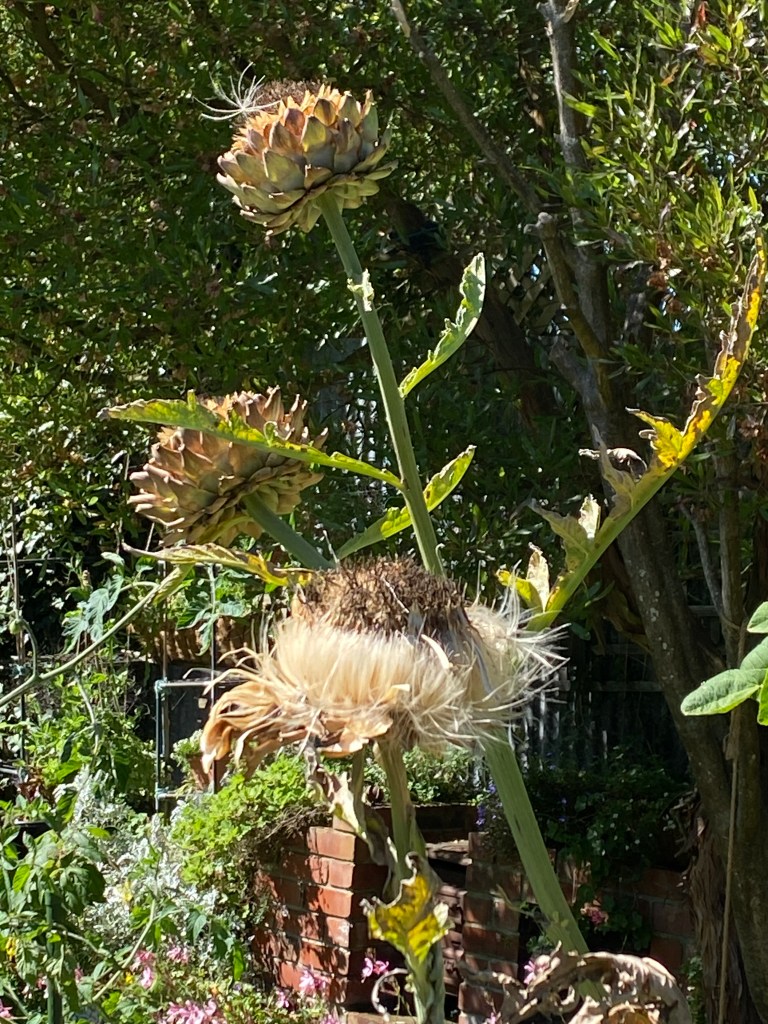
Artichokes are a type of thistle, apparently. I anthropomorphise my artichokes because they look as if they’re waving their arms about. The one which ‘exploded’ in a cloud of thistledown the other day is increasingly earning the name ‘Boris’.
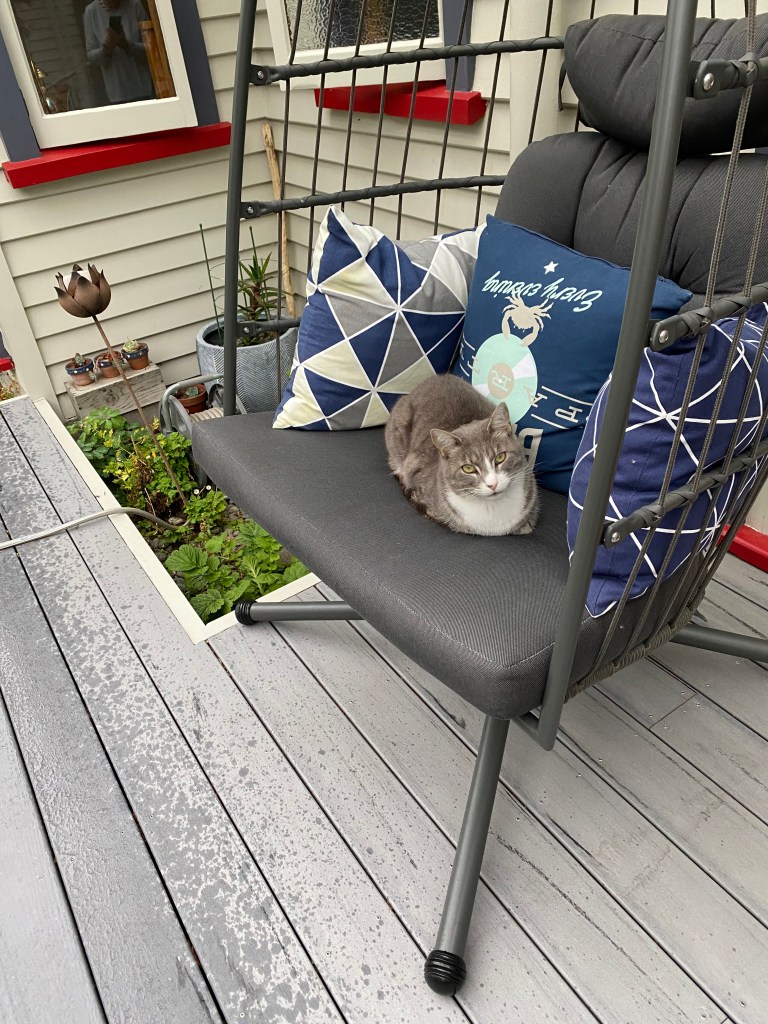
And for the Felix fans, here he is with his ears in lynx position and an intense look which says, ‘Get out of that egg chair and give me a treat’ (Whiska’s Temptations Seafood Flavour) – no ‘please’ required.
In the heat on Sunday I was surprised by the sight of an artichoke ‘exploding’ as the seed head opened and seeds went off in all directions. Gusts of wind took the feathery seeds which flew and drifted about the garden and into the house like large ‘fairies’ from a dandelion clock . Perhaps one will sprout on a sofa?
All advice is to cut off the heads of the artichokes before this stage, but then you’d miss the drama.
Two hot days in a row were all the excuse I needed to sit in a cool spot and read. Consequently, I’ve just finished this brilliant, entertaining and educative book by a 27 year-old historian. I had thought of skimming through it quickly, but it was so engaging that I read every word – sometimes more than once! The author would like to rescue the once famous (infamous?) visual satirists (mainly Gillray, Rowlandson and Cruikshank) from Victorian censorship – Prince Albert burnt many he found in the royal collection. She claims that they were such an influence in their time that they likely changed the course of history. As the cover illustration shows, they caricatured political figures, here showing PM William Pitt and Napoleon Bonaparte carving up the globe – you could substitute them for Trump and Putin.
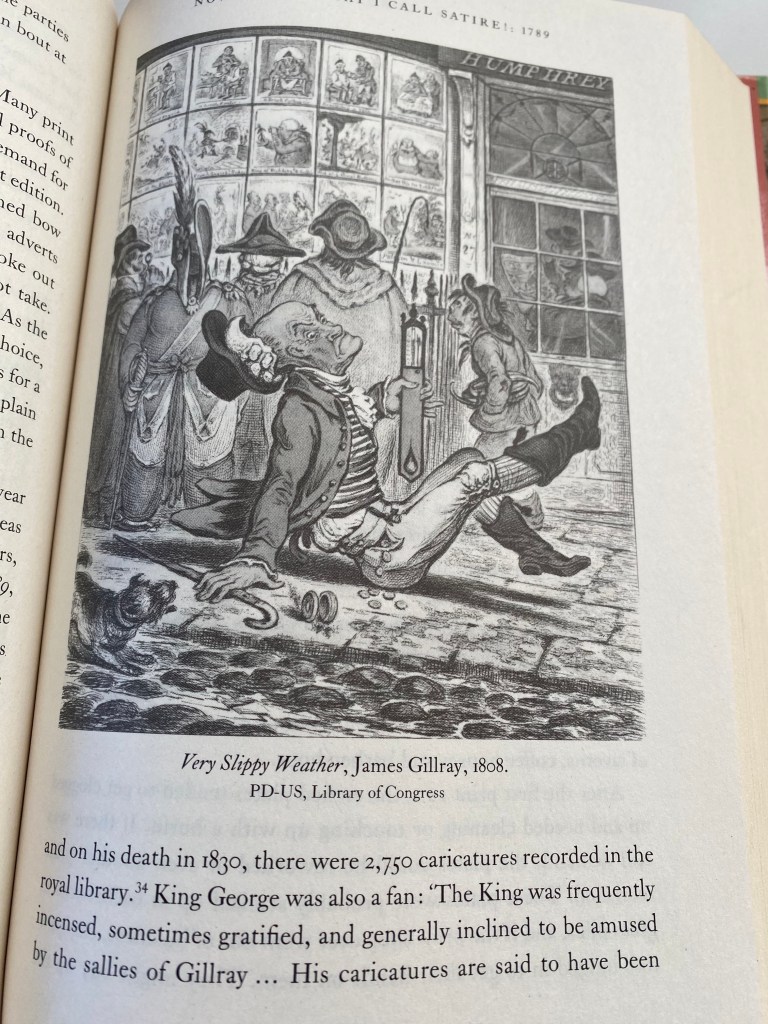
People would crowd to the bow windows of the printmakers (here, the shop of Hannah Humphrey) to see the latest cartoons – often in the hope (or dread) that they might feature in the caricatures themselves – and to buy some to add to their collections.
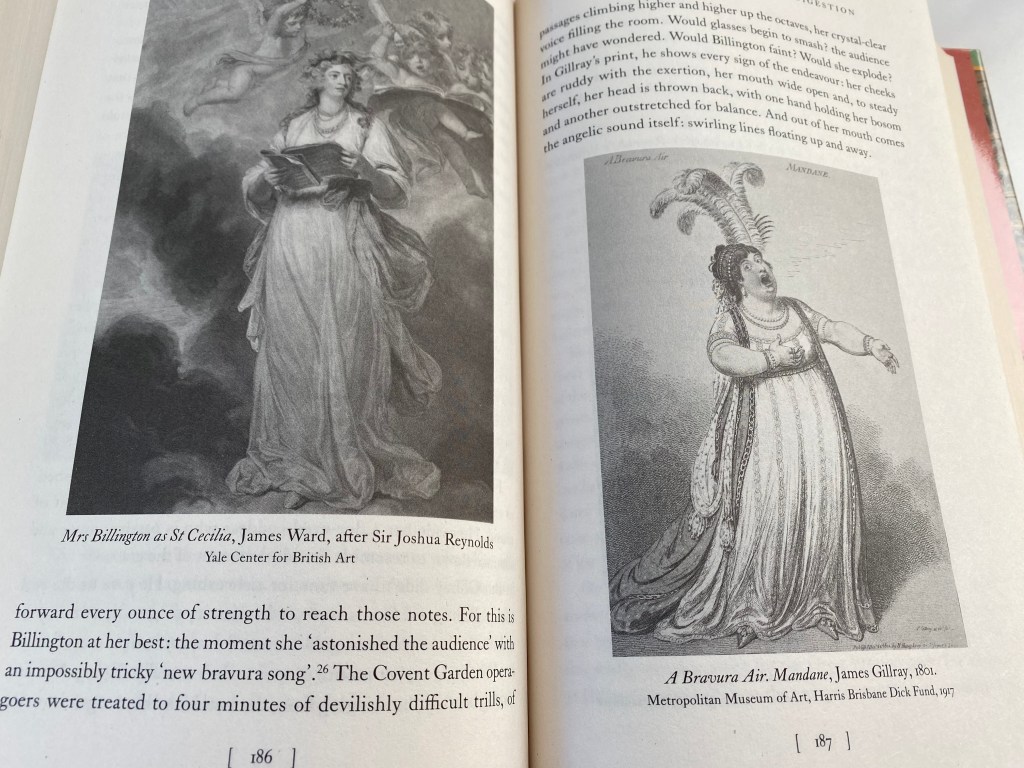
While portraitists and painters may have been held in higher esteem, the satirists were generally formally trained in those skills too. This image shows the contrast between the two forms: one an idealised portrait of a celebrated singer, while the caricaturist brings her down to earth.
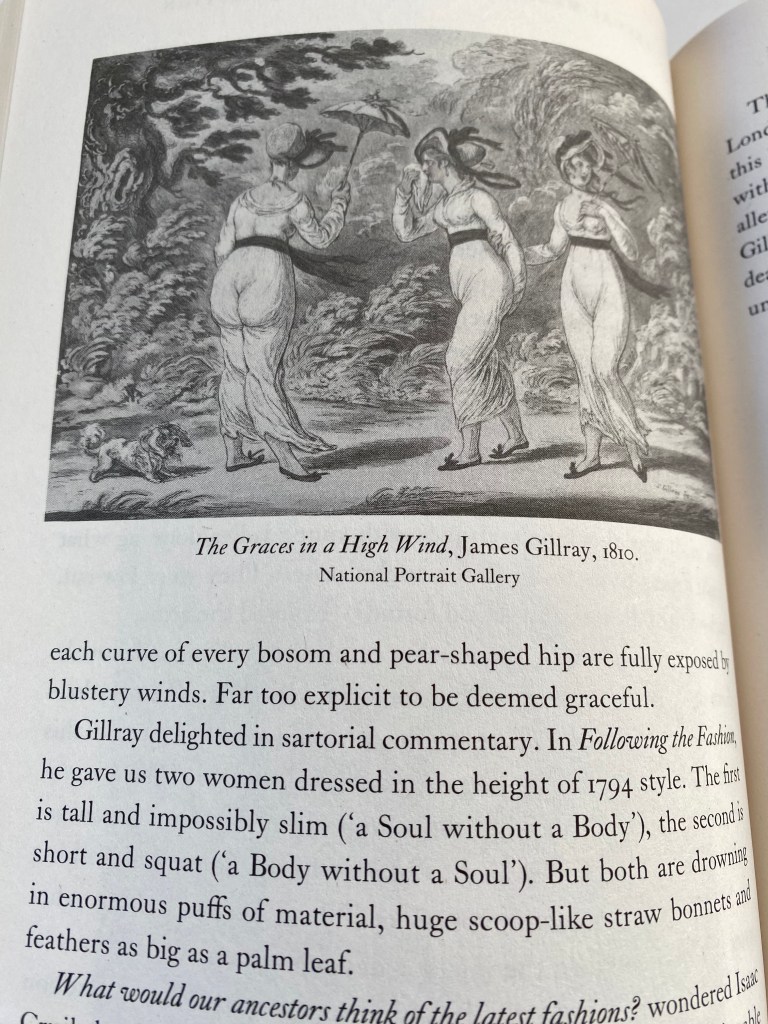
I am amused by this send-up of a fashion trend in muslin dresses better suited to warmer climes than the English weather.
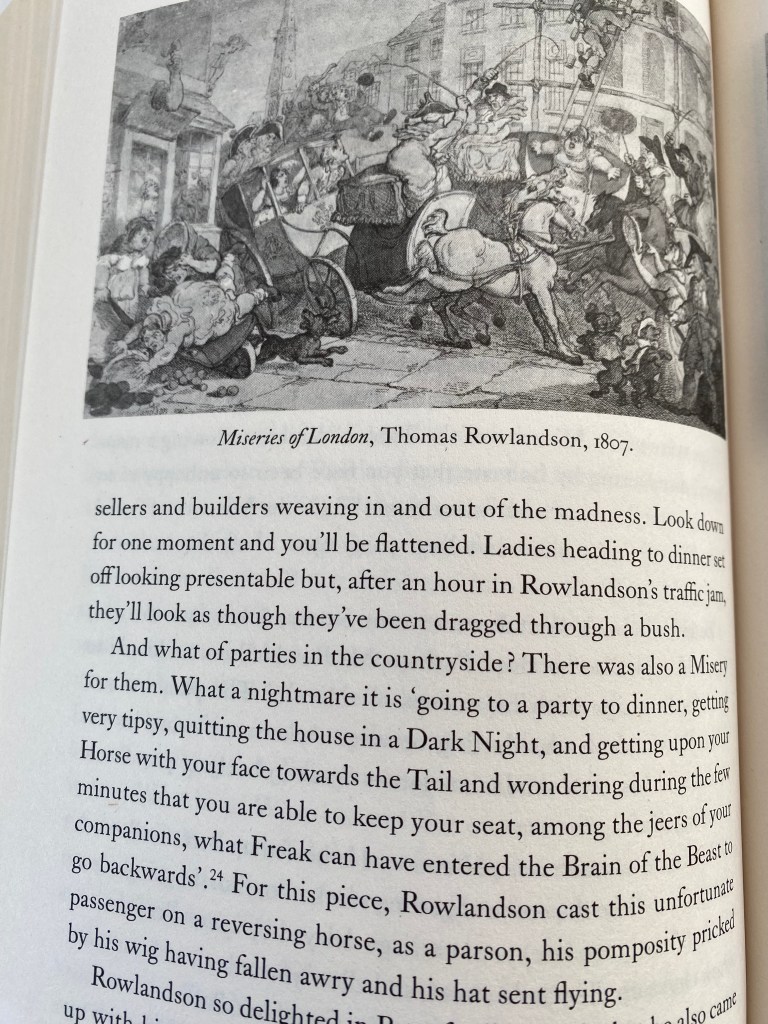
And here’s a Georgian traffic jam in London. I’ve included text again so you can appreciate the author’s very readable writing style.
Many of the caricatures are of brutal scenes, particularly of the French Revolution, which shocked the public and, despite general disapproval of George III and more so of his profligate heir, may have put people off trying the same thing at home.
Here’s a bit about the author, with a caricature of the Prince of Wales (later George IV) by Gillray below.
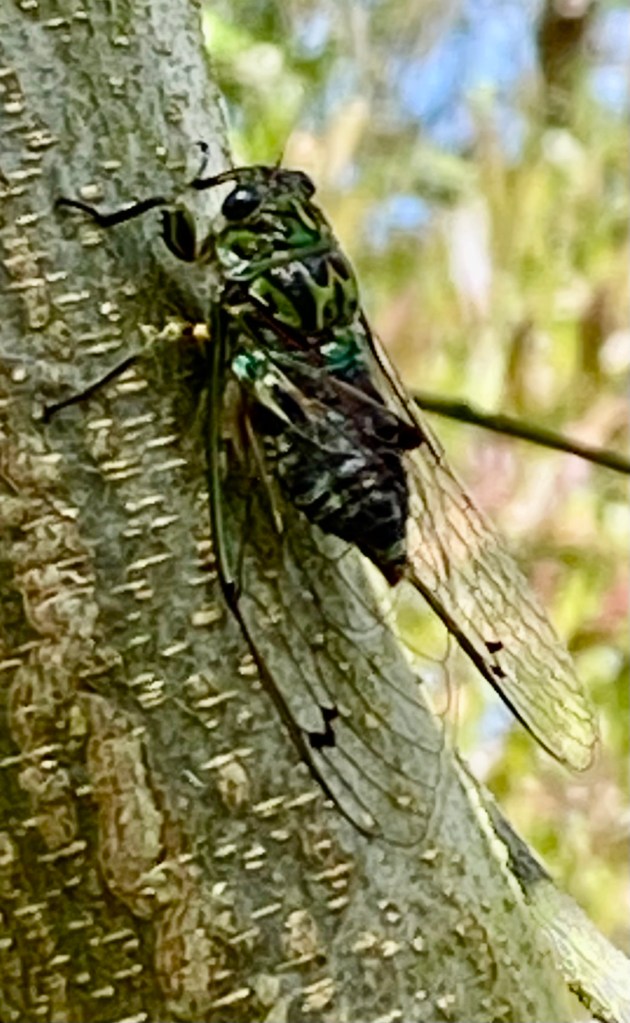
A cicada was in full voice in the kowhai tree beside the house. To me, the sound represents the end of summer when the days are often still and hot. The cicada was low enough on the tree to get a close photo. I discovered that it has interesting markings. It is probably a Chorus Cicada.
Felix, however, trying to sleep, seemed to become increasingly irritated by the loud noise. At first he was relaxed, stretched out on the warm deck, then his ears twitched back and forth and he opened his eyes. Next minute, he was up the tree. The noise stopped abruptly. As far as I can tell he didn’t catch the cicada, it flew off (I hope) to annoy someone else’s cat.
With doubtful weather this morning, we decided to walk in the park instead of on the beach. The town has been buzzing the last few days with the Electric Avenue music event in the park on Friday and Saturday. Over the fence, we could see how beautifully presented the venue was.
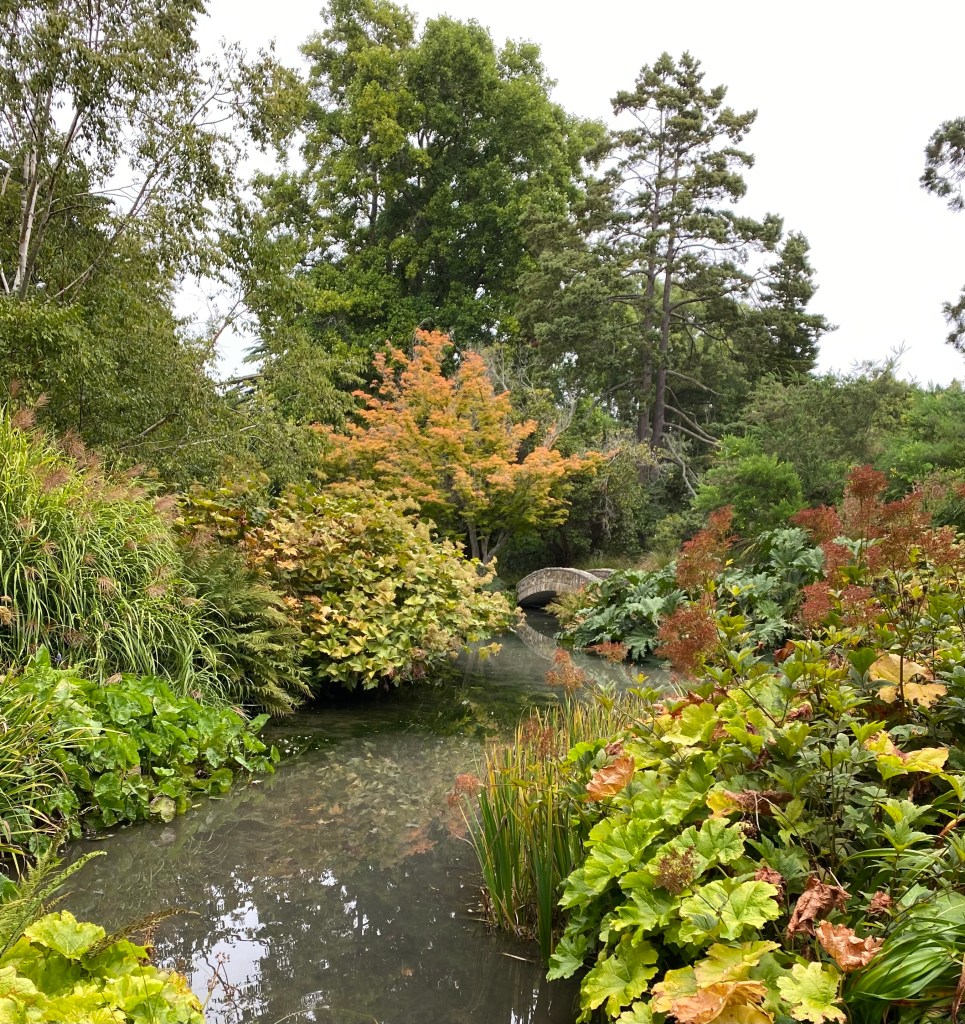
To match the weather, we walked through the Water Garden and remarked on the autumn colours – surely it’s not autumn yet?!
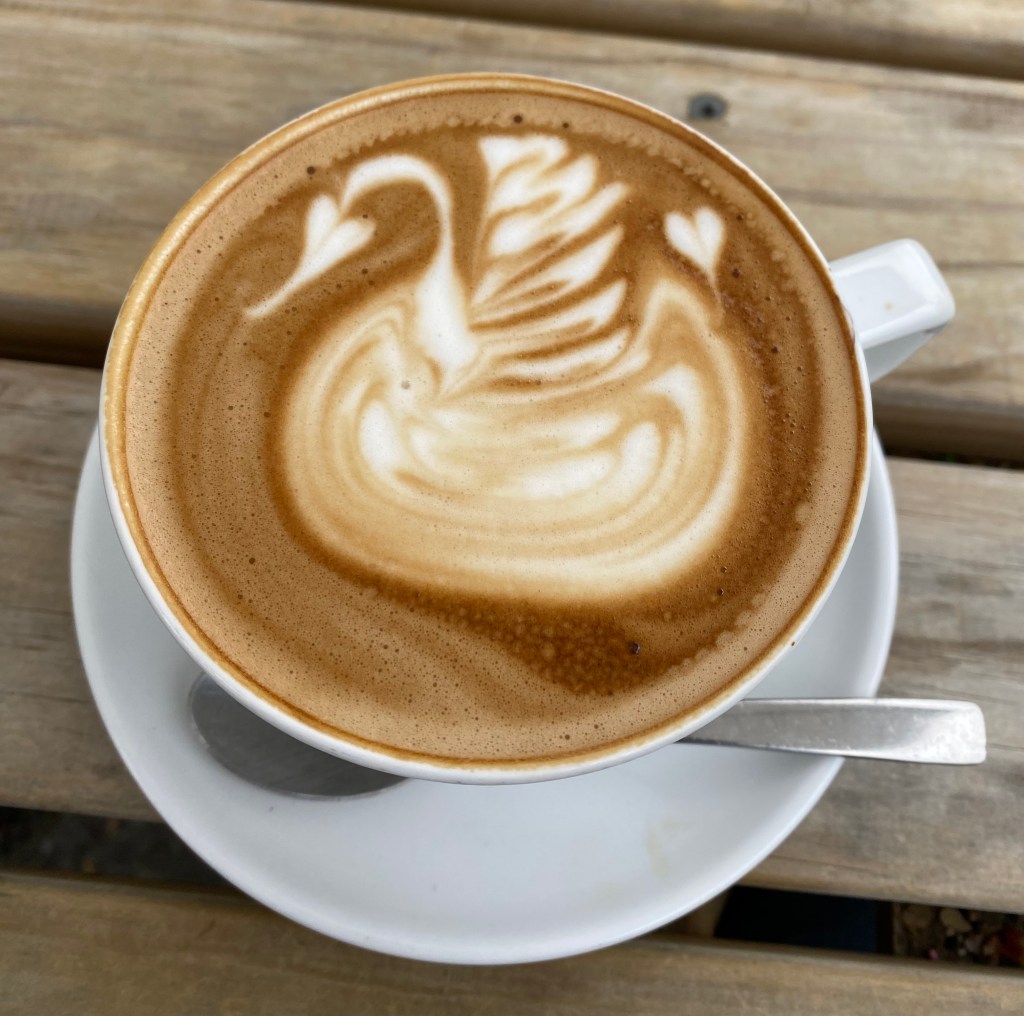
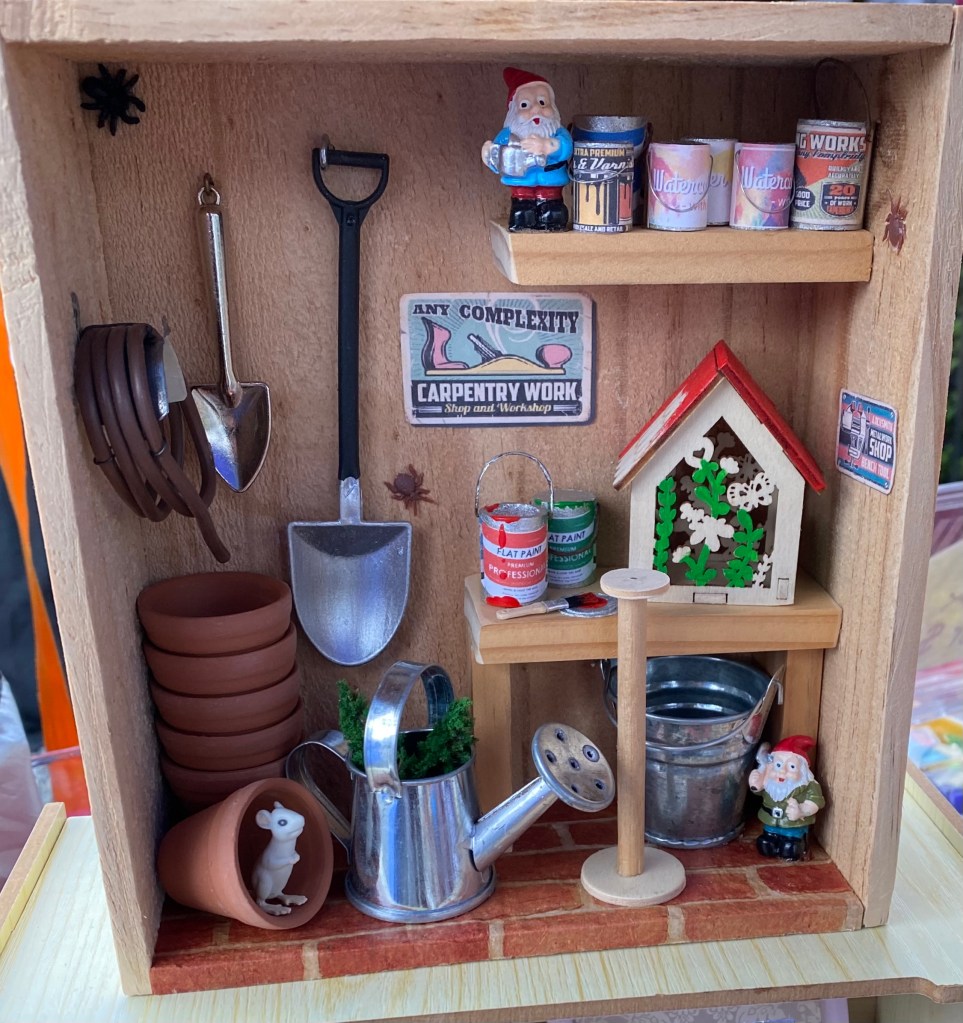
The Arts Centre provided the consolation of hot drinks at Frances Nation – with a delightful swan on the top of my flat white. Across the road at a craft market, we marvelled at the dextrous work of the stall holder who specialises in miniatures.
While the heavens did not open, as we feared they might – there was just a light drizzle from time to time – we enjoyed all there was to see in the Gardens (highlight: the Curator’s Garden) and the Arts Centre (notable: the new Arts Centre Shop). And we still managed our usual number of Sunday walk steps: over 6,000.
An exhibition at Tūranga for Chinese New Year includes a large painting entitled Happy Guanzhong Kids.
It reminds me of village scenes and children playing which I saw in China in the late 1980s. Here, the scenes are tidied up, stylised and compressed into one picture, like a Bruegel painting. I enjoy looking at the details. It is charming.
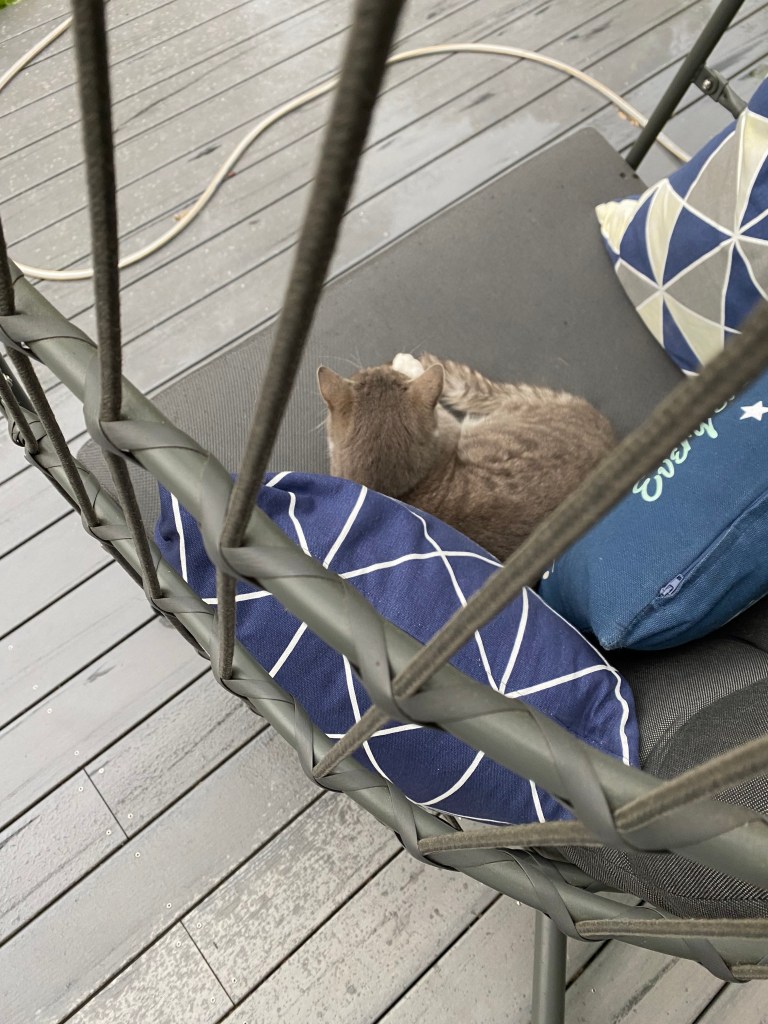
When it started to rain I went to cover the egg chair, but it was occupied. Felix remained on it as the rain intensified and thunder rumbled. He was still there when the storm had passed and after I had spent a couple of hours solving the sudden loss of internet. It’s unusual for him to be on the egg chair, possibly because it moves. It’s my ‘therapy’ place – perhaps he feels its comfort too.
Later, he came inside for a treat before heading outside. I checked to see if he’d gone back to the egg chair, but he was staring over the side of the deck at this little chap (or chap-ess).
We’ve seen a hedgehog about in the early morning or late afternoon on the patio, on the drive, and disappearing under the deck. Perhaps it lives there.
................... for lovers of ice cream. Your free on line magazine for sweet frozen treats. Recipes, inspiration, artisanal ideas for your delectation.












 Anne-O-tations