Once a week, all year round, my friend and I drive 20 minutes east to the beach. In winter, while others head west to go skiing, we enjoy the changing moods of the sea and sky. This week we paddled for the first time since autumn.
A little chilly, but refreshing. August 2020
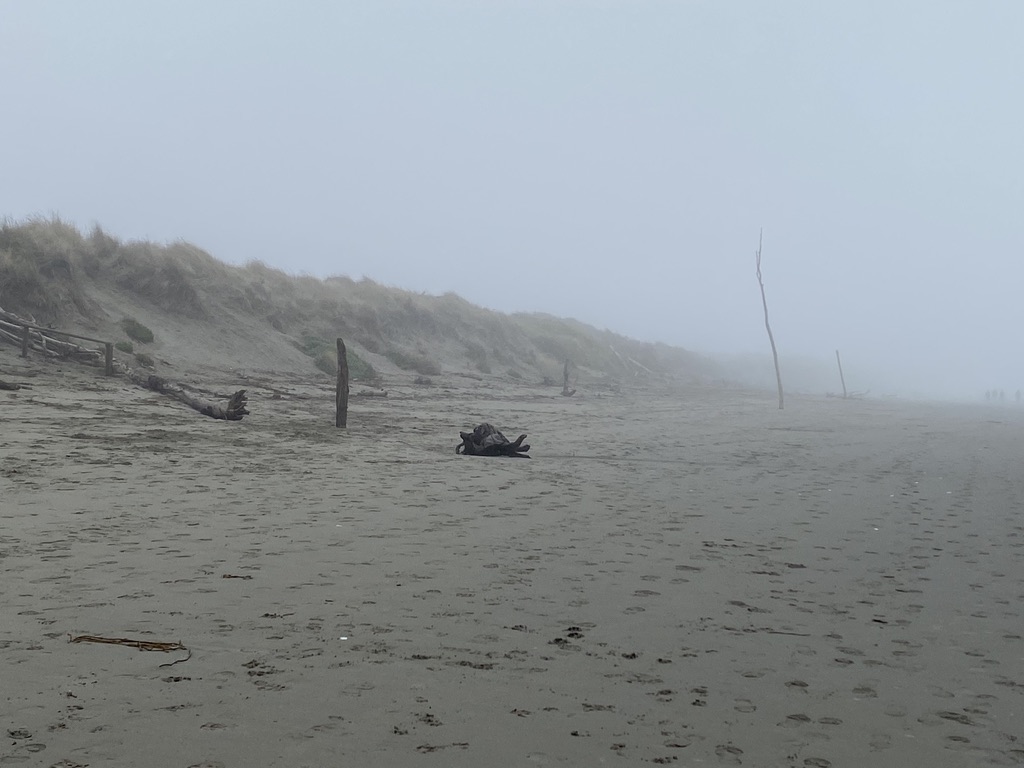
The sky was blue and clear so we had a clear view of the Port Hills and the Kaikoura mountains. Yet, just a week earlier, you could hardly see a thing!
The footprints told us others were out walking too. August 2020
We’ve encountered all sorts of weather over years of winters, including stinging wind-blown sand and biting southerly winds. In August 2016, there was snow on the Port Hills, but a beautifully clear day.
The beach is different every visit. It depends on the tide, weather, and what has happened over the week, such as high tides or storms which wash up drifts of seaweed and shells, push the sand into banks against the sand dunes or wash the beach smooth and clean of debris.
July 2020
Aug 2015
One morning, we found a fishing boat had washed up overnight.
22 December 2019
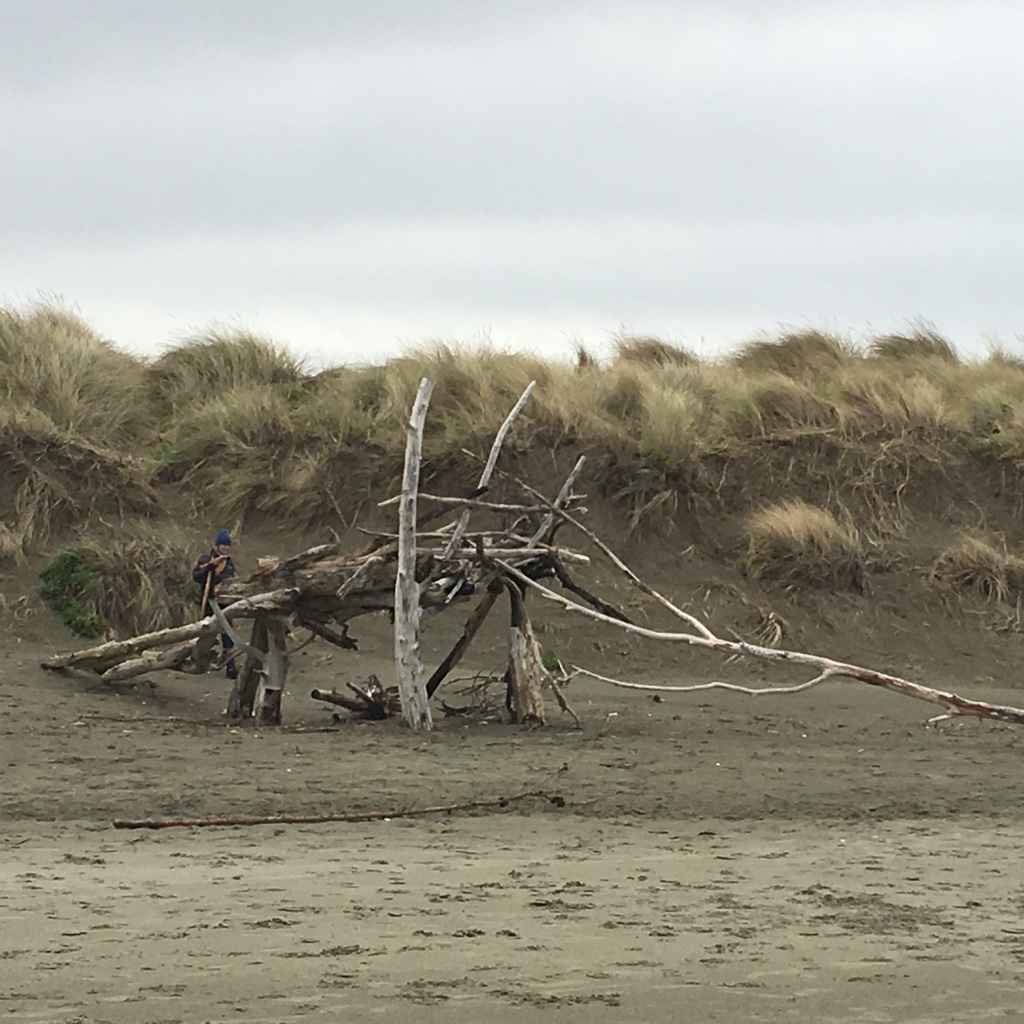
Sometimes artists exhibit their work at the beach while other people find driftwood irresistible for creative expression.
Jan 2017
Nov 2018
July 2019
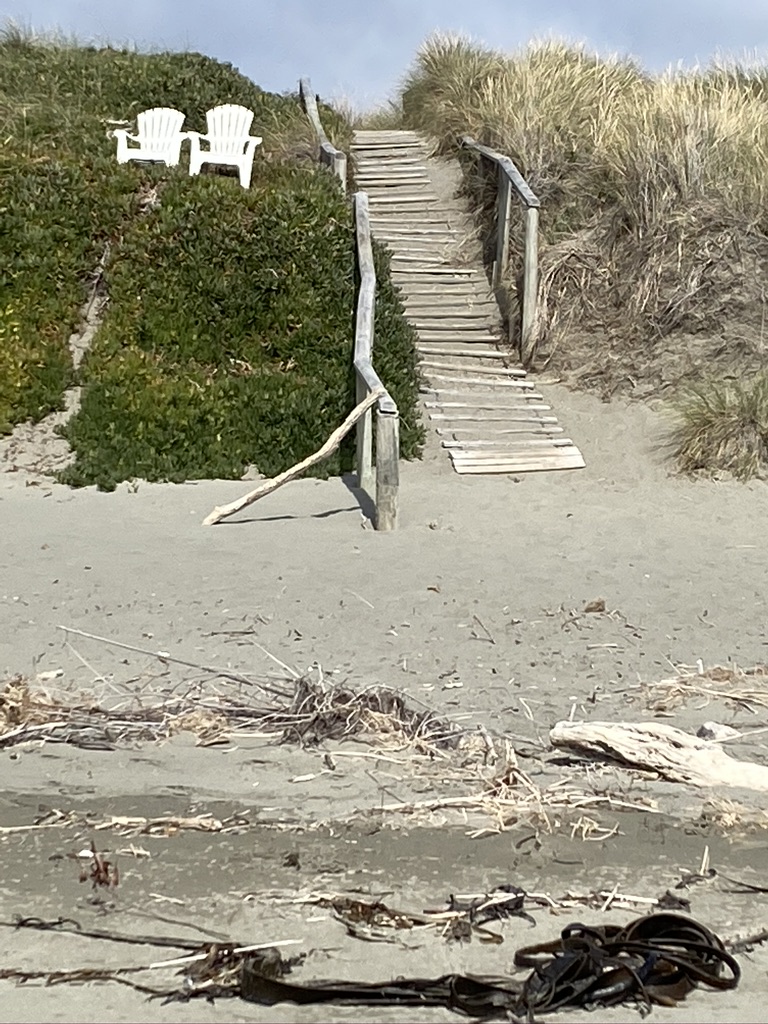
Some would like to live at the beach, even in winter! Aug 2020
This week I saw these two works by Russell Clark in the Christchurch Art Gallery. They celebrate the sea and its exhilarating effect on us, using light, perspective, shape and texture.
The painting on the left is View from the Pier. The sculpture is called Beach Figure. The texture of the garment reminds me of driftwood and sand shaped by the wind.
Nature does some interesting sculpting too.
Dec 2018
Dec 2018
Mar 2020
Aug 2015
Mar 2018
Dec 2018
We, and many others, find the atmosphere of sea, sky and fresh air uplifting. There are people out walking, running, cycling, surfing, and exercising their dogs and horses all year round.
Dec 2018
Dec 2018
Aug 2019
Jan 2020
Aug 2020
Nov 2018
April 2012
Dec 2015
Dec 2015
Both sea and sky have changing moods.
May 2020
Often, we walk up the dunes to find a view from the top which takes our breath away.
There is one more session of Arguments, Fallacies and Trickery, the philosophy class I’m attending at the WEA. We have been looking at aspects of reasoning and how language can be used to manipulate our responses to issues and ideas.
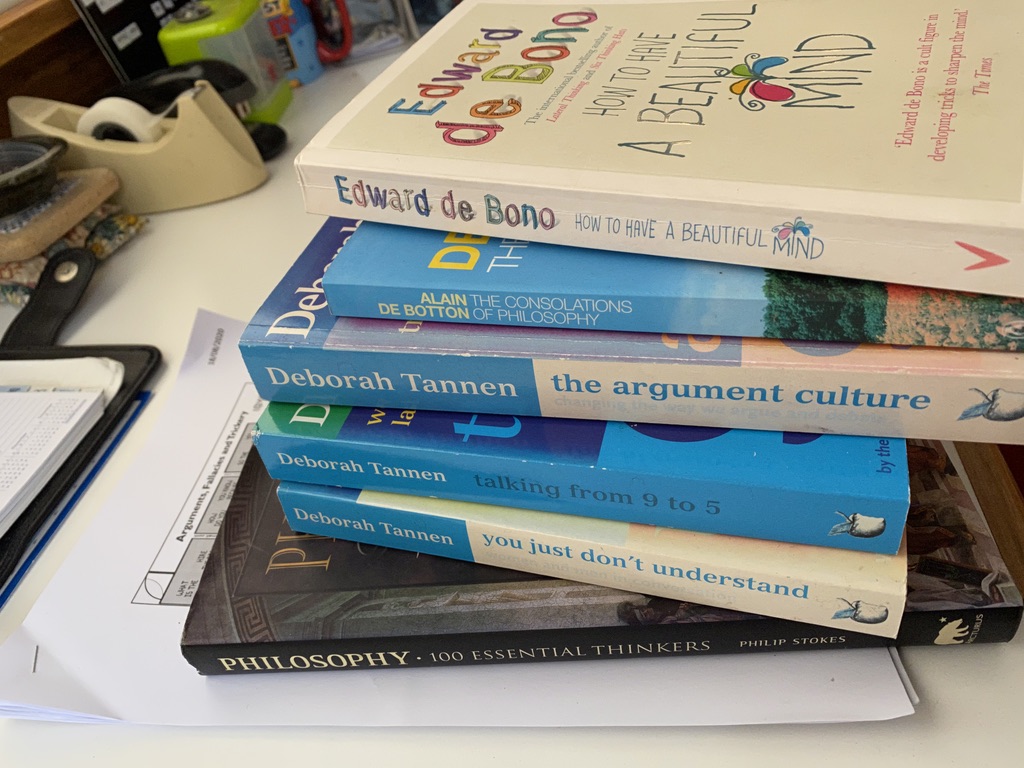
The course has led me to dig out the books I have – some unread – about philosophy, thinking, and language used in argument.
I’ve been examining how I express – or fail to express – a point of view, and have found I often let my feelings get in the way. Edward de Bono‘s six thinking hats lets us acknowledge feelings (red hat). I often berate myself for not offering a view, particularly when someone makes an unsupported assertion in conversation. My reading is helping me to clarify my ideas and my thinking processes so that I can experiment with careful, considered responses. A friend uses the “commend, recommend, commend” technique which is a useful starting point and easy to remember when you are put on the spot. The “commend” part helps to see the other person’s point of view, which can help to quell the anger response which tends to result in a standoff, with polarised views. De Bono develops this in his chapters: “How to Agree”, “How to Disagree” and “How to Differ” in How to Have a Beautiful Mind (2004). The aim of his book is to encourage the readers to use their minds – beyond intelligence or knowledge – just as they might exercise the body.
We have become accustomed to a different, cooperative, collaborative style of leadership in Jacinda Ardern which emphasises kindness. Every achievement from gun control to environmental protection was sweeter for having been collaborative and responsive to events and needs. When asked if she found the coalition negotiations frustrating, Ardern said that, on the contrary, it was an aspect of leadership which she enjoyed. I am disappointed to see the old “oppositional” model being ramped up by the latest opposition leadership. Of course, the name “the opposition” sets up this style of discourse. It is calculated, of course, particularly with an election in October, because many people respond to it with relish, whichever “side” they are on.
Deborah Tannen in The Argument Culture (1998) begins the book by addressing “our tendency to engage in ritualized, knee-jerk opposition…our tendency…to approach public dialogue, and just about anything we need to accomplish, as if it were a fight.” It is a tendency of Western culture, she contends, which “has served us well in many ways but in recent years has become so exaggerated that it is getting in the way of solving our problems. Our spirits are corroded by living in an atmosphere of unrelenting contention – an argument culture.”
How much worse it is now with social media and the internet generally adding to this culture. How easy it seems to slip into old habits and “go on the attack” (war imagery pervades our language) instead of looking for positive ways of responding which enable common ground and agreed solutions. When the Dalai Lama was asked what is the secret to living a good life, he replied: “Be kind.” It is such a simple and obvious thing to do.
Edward de Bono says we should always be looking for alternatives – as in his lateral thinking for which he became famous in the 1970s. It is disturbing that this technique, and the thinking hats, might be dismissed as no longer fashionable – “old hat” – when we need them more than ever.
There was a pro-life rally in the central city in the weekend and I felt a surge of anger as I saw men in pro-life t-shirts. It was some time before my thinking led to common ground. Probably, pro-life and pro-choice both want a society in which it is safe for a woman to bear a child in most circumstances. When looking for alternatives to the currently polarised views, I wondered if both sides could direct the energy created by perceived injustice into making a society in which women are not degraded, fearful and intimately scrutinised. In which they are not held responsible for the crimes of others. In which bringing notice to themselves does not make them vulnerable or subject to the controlling actions of others. In which they have access to fair pay and resources. In which they have the support of law – begun, in part, by the recent legislation in which abortion is a health issue, not a criminal one. It could be a way to move forward.
My re-thinking is a work in progress. (Double meanings intentional.)
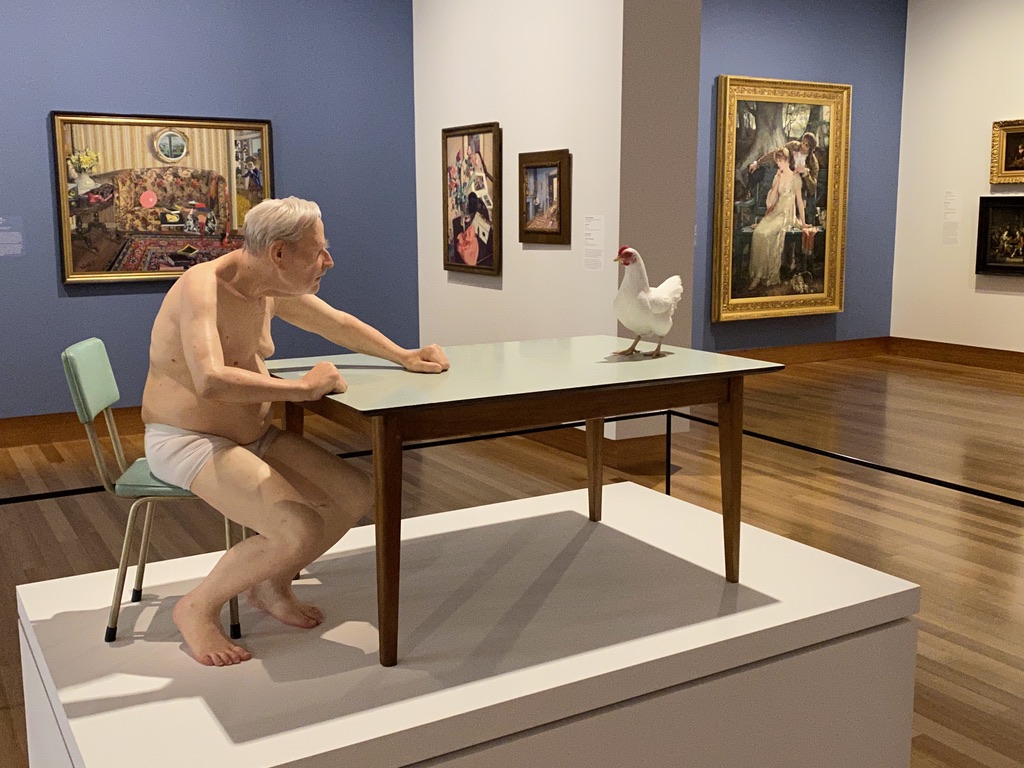
Finding common ground? Ron Mueck, chicken/man, Christchurch Art Gallery. Less subtle is the power play in the painting on the right.
When the school year was divided into three terms, instead of the current four terms, we looked forward to August holidays and the first signs of spring. The month is a changeable one. Yesterday was warm. Today I walked to philosophy class at the WEA feeling the cold bite of the “beastly easterly”. Our entertaining tutor and the rapt class did something to ease the chill, not to mention the sometimes heated discussions of logic and reasoning. The class is called Arguments, Fallacies, Trickery.
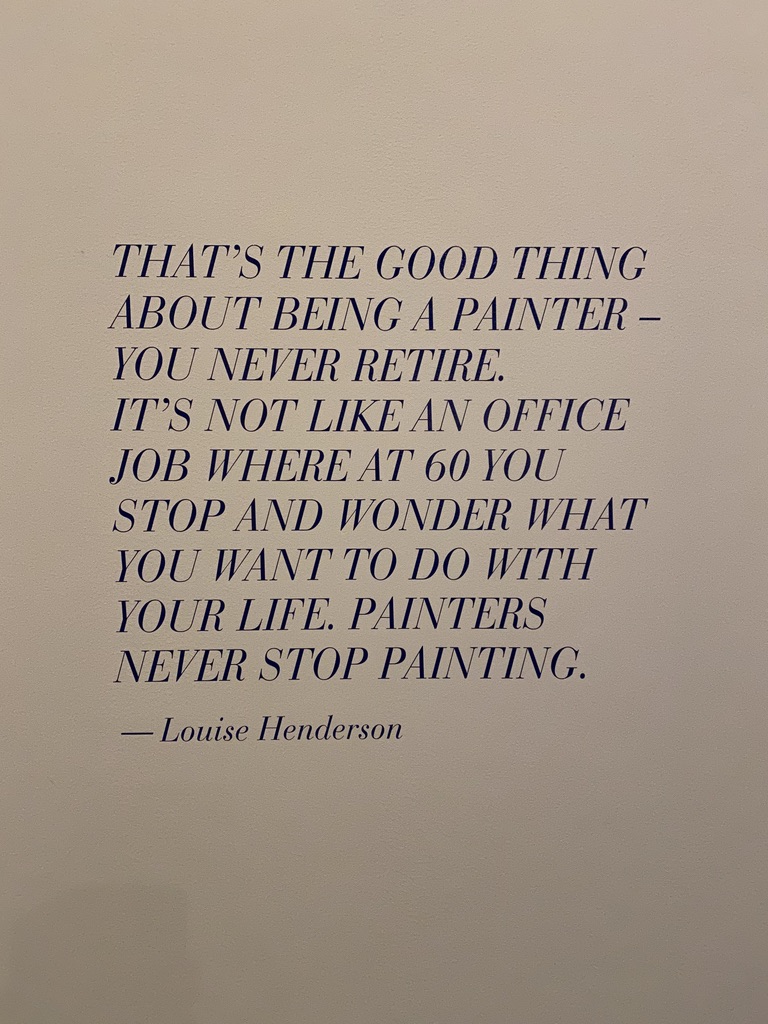
After class I dropped in at the Art Gallery to take a second look at the Louise Henderson exhibition. At the entrance is this quotation:
As a retired English teacher, I will never stop reading or thinking about what I read. The philosophy class has shown me how to rev the cogs up a notch and I’ve enjoyed the ‘homework’ I’ve set myself to discover more and to understand the jargon. I can apply what I’m learning to my reading.
I’m revelling in reading and missing no opportunity to read widely. The variety available at our fantastic libraries is impressive. I’ve just finished a book set on the Kamchatka Peninsula in Russia (Disappearing Earth by Julia Phillips) and I’m now reading a book set in ancient Rome (The Grove of the Caesars by Lindsey Davis, in the time of Domitian who, incidentally, banned all philosophers from Rome) – both from the library. I was able to order a missing book in Tsitsi Dangarembga’s trilogy. It arrived very quickly, a brand new copy of The Book of Not, which follows on from Nervous Conditions. The last in the trilogy is This Mournable Body which is long-listed for the 2020 Booker Prize. I have a copy in my latest pile from the library. The trilogy is the story of Tambudzai, a girl desperate for an education who moves from her rural village to a prestigious boarding school on a scholarship during the struggle for independence in Rhodesia-Zimbabwe. Will her education give her the life she hopes to have? At what cost? It revives memories of my students’ teenage angst and struggles with anxiety and identity and with their often harrowing home lives. Add a layer of war (continual gunfire in the distance and close-up violence) and discrimination (an overcrowded African dormitory and a bully for a matron) and this character’s pain becomes palpable to the reader. I will read on anxiously to discover how Dangarembga’s character survives as she grows up. Interestingly, she remains in Zimbabwe (so far) unlike the main character in NoViolet Bulawayo’s novel We Need New Names (shortlisted for the Booker the year Eleanor Catton won) who migrates to the US and experiences poverty and racism there. In a heart-breaking scene, she and her cousins try on clothes in a mall to picture themselves living lives they know they will never have. Dangarembga has remained in Zimbabwe where she is an award-winning film-maker, playwright and political activist in a country where, like many others, a pandemic is one more thing on top of many dangers. There is no feeling nostalgic for times past, I would suppose. Instead, all of these books to some extent show virtue is a source of happiness and suffering does not exclude the possibility of joy – as in the philosophy of the Stoics interpreted for today. I may change my mind about this conclusion when I’ve read the third book.
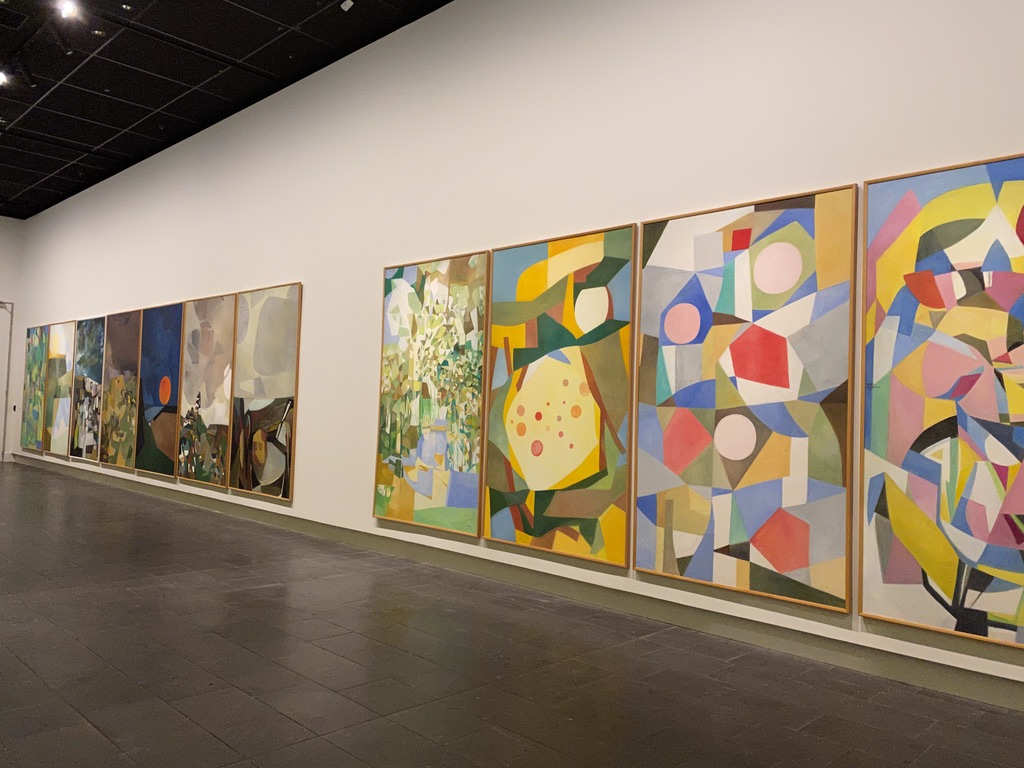
Back in the Art Gallery, August is missing from Louise Henderson’s panels featuring the months of the year.
In a tangential mind-drift during the philosophy class this omission seemed significant. I’m not sure why. It makes a good thinking point. What would it have been like? Would it have shown a half-way point between the dark July panel and the light September panel? Did it contain something which set the exuberance of the remaining panels in motion? Has it been lost? (The answer is in this link.) Or did its owner refuse to lend it for the exhibition? I’m pleased the curator left a gap for the visitor to contemplate.
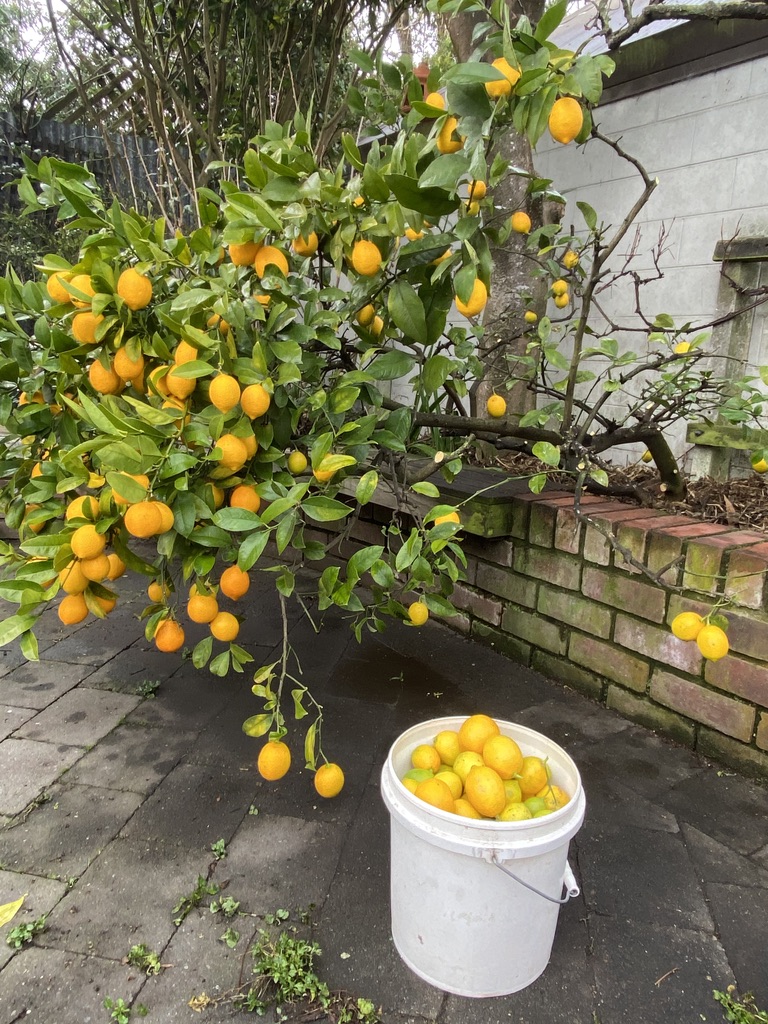
August seems yellow to me so far, less than a week into the month. Perhaps because I have just pruned the lemon tree quite hard to remove branches resting on a brick wall. I collected a bucket full of lemons from the removed branches and am considering ways to use them – limoncello? preserved lemons? lemon meringue pie?
‘When life gives you lemons, make lemonade.’ Sounds like Stoic philosophy to me.
Perhaps Popcorn will discover some answers inside the strawberry bucket.
When Zeno lost his merchandise in a shipwreck, he turned to discussions under a Stoa, or porch, hence the name Stoic. He is the founder of Stoic philosophy which seems to be based on not letting misfortune defeat you, but using it to discover new possibilities. These rescued hens have suffered misfortune, but don’t appear to be dwelling on it.
Here’s a nice thought to finish:
“Of all people only those are at leisure who make time for philosophy, only they truly live. Not satisfied to merely keep good watch over their own days, they annex every age to their own. All the harvest of the past is added to their store. ” — Seneca
Wee Jock, in the best fire-side chair, visited for 4 days.
Our winters are not severe, although they are tough for many people and we all look forward to warmer days. Where most of us live here, we’re not knee-deep in snow or suffering through long dark days and months, as in Scandinavia where they suffer consequent mental health issues – perhaps why Sweden hesitated to impose an early lockdown when spring had just begun.
Today there is a frost but, as the pattern goes, it is followed by warm sun. There is something to appreciate, even on a dull day. Yesterday was cloudy and cold, so we lit the fire earlier than usual, ate kumara soup and read our books. Outside the weather went from cloudy to stormy to rain with a bit of ice in it, to clear and even a bit of watery sun in the late afternoon.
I appreciate the warmth of thick woollen clothing which I couldn’t bear the thought of wearing in summer. My wool duvet, wool pillows and wool mattress cover are fabulous in winter – and summer (with one less layer of duvet). I am able to wash and hang my woolly socks and merino tops outside on the line – especially on a day like today.
Thank goodness that we are able to socialise (let’s hope it lasts). Meals out, card games and walks are great to keep my spirits up and keep me connected with friends. And between-times there’s blogging, emails, texts and phone calls – and, maybe, delightful news. Speaking of news, there’s always something thought-provoking in the daily newspaper I collect from the gate each morning.
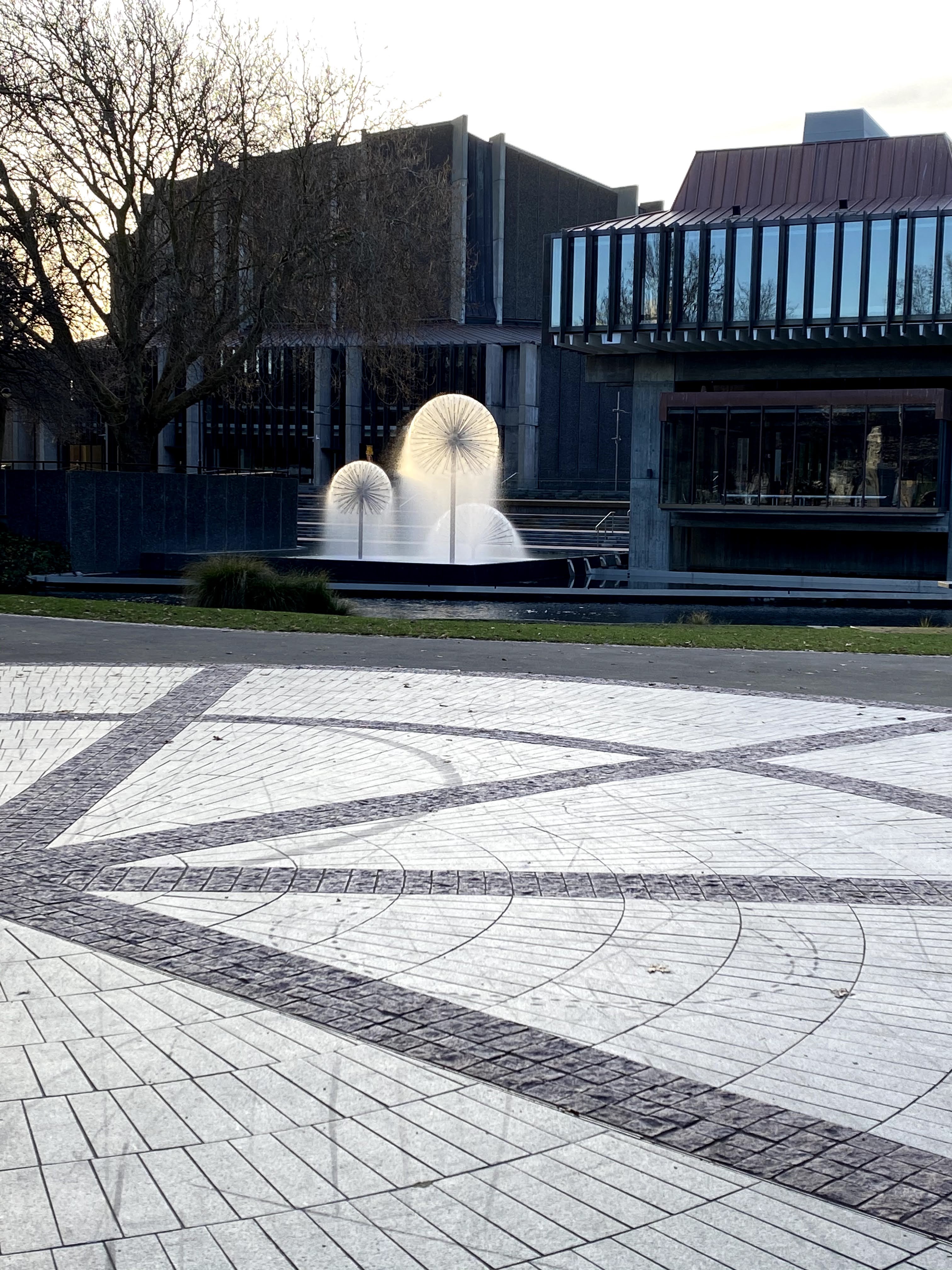
Our Christchurch City Libraries are perhaps the best thing about our city. They are a connection point for everyone and a warm place in winter. There’s something magical about coming home with a pile of books. Walking home from the library last week, I was delighted to see the Town Hall fountain working again. I sat and enjoyed it for a while.
The Ferrier Fountain lifts the winter blues.
Over the last couple of months I have found myself taking the odd photo of something cheering. Here are some creative delights I’m enjoying this winter.
Here I am appreciating creativity: my winter poem, Mum’s marmalade, a fairy house at the beach, the bird feeder – an up-cycled work of art, affogato dessert at 27 Steps lit by a light installation outside, my winter-themed noticeboard.
The garden is a changing source of delight.
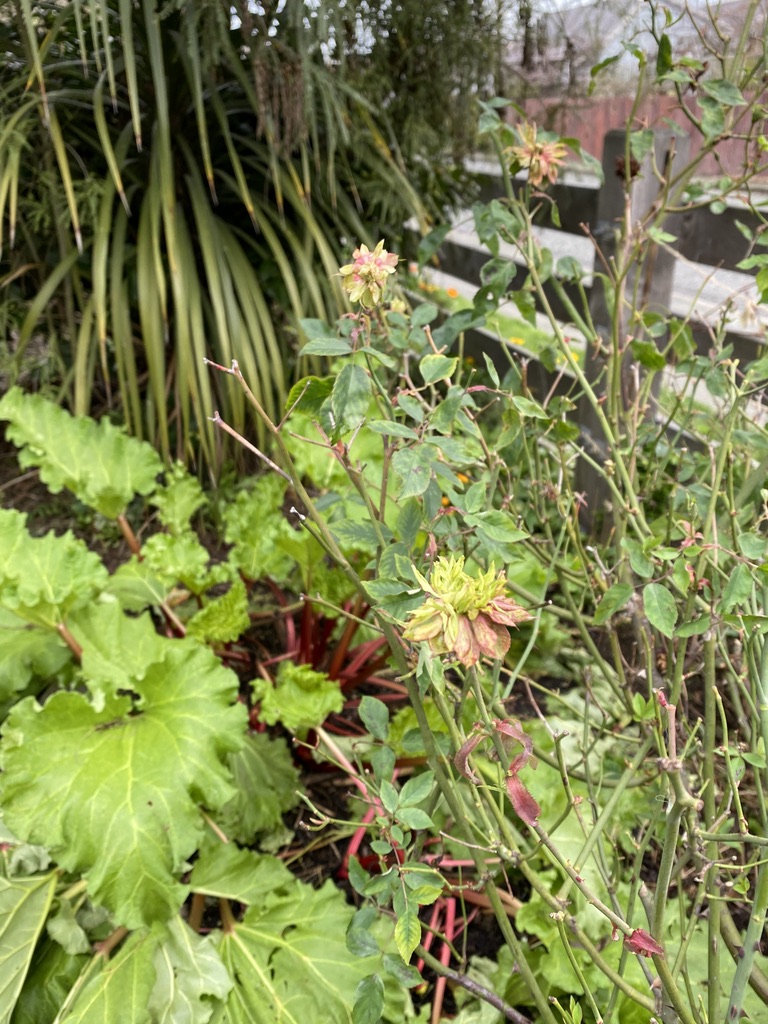
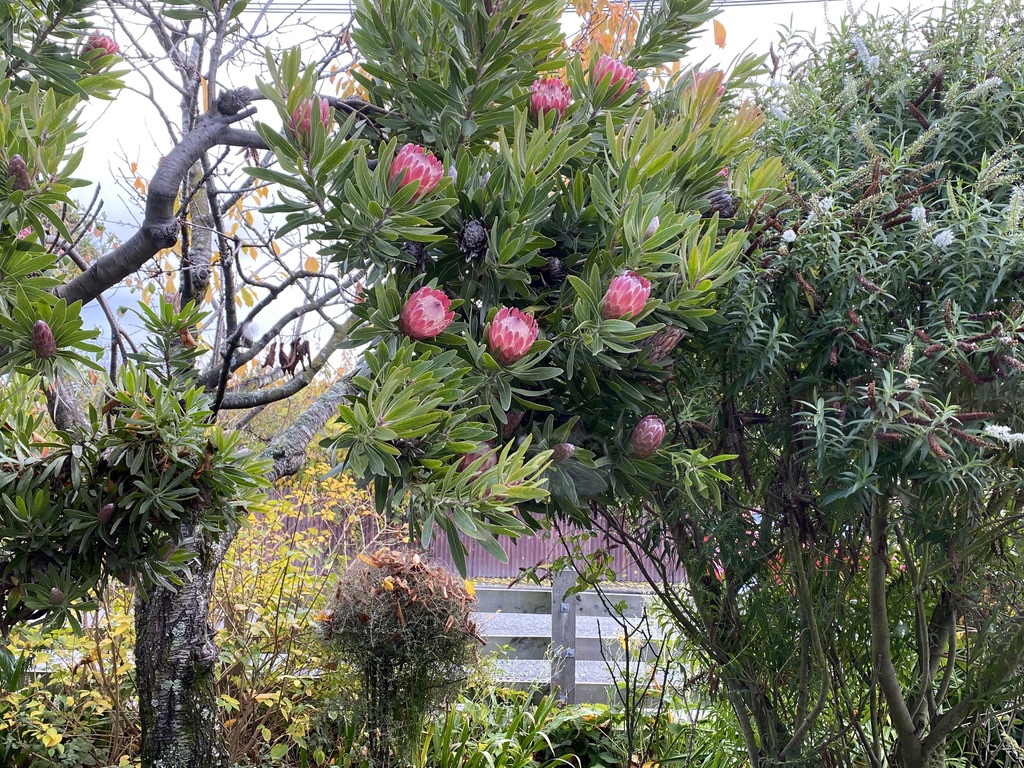
I’m appreciating the colours, textures and forms in the garden – and being able to pick gorgeously scented violets and wintersweet, and harvest herbs, fruit and rhubarb.
Winter delights show me that there’s always something cheering in the cold, dark and dreariness, particularly as I have the luxury of time to appreciate it.
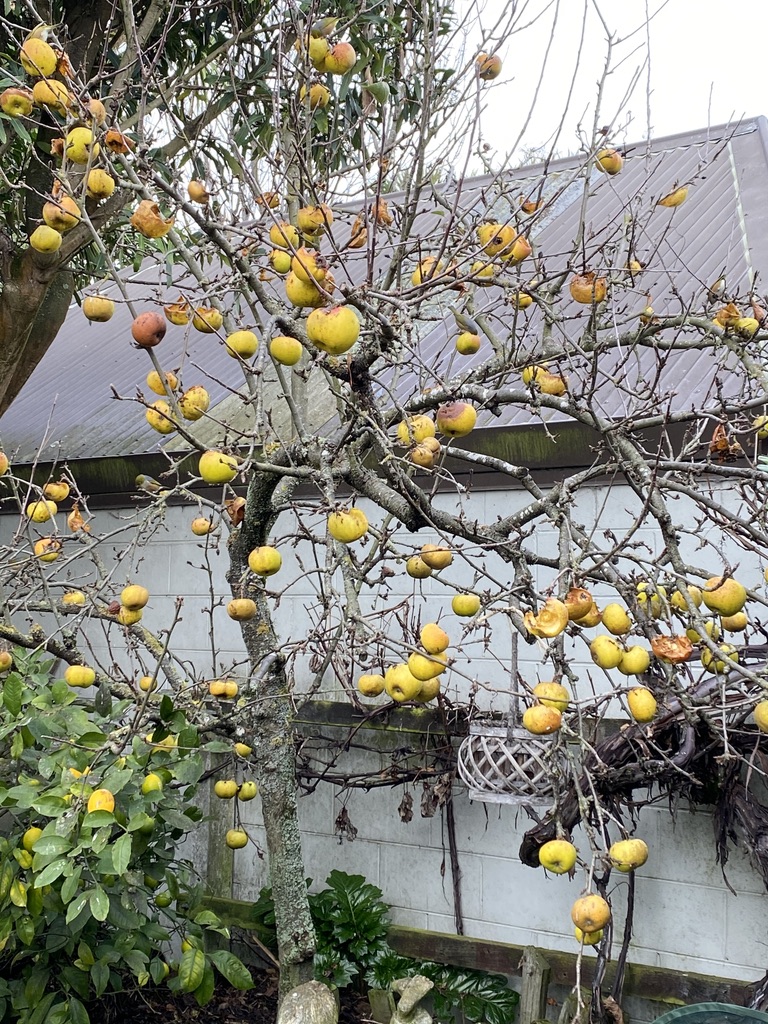
Waxeyes (aka silvereyes) feed on the last of the apples and our sociable chooks come to see what’s up.
In the late afternoon, there’s the possibility of a contemplative winter cocktail and The Panel on National Radio.
A ‘wobbly knee’ (whisky, green ginger wine and lemon) and RNZ National.
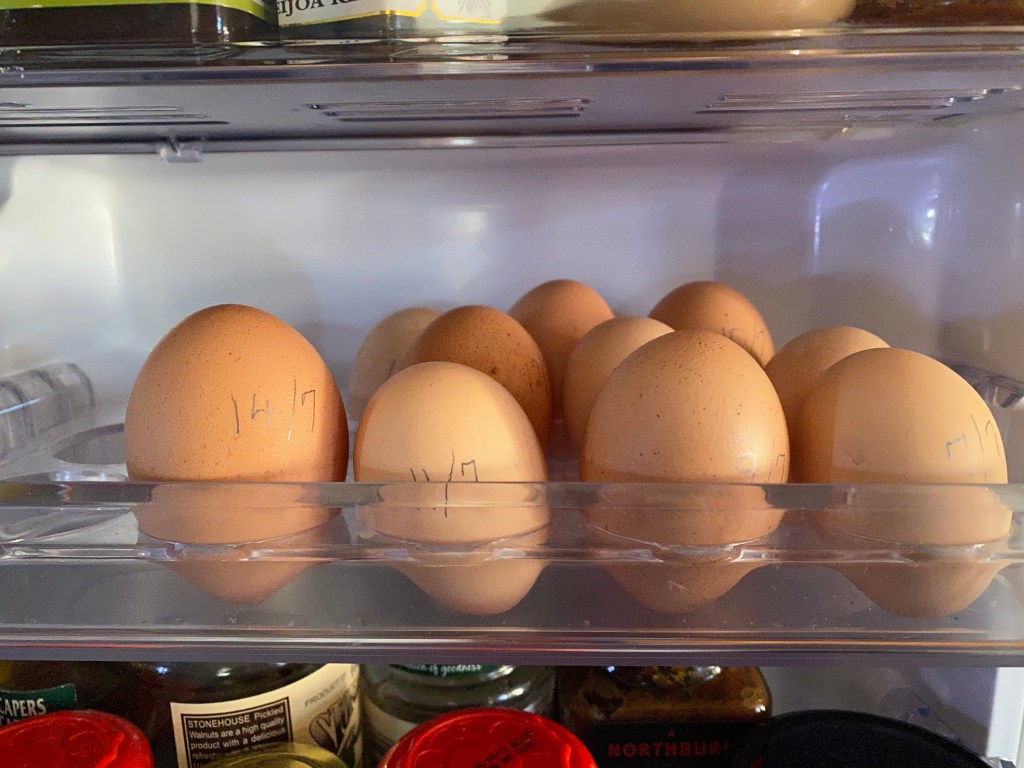
It’s hard to say if the remaining two hens miss their mate. I was reading all sorts of reactions into their behaviour over the next couple of days, but who knows? They have continued to lay eggs as usual. Dora excelled herself with a whopper on Tuesday. I expected the hens to go off the lay in winter, but it doesn’t seem to be the case with these chooks.
They stick together a lot, as usual. When the sun is out, they find a dry spot for a dust bath by the wheelbarrow, where I keep pea straw.
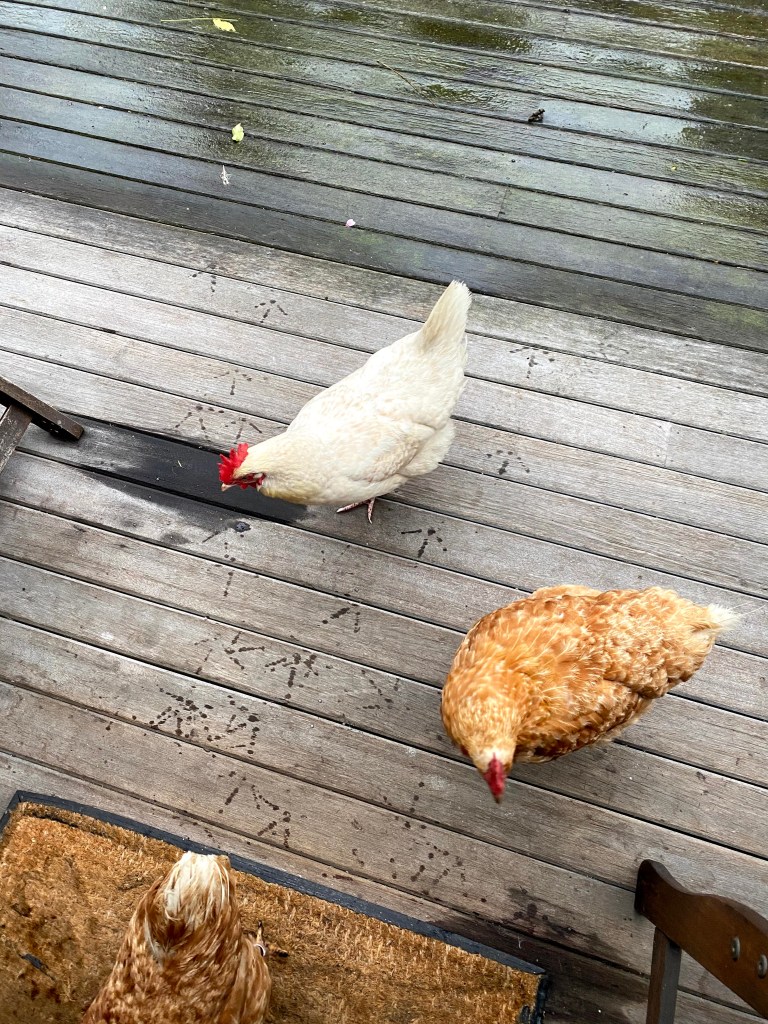
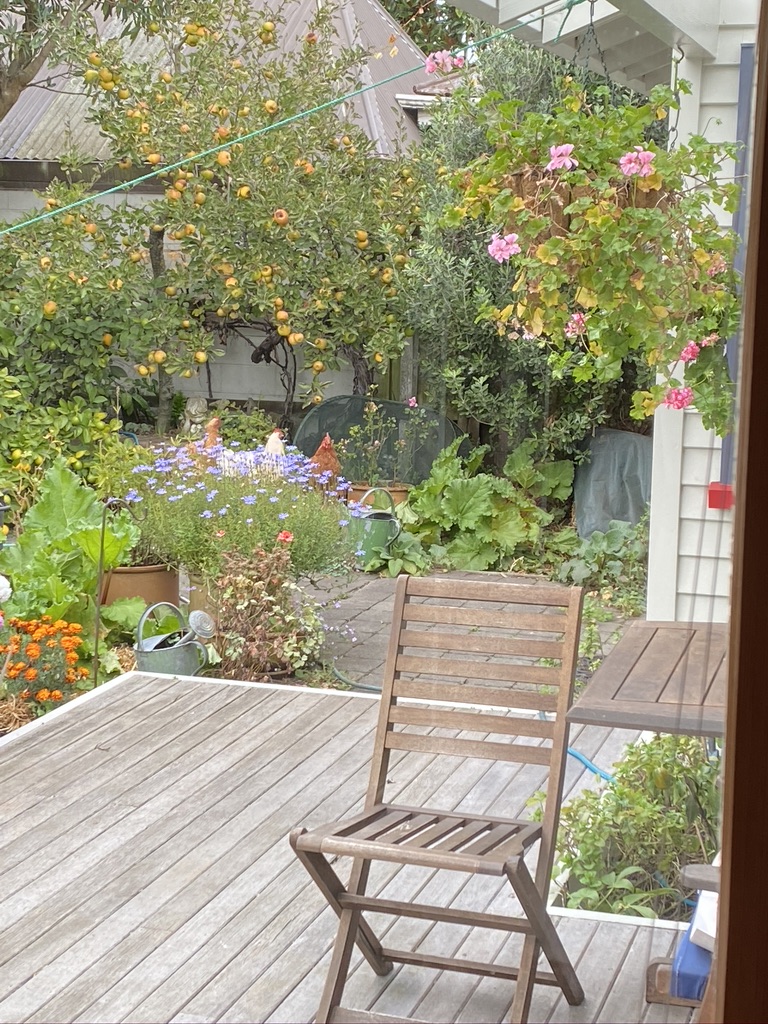
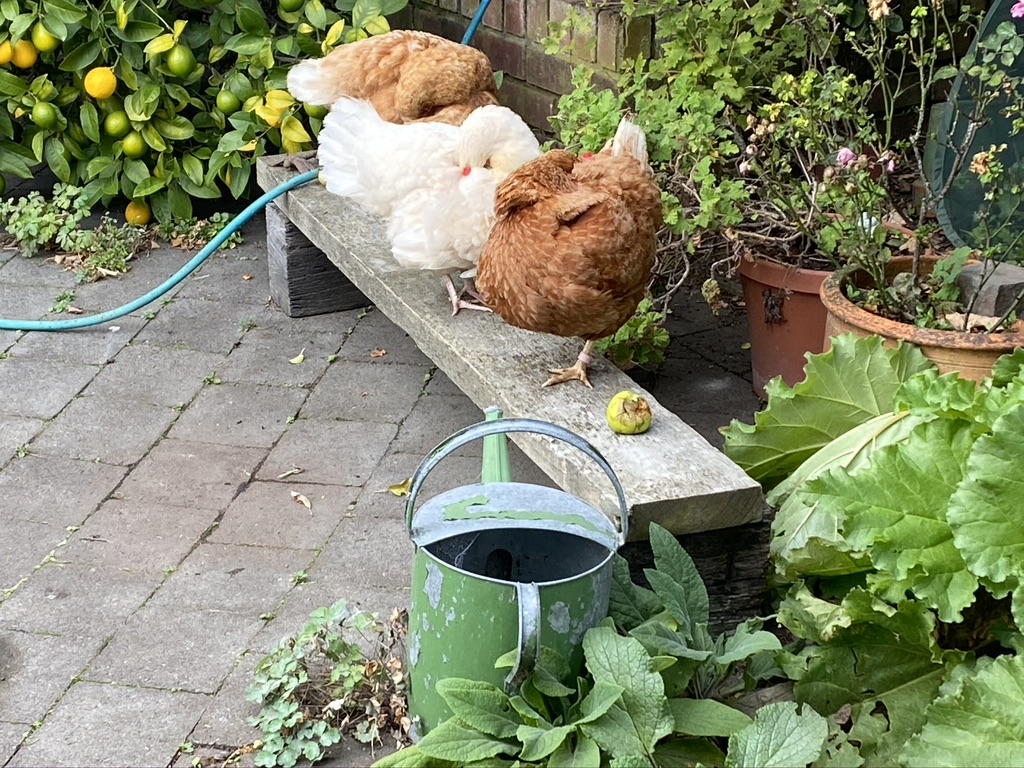
I feel sorry for them in this cold weather and give them plenty to eat and treats such as sunflower seeds. They tolerate the blackbirds, sparrows and wax-eyes which fly down for left-overs from the feed trough and bowls. When I am in the garden, they like to inspect what I am doing, pulling apart raked up leaves to look for insects, and just being companionable. They like to perch on garden furniture to groom themselves or, in Dora’s case, to do her job as sentinel. Popcorn retains her position as head hen.
They can move mountains of earth, earning them the nicknames Fulton and Hogan, after the earth-moving and road construction company. The soil becomes so aerated that it has risen considerably above the level of the paving stones by the wood pile.
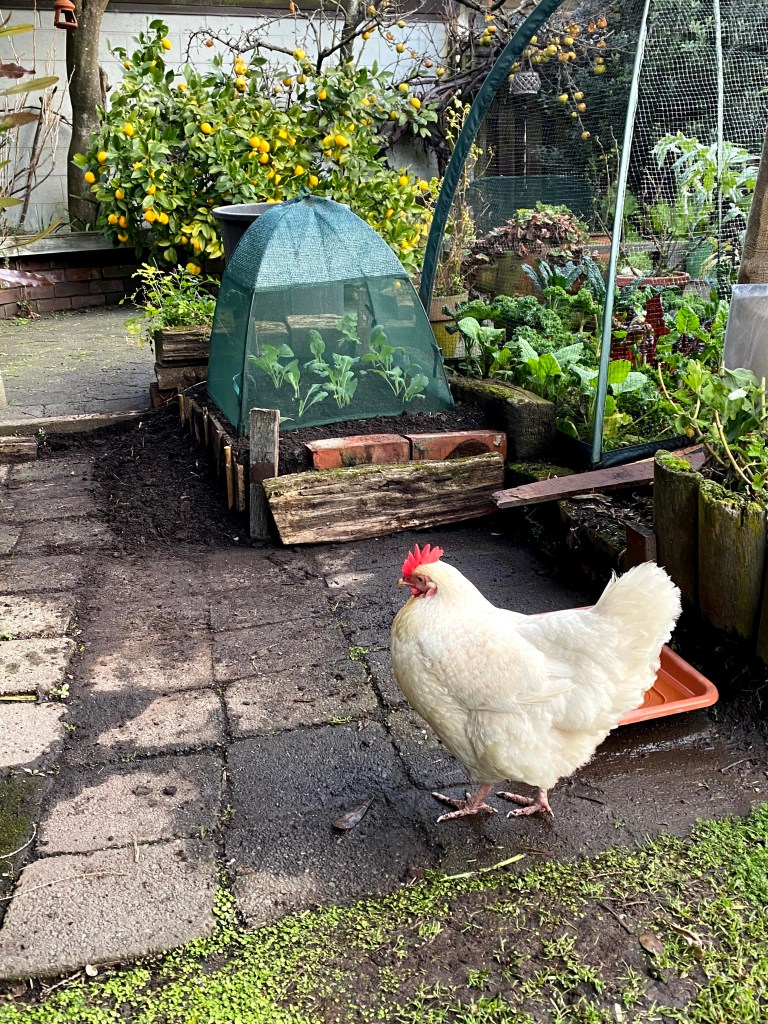
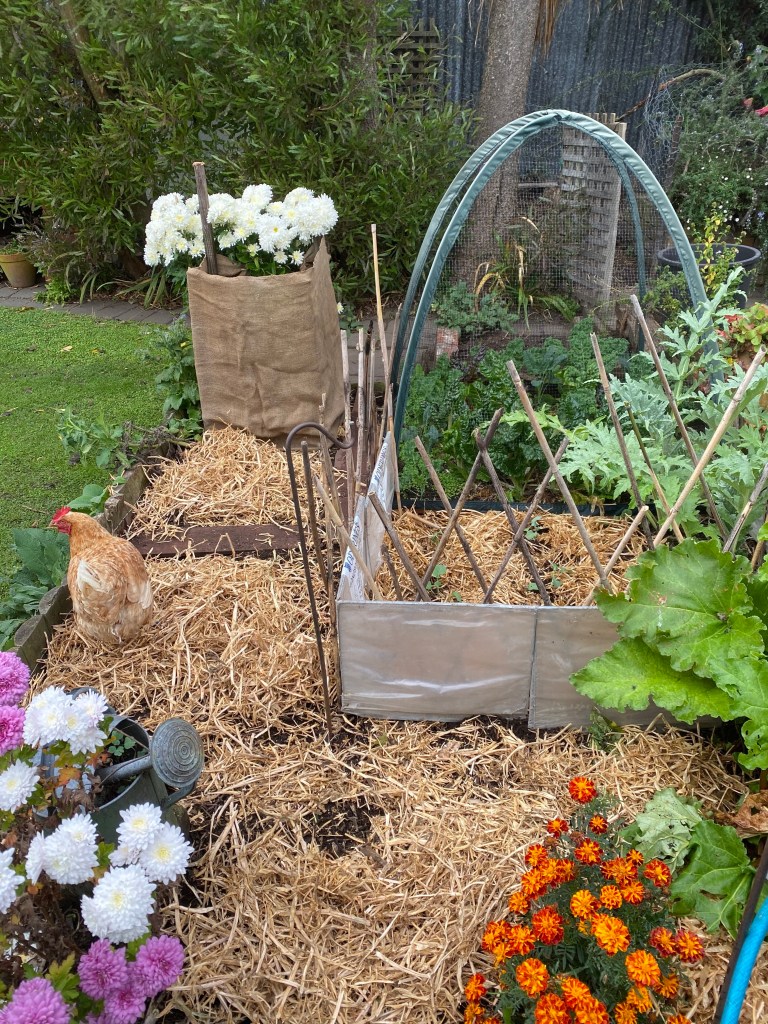
I’ve heard that some people turn their chickens out onto the vegetable garden before they plant. One of my chooks’ well-tilled spots looked so good that I was delighted when I found a small dome at The Warehouse. Popcorn and Dora were keen to help, of course. I distracted them with silver beet and kale leaves while I quickly planted some vegetables and secured the protective cover.
They say that people come to resemble their pets. I’m amused to see that my shorter hair cut has unleashed my natural wave into wings, giving me the look of a startled chicken!
Betty passed away peacefully overnight. She spent all yesterday in her comfy house, standing with her head under her wing. It rained most of the day so I sympathised with her. This morning the sun was shining. I went to put her in a sunny spot and found her at rest on the hay in the corner of her house.
One of three rescued hens, she seemed to be older than the other two and stopped laying some months ago. Her comb and tail had become smaller and she liked to settle in the sun while the others were busy around the garden.
Here are some happy memories of Betty Blue (she had a blue tag on one leg and is the lighter colour of the two brown birds).
My niece (also mourning Betty’s loss) and friend found some hens running loose on the Port Hills last winter. They managed to catch two (Betty and Dora). Popcorn came from the SPCA to make a mini-flock of three. They named the hens Satay (now Dora) and Butter (Betty). The hens came to live with me in January. We have no idea how old they are. Dora and Popcorn are still laying regularly. My niece believes Betty was hit by a car at some stage which may account for her increasing frailty. She was the lowest in the pecking order, but still did well to get her share of food and treats. Now, there is just the head hen (Popcorn) and the sentinel or lookout (Dora).
Betty’s grave is under the lilac trees. I found a suitable rock – which, now that I look at it, resembles a chicken beak down, tail up. Around it I have planted fox gloves and an azalea from my beautiful sister. Winter sweet flowers add scent to the scene.
The Hens by Elizabeth Madox Roberts
The night was coming very fast; It reached the gate as I ran past.
The pigeons had gone to the tower of the church And all the hens were on their perch,
Up in the barn, and I thought I heard A piece of a little purring word.
I stopped inside, waiting and staying, To try to hear what the hens were saying.
They were asking something, that was plain, Asking it over and over again.
One of them moved and turned around, Her feathers made a ruffled sound,
A ruffled sound, like a bushful of birds, And she said her little asking words.
She pushed her head close into her wing, But nothing answered anything.
After I had cleared some creeping campanula which was taking over the barrel of polyanthus, I noticed two mushroom-like shapes emerging from the soil. On closer inspection, I decided they were puffballs. To my surprise, a day or so later they had turned into this:
Had a child’s geodesic dome toy landed there – or perhaps something from outer space? It had the look and feel of plastic. When I looked closely, I could see how it had formed out of the two “puffballs”:
In a couple of days it had crumpled and collapsed, by which time another one was emerging:
It was popping out of its pod looking like a scrunchie.
Then I recalled seeing it growing under trees at the beach and discovering that it is called a basket fungus, so I looked it up. The Maori names include tutae kehua (ghost dung) and tutae whetu (star dung). It is native to New Zealand and also found in Australia and South Africa. This site, with interesting photos, also identifies it as a buckyball stinkhorn. I didn’t sniff too hard, but any bad smell wasn’t obvious in my specimens.
I wrote a post called Inexcusable Ignorance (August 11, 2019) after observing a very delicate pale grey fungus on the lawn. It looked a little like the crowd of hattifatteners in the Moomin stories. I felt strongly the need to learn more about everyday things in the garden. Well, my head is bursting with information now. A Compendium of Collective Nouns informs me that, rather than crowd, the correct term is colony of fungi – “a batch of fungi that has grown from a single spore or cell – that is, a clonal colony.” A question on the television quiz show QI was: “What is the largest living thing on the planet?” There were the usual responses: “The blue whale”, “The Redwood tree”. The answer was a massive fungus, which must be the one referred to in A Compendium of Collective Nouns: “In the forests of Eastern Oregon, a clonal colony of the fungus Armillaria solidipes has spread across twenty-two hundred square acres, and is estimated to be twenty-four hundred years old.”
A Radio New Zealand article I found states: “There are tens of thousands of fungus species in New Zealand”. A competition to vote for the favourite fungi was run at the 32nd annual New Zealand Mushroom Foray. The basket fungus came second. The Maori term used for it in the article is matakupenga which, on looking up, I found is also a design used in Maori carving symbolising the life force between the living and the ancestors. The winner of the competition, a stunning blue fungi, appears on our $50 dollar note, I was surprised to discover. There are great pictures on the RNZ link.
The New Zealand Mushroom Foray conjures up wonderful mental images. It reminds me of the Mushroom Pickers’ Ball in the Polish book Drive Your Plow over the Bones of the Dead by Olga Tokarczuk (who won the Nobel Prize in Literature 2018) which I have recently laughed till I cried over (surprising, as the title doesn’t suggest hilarity). I never imagined there would be a similar group here in NZ. Which all goes to show that the more you learn the more connections you make, the less ignorant you are, the more fun you have, and the more you appreciate the world and our tenuous place in it.
Dora, Betty and Popcorn keep together most of the time. Betty who has grown quite plump is not laying eggs – or not viable ones. She does not move about as much as the others, often sitting on the door mat, but is still quick to run for food or to see if I have a treat. Dora (named for the explorer) will occasionally go off on her own over the fence into the front garden – or into the house given half a chance. Otherwise, wherever you see one the others aren’t far away.
I think Popcorn is top of the pecking order, but they all get on well. I hear a bit of a kerfuffle (a perfect word for chooks) in their little house as they settle for the night. Did you know they can sleep with one eye open? How to Speak Chicken by Melissa Caughey (see last post) informed me that the chook nearest the door keeps an eye out (perhaps this is where the expression originated) for possible intruders. They rotate positions so that each chook gets to be in the middle and have both eyes closed for part of the night. This characteristic, along with their ability to melt away into the cover of undergrowth, dates back to their ancestor – the Burmese jungle fowl. They have one eye designed for close up viewing and the other for scanning the sky for potential danger.
The weekend before last, I observed them sitting in a row for their morning preening.
Left to right: Betty, Popcorn, Dora.
These rescued chickens will live out their lives here whether or not they continue to lay eggs. Having read This Chicken Life by Fiona Scott-Norman (see previous post) I am more aware of the hard life most “utility breed” chickens have, being bred and selected for their eggs and meat. Popping out an egg a day takes a toll on these hens and they do not live long – perhaps two years. If they are “broilers”, bred so large they collapse with their own weight, they only live for a number of months. I wonder if Betty is getting a little depressed, knowing she is not producing eggs and waiting for “the chop”.
“Did someone say ‘the chop’?”
This Chicken Life recommends heritage breeds for backyard flocks. They don’t lay as often but having a few more of them can compensate. Of course, if you want them to live as they really should, you need a rooster, which isn’t allowed in urban areas. Some of the chicken fanciers in the book get around this by keeping their roosters in a box or sound-proofed garage over night. The heritage breeds come in all sorts of dramatic colours and sizes (as do their eggs) and they can live to be teenagers.
The book shows how chooks bring joy and comfort to all sorts of people: the sick, the elderly, people needing mental health support, people with physical disabilities, prisoners, children who are bullied, children who are autistic, school children generally, people who rescue them, artists who paint their portraits, an actor who includes them in her comedy acts, those who photograph them in fetching poses, show them, judge them, crotchet hats for broody chooks and a woman who manufactures wheelchairs for injured birds. This woman has a trailer called a “Pull-et” for taking her chooks on holiday with her. Many say how they enjoy their backyard “chicken television” at the end of a working day. Even the Queensland Parliament has an Eggsembly of chooks which is a highlight of open days at Parliament House in Brisbane.
There is something natural, primal even, and calming about chooks.
[Quite Interesting Note: “primal” is also a word for a large feather on a bird’s wing.]
At the moment of writing, Dora, Popcorn and Betty are having dust baths together. They scratch away the damp surface to find the dry soil beneath and settle into little bowls of dust, fluffing their feathers and dozing.
It started with the installation of a bird feeder made of up-cycled materials…
Fast-drying concrete secures it. Chook inspection. The top can be removed and is lined with a grey plastic plant saucer with holes for drainage.
This ingenious piece of engineering by my brother-in-law and nephew, consists of a cast iron industrial lamp (we think) inverted on a cut-down pole. It has been rust-proofed and varnished. Concreted in, it is here to stay and looks magnificent against the autumn colours of the wisteria. In the early morning when the sun hits it, water vapour rises from the dew-wet metal. We thought it might take a week or two for the birds to get used to it, but they have taken no time to discover the crusts of bread while the chooks, unconcerned, remain grounded below.
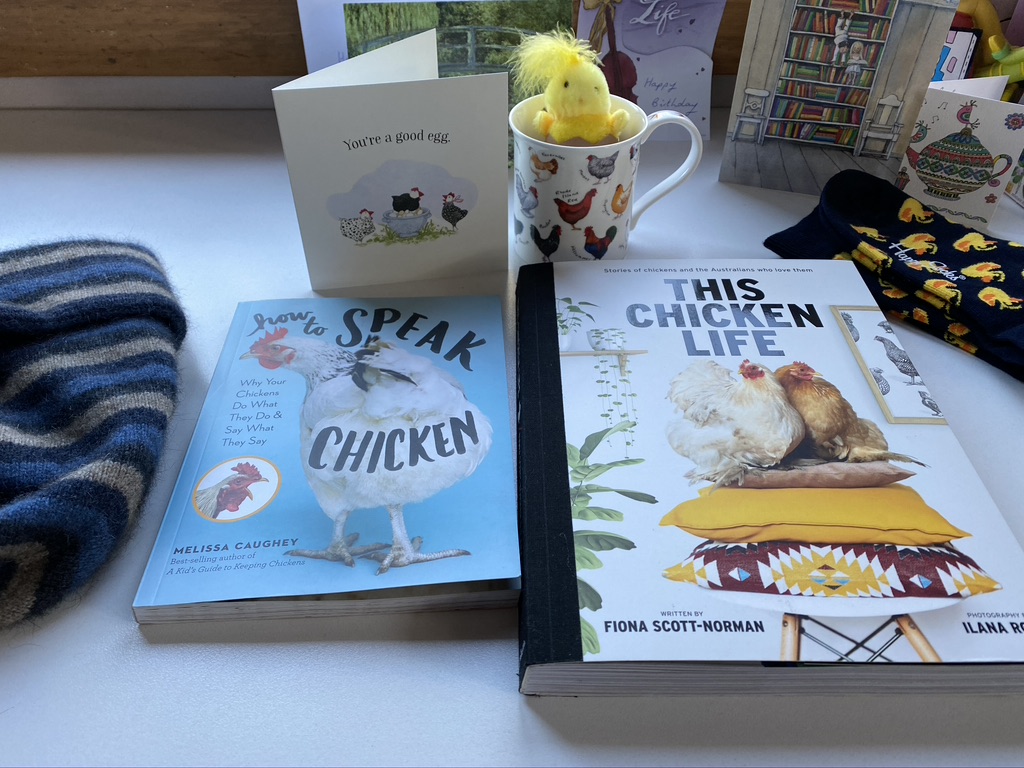
It continued with bird-themed gifts:
I’m feeling very spoiled and continue to be entertained by the birds visiting the feeder and by these amazing books about chicken-obsessed people. This Chicken Life is Australian and there are some horrendous accounts of fox attacks. Thank goodness we don’t have foxes in New Zealand to add to our introduced pest woes. “Like coconut on a lamington, they’re all over Australia…introduced between the 1840s and the 1870s by a conga line of utter muppets…keen to indulge in the ‘noble sport of fox-hunting’.” I worry when the chooks get into the front garden that an illegally off-the-lead dog will get them – which happened to friends’ chickens in Dunedin. The Australian patois of the book is very funny and also hits the spot about the worries of chook ownership. After a fox attack, and a period of grieving, you are advised: “…when you miss the gentle susurration of chickens bok-bok-bokking in the garden, you pull up your big farmer undies and go to the poultry auction and buy more chickens”.
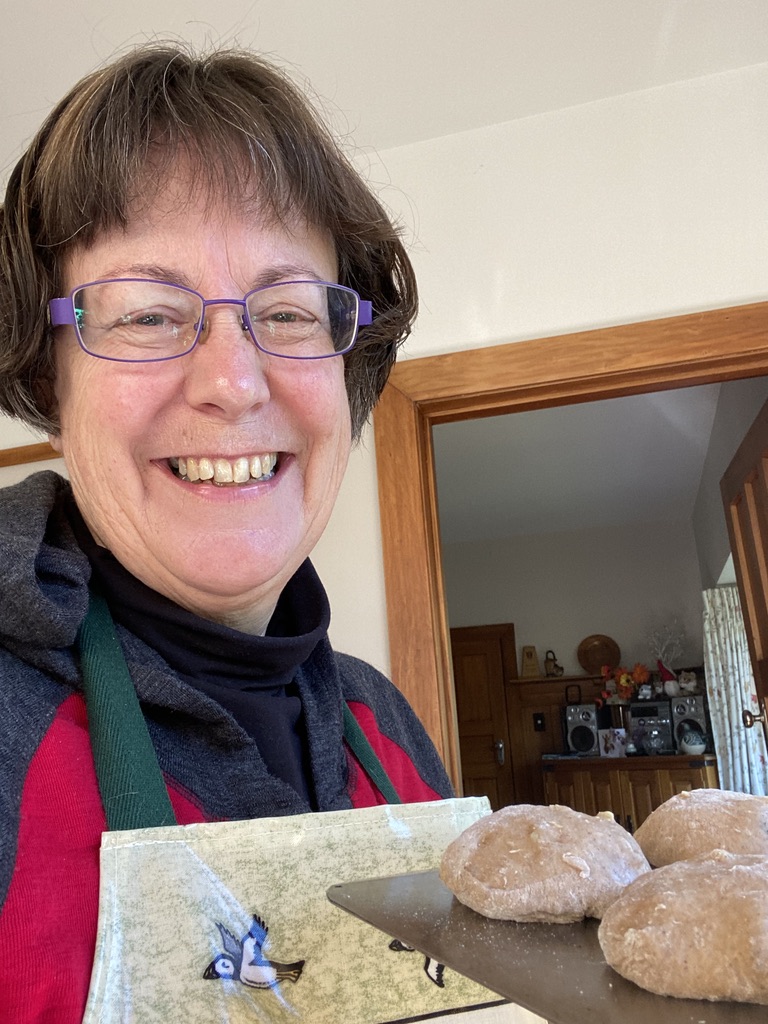
I enjoyed a Genesis Energy power shout (free electricity for 8 hours) on my birthday; turned up the heat pump, auto-cleaned the oven and made spicy buns.
Me in my puffin pinny putting the buns in the sun to rise.
In the evening there was spicy chocolate birthday cake, a family favourite recipe, with coffee icing and walnut sprinkles, expertly baked and decorated by my sister.
So, here I am, an old age pensioner at last and feeling quite mature! GoldCard, new driver’s licence, flu shot. All set.
I read The Unlikely Escape of Uriah Heep by H.G. Parry on the Kindle app on my ipad – my favourite bookshop was shut during lockdown – but I would like to have a “real” copy of it to dip into again more easily. I expected the book to be like the Jasper Fforde series which began with The Eyre Affair, in which a literary detective’s work is to put escaped characters back into their books. It is funny and fantastical by warping our known world, but The Unlikely Escape is different, superimposing or layering fiction on our “real” world. You laugh one moment and catch your breath the next.
The quotation above (reminiscent of ‘there’s a kangaroo loose in the top paddock’) comes from the first page when Rob’s brother, Charley, telephones him in the middle of the night from the university English department with a plea for help. Charley has summoned Uriah Heep out of David Copperfield and he does not want to be read back in. To remind you what Uriah is like, I found this audio of Dickens (really?) reading the part where David Copperfield meets Uriah for the first time.
In an interview with Kim Hill, the author said she chose the name Uriah Heep for the title as it is a name likely to be familiar to potential readers of the book. He is not the only character on the loose. There’s Heathcliff (with lethal weaponry), Sherlock Holmes and Dr Frankenstein (each called on for advice), Dorian Gray (expert internet hacker), Scheherazade (continually shelving in the bookshop) and various others.
I was surprised to find that H.G. Parry is a NZ author (but not surprised that she has a PhD in literature) and that the setting of her book is Wellington. To explain why I was surprised, the fictional characters who are on the loose are from Victorian to Regency English literature mainly. There are Dickens characters, and Austen and Wilde characters, as well as a fictional (i.e. made up by H.G. Parry) girl detective, from the twenties or thirties, I think. She’s a bit of a Jacinda Ardern type of character: forthright, moral and pragmatic, carefully negotiating her way around the tricky coalition of characters as she takes the lead. The particular setting is not that relevant really, as the book is about reading and how the characters we read about can inform our own lives. Perhaps, as it is the capital city, there is an implication about how we govern ourselves, settle scores and lead the way… The local references: Maui and Mahy are both internationally known, and this book is for an international market.
The book is a blast, particularly if you have studied literature and literary criticism, but just as much if you are aware of the vagaries of human nature and the different ways in which we can invent and re-invent ourselves, or if you have seen the various interpretations of the classics in tv series and film. As an example, there are five Darcys – each evidence of different ways in which readers have interpreted the character. One looks like Colin Firth. They share a house in a lane off Cuba Street. The lane is only accessible to other fictional characters (a bit like the train platform in the Harry Potter books), but it is under threat and this provides tension and action in the plot. One character is The Implied Reader who has an indistinct face. An Implied Author turns up at one point, and even Charles Dickens.
The plot is held together by a variety of contrasts and conflicts. Mainly, it is the story of two brothers. One is a 26 year old prodigy and academic who can summon fictional characters from books. The other (the first person narrator for much of the book) is a criminal defence lawyer who has almost always looked out for his younger brother. Now, he is called on to confront the family secret while hiding it from his partner, Lydia, and to take his support of his brother to a dangerous level. Uriah Heep becomes significant here as a foil to David Copperfield. I read a Guardian article which said these two characters “are a fork in the road”. Which brings up the question of how fair an author is in creating characters to make a point – Uriah Heep is perhaps justifiably aggrieved! A similar question arises as Charley and a rival summoner fight over which fictional world to impose on the real life city. So it is about academic rivalry as well. Or meeting one’s arch-nemesis. Is it imperative to impose one potentially limiting interpretation or to allow the many manifestations of fictional characters? The book argues for the latter.
The book is about how we read, whether or not we read, how much importance we give to the creative imagination and how powerful it can be in our lives. Margret Mahy’s The Lion in the Meadow is a recurring reference. I remember reading that there were two endings to Mahy’s story, and it is discussed in the book. The writer – and consequently the reader – suffers by repressing the imagination is the point made. And so in the end, as in Mahy’s book, the dragon remained “and nobody minded”. The Unlikely Escape finishes (slight spoiler alert – this book is about far more than the ending) with the once occasional reader, Rob, engrossed in Great Expectations at home by the fire with his brother Charley (reading The Princess Bride) and Sherlock Holmes (reading Agatha Christie) “And for a moment, the space between heartbeats, I felt I could glimpse the world Charley saw. A world of light and shadows, of fact, truth and story, each blurring into one another as sleep and wakefulness blur in the early morning. The moments of our lives unfolding as pages in a book. And everything connected, everyone joined, by an ever-shifting web of language, by words that caught us as prisms caught light and reflected us back at ourselves. ‘We changed again, and yet again,’ I read, ‘and it was now too late and too far to go back, and I went on. And the mists had all solemnly risen now, and the world lay spread before me.'”
I’ve enjoyed the thinking this book has allowed me days after finishing it.
................... for lovers of ice cream. Your free on line magazine for sweet frozen treats. Recipes, inspiration, artisanal ideas for your delectation.


































 Anne-O-tations