Forget-me-nots

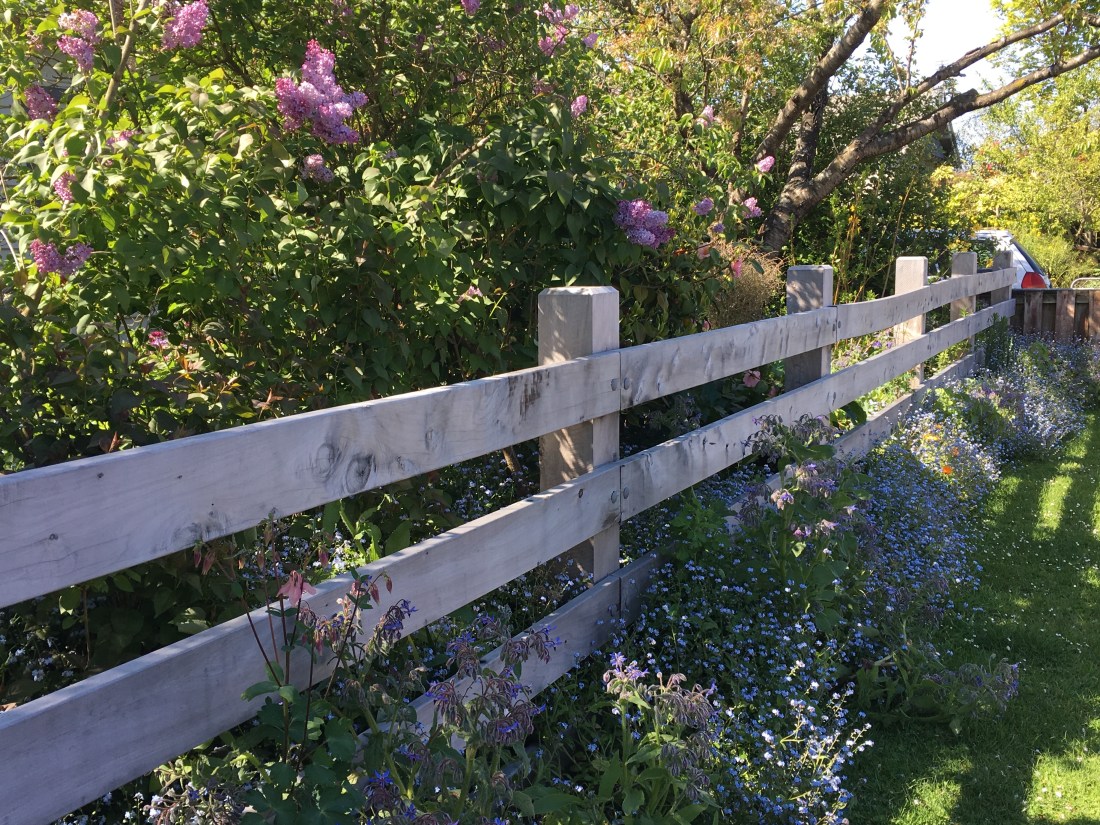
Forget-me-nots are everywhere, as they love to be, forming blue clouds under shrubs and along paths and fences.

IMG_4755.jpg

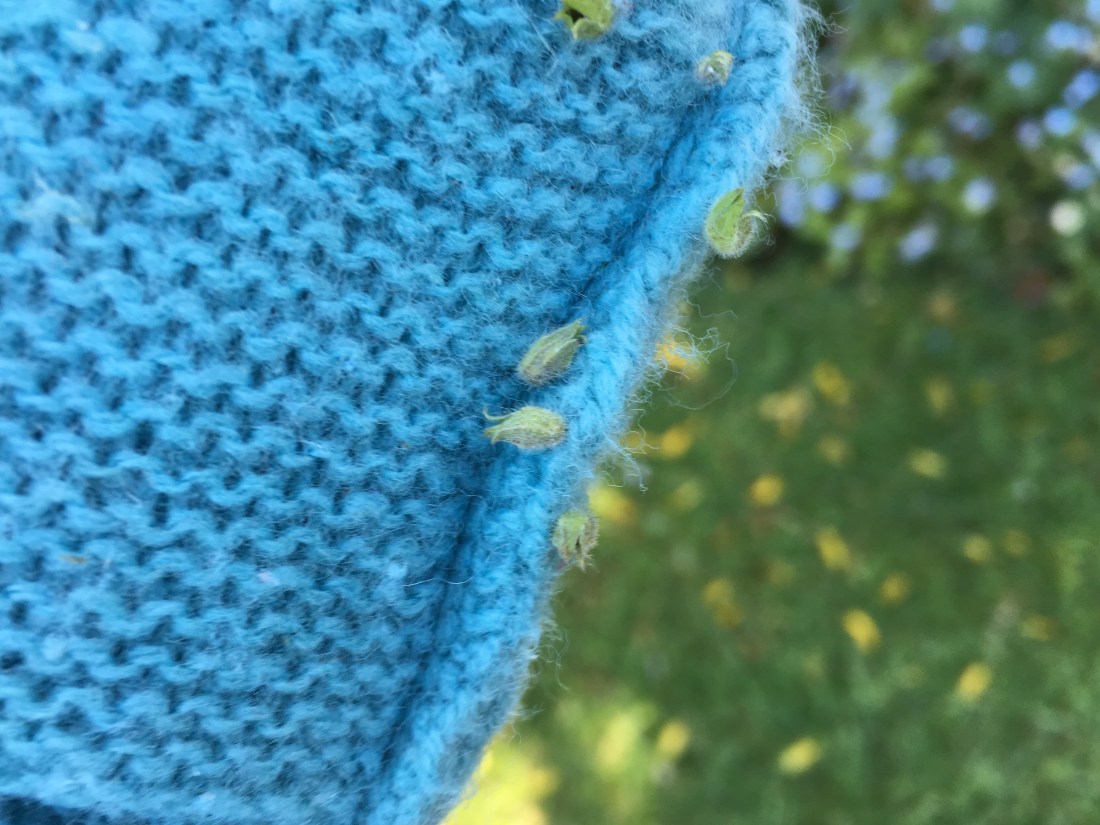
I know I will have to pull them out soon.  They are already beginning to go to seed and the fuzzy seeds will stick to everything, socks and sleeves especially.

IMG_4756.jpg

But I want to enjoy them as long as I can.

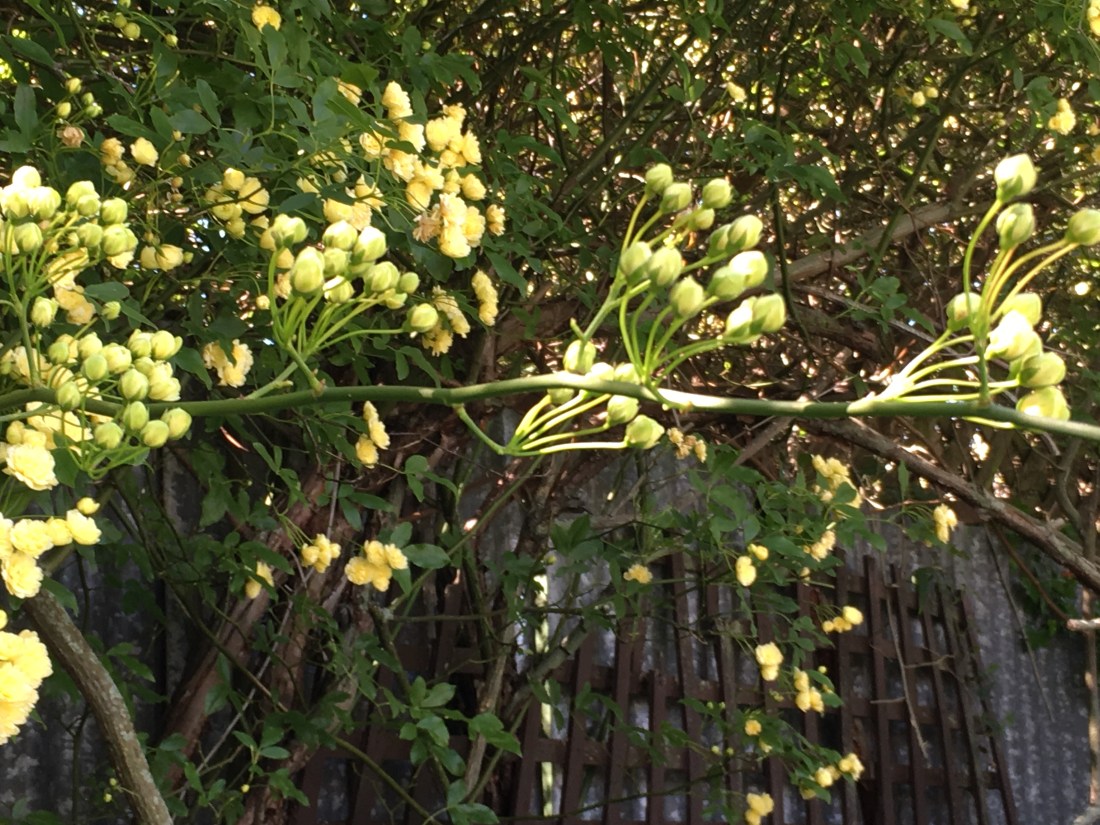
The banksia is about to pop into bloom.

IMG_4758.jpg

The strawberry pot has been replanted.

IMG_4760.jpg

I’ve a new felicia to replace the one which failed to thrive in a new spot.  This time, it’s in a pot.

IMG_4761.jpg

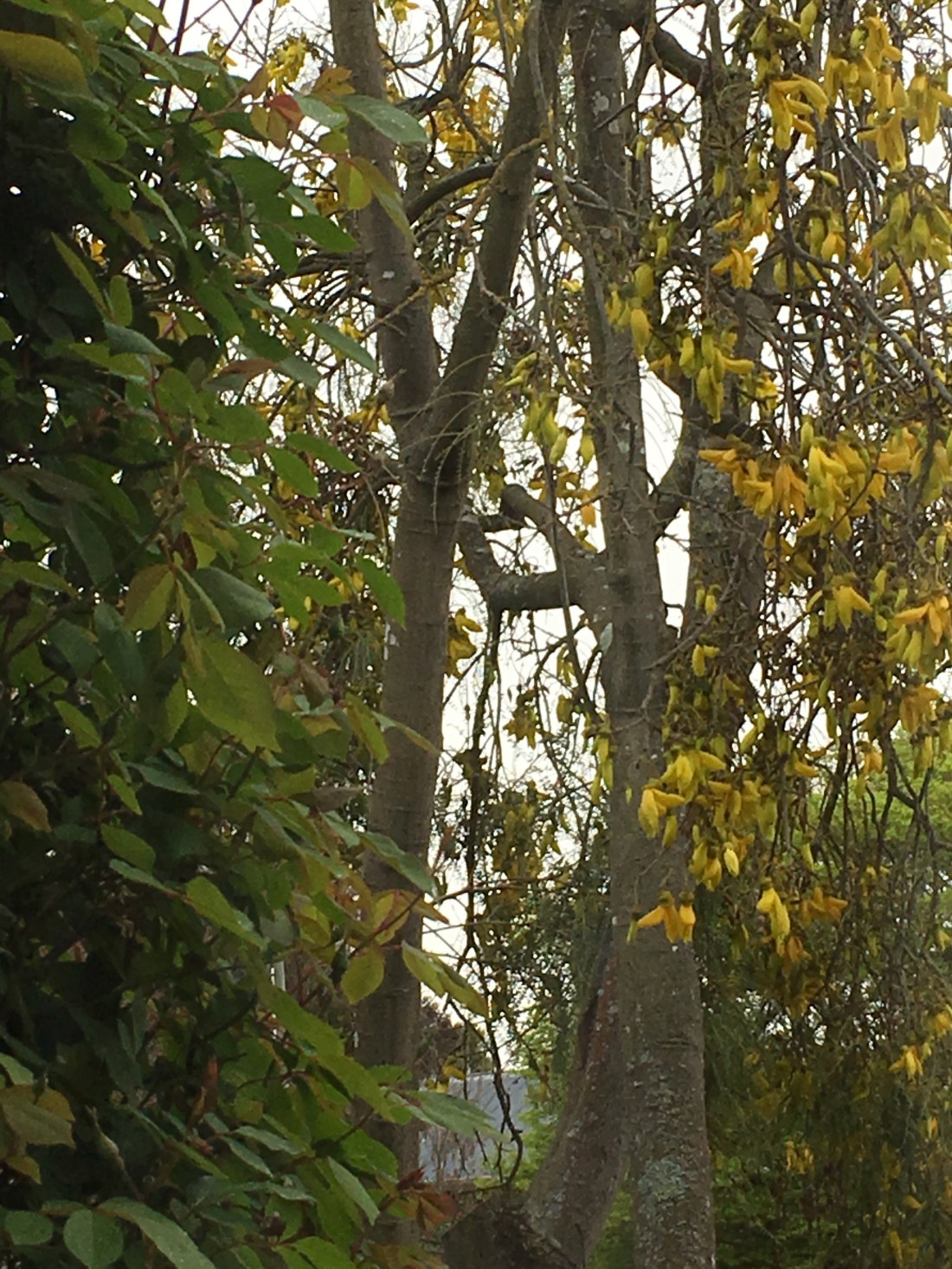
What I call a regenerating forest of kowhai (i.e. I didn’t plant them) is in full flower and is full of birds, particularly wax-eyes, and bees.

IMG_4752.jpg

All jobs done

I can look at my back garden and see jobs done.

The lemon tree has had each leaf individually scrubbed with detergent to remove sooty mould.  Once the sun had gone off the tree, I could spray it with organic oil on both sides of each leaf to deter or smother the insects which caused the mould.

IMG_4754.jpg

I hate to spray, and organic oil seemed a compromise worth making.  It didn’t require the protective clothing I needed to spray the deck for the green organic matter visible when it is wet – or dry, looking at this photo.  Not sure if it was worth the trouble.  Time may tell.

The garden furniture has been washed, left to dry for a day, and re-oiled.

The paving stones are regularly weeded – but the violas are left to do their magic.

Lettuces are coming up.  Sweet peas, in ground prepared with rich home-made compost, are on their way to climbing the bamboo stakes (which were also home-grown but now this invasive variety is banned from the garden).

The daphne was ailing and has been moved in its pot from the front garden, thanks to borrowed muscle power.  Apparently, daphne prefers morning sun and afternoon shade.  I hope to see it perking up again before long.

Other progress is down to work prior to these two weeks of holiday.  Broad beans are growing higher each day as are cauliflowers and kale.  Peas are flowering  – “volunteers” which grew from the pea straw mulch.

The geraniums, which I’ve had for years and years, are doing well in their new hanging baskets.  The raspberry canes and blackcurrants are in leaf, as is the grapevine. The hose is on one of the gooseberry plants and some silver beet plants.  There is also self-sown parsley over there and it is abundant in various other parts of the garden.  The apple tree is in full flower.  The rhubarb plants are as generous as ever.

Blackbirds are nesting in the tree behind the lemon, so they’ve been busy too.

Now, there’s just the grass to mow again – with a family heirloom push-mower, a Masport Meteor.  What a pity it’s raining!

A Dog’s Day

Being elderly is no fun sometimes.

It’s hard to keep up when we go for a walk.

IMG_4735.jpg

I need to drink a lot – sometimes sitting down is best.

IMG_4744.jpg

And then I need to pee a lot…wherever I am…so now there’s a pottle-potty.

IMG_4731.jpg

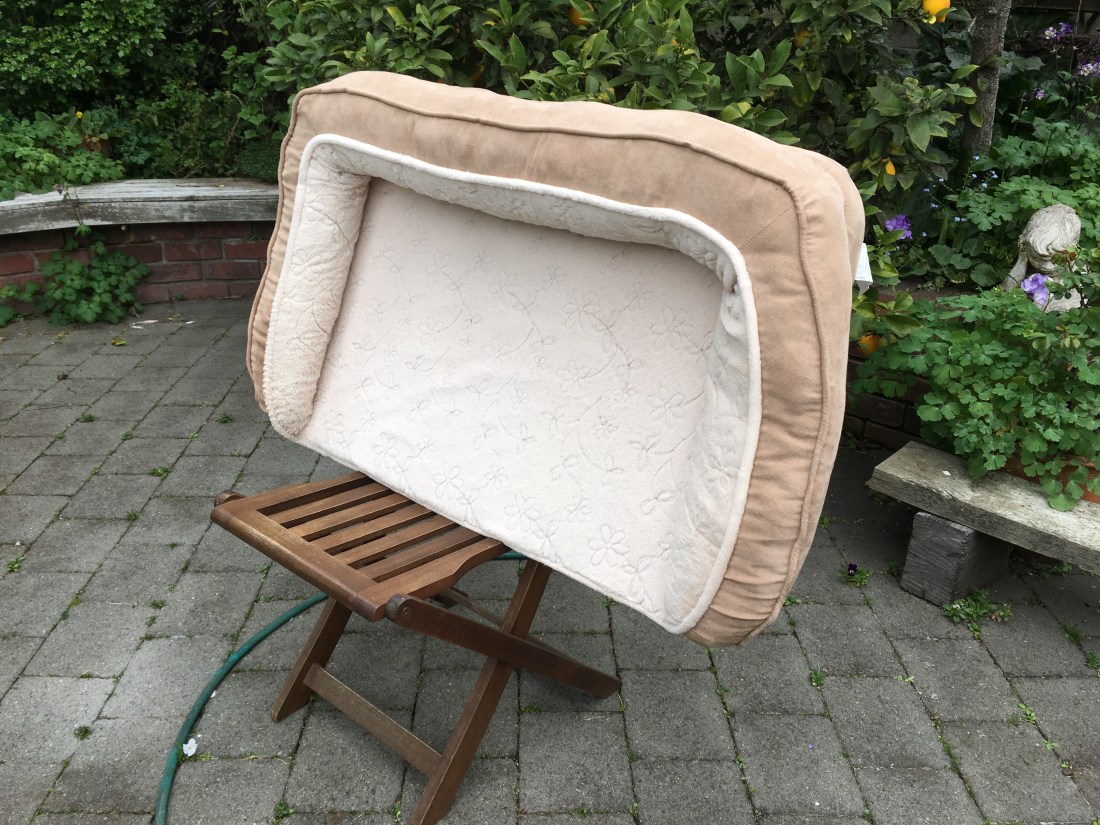
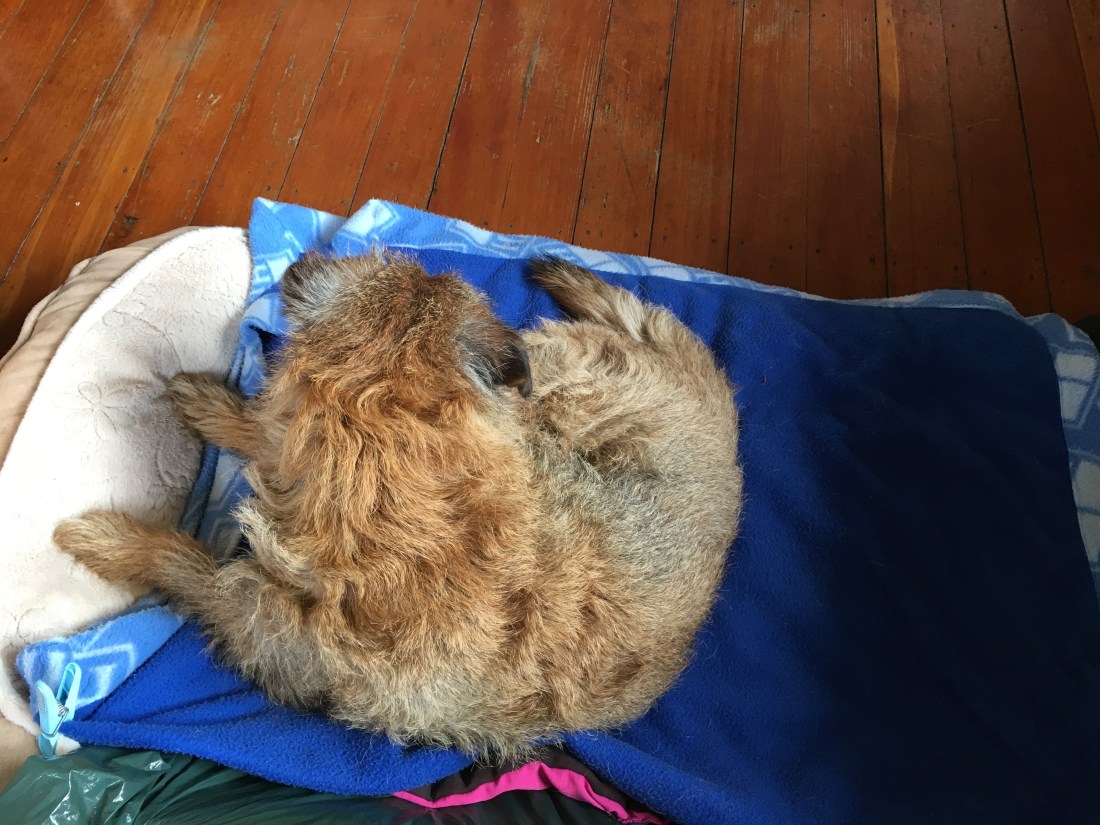
And I seem to get stuck in the furniture.

IMG_4753.jpg

Or I have to lean against a wall.

IMG_4743.jpg

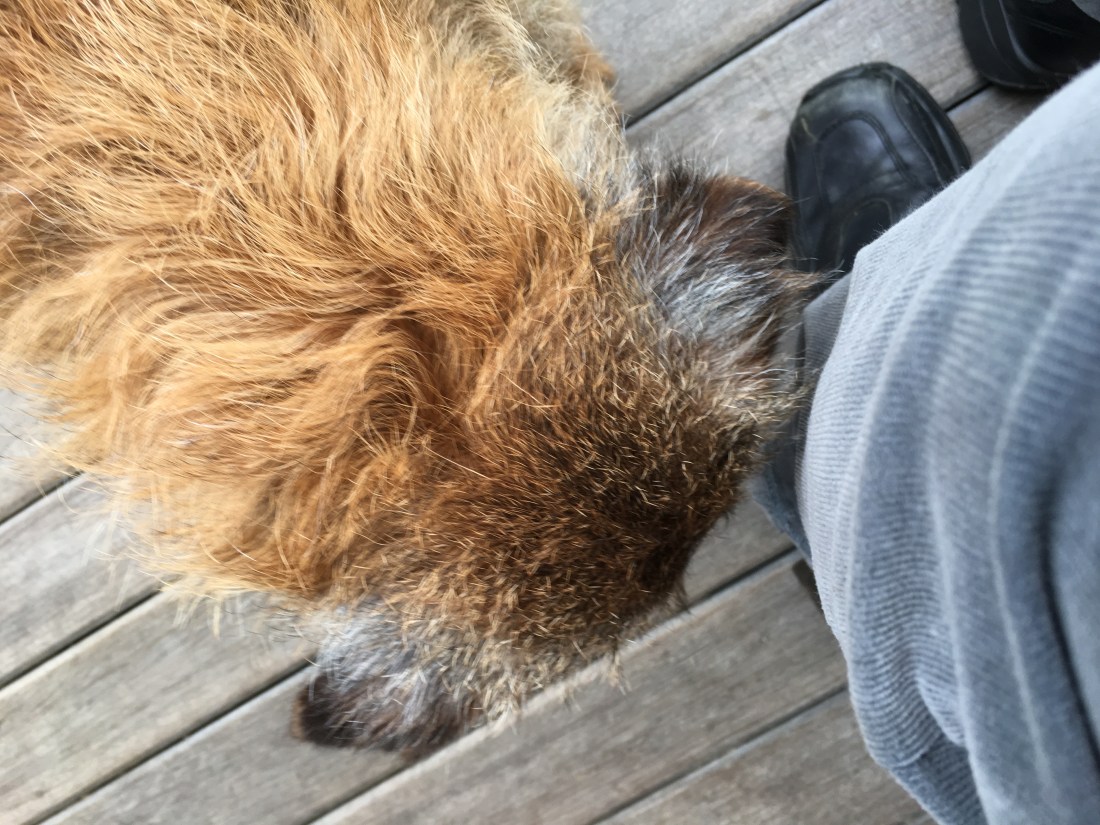
But there’s nothing like a good old knee rub to cheer a chap up.

IMG_4740.jpg


The past is a foreign country…

It is time to clean out a bulging file.  Years ago I’d sent away for my personal file and this is now headed for the shredder.

Here’s a last look at my career on file from application to mid-point:

IMG_4718.jpg

The top document looks like something out of an old film from a time when things were very different. I could photoshop it to look noir.

My mug shots over the years are like something foreign and long-forgotten too.  At least the red ticks seem to indicate that I have written my name, birth date and years at high school accurately:

IMG_4720.jpg

The hand-written references from my high school headmistress and the principal of teacher’s college both use that rather damning, or at least ambiguous, phrase: “has potential” and the old-fashioned: “a rising sense of humour”.  Perhaps, after nearly 40 years of teaching the “potential” has been borne out, while the humour, like a share-market graph, has risen and dipped, and even plummeted at times.

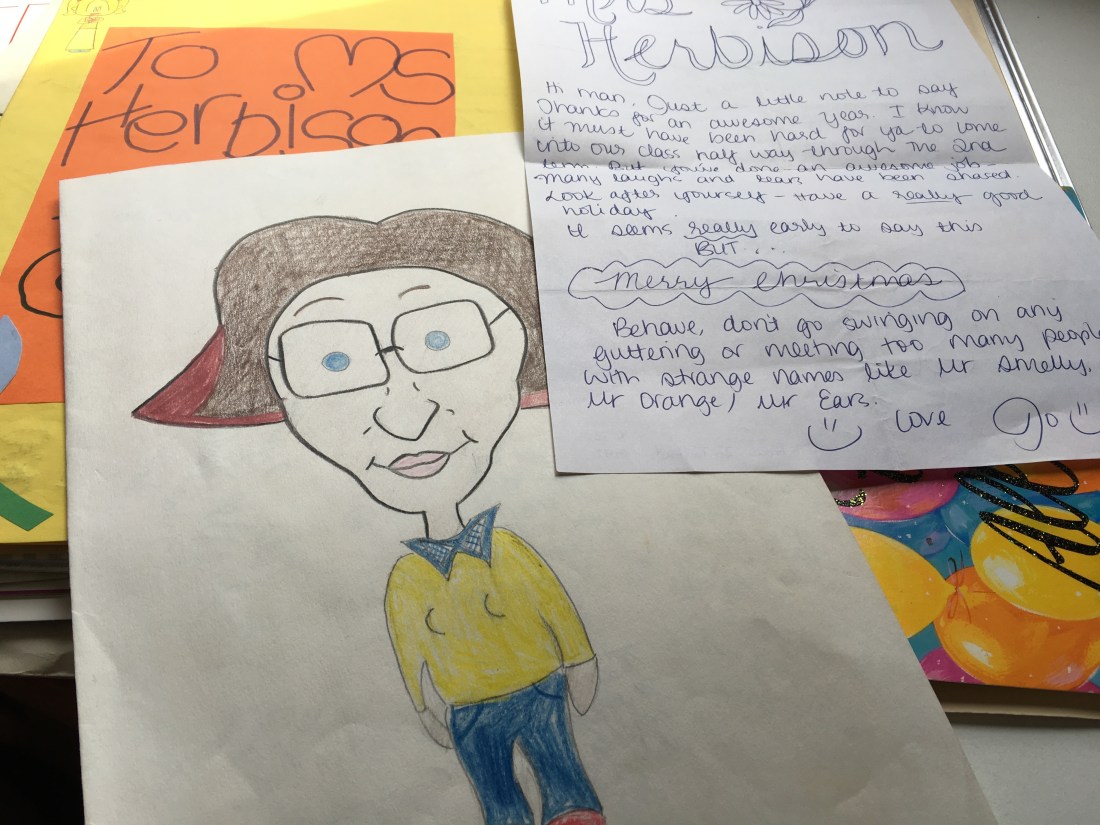
I will keep some pre-digital cards and notes from students and colleagues, such as these delights to revive my sorry sense of humour:

IMG_4719.jpg


Flight of Fancy

After waking from a startling dream and failing to get back to sleep, I turned on the light and picked up my book, Public Library and other stories by Ali Smith.

IMG_4746.jpg

The story ‘The ex-wife’ turned out to be about Katherine Mansfield.  I learnt several new, captivating – unverified – things about her.  She had a cat called Charlie Chaplin who had a kitten called Wing.  Here the flight references begin.

Apparently, Mansfield could have been born in a hot-air balloon flying over Wellington. A “medical incident” of one of the female passengers, one of whom was Mansfield’s pregnant mother, reportedly delayed the flight on 15 October 1888.

Then, in the 1920s, when the British film industry made hundreds of films, Mansfield may have earned money as an extra.  Later the films “were melted down and used to make the resin that was painted on the wings of aeroplanes to make them weather resistant”.

Revelations more startling than my dream.

Virginia Woolf, according to the narrator, considered Mansfield “flighty”.

And there are always connections: a link to my thoughts about Aminatta Forna’s book Happiness.  Katherine Mansfield wrote:

Everything in life that we really accept undergoes a change.  So suffering must become love.  This is the mystery.  This is what I must do.

Part of this (up to ‘mystery’) is quoted in Smith’s story.  And of the writer’s role, the narrator quotes her again:

What the writer does is not so much to solve the question, but to put the question.  There must be the question put.  That seems to me a very nice dividing line between the true and the false writer.


Happiness

“How do we become human except in the face of adversity?”

Of the 50 or so books I read each year, a few books stand out and remain with me, and I wonder if those are the books which are wide in scope, yet focused in message. Burnt Shadows by Kamila Shamsie is one of these.  Shamsie creates links from Hiroshima (hence the burnt shadows) to Pakistan and the United States and the “war against terror” to question our perception of events.  Similarly, Happiness by Aminatta Forna is wide in scope ranging from the wolf-hunting in the US in the 1830s through war zones in Africa and the Middle East to fox-hunting in urban London, to focus on modern humanity increasingly ill at ease with itself.  This is a clumsy summary; Forna’s writing is not so.  The threads of her narrative are drawn together with powerful impact (for me, at least).  One such thread, through the character of American scientist Jean Turane who is studying foxes in London, is our relationship with animals both wild and domestic, and there is animal imagery in character descriptions: the eyes (human) which “hunted” in an unguarded moment on waking, the bite on the wrist administered by a woman who, having lost her mind, reverts to instinct.  Such animal connections are not new but the way they intersect across the narrative threads gives fresh insights, and the way in which the writing triggers connections in the mind of the reader is what memorable writing does.

Can ‘knowing better’ change ingrained habits?  William Golding talked of the “off campus curriculum”; the habits and beliefs we are instilled with before knowledge can take hold. Significantly, the two main characters in Happiness are experts in their fields. Jean’s story is intersected by that of Ghanaian psychiatrist Dr Attila Asare, an expert on Post Traumatic Stress Disorder, a major thread in the book.  In London to deliver a key note speech at a conference, he considers the city about him and thinks of those who live “in terror of what they cannot control” as “glass dwellers” who are “terrified of the cloche being lifted. They treated the suffering of others as something exceptional, something that required treatment, when what was exceptional was all this…All of this.”  Attila and Jean both “lift the cloche” in their lives (in italicised flashbacks and in the present) and encounter danger and discomfort but are better people for it.  Forna batters at that glass throughout the novel, in the ladybirds against Jean’s windows, and the woman behind the window of her house tearing out her hair – whose nervous disorder will be healed by the roof garden Jean constructs for her.  It questions how we deal, or fail to deal, with challenges such as human migration, animal migration: foxes in urban areas, the brightly-coloured parakeets in the park (which reminded me that I had seen these in Greenwich), our treatment of the elderly and the grief of our neighbours.  People migrate, animals migrate.  Both experience hostile reactions.  A 13 year old student of mine who knows a lot about ants (just as Jean in the book is an expert on foxes) recently questioned my killing of ants in the house with, “That’s not very nice” and a hard stare. I was reminded of this when, at the end of the novel, Attila admires “the ant bearing a sugar crystal… its tenacity, its superior strength.” I still have ant bait (will this book change that?) but I look at the odd ant on the window sill with more respect. I thought a lot about education during this book.  A lot of our unpleasant behaviour can be explained by ignorance and, worse still, not wanting to know, when it is easier to revert to ingrained habits, despite the gains: “All of this”.

“How do we become human except in the face of adversity?”

This rhetorical question in Happiness, felt like both a reconsideration of what happiness is, and a life-changing revelation. It felt familiar: it put into words and into the structure of a novel an idea I think about, such as when young people look at what work they might choose, saying, “No, that’s too hard. I want something easier – with lots of money…”  Yet, my experience of challenging work is that out of the unavoidable failures and set-backs comes something beyond value.  “Lots of money” may provide a little insurance (I can hear hollow laughter from Christchurch people), but can’t protect us from adversity.

I was led to consider whether we have become more resilient or more fearful, individually and as a community, since the earthquakes and the associated feeling that the whole world is crumbling about our ears. “What doesn’t kill you makes you stronger” is a cliche dismissed at first in the book, but it appears again, and again, so that its truth is reinforced.  The book questions “whether the absence of adverse life events creates the ideal conditions for human development”. The effects felt by people since the earthquakes are sometimes described in the health system and the media as PTSD and this “disorder” is a major theme in this novel – as is the media’s response to events. At first I thought the author was being satirical about the modern health system and the general discourse in the media about health issues – and there is humour there – but the truth of it is sobering. Here, Dr Asare considers the burgeoning number of hospital departments:

Affective Disorders Service. Anxiety Service. Chronic Fatigue Service. Challenging Behaviour Service. Conduct Problems Service. Eating Disorders Service. Depersonalisation Disorder Service. Female Hormone Clinic. Mood Disorder Service. Obsessive Compulsive Disorder Unit. Party Drugs Clinic. Psychosexual Service. Self Harm Service.

Later in the chapter, a child observed having a tantrum is described as having “Disruptive mood dysregulation disorder” which seemed funny at the time – but is it true that the term is used by health professionals, and if not now, will it be in the future?

The book’s real force, for me, comes from the journey made by Dr Attila Asare, and the realisation he comes to about his field of study. PTSD is examined in war zones and as “Responses to Adverse Life Events” in civilian life – even “Witnessing Trauma through Social Media”.  “How do we become human except in the face of adversity?” is spoken by his character. Happiness becomes a paradox, he concludes.  Trauma causes suffering,  but not necessarily damage, but it does lead to change. And that change may be happiness – if not as we commonly imagine it.  I think Michael Leunig imagines it this way.  A memorable cartoon of his lists grief as one of the things which adds meaning to our lives.  That connects with me.  Grief never goes away.  We live with it.  It is part of what makes us human.  And here the intersecting thread of Jean and the foxes gives us a lesson in resilience. Attila reads Goodbye to All That (an echo of “All of this”?) by Robert Graves in which a soldier, sickened by the life at home, “the insanity of the insulated”, returns to the trenches. “Attila picked up the pen again and traced his thoughts on paper.  He wrote: ‘Resilience: Ability to maintain a state of equilibrium in face of adversity.’  He wrote the words: ‘Hope.  Humour.  Survival.  Adaptability.  Expectations.  Impermanence (acceptance of).’ These he wrote on one side of the paper. On the other side he wrote: ‘Denial.  Protectiveness.  Control.  Environment (creation of perfect).'”  We do dig a hole for ourselves, I concluded.

My teenage students often look for “easy” books to respond to, yet the students who choose challenging books (even inadvertently) respond best because their thinking has been expanded.  It could be that something in the book triggers a connection in them, that they are ready to hear what it has to say.  In adult book group discussions, I have become aware that our responses to the books we read depend on what is going on in our lives at the time or the degree to which the book agrees or disagrees with our beliefs and values, regardless of the author’s perceived intentions.  Reader Reception Theory posits that a reader brings meaning to a book – almost regardless of the writer.  I am more inclined to respect the writer’s craft in shaping our responses.  I had barely started this novel before our book group met last week and now that I have read it, captivated by its scope and crafting, I want to wind back time to give it its due, although everyone “loved it” and “would recommend it to anyone” and significant life events were triggered, particularly around grief. For me, it will become one of the memorable ones.

IMG_4721.jpgIMG_4722.jpg

Three-dimensional

It occurred to me this morning, as I looked out at my garden, that I feel three-dimensional here.

While travelling, I was not myself in many respects, just a tourist passing through, like the narrator of Apirana Taylor’s short story “The Red Sari”.  He sits in gridlocked traffic in the bubble of a taxi, sees a jet rising away from it all above him, thinks of his air-conditioned hotel and feels a sense of relief that he can escape before long.

This is a good time of year to be at home, with time to read thoughtfully and to reflect. Lemon and ginger tea steams beside me on a Portuguese cork-and-tile coaster. From my study window, I can see my own little bluebell wood (growing under a native beech):

IMG_4704

If I look to my left, I can see these Iceland poppies:

IMG_4710.jpg

For the bees I let the borage grow wherever it appears. It sprawls over the lawn so that I have to hold it back with garden forks while I mow (in the evening after the bees have gone).  The bees also enjoy the rosemary, the forget-me-nots, the cherry blossom and the hebe:

IMG_4707.jpg

The apple blossom is my favourite for its beauty. This little tree also produces a great many sturmer apples:

IMG_4717.jpg

The diversity of exotics and natives is joyful and the garden is full of “volunteers” and rescued plants.  My role in this is to let things be and watch to see what develops. No spraying, I weed by hand when necessary, and nurture the surprises like these violas which pop up between the paving stones.

IMG_4715.jpg

There is constant bird-song. Yesterday, two ducks visited. One waded, up to its knees, in the grass (since mown) while the other peered over the edge of the roof.

They were just passing through, but I would like to think I’m here to stay, at least for a while.

A Warm Welcome

Tomorrow, I will have been home for a week. It has pretty much taken until today to get everything at work ship-shape again. On Monday I looked at the piles of paper I had to deal with and felt that my head might explode. Somehow I had to sort it all out and teach at the same time. If it hadn’t been for wonderful colleagues stepping in in my absence, I wouldn’t have things sorted by now.

As I was setting work for my five classes before I left, I became acutely aware of how complicated the job is. On my return, I was made aware of how things have changed in the job in just a few years. My replacement was not accustomed to using digital technology or to new methods of assessment. So there’s a benefit to taking leave: you value what you do more.

On the other hand, as she swanned into school today with a pile of library books to return under her arm and a nonchalant air, I did envy her freedom.

I’m still not quite used to being at home. Routines have been forgotten, such as how many spoonfuls of rolled oats I put in my plate. This used to be a part of my morning routine which I didn’t have to think about. An advantage of being away for nearly eight weeks: you forget how you did things and can re-think and change. It’s refreshing. Except that I forgot to take morning tea to the beach on Sunday. Morning tea is important on the beach, when you choose a good log and sit down to chat and share treats. My understanding companion still shared carrot cake with me.

There are sobering things, such as listening to the news and little of it is encouraging. I have to switch to the concert programme. Or suddenly coming to on the way home from work to find I’d fallen asleep and crossed the centre line. Getting up in the dark to get ready for work. Steeling yourself for the day ahead. Cleaning up after an elderly dog. But isn’t he lovely:

img_4674-e1532683020646.jpg

There are wonderful things: the sparkly sea on a sunny Sunday, the warm sun on a winter’s day, bird song, fantails flitting about on air waves, the nip of frost in the morning, the stars so clear and so close, winter sweet’s fragrance, the red rhododendron beginning to flower. Mum’s lasagne! I’m not finding it cold; I’ve been told the worst of winter is probably over. Perhaps I’ve soaked up heat from Europe and still have stores of warmth.

My lovely and loving family make coming home warming.