Nola’s nursing days

I took a picture of this painting in the From Here on the Ground exhibition at the art gallery this morning. It shows the Nurses’ Home where Mum lived while training in the early 1950s. She remembers the beauty of the building with its terrazzo floors and elegant arches. More recently, we would admire it when we visited the heritage rose garden which was planted in 1950 in the foreground of this painting. Mum is sad the Nurses’ Home was demolished to make way for the hospital extension. However, she enjoyed very good care in the new part of the hospital after breaking her hip.

Sunlight aka The Nurses’ Home, Hagley Park 1938. Artist: Cecil Kelly

The Nurses’ Home was built in 1931 in Spanish Mission-style. Mum doesn’t remember connecting it with the buildings in Santa Barbara where she visited family in the early 2000s. She has these souvenirs.
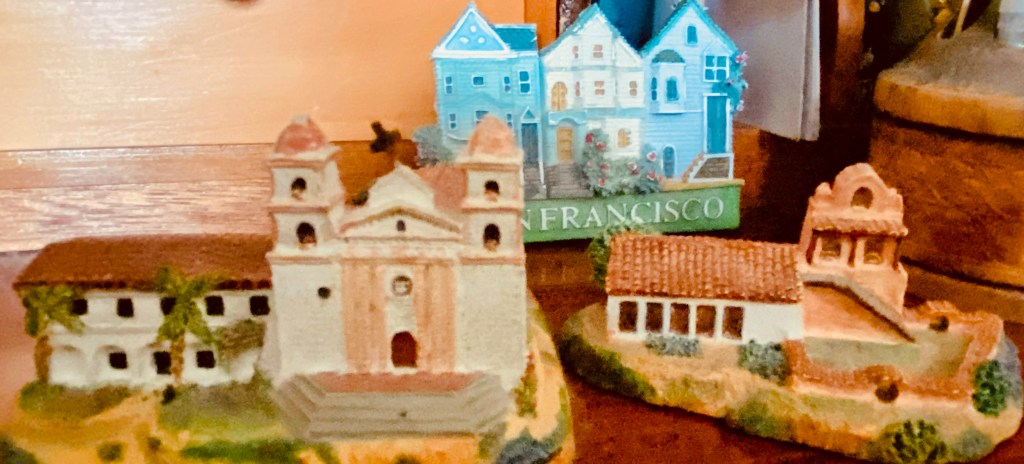
Spanish Mission buildings in Santa Barbara are distinctive to the place, as are the ‘painted ladies’ to San Francisco.

Here’s part of Mum’s year group of trainee nurses. They wore pink uniforms to indicate they were in their first year. Can you spot Nola?
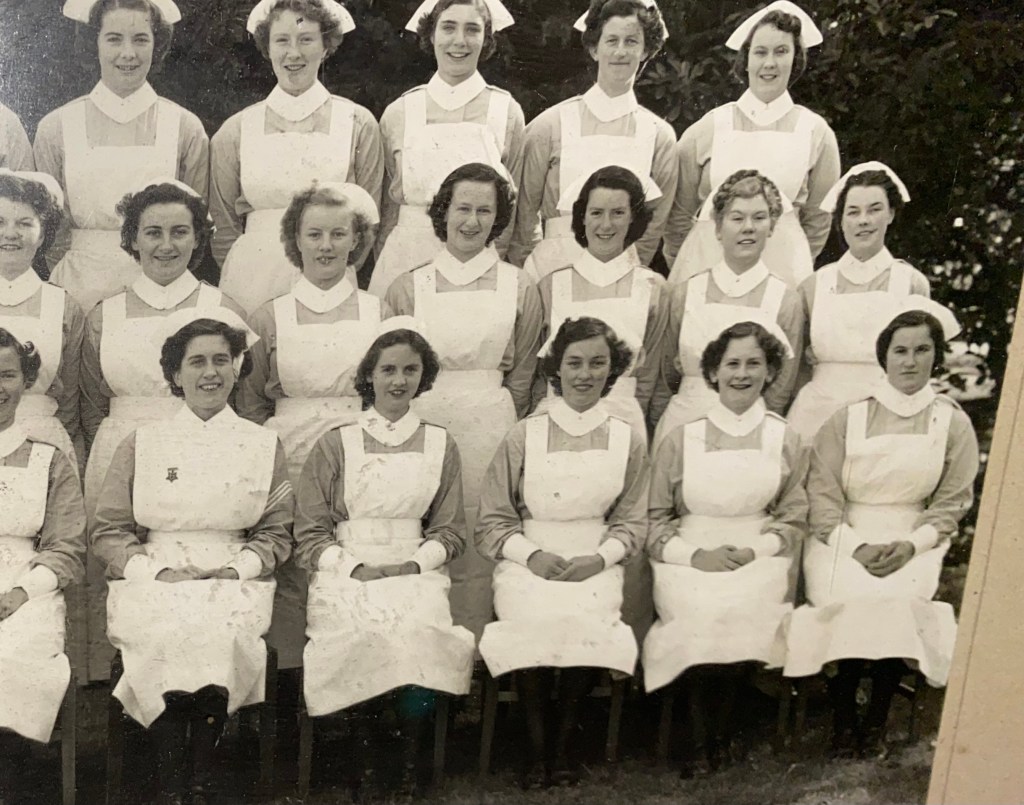
Nola: third from the right in the second row with Adrienne on her right and Eleanor on her left.

Today, Mum has taken up knitting again after many years. We found some bags of wool in the back of the wardrobe and a roll-up knitting-needle holder, and here she is casting on the first row on very small needles, following a pattern in a book I found in the library for her.

Ngā Hau Ngākau

Waraki (Dawn Chorus)

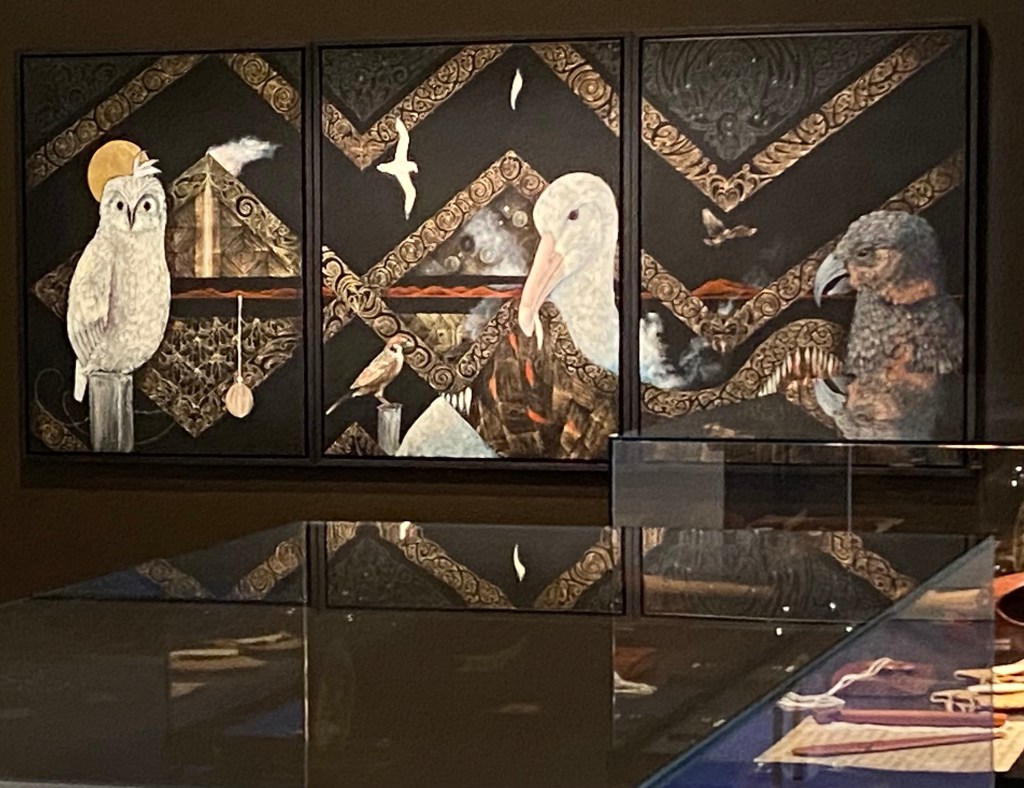
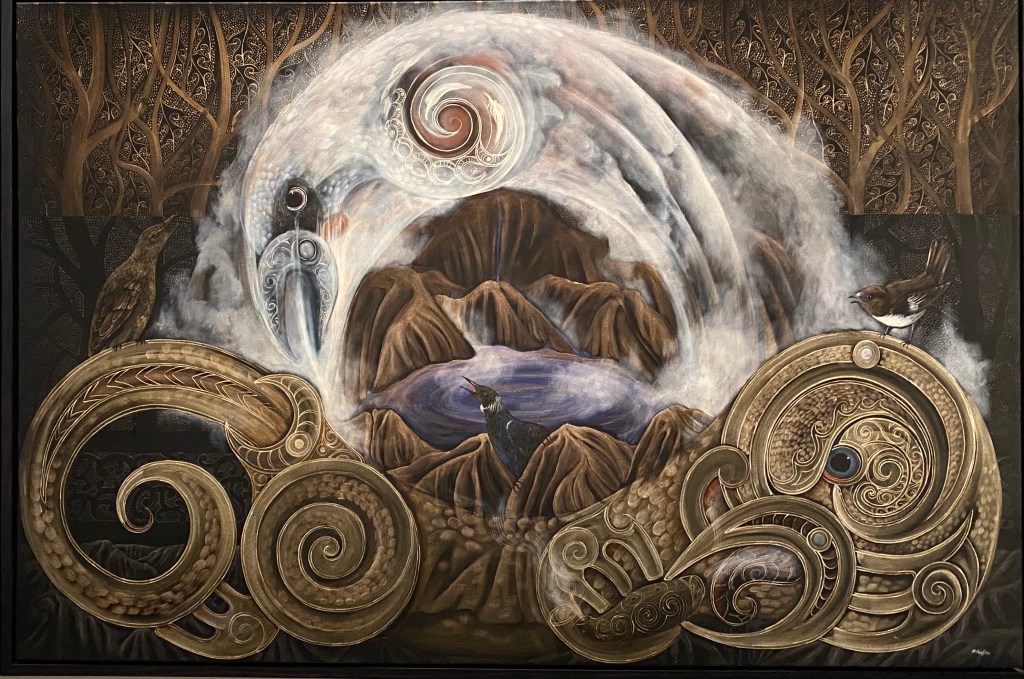
The images in this exhibition (the title translates as ‘Breath of Mine’) take you from the physical to the spiritual world. The more you look the more you see. The patterning and carving elements remind me of this:

There was once a carver who spent a lifetime with wood, seeking out and exposing the figures that were hidden there.

Patricia Grace. Prologue to Potiki. Penguin Books (NZ) Ltd. (1986)

The exhibition space shadows the shape of a whare whakairo (carved meeting house). It’s about manu (birds) “treasured in Māori mythology as messengers that connect the physical and the spiritual realms” says the introduction, and honours the work of musician Hirini Melbourne whose bird waiata I enjoy. He researched early Māori instruments, which often echoed bird sounds, and revived their use as you can hear in the soundscape accompanying the exhibition.

I particularly like the painting of toroa (albatross) having seen them in flight recently at Taiaroa Head, and also the detail of sea life. If you look closely, you can see nets and boats, so exploitative human interaction is there but, mostly, there’s the power of nature such as water and wind and the special character of each bird and animal. The triptich panels echo the kōwhaiwhai panels used for storytelling and oral history in the whare whakairo.

The exhibition is a travelling one, in Christchurch at the pop up Canterbury Museum space at CoCA until the end of April. The link will take you to better photos than mine. You can also hear the music here.

The paintings are by Robin Slow and the carvings are by Brian Flintoff. The musicians are Bob Bickerton, Ariana Tikau, Holly Tikau-Weir and Solomon Rahui.