Great book group

“Come and join our book group,” was an invitation I received last year from people I knew or had met through the WEA and the WORD festival. My last book group had lost its appeal for various reasons and I went through a period of grief, I guess, for what had been an excellent social and mentally challenging monthly meeting.

This new group is excellent. We sit in a circle in a local library for an hour once a month and each person talks about what they’ve been reading. I find this refreshing and interesting after being in a group where we all discussed the same book.

This week, in a group of about 12 plus a librarian, we heard about a range of books as usual. Mine was Patchwork, the graphic biography of Jane Austen by Kate Evans. One woman had read Marie Benedict’s book about Rosalind Franklin. Benedict writes about women who have been overlooked by history and another book grouper has read all her books. One woman talked about an article in NZ Gardener about climate change affecting trees. Another talked about a book on NZ Wildlife. There was Munich by Robert Harris, which the reader says has disturbing resonance with contemporary politics. Karen by Kelsey Grammer is about the actor/comedian’s sister who was murdered when she was 18. Another book was about growing up in Northern Territory Australia – living with snakes and living off bush tucker. One was a memoir by Stalin’s daughter.

Some books were exchanged – often they were personally owned, some picked up from little book libraries or second-hand shops. Many were library books, some ebooks. I went away feeling the richness of reading in our group, the enthusiasm for learning about other people’s lives and about the world in general. I know that there are book groups in libraries across the city – and across the country – all with a different flavour, it seems, when they report back on the Christchurch City Libraries newsletter.

Sometimes, when the books we have discussed are quite grim, I feel like scuttling back into the comforting arms of cosy crime! But, right now, I’m reading Helen Garner’s diaries from the 1970s to the 1990s and enjoying being inside the mind of a writer.

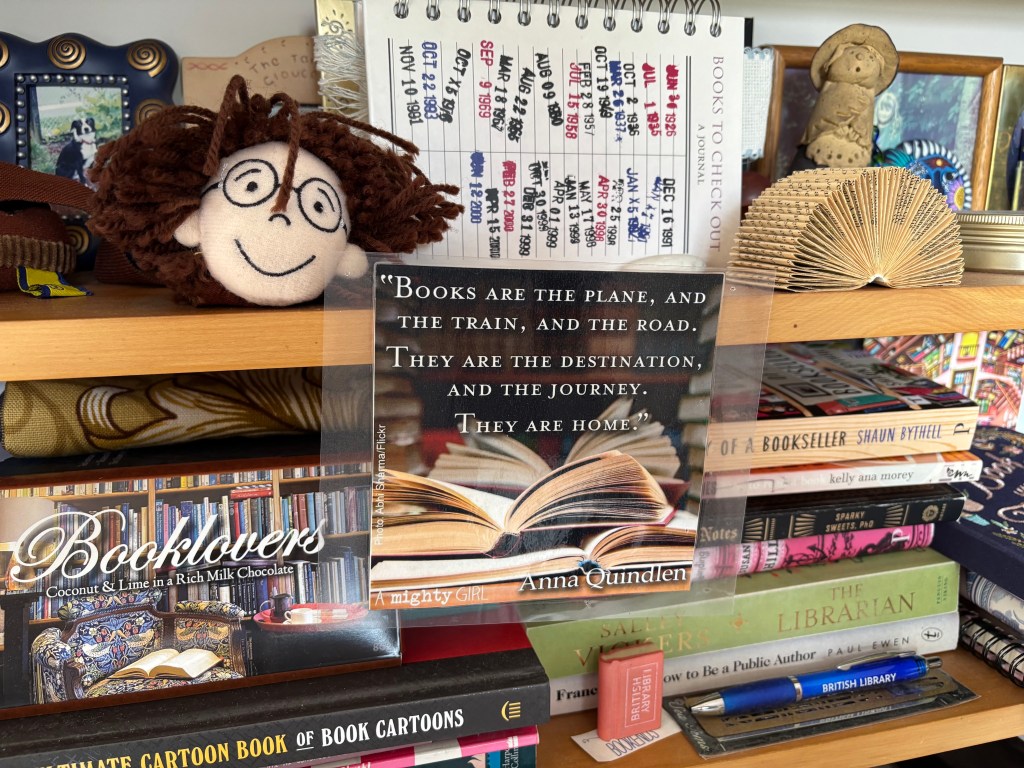
My ‘book’ bookshelf

Book magnet

Everyday we’re either repelled or attracted by what we experience – or somewhere along the continuum from one to the other. Felix is very cute until he brings in a rat. I began this morning’s paper with anticipation only to put it down with distaste. I link these opposing feelings to the kinds of books I’ve been reading. I was a little repelled (that’s NZ-speak for very repelled) by aspects of a book of short stories titled Surplus Women by Michelle Duff. It’s literary fiction, after all the author won the International Institute of Modern Letter’s fiction prize in 2023. The book reminded me of Margaret Atwood’s short stories collected in Bluebeard’s Egg which I puzzled over at university until it clicked that the women were supposed to behave like that and never see the error of their ways – so we wouldn’t make the same mistakes, perhaps? With both authors the writing itself is the most attractive feature.

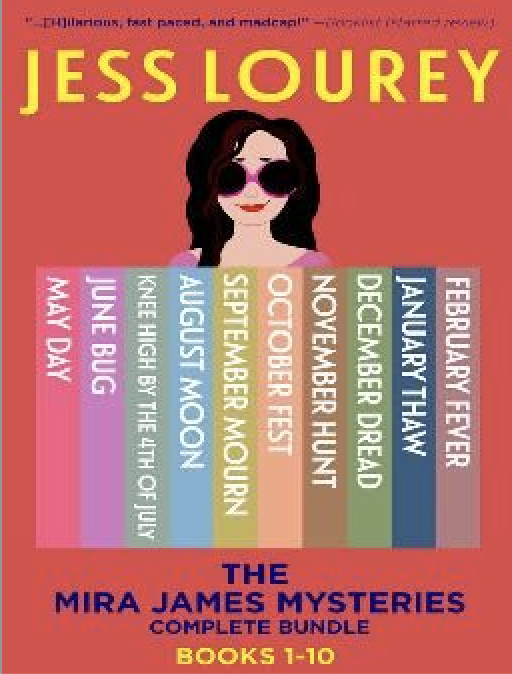
I am never without a book and, ever indiscriminatory (within limits), looked forward to slipping into the more comfortable, but somewhat mis-named, genre of ‘cosy crime’ to give me a break. I decided on May Day by Jess Lourey and embarked on a sometimes attractive sometimes repellent adventure set in the small town of Battle Lake, Otter Tail County, Minnesota (all real places). It’s attractive for the hilarity and social commentary and somewhere on the spectrum to repellent for the food, weird Americanisms (‘a couple moments’ instead of ‘a couple of moments’ is just one example) and quirky characters – reminiscent of Janet Evanovich’s Stephanie Plum series, but engaging for its freshness*. I’m too entertained to be bothered by the sneaking suspicion (i.e. awareness) that the writer knows too well – and manipulates – her reader, but that is perhaps the same for all fiction writers; part of the writer’s craft. Of course, May Day turns out to be the first of a Book by Month series. The first was cheap on Amazon, after which the price of each book quadruples. So I looked it up on the library catalogue and have downloaded all ten books in the series for free and have 14 days to finish them. A fest of alternating attraction and distaste. I’m up to July.

*Both Evanovich and Lourey get a lot of laughs out of the antics of elderly folk – but then, so do I. When I took Mum (aged 96) to have a blood test on Thursday she announced in the waiting room that her stockings were falling down and proceeded to hoist up her neat tweed skirt to make the necessary adjustments. (Luckily, there were only three people in the waiting room, a man intently involved with his phone and two others hastily heading out the door. A courier driver at the counter had his back to us and was taking his time.)

Uproarious!

Two hot days in a row were all the excuse I needed to sit in a cool spot and read. Consequently, I’ve just finished this brilliant, entertaining and educative book by a 27 year-old historian. I had thought of skimming through it quickly, but it was so engaging that I read every word – sometimes more than once! The author would like to rescue the once famous (infamous?) visual satirists (mainly Gillray, Rowlandson and Cruikshank) from Victorian censorship – Prince Albert burnt many he found in the royal collection. She claims that they were such an influence in their time that they likely changed the course of history. As the cover illustration shows, they caricatured political figures, here showing PM William Pitt and Napoleon Bonaparte carving up the globe – you could substitute them for Trump and Putin.

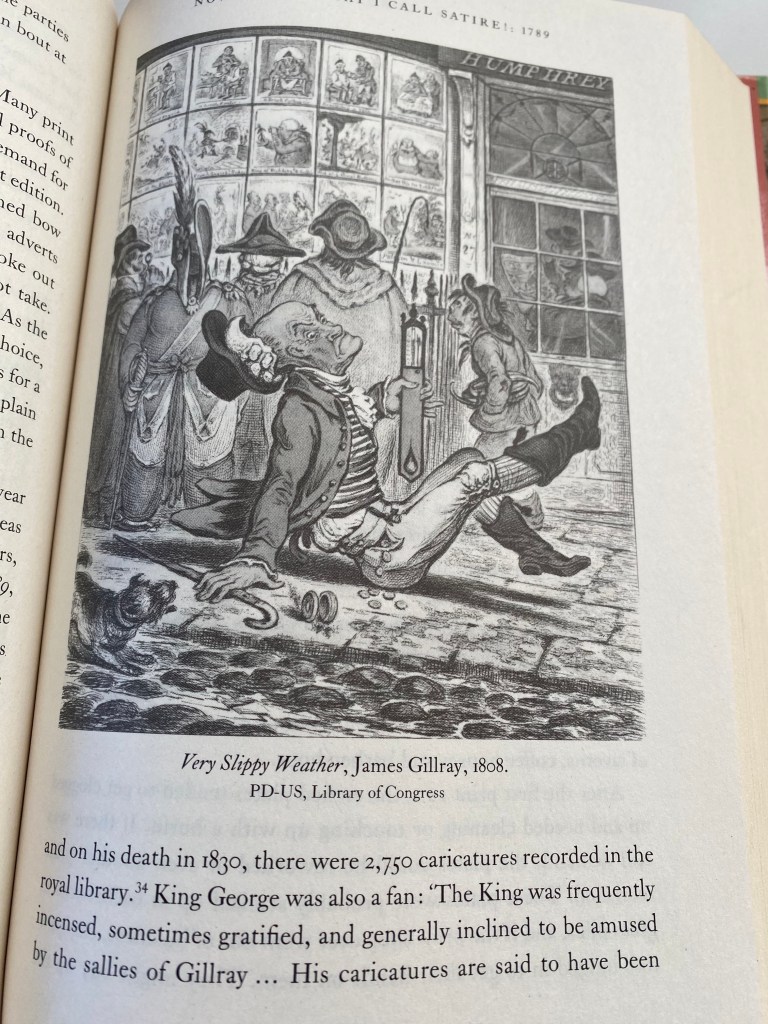
People would crowd to the bow windows of the printmakers (here, the shop of Hannah Humphrey) to see the latest cartoons – often in the hope (or dread) that they might feature in the caricatures themselves – and to buy some to add to their collections.

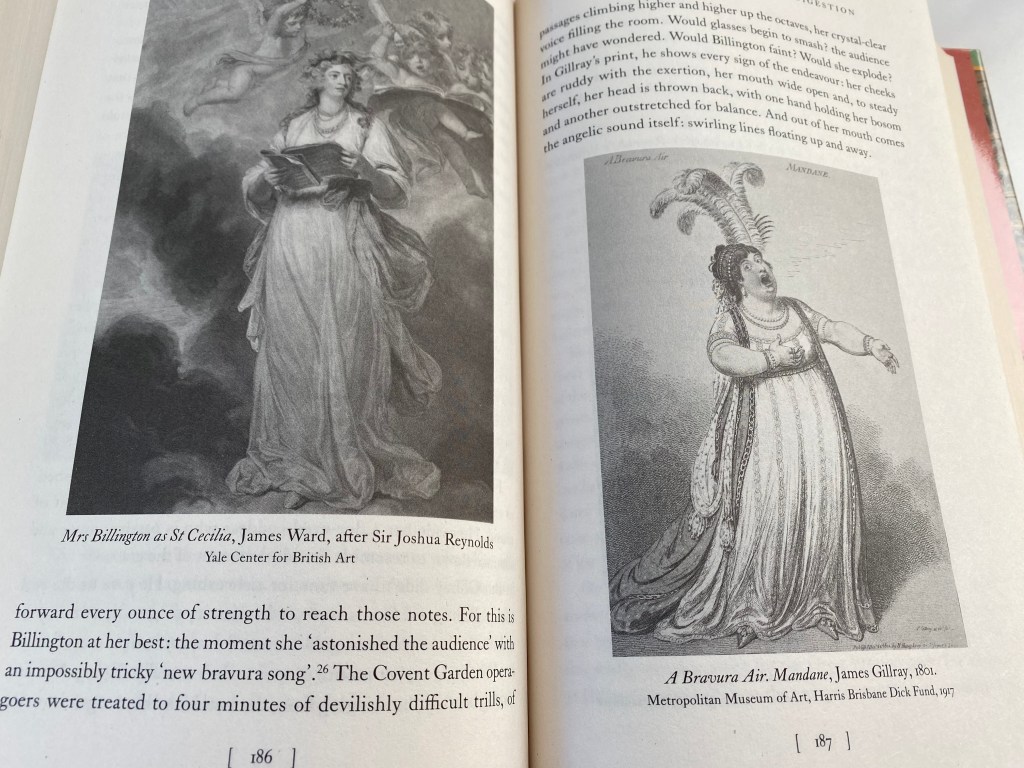
While portraitists and painters may have been held in higher esteem, the satirists were generally formally trained in those skills too. This image shows the contrast between the two forms: one an idealised portrait of a celebrated singer, while the caricaturist brings her down to earth.

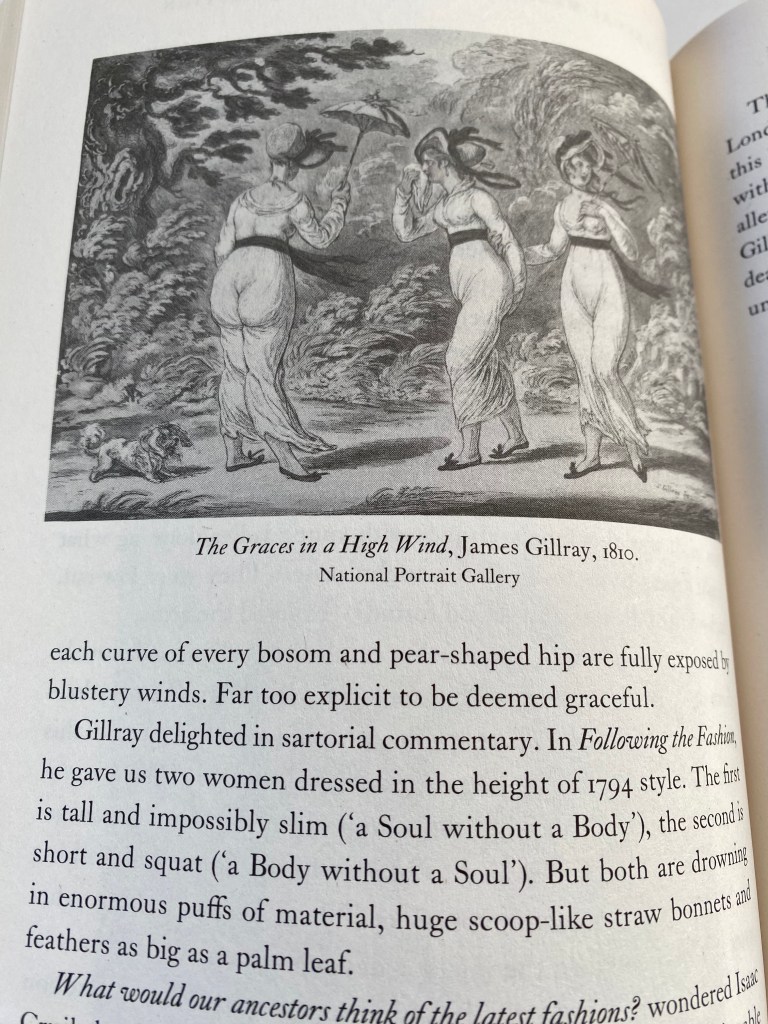
I am amused by this send-up of a fashion trend in muslin dresses better suited to warmer climes than the English weather.

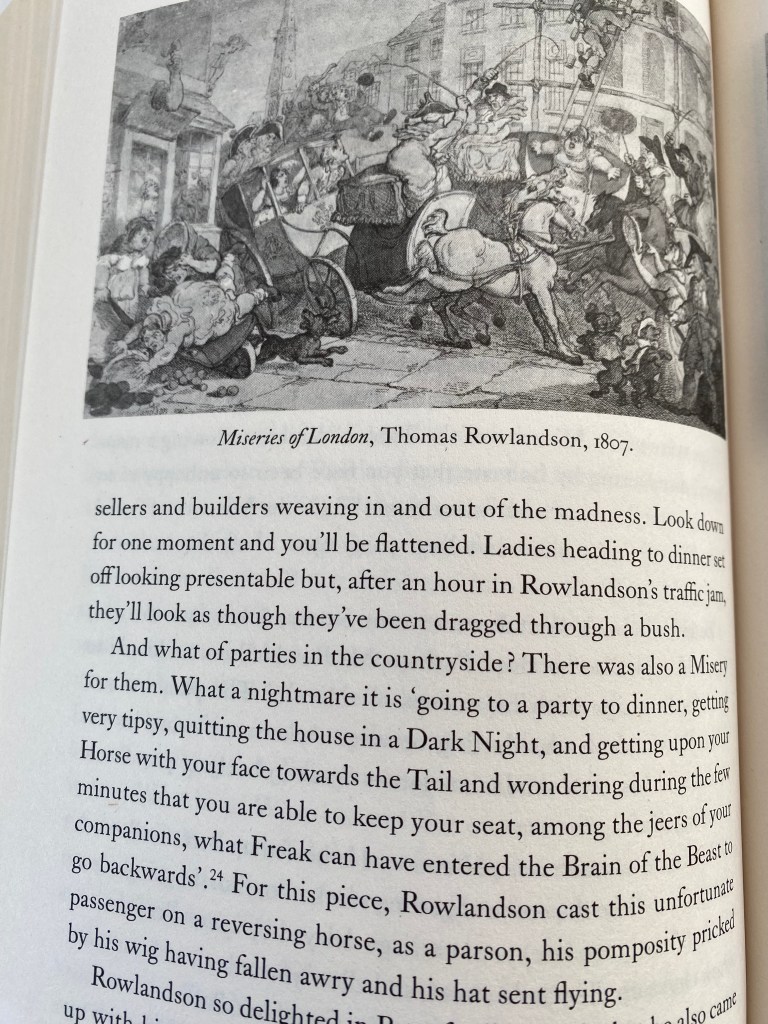
And here’s a Georgian traffic jam in London. I’ve included text again so you can appreciate the author’s very readable writing style.

Many of the caricatures are of brutal scenes, particularly of the French Revolution, which shocked the public and, despite general disapproval of George III and more so of his profligate heir, may have put people off trying the same thing at home.

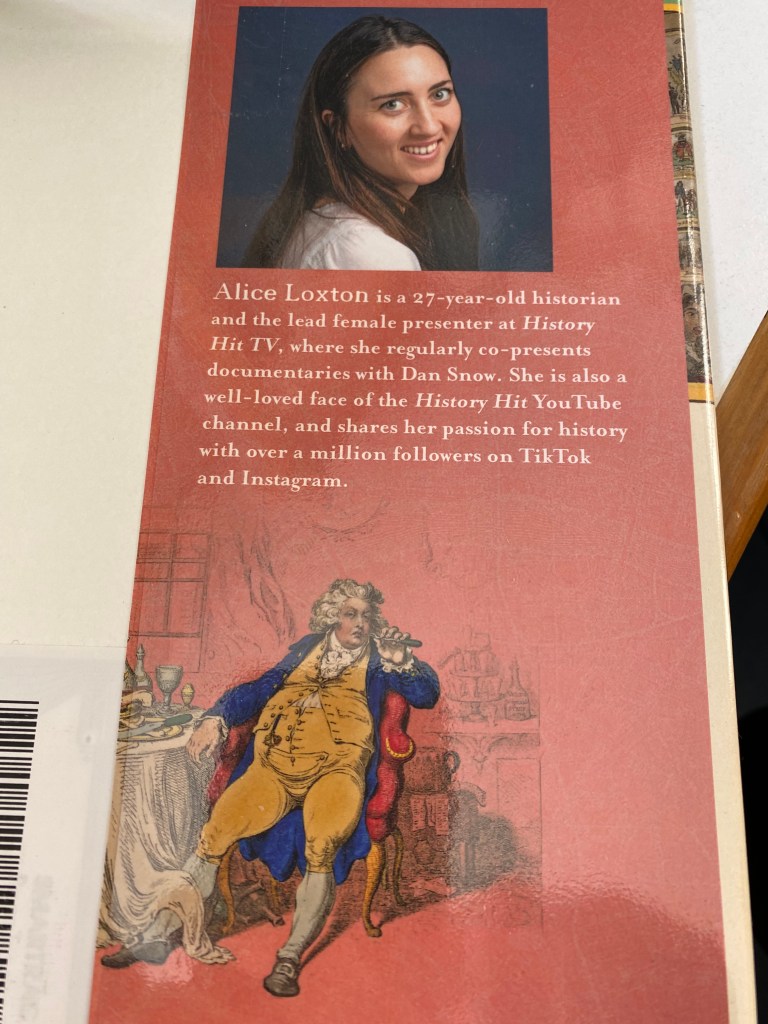
Here’s a bit about the author, with a caricature of the Prince of Wales (later George IV) by Gillray below.