This morning the rain dried up, the sun came out and I took a look at progress in the garden. First, some of the edibles:
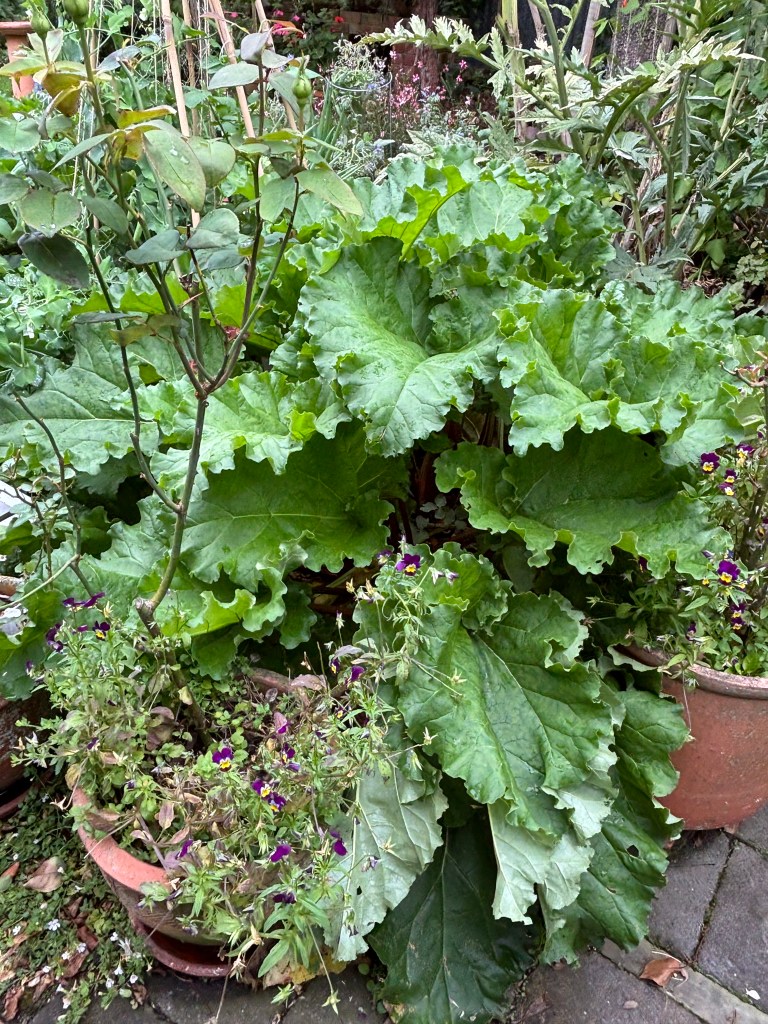
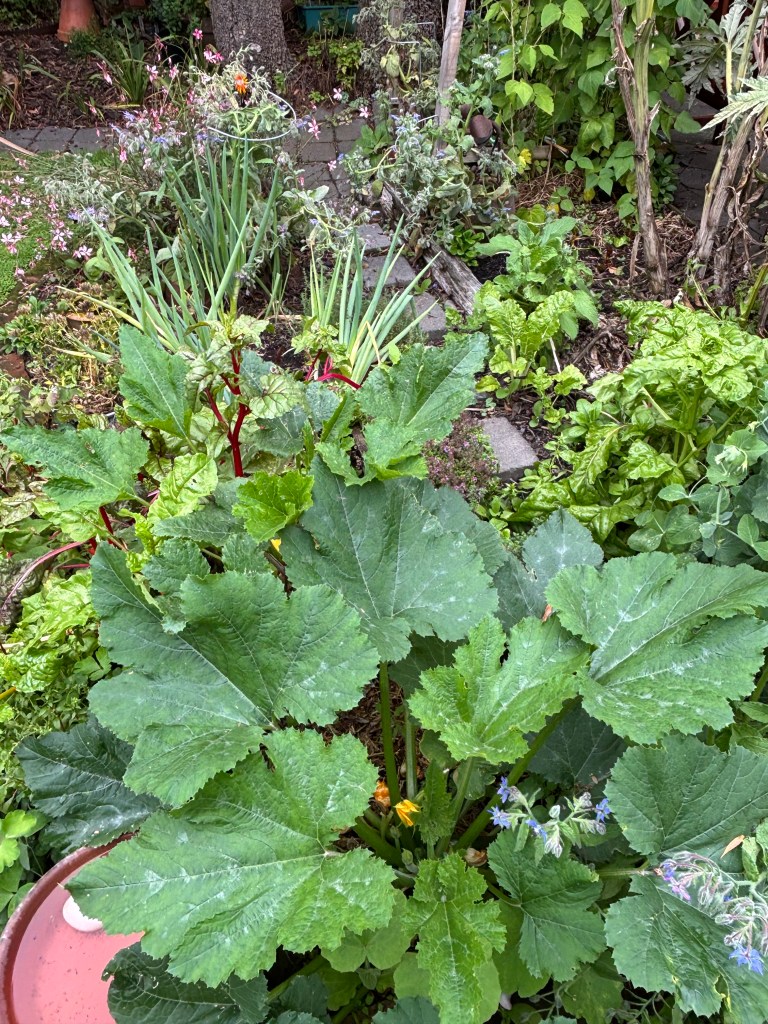
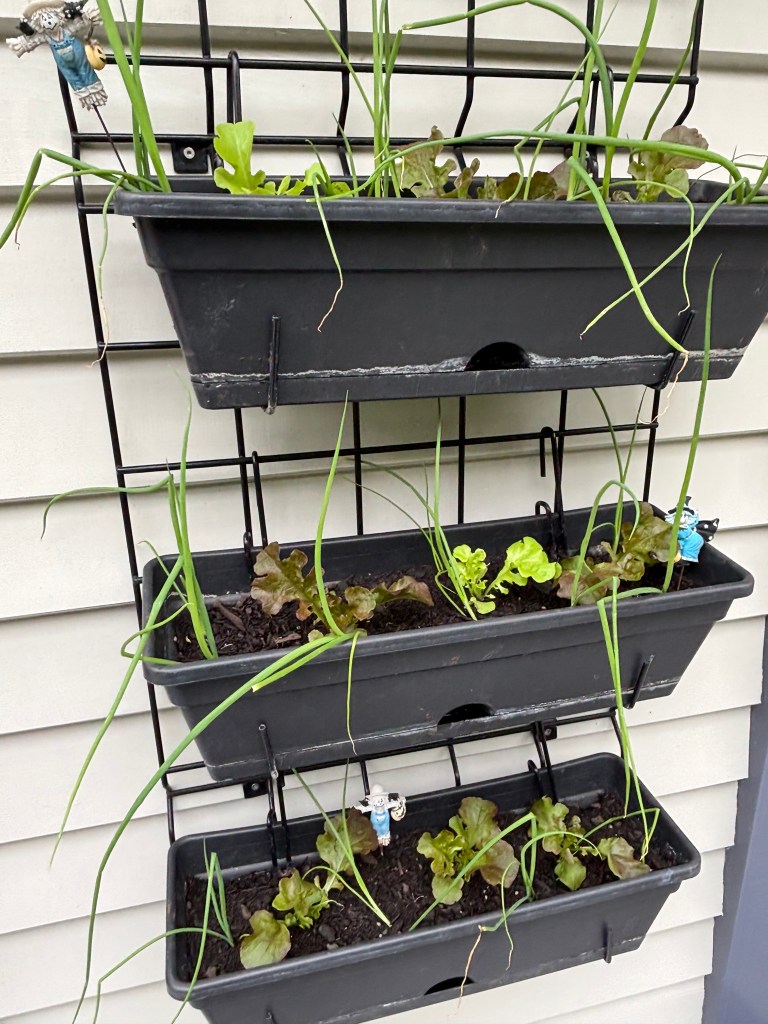
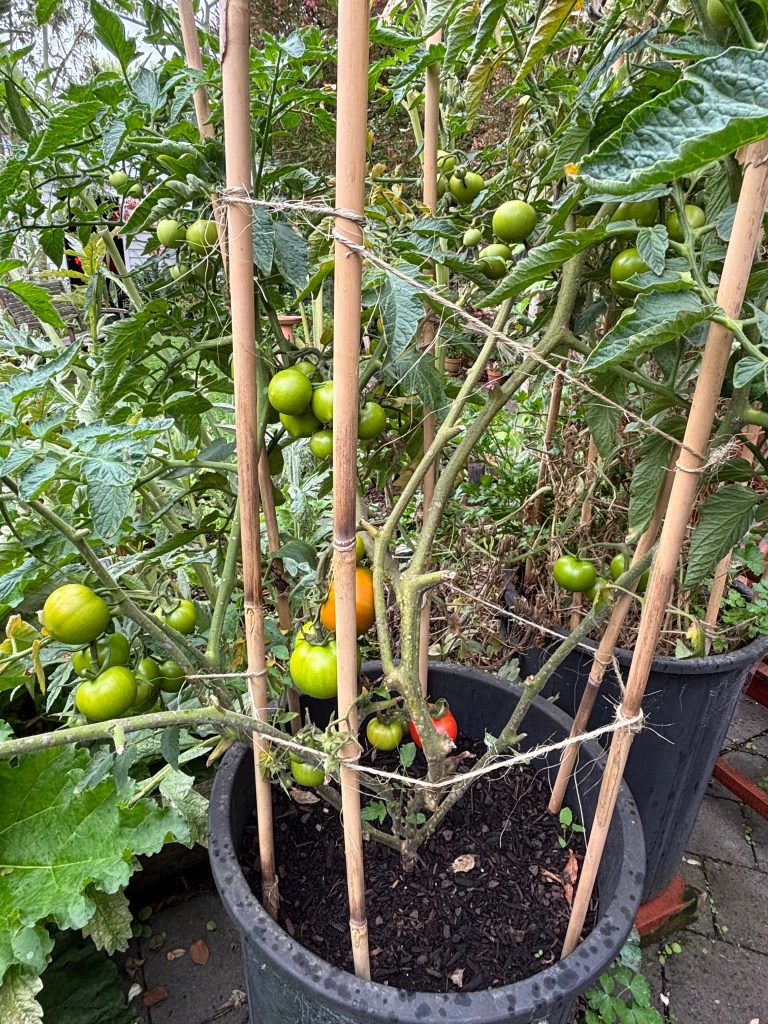
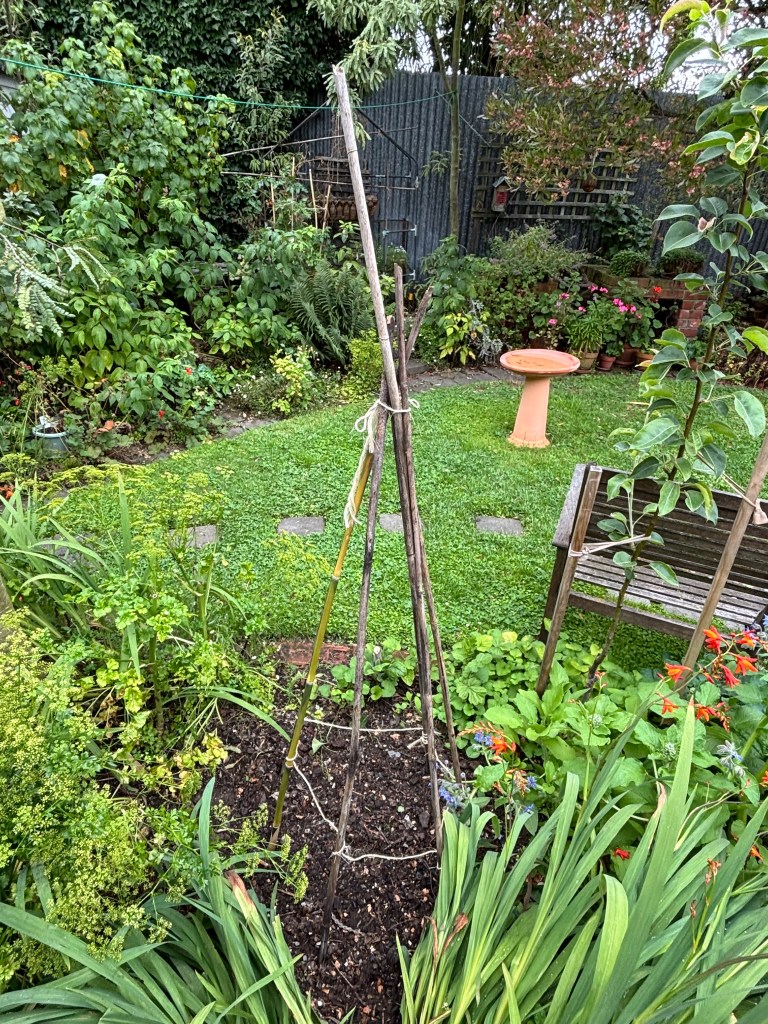
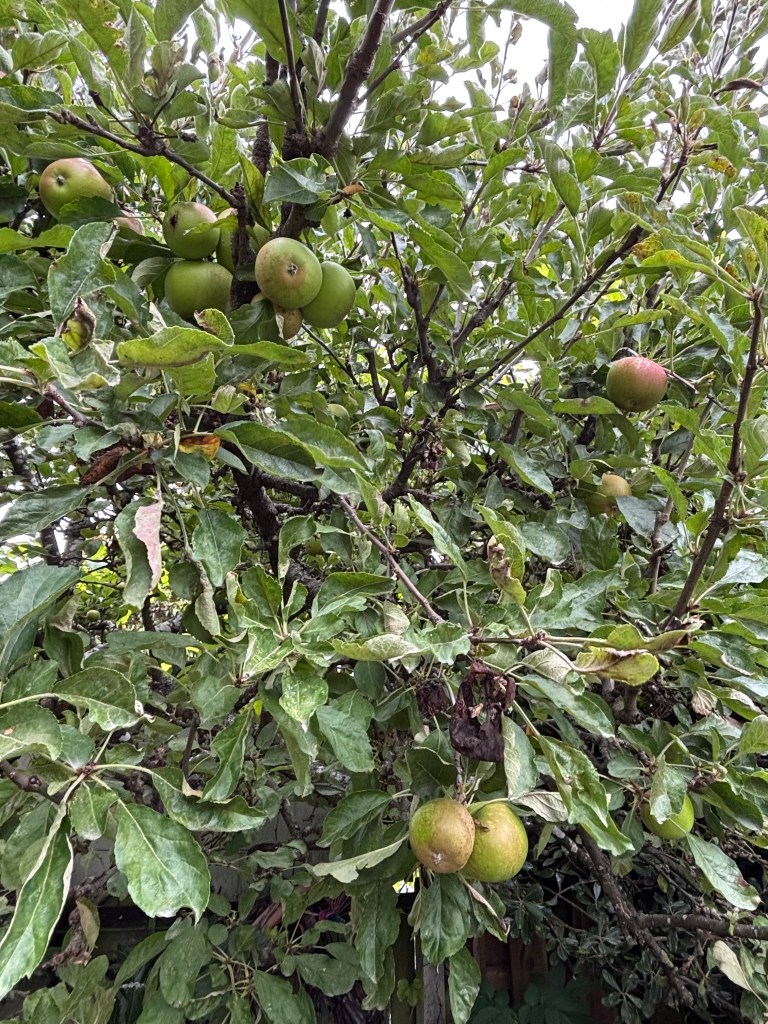
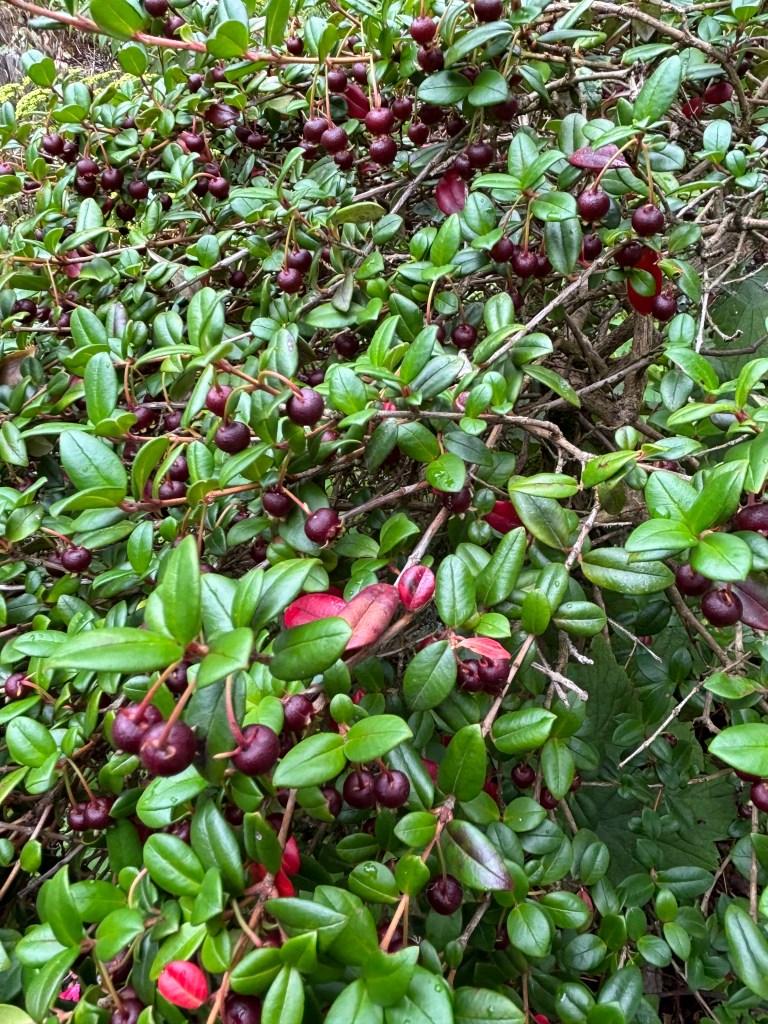
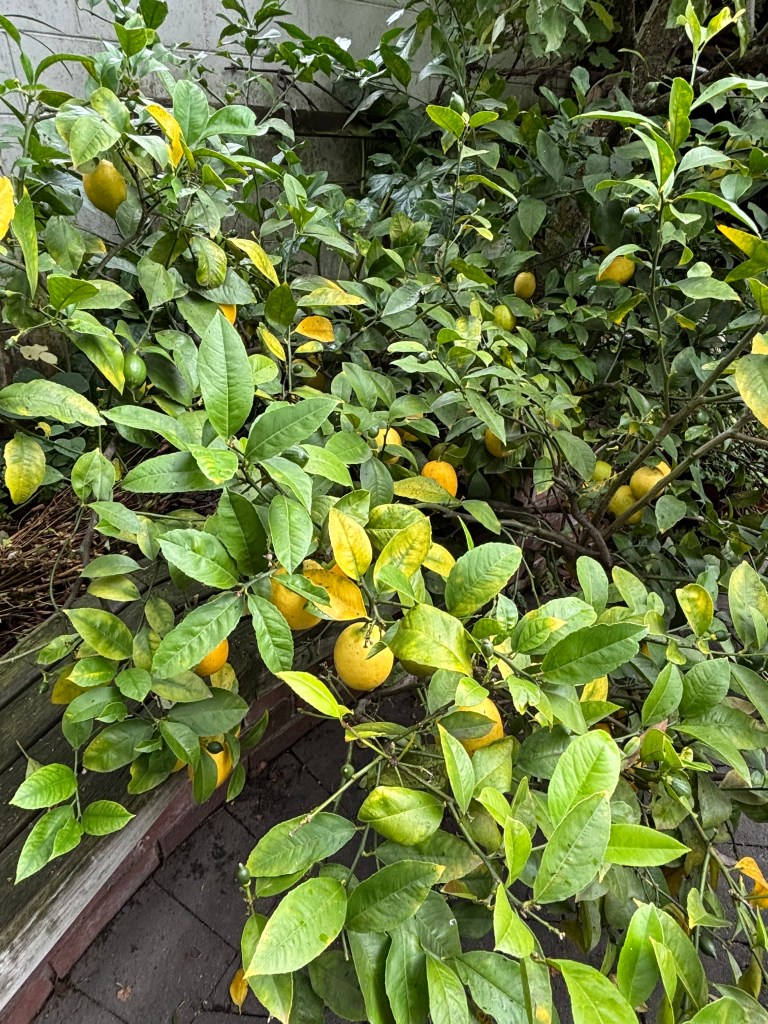
The more it’s picked the more the rhubarb growsHuge courgette leaves, tiny fruit!Recently planted ‘salad bar’Ripening Potentate tomatoesI hope the sugar snap seeds are germinating in thereSturmer apples beginnning to ripenCranberries galoreMore lemons than I know what to do with
Then the flower garden:
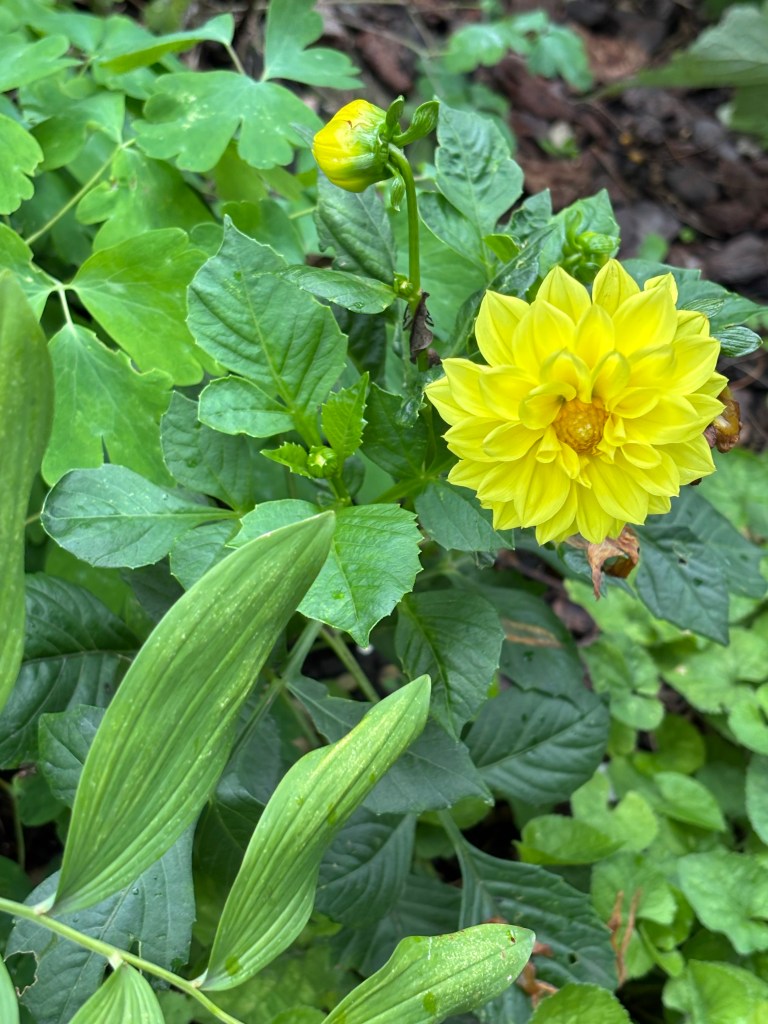
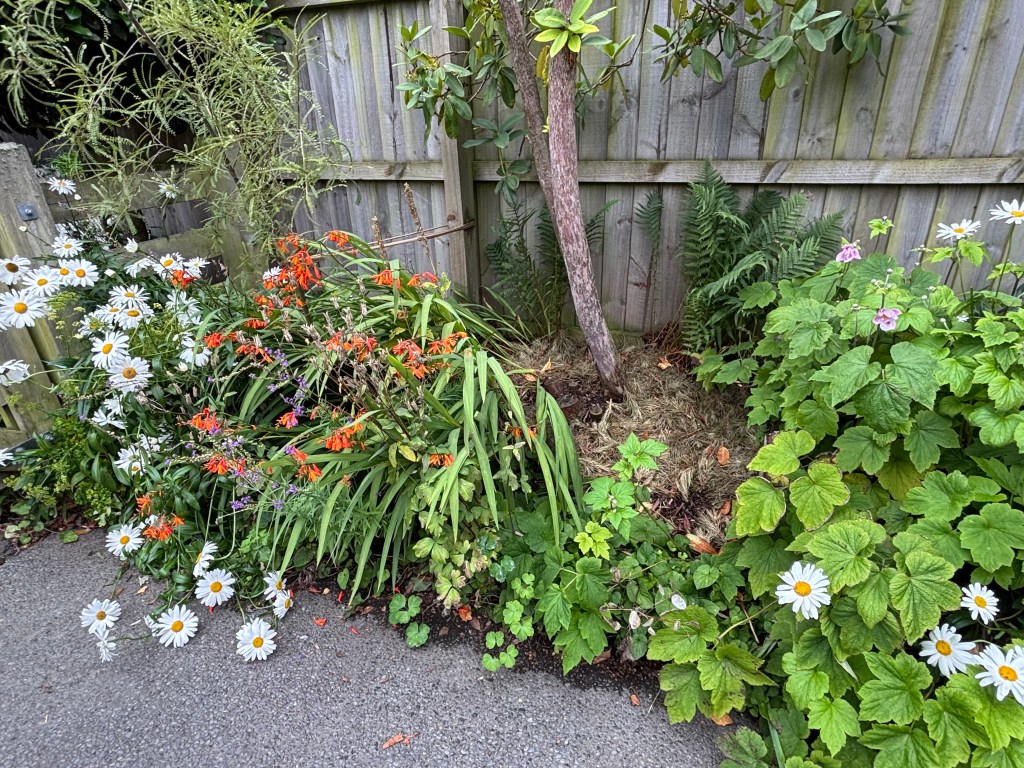
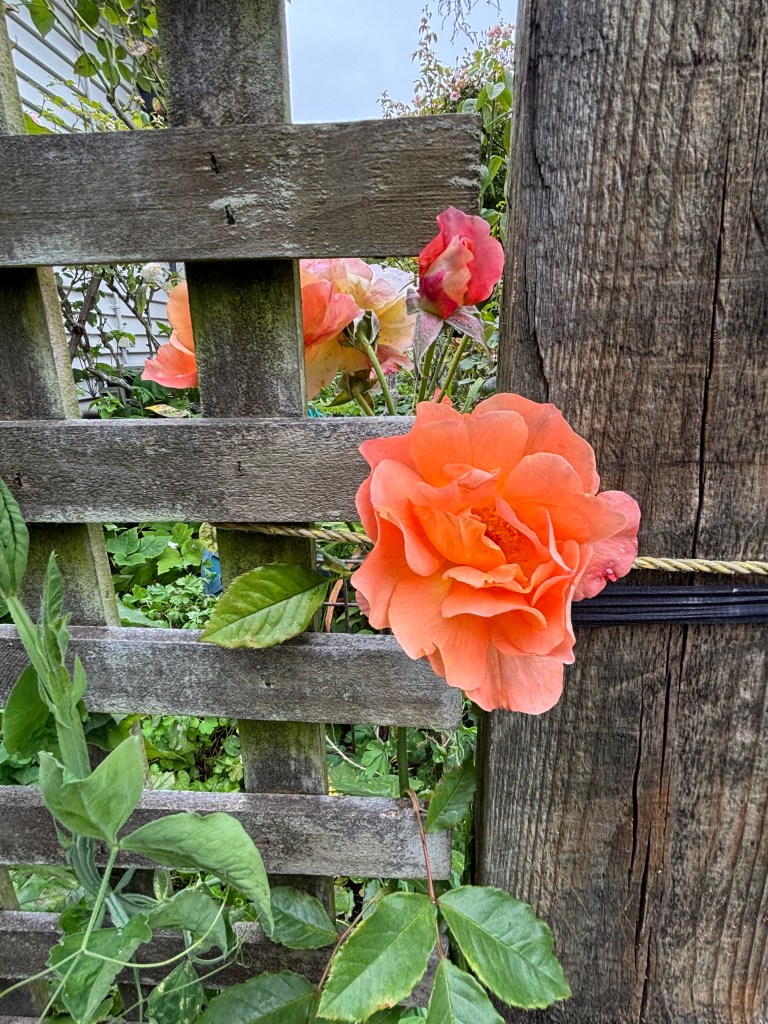
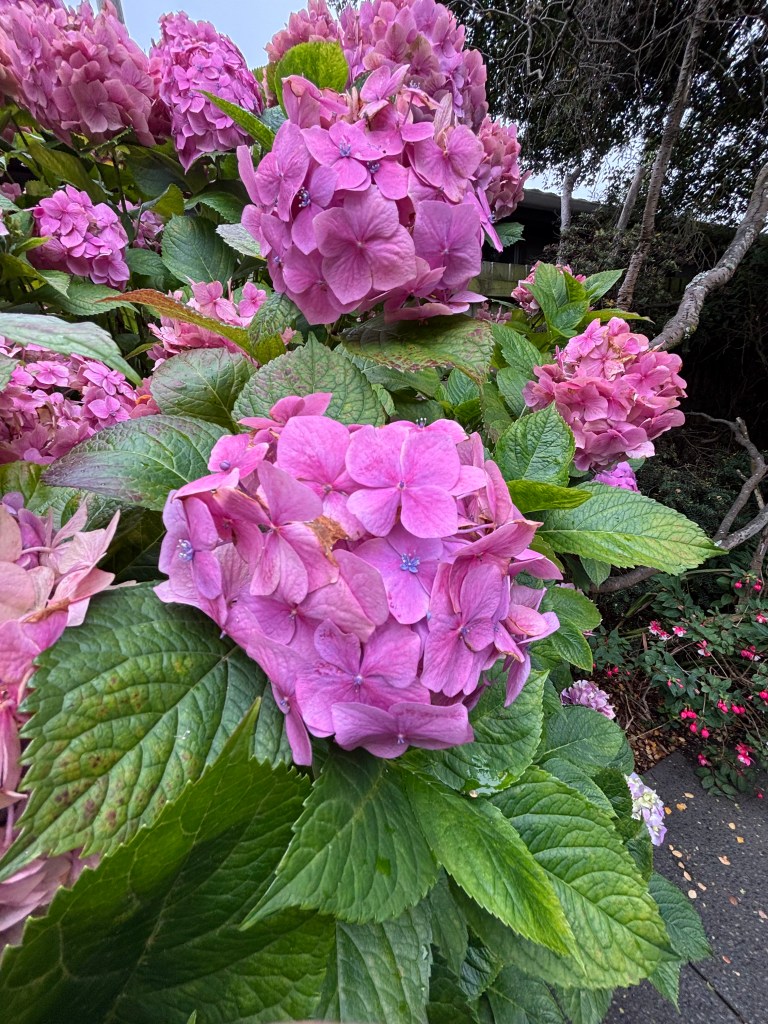
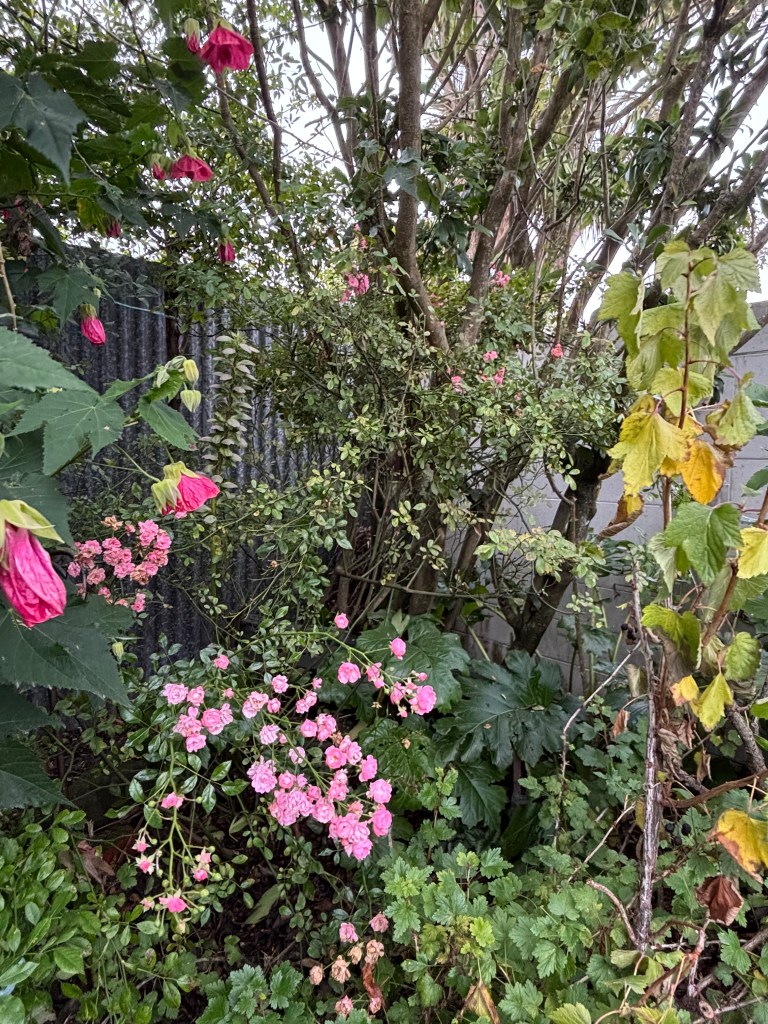
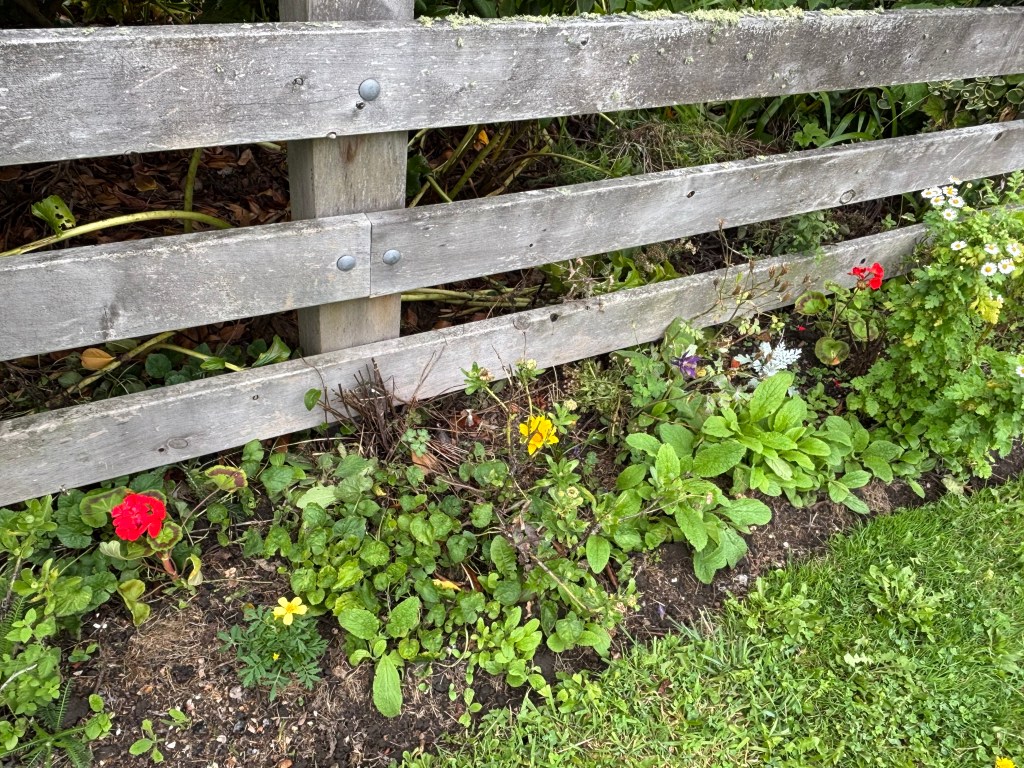
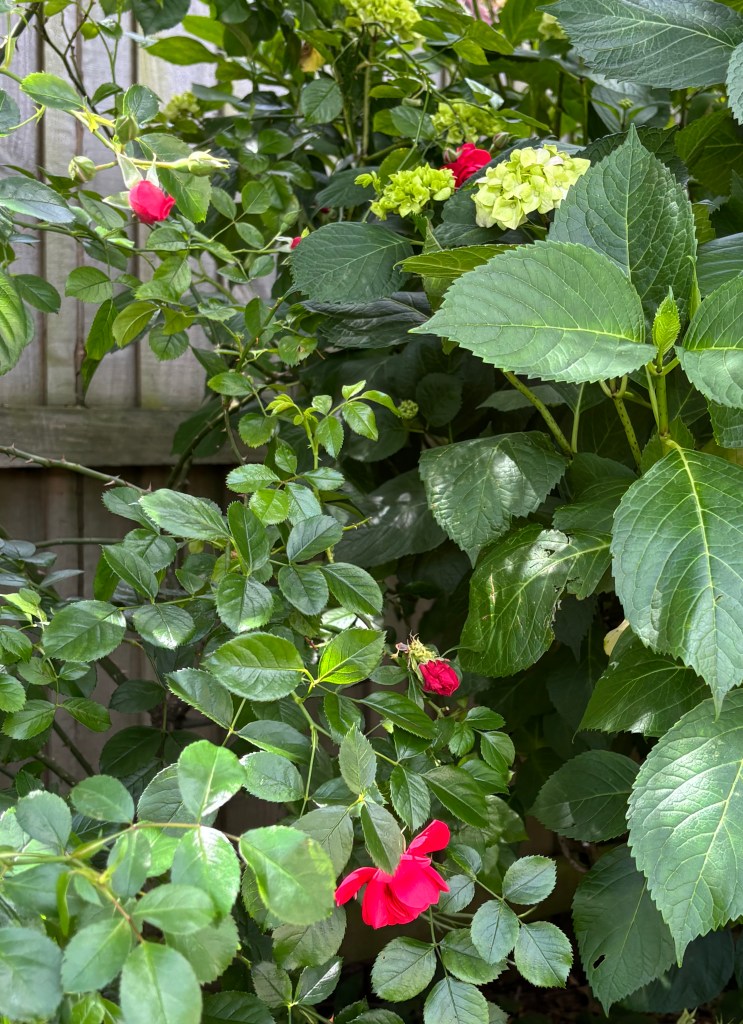
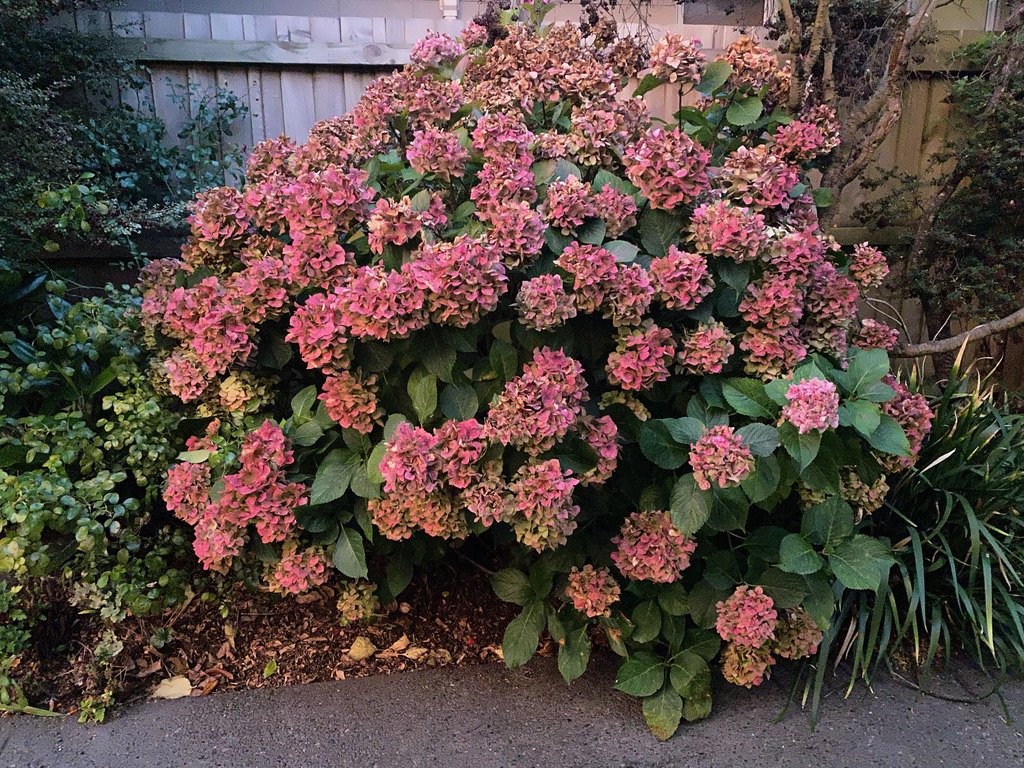
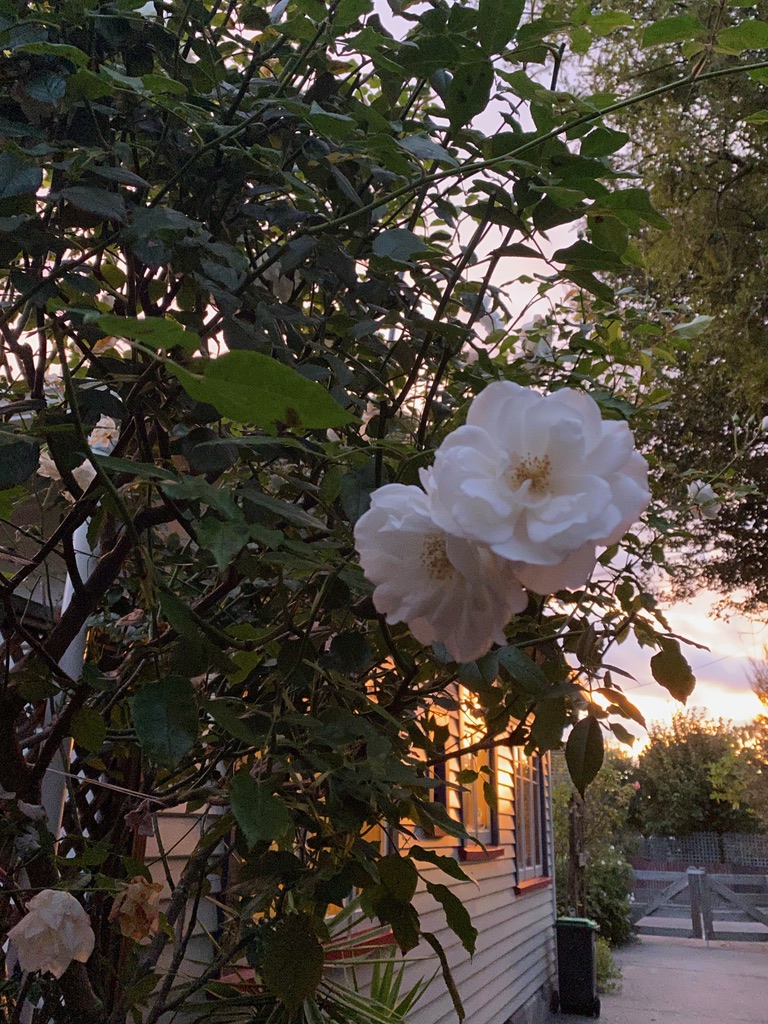
DahliaShasta daisies, Japanese anemones and montbretia doing well (not that they need encouragement). Rhodo mulched with clippings from the Xmas tree.Westerland rose going strong 3 months after it was plantedHydrangea flowers as big as your head!Very tall iceberg roseFairy rose scrambling out and up for lightNew planting (geraniums, gazanias, cineraria silver dust, marigold vanilla cream) to add colour to the berm doing well – so far.
Nothing appears to have suffered from the rain and, for me, it’s a relief not to water most days. Everything looks green. Most plants look healthy. As will I, no doubt, after trying some of these recipes:
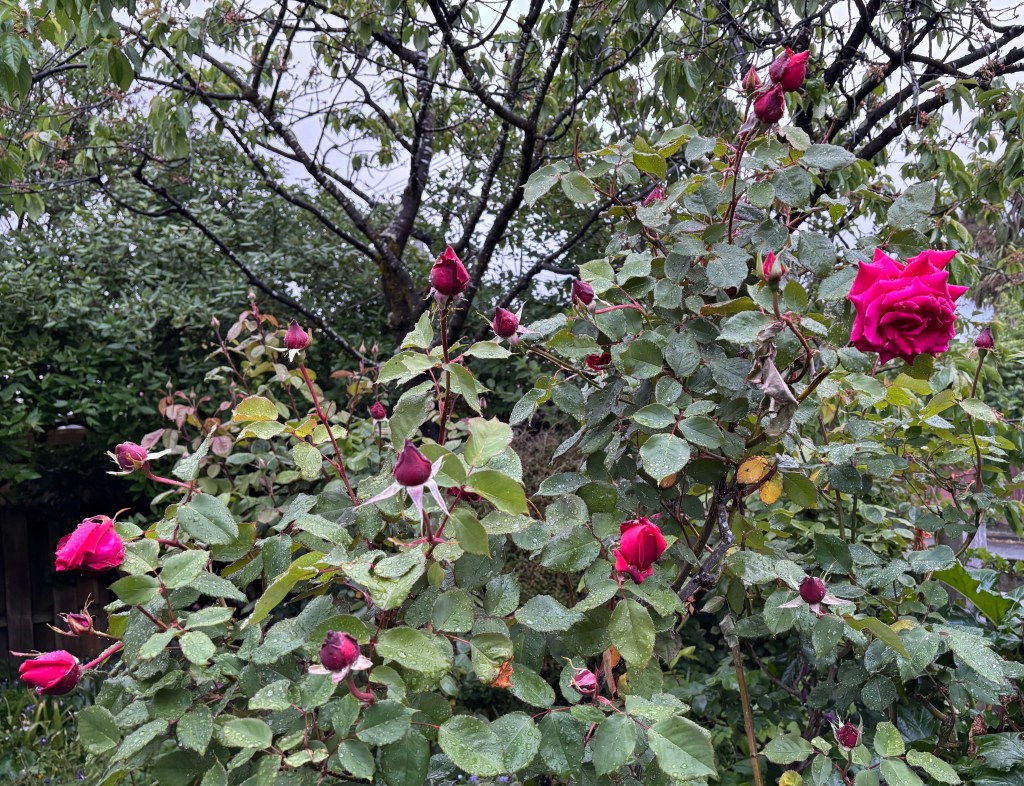
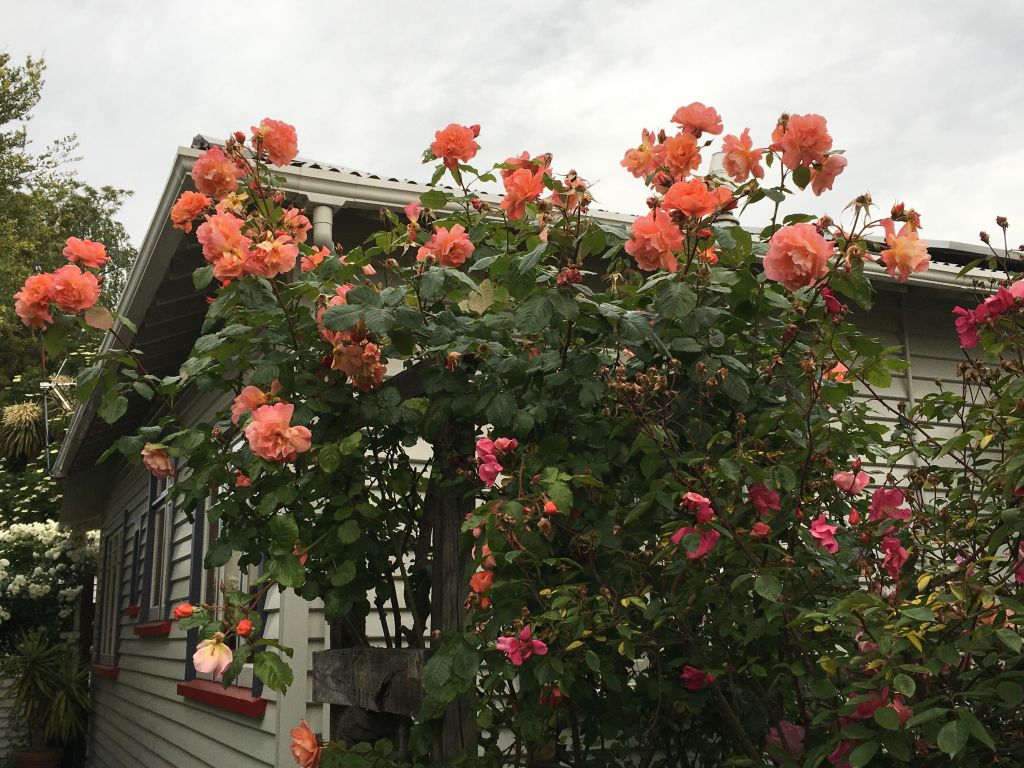
Looking forward to something can be better than the event itself. However, I’m looking at my roses which are beginning to flower and producing heaps more buds. It’s amazing how fast they have grown after being pruned back in July. I’m pleased to find that they weren’t blown to smithereens by last night’s wild wind.
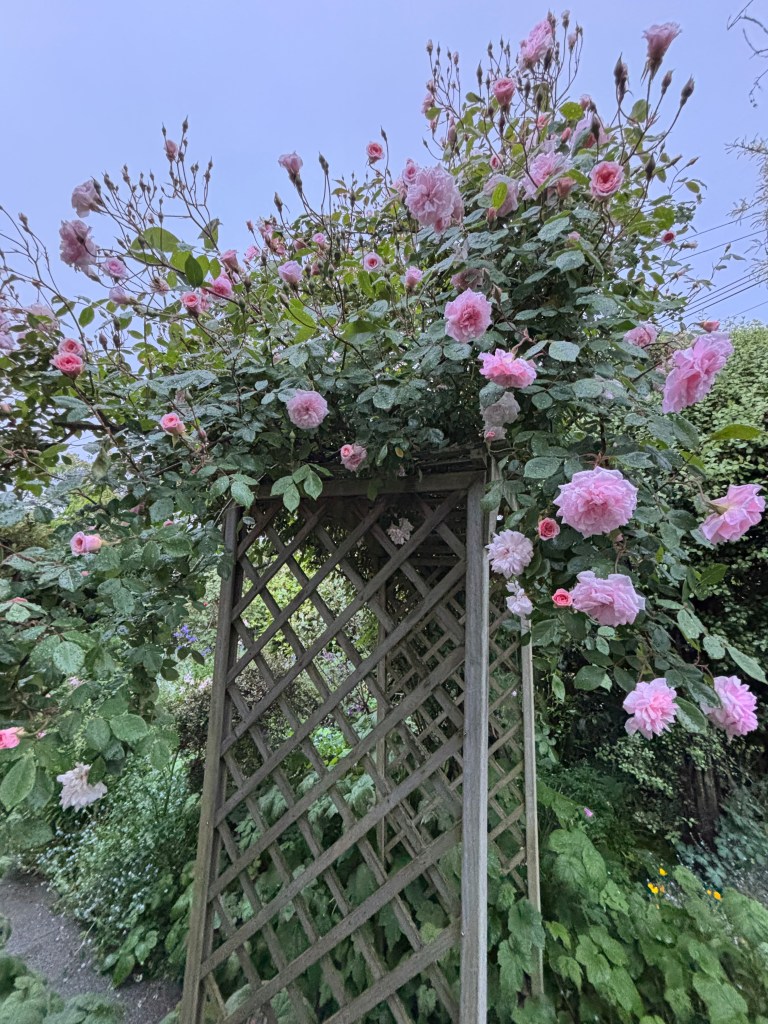
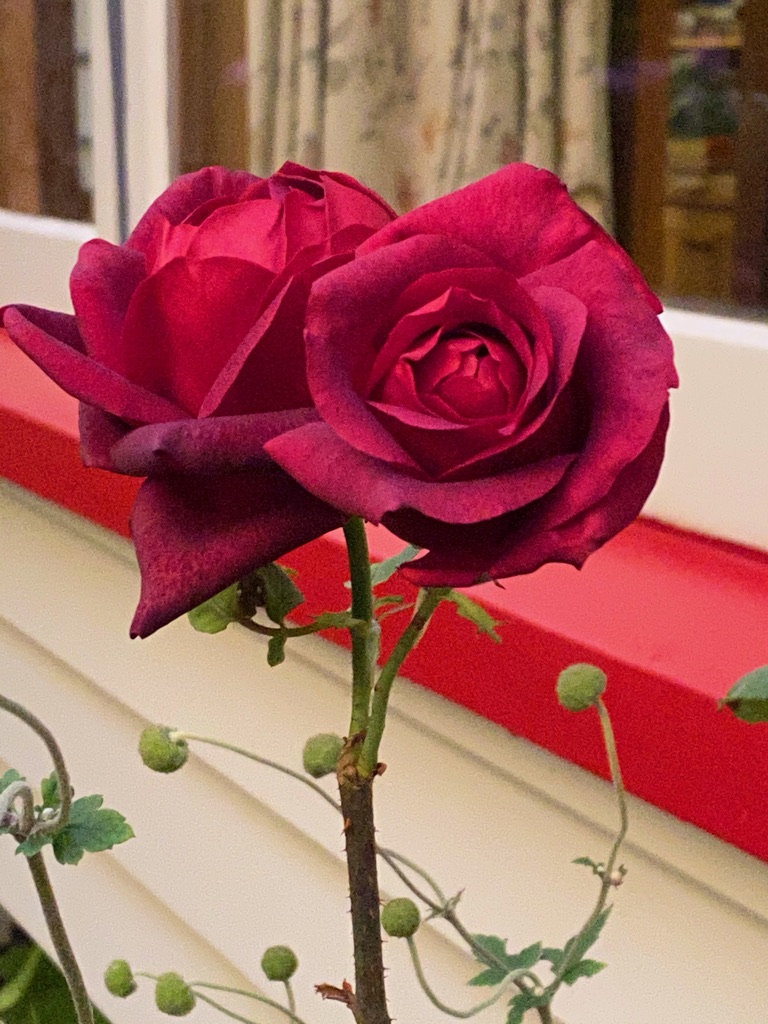
Name unknown. We call it ‘big bloomer’. Beyond it, Precious Platinum also has many buds.Cecile Brunner
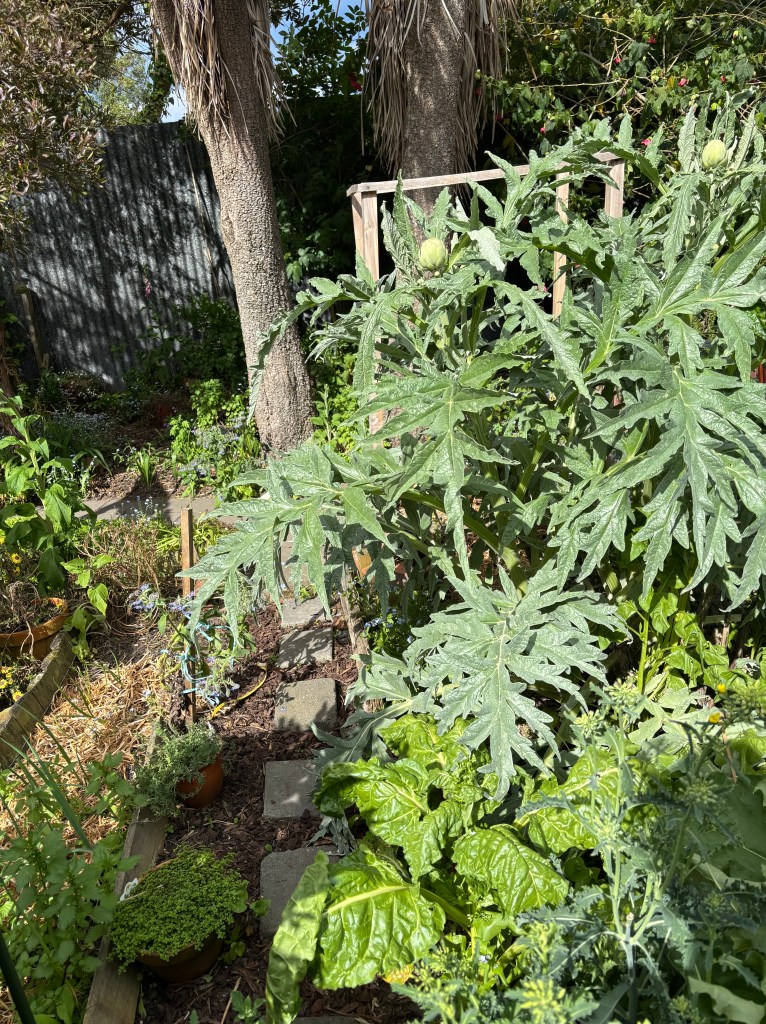
The globe artichokes have lots of buds this year; usually there are only two or three. While the blackcurrant flowers were barely noticeable, the developing fruit is more obvious and looks promising. The lime tree, which I feared was dying, is now producing new leaves. My neighbour says it may be wise to remove the flowers to give it a better chance of survival.
Globe artichokesBlackcurrantRecovering lime tree
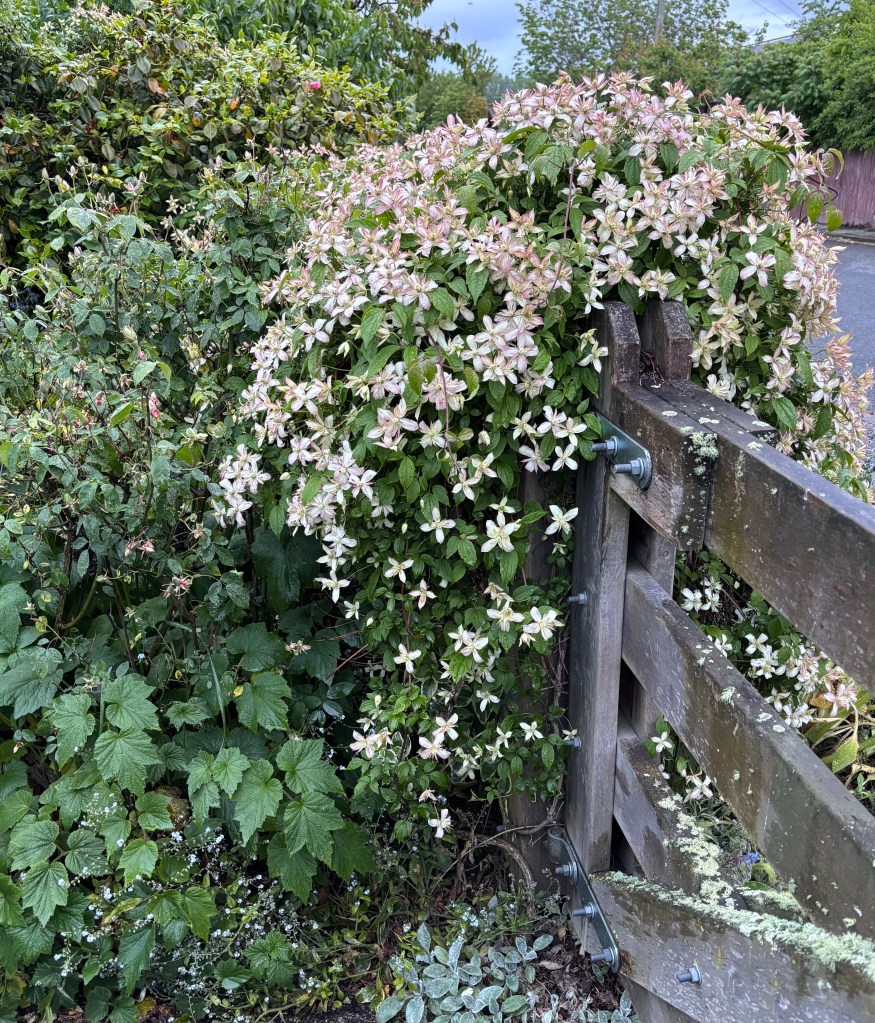
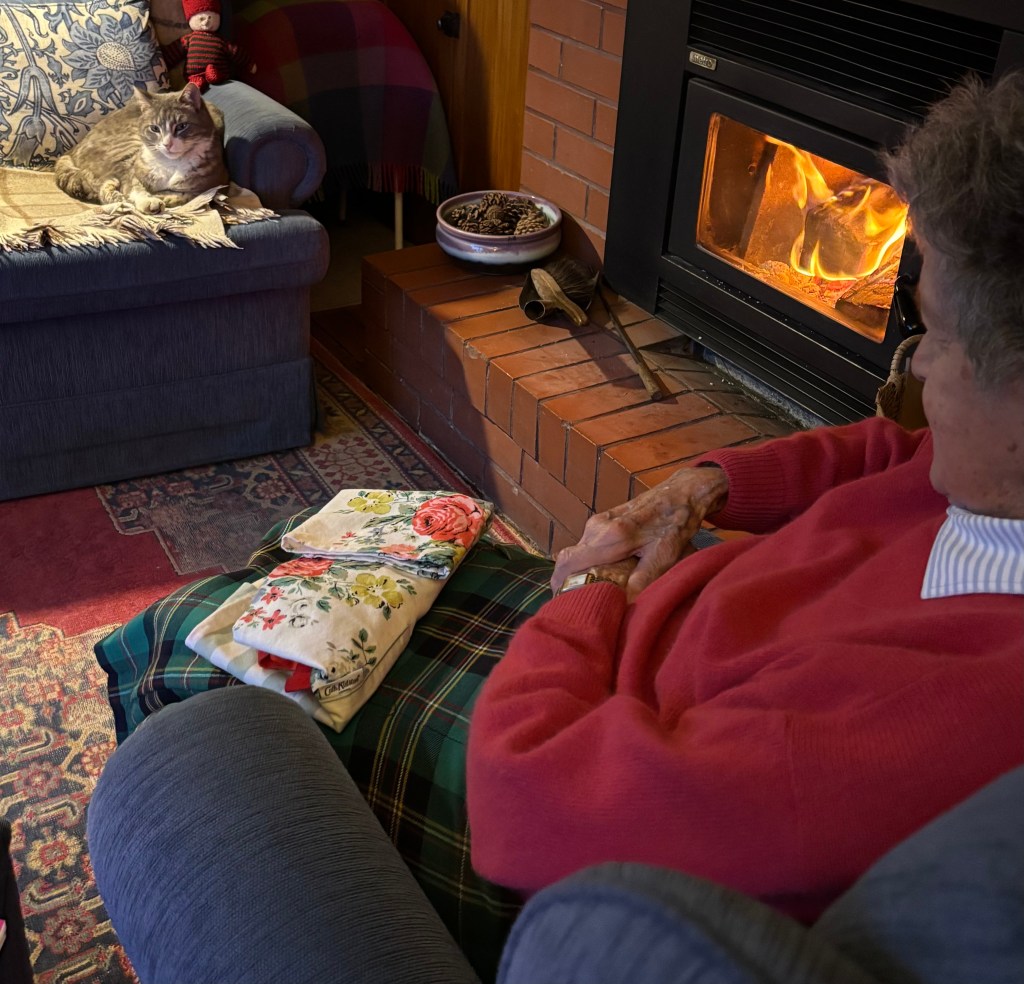
Clematis montana is in full flower, and hierloom green rose ‘Viridiflora’ to the left is covered in buds. The garden will be enjoying the rain which we had been hoping for. The temperature has dropped and snow is falling further south. Felix commandeered Mum’s chair beside the fire last night and again this morning.
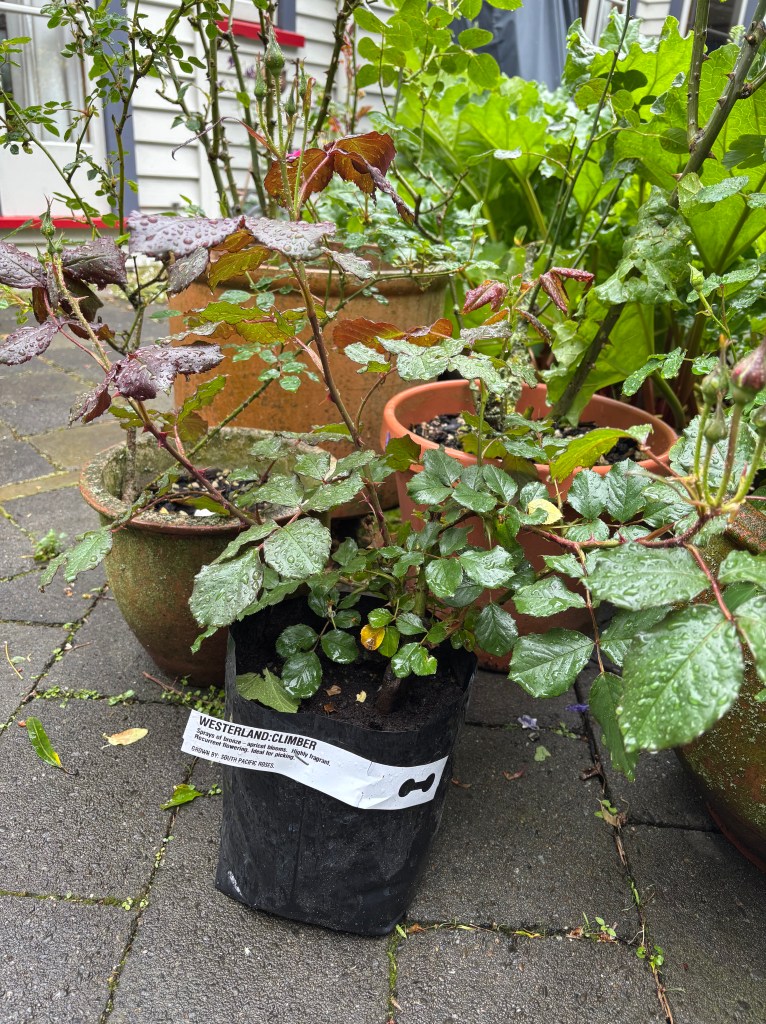
A new Westerland rose, kindly given to me to replace the one which died, seems to be happy socialising with other roses, and has several buds. I am planning where to plant it, which requires removing the stump of its predecessor which I had hoped might regenerate, but no such luck. Now there is the new rose to look forward to.
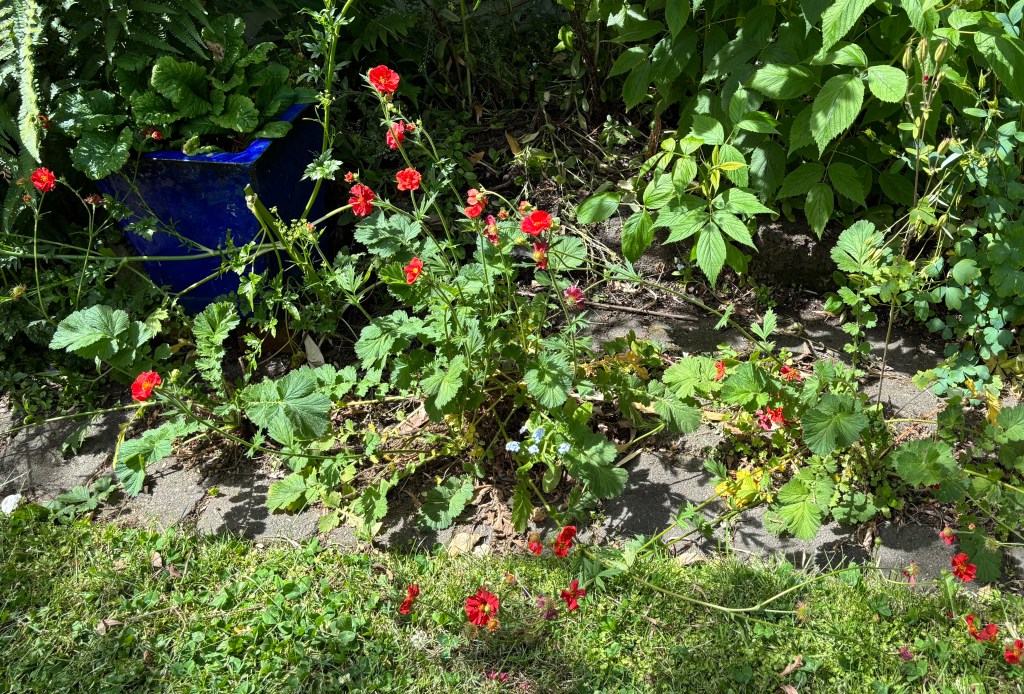
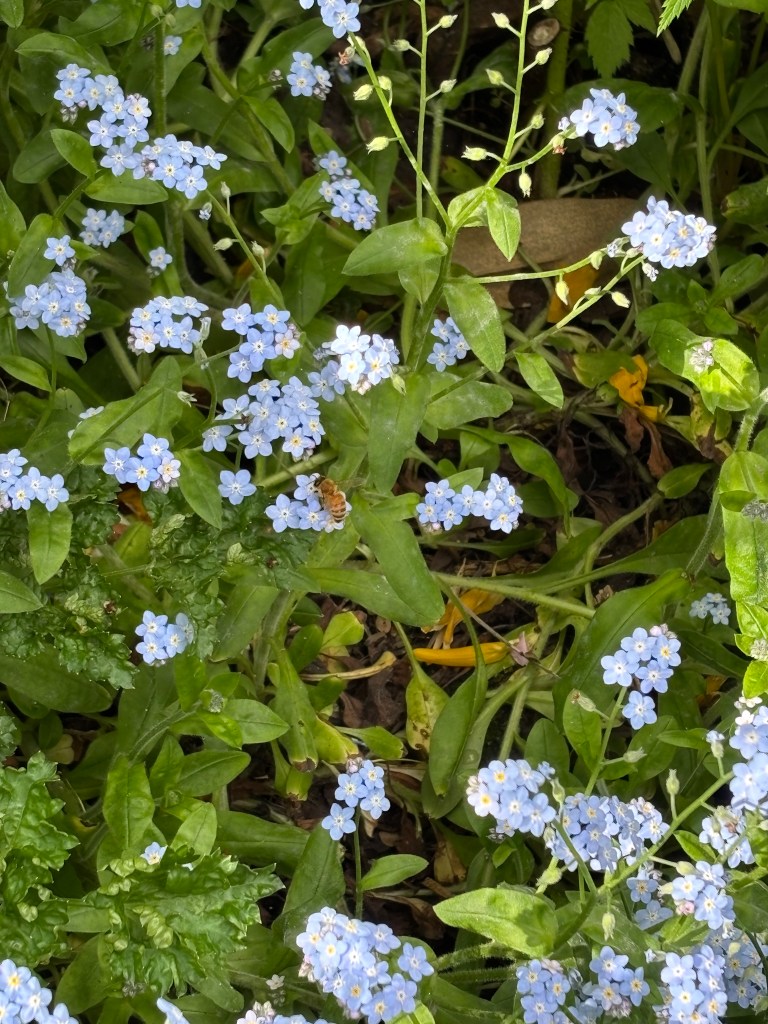
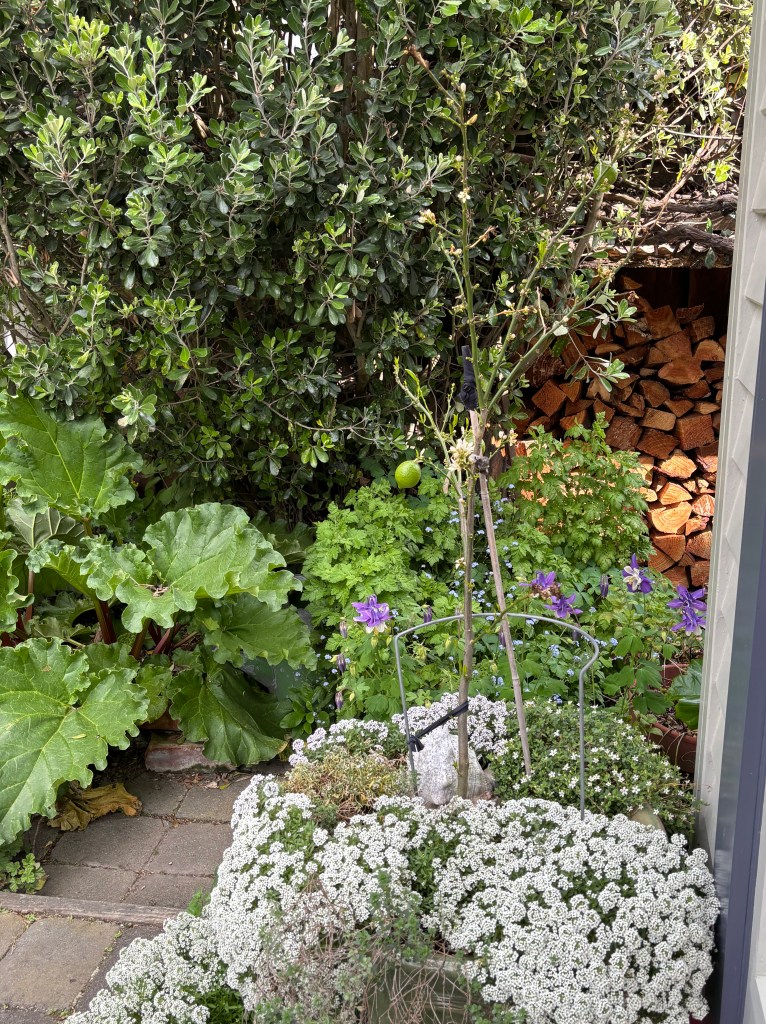
A woman looked over my gate this week and asked, ‘How do you get your flowers to grow?’ I looked with some despair at the cloudy masses of forget-me-nots and couldn’t think of an answer. ‘They just do,’ I said lamely, in the end. Which is true. I didn’t plant the forget-me-nots. They just come up every spring. So do a lot of other things which I inherited when I moved in nearly 40 years ago. ‘What about those,’ she asked, pointing at some aquilegias. I planted aquilegia seeds – probably decades ago – and they continue to come up every year. Often in less than convenient places. Fox gloves come up randomly, as does Solomon’s Seal, feverfew, borage, parsley, lemon balm, wind flowers, marigolds, geums … She told me that she’d tried to grow some daffodils in a pot but they got knocked over by the wind. Gardening’s like that, I reassured her, a roller coaster of success and failure.
Bees like the forget-me-notsAquilegia growing between paving stonesFox glove beginning to flower
While I have planted roses, herbs, fruit trees, vegetables, pansies, sweet peas, geraniums, raspberries, blackcurrants, and so on, many plants are self-sown or grown from cuttings I’ve been given. Others have spread of their own accord. Or contrarily given up the ghost.
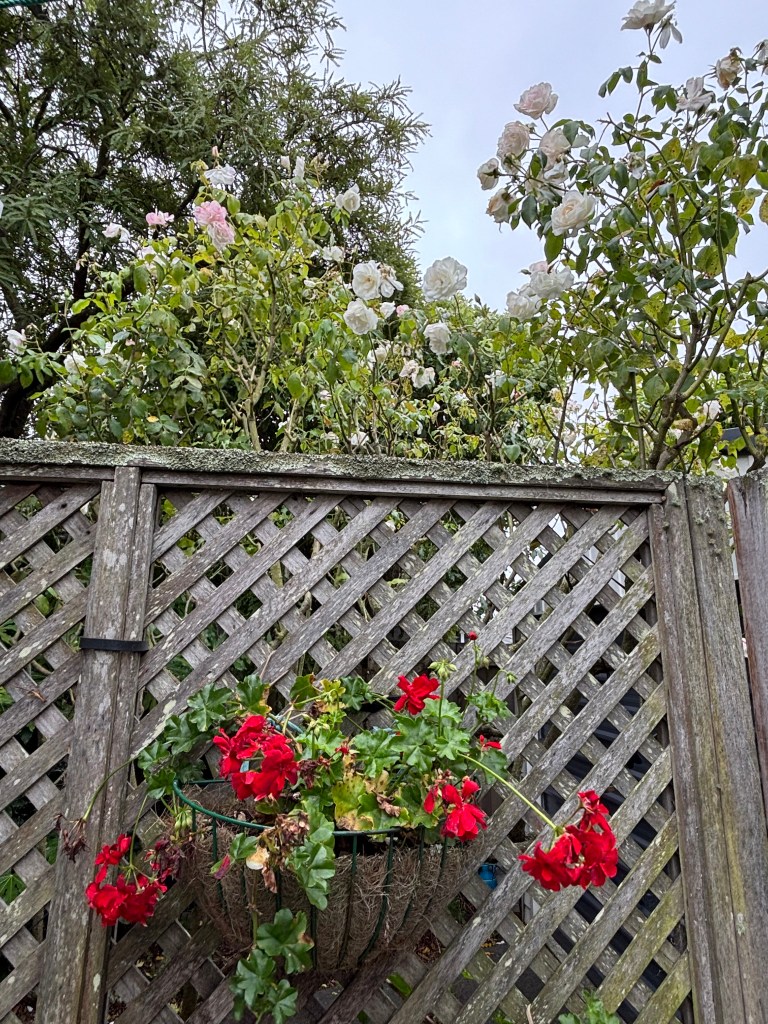
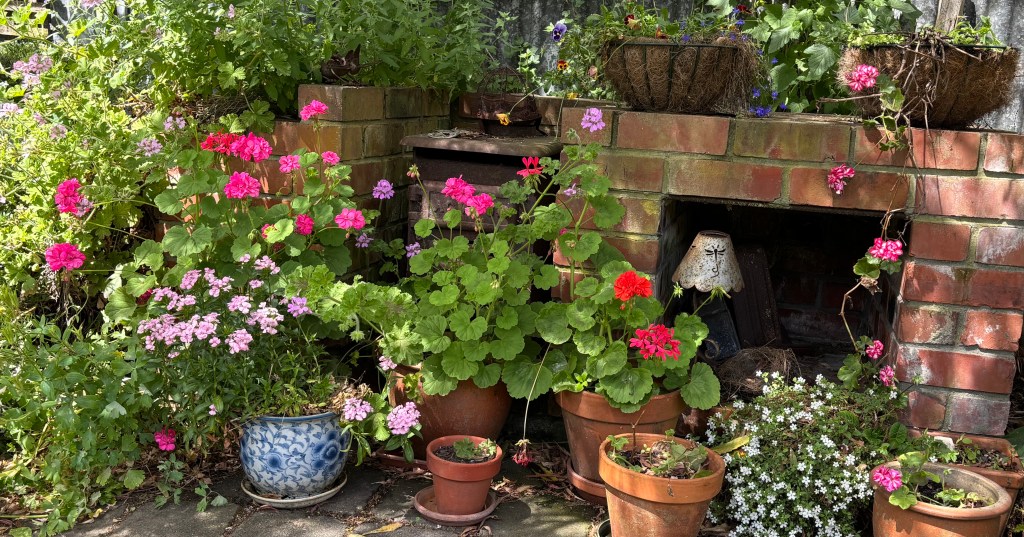
Planted, gifted, transplantedGeraniums grown from cuttings left by a neighbour at my gateBanksia I planted, now needs support
Many large trees in the garden are self-sown and are usually indigenous such as several kōwhai, ake ake, pseudopanax, pittosporum and cabbage trees – or were planted by previous owners, such as the beech, karo, a very old hebe and a myrtle. The ake ake has an interesting trunk.
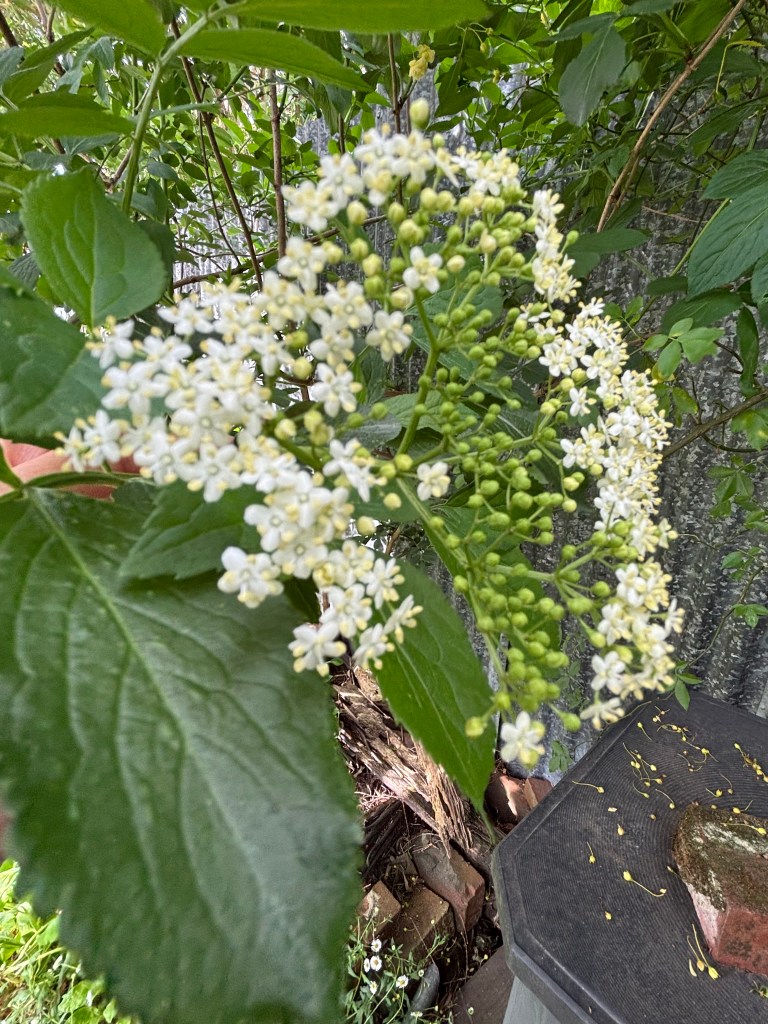
Although not a great fan of succulents, several years ago I bought some cute little ones at a market. Now they are in various parts of the garden, completely hidden by cottage garden plants at the moment except for some in pots. I’m encouraging some self-seeded elder plants to grow so I can make elderflower cordial.
Trunk of ake akeFlowering succulentFirst elder flower
Dips in the gardening roller coaster include plants which do not thrive or suddenly sicken. This has happened recently to a bay tree in a pot which was thriving until a few weeks ago when its leaves began to turn brown. It was badly affected by scale. I trimmed it back and administered what first aid I could. Now it’s just a matter of wait and see. A lime tree in a pot lost all its leaves, but there are new ones appearing, so I’m hoping it will recover. My lemon tree gets sooty mould from time to time, and once a more serious disease from which it has recovered. I had to remove all the affected fruit in the serious case, and pruned the tree in both cases to let air flow through. I’m still mourning a beautiful rose, a Westerland, which died last year.
Ailing bay treeRecovering lime treeRecovered lemon tree
A bit of a softie about what gets to grow, I often can’t bear to pull things out (except convolvulus). Children passing by might enjoy the dandelion clocks on the front berm. This week a gardener on tv was advocating for weeds in the garden. While not exactly a weed (whatever a ‘weed’ is) my artichoke is a bit of a thug in the garden, overshadowing the vegetables and rhubarb, but it is pleasing to look at. Today I noticed the first globes appearing.
I spend a lot of time just looking at the garden. Once the forget-me-nots have finished, other plants will re-emerge to take their place.
It’s great to be back working in the garden after a ‘gardening drought’. Once I got started, I was encouraged by my progress and have been gardening for several days. Tidying around the edges came first and led to more deadheading and cutting back the raspberry canes. I mulched the berry patch with leaves from the cherry tree.
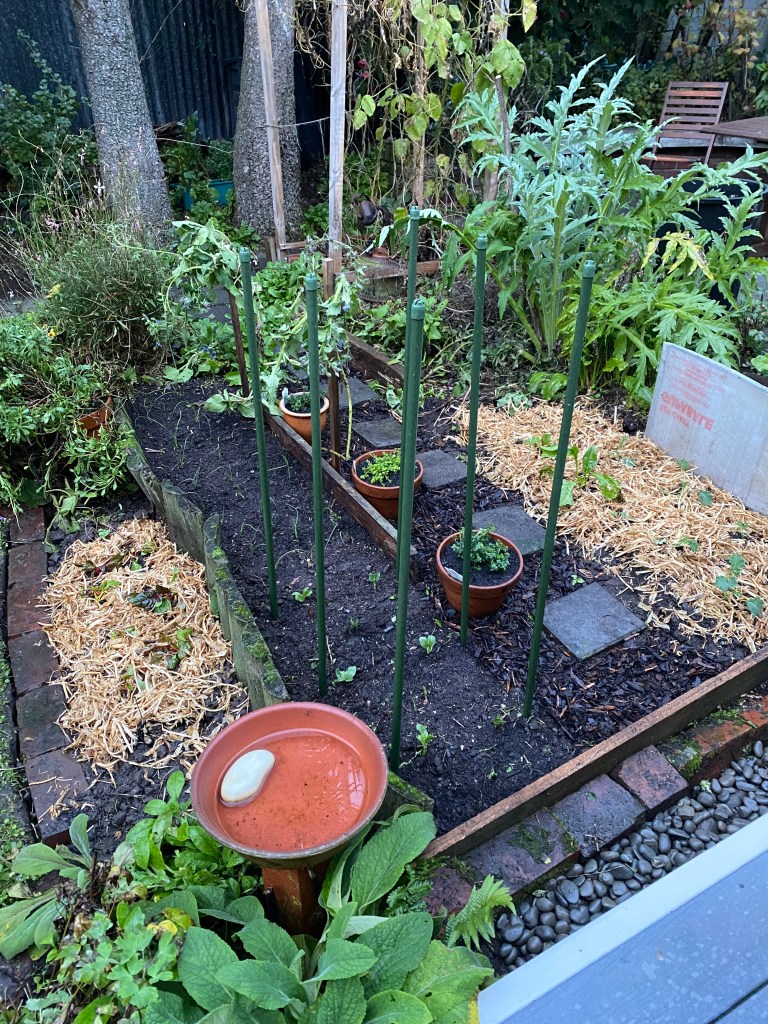
The vegetable garden required more thought. I want to rotate the vegetables, but it’s difficult when I have no success with some things. I drew up a plan and made a to-do list, then researched the prices of vegetables packs and bark for the paths. I bought the plants at a favourite nursery (Oderings) – and added a Pink Princess daphne plant to my trolley as well. I prepared the beds and planted most of the vegetables (broad beans, and onions) until I ran out of daylight around 5pm – so frustrating, but time for cheese and crackers and gin and tonic.
Today I went to Mitre 10 for bark – and bought some pea straw and thyme plants. (I recycle used plastic plant pots here too.) I planted the remaining vegetables (rainbow chard and curly kale). The daphne required a bit more care according to my research. I measured the soil ph/acid levels, dug the hole wide but not too deep, put bark mulch in the hole to aid drainage, and added sheep pellets and a bit of acid fertiliser. The daphne looked a little sad in the nursery I thought, but it was the last they had of the variety I had seen recommended in an article. I hope she cheers up!
Pink Princess
I bought three varieties of thyme (lemon, golden and common) and put them in terracotta pots to go alongside the stepping stones which I’ve put through the centre of the vegetable patch. I’ve widened the garden by moving the brick edging further into the lawn. It felt creative, deciding to add some stones here, bark mulch there, and some old boards as edging. Pea straw around the chard and kale added the rustic look I like – and it smells wonderful!
The Sunday sky beyond is about to turn pink with a dramatic sunset and, to the east, a rainbow appeared.
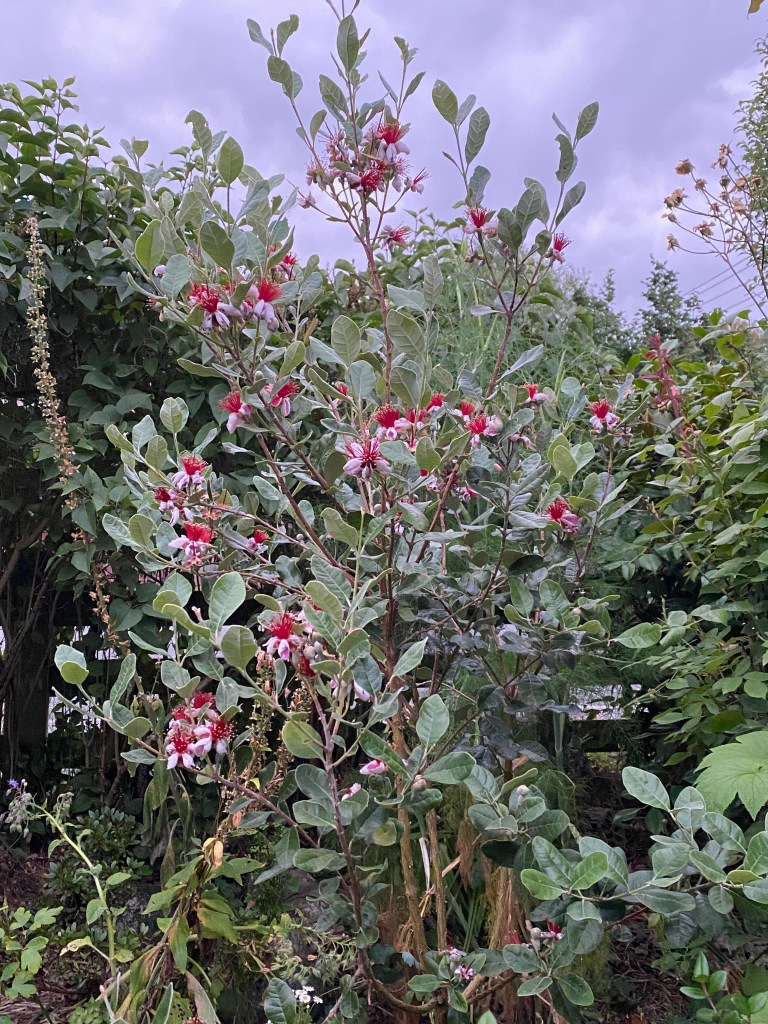
The feijoa tree is covered in flowers this year. As we put the Christmas tree (exotic pine) inside the house on Sunday, we looked out and said, ‘There’s a real one!’* It is native to South America and is of the myrtle species, so related to the pōhutukawa aka the Aotearoa/New Zealand Christmas tree (beautiful pictures and the full story on this link).
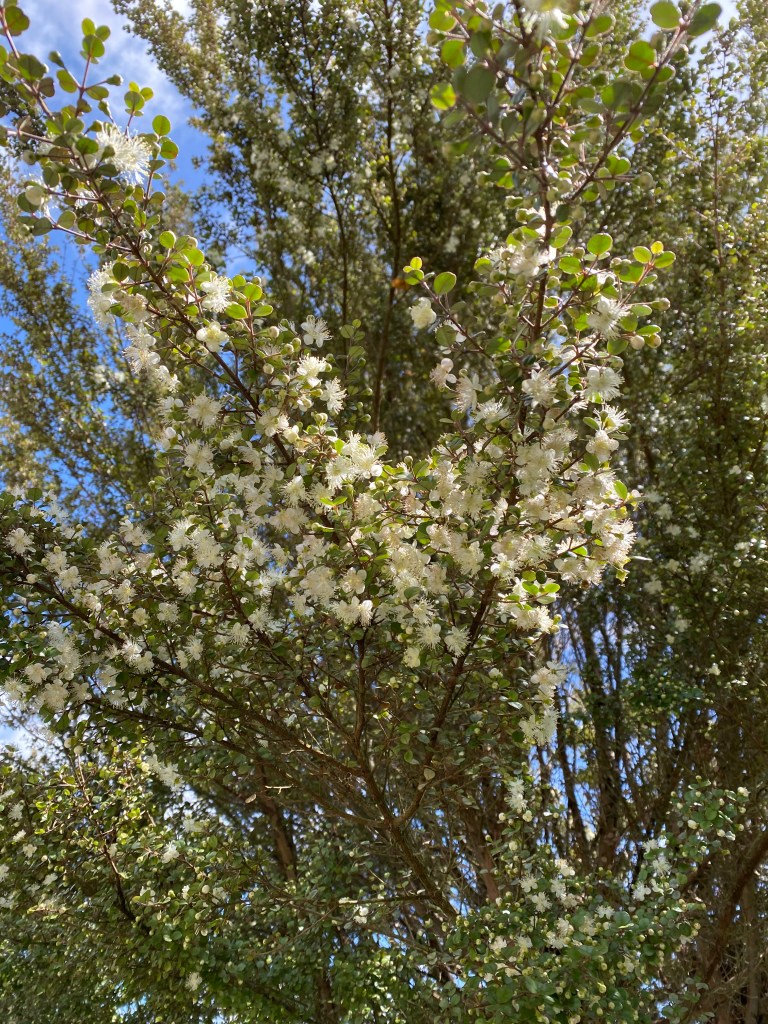
I have a New Zealand myrtle in the garden. It is covered with fluffy white flowers at Christmas time, which prompted me to post about it last year (Christmas Trees, 8 Dec 2023 – also A White Christmas 14 Dec 2021). The Southern rata, another myrtle, was in flower when I was in the Botanic Gardens the Sunday before last.
Feijoas are very popular in New Zealand, and Kate Evans has written a book about them.
Here’s a close up of the pretty flowers which make the feijoa a self-decorating Xmas tree.
Myrtle rust is a problem for myrtles, so let’s hope it doesn’t become the grinch for future Christmases.
*My sister and brother-in-law, who gave us the inside Christmas tree also gave us the feijoa tree.
Optimism is needed when you grow your own food. I bought a pack of six ‘Moneymaker’ tomato plants when it was really too late in the season, but my garden rotation diagram suggested tomatoes were good to plant after the beans had finished and, generally, I’m optimistic. It was the last pack in the garden centre, and the stems of the plants were bent sideways. Warning signs. However, I planted them with stakes and the plants straightened up in a few days and grew quickly.
By the end of summer, there were large trusses of fruit – all green and showing only slight signs of ripening. Since then we’ve had several frosts. I’ve been picking the tomatoes which are beginning to look yellow and putting them on the kitchen window sill. Many have ripened: good to use in casseroles and soups and in the frittata I made yesterday.
Frittata is a great way to use garden produce. This one has kale, spinach and silver beet from the garden as well as sliced (formerly green) tomatoes.
The stems of the tomato plants have turned to mush almost – as I expected the tomatoes would too – after all, it’s Winter Solstice and the shortest day tomorrow. Many tomatoes were on the ground before I rescued them today and put them on the windowsill.
These tomatoes remain after I picked up the ones on the ground.
Intermittently, over the next hour or so, we began to hear little thuds. Some of the tomatoes were rolling off the windowsill onto the bench, into the sink and one made it as far as the floor. And they’re not the variety called ‘Tumbling Tom’!
As I worked in the garden this morning I could hear the hum of many bees. Sure enough, the Rōhutu (lophomyrtus obcordata or NZ myrtle) is beginning to flower and is attracting honey bees.
I associate the Rōhutu with Christmas, although we have a ‘traditional’ tree in the house, kindly delivered by my sister and family on Saturday (we were anxiously keeping busy while Mum had her hip-replacement surgery).
It’s usually Mum who decorates it, but this year it had to be me. She is keen to be home, but has a wee bit of recuperation to do first. I’m sure Felix misses her.
Felix takes a break from chewing Santa’s hat
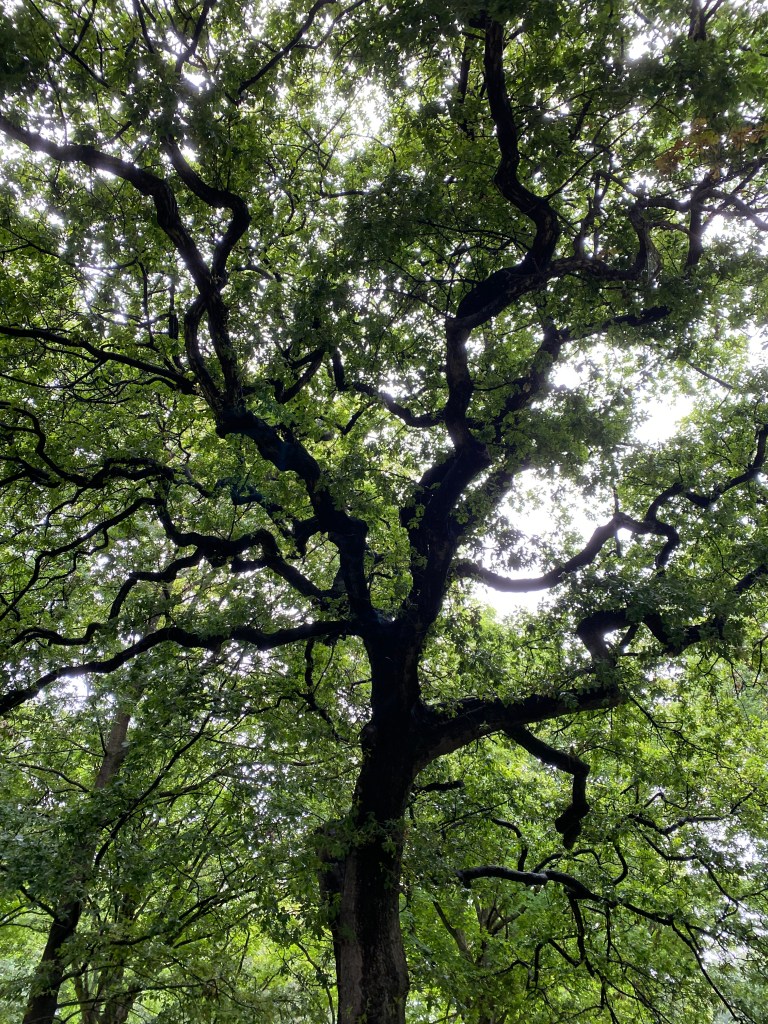
While I’m on the subject of trees, I took a photo of this amazing, huge tree in Hagley Park as I walked to visit Mum at the hospital on Monday.
It’s raining at last. It was great to hear the rain bucketing down in the night on the dry garden. This morning there’s a mix of rain and sunshine and the garden looks washed, fresh and sparkling.
The chooks are sheltering on the deck where it is both sunny and dry – but only 10 degrees centigrade. Heat pump and woolly socks are on for us indoors!
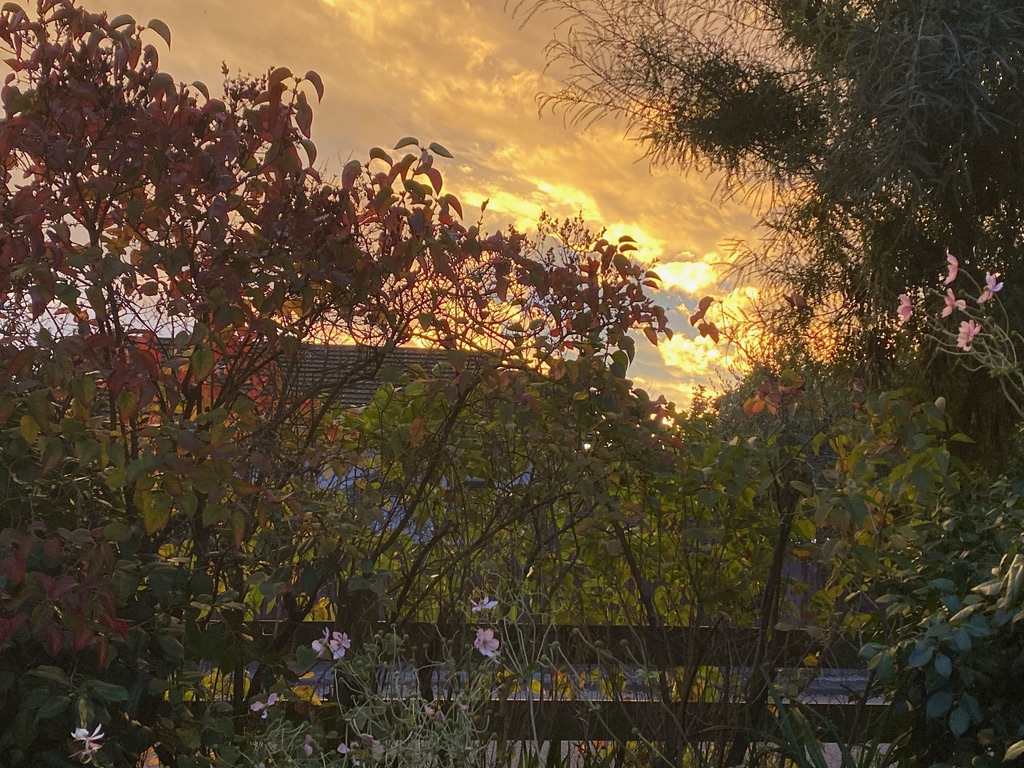
Yesterday I was in the garden all day. It was warm but overcast. Then in the evening the sun appeared below the nor’west arch lighting up the trees and make the flowers glow.
I find myself singing Bring me Sunshine today, with its cha-cha rhythm, and playing the Morecambe and Wise version which I have added to a playlist of Make me Smile songs. When I joined Singing for Pleasure at the WEA I started a playlist of the songs we sing. Now I have several more playlists including Childhood Favourites, Drive (for long journeys), Shiver up the Spine, and even Chicken-themed songs. Every day I wake up with a song or two playing in my head.
Today’s song is apt because the sunshine can be figurative: “Bring me sunshine in your smile. Bring me laughter all the while. In this world where we live there should be more happiness, so much joy you can give to each brand new bright tomorrow…”
This couldn’t be exemplified better than by this wee chap whose photos, arriving regularly from my niece, bring a day full of sunshine!
................... for lovers of ice cream. Your free on line magazine for sweet frozen treats. Recipes, inspiration, artisanal ideas for your delectation.




























 Anne-O-tations