

Mis-spoke became a word a while ago when a politician regretted? retracted? was caught out? about something he said. There are lots of words starting with ‘mis’, such as misstep which has two meanings: you literally overbalance while walking or, figuratively, make a tactical error. Both have the sense of being accidental, not intended, while the more recent use of ‘mis’ words suggests a deliberate, even calculated, effort to distance the user from the action.
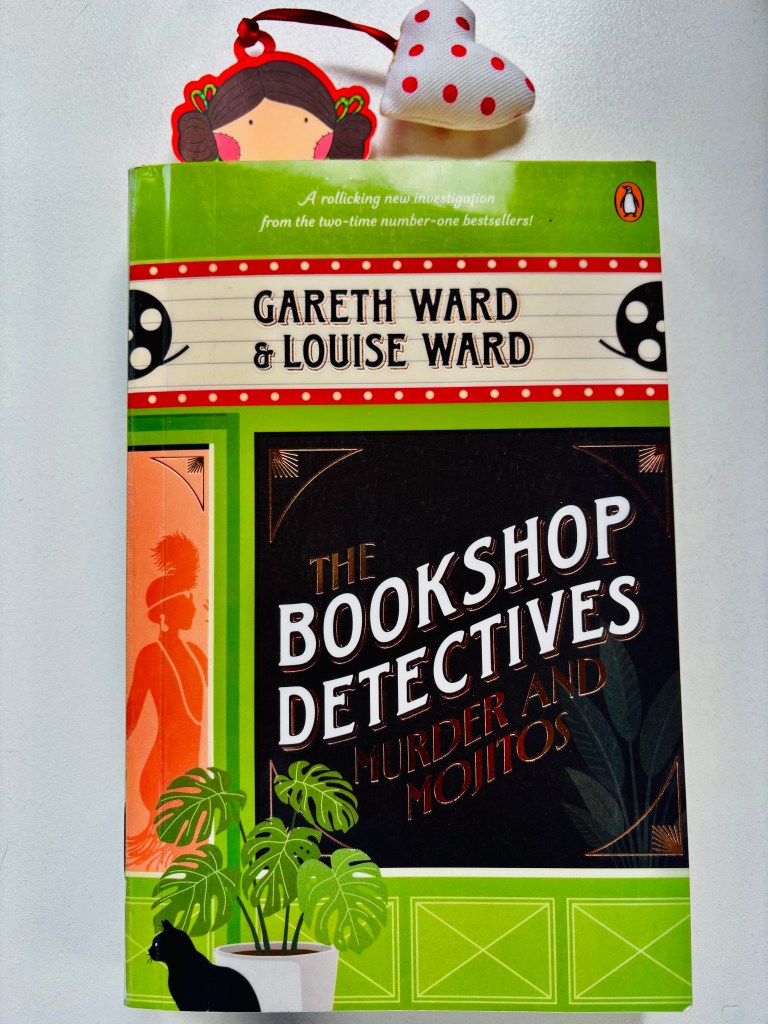
I started thinking about all this when ‘mis-remembered’ popped into my head just now while reading Murder and Mojitos. In the scene, a customer comes into the bookshop looking for a recently released book by a popular author but she doesn’t know the title. When it is established that Nicky Pellegrino is the author, the bookseller responds: ‘Ah,yes, “Murder in Italy” … ‘ This is one of the many in-jokes in the Bookshop Detectives series. The joke being, in this case, that Nicky Pelligrino writes a number of romance books set in Italy. Perhaps the book in question is the 2024 novel Marry Me in Italy.
‘Mis-think’ could be a word for a tendency to self-sabotage or let ourselves be deliberate misled (haha). Could ‘mistake’ mean to deliberately steal? (‘Oh, I mistook.’) More often ‘mis’ words seem to be used by politicians to excuse their less than ideal behaviour or to shift blame or to respond to a failure to manage a crisis. ‘Miscommunication’, ‘misappropriation’, ‘misinformation’, ‘mistakes were made’. Language is fascinating, especially when we can read between the lines for the speaker’s intentions. It’s part of critical thinking – the detective brain – which is useful, particularly now during an election campaign.


Misinformation is false or inaccurate information, spread without an intention to deceive. In this case the person spreading it believes it’s true, but it isn’t. Disinformation is the deliberate creation and dissemination of false information with an intent to deceive. This is where someone knows it’s not true but says it anyway. In this election campaign it’s sometimes hard to know whether the info is mis or dis.
LikeLike
It says something about dissembling that it has been necessary to make the distinction between the two. And how often do people with vested interests pass one off as the other? There’s no limit to scheming and calculation. Thanks for drawing my attention to the dis- prefix. I could write about dis- words as well: dissolute, disrespect, disrupt, disproportion, disserve, dispossess, dissimulate, disregard – it’s all very disappointing that these words are needed to describe behaviour. Disquieting too.
LikeLike