Shopping and Eating

It’s not all books, views and gardens on this trip. I have a very small suitcase, so taking pictures has become a satisfying substitute for mindless consumption (with the exception of food, which I photograph and consume).

Window shopping:

Just looking, thanks:

Chocolate in a sardine tin – with a famous Portuguese figure or aspect of Portuguese life on the lid:

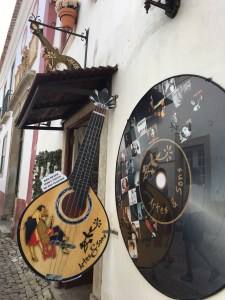
Music shop with miniature instruments and traditional Portuguese guitars:

Salami and smoked ham in this deli:
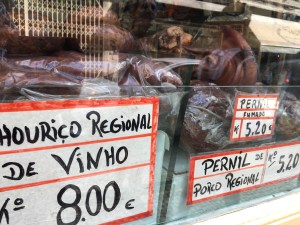
Dried cod in a supermarket (definitely just looking):

This second-hand shop is in La Vie, a shopping centre. I wouldn’t risk stepping in there (breakables).

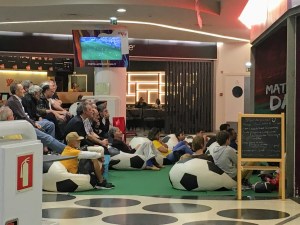
In La Vie, there was a crowd watching football (Brazil vs Mexico):
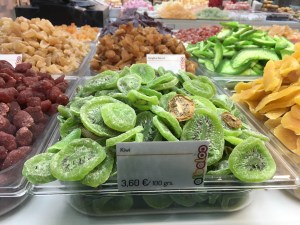
Dried, sweetened kiwi fruit:
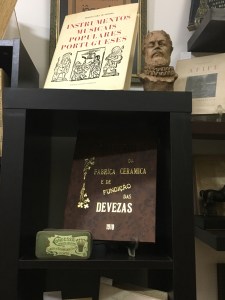
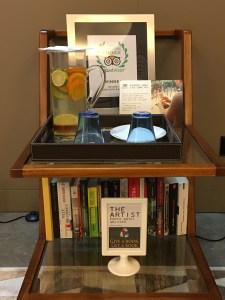
Back at the hotel, I spotted this in the lobby (oops, books again):
The hotel trains young people and it makes a lovely, positive atmosphere.
I went down for a simple salad meal in the bar and was talked into eating in the restaurant instead. Oh, they had to twist my arm!

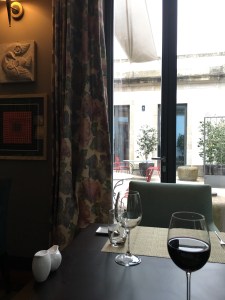
The restaurant is decorated with students’ art work:

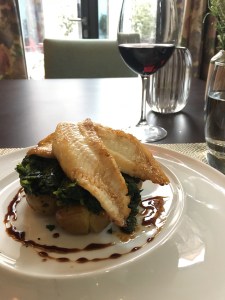
It was a delightful dinner of vegetable soup, fresh fish with spinach and potatoes
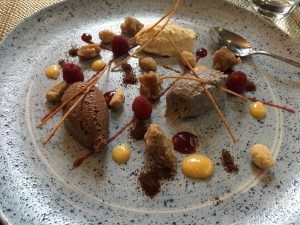
and a selection of mousses on a pretty plate:
I’m enjoying Portuguese espresso too (short black):

A fitting last meal in Portugal.

Big walk across Porto

I walked 14.9km today, according to my health app. I found interesting back streets as I walked to the Palacio Cristal gardens.

And views of the Duoro River and an interesting mix of old, new and under-construction.

This garden just about has it over formal gardens. I particularly liked the use of gumboots. There were chooks in a pen behind.

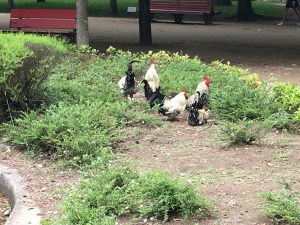
There were chooks in the gardens too:

Among the garden sculptures were peacocks, peahens and peachicks!

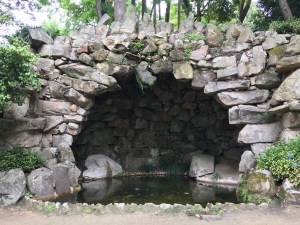
The Palacio Cristal itself was under renovation – as was the Historical Museum and the Bolhau Market. The gardens were pretty nice, however, with old trees and a lovely grandeur.

Even in the gardens there was no getting away from books. This mobile library was parked inside the gate.

Old Books

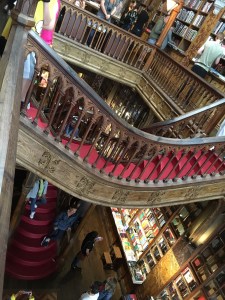
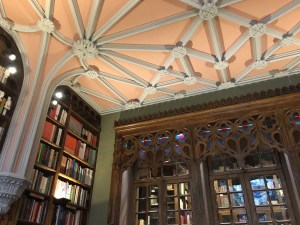
Yesterday, our local guide told us about Livraria Lello, a bookshop which inspired JK Rowling; the Hogwarts staircase is apparently modelled on the one in the shop. Would you agree?

We didn’t have time then, but I was first in the door this morning, hence an empty staircase with no tourists posing all over it.

There was also a small exhibition of Joan Miro illustrated books.

There is a book conservator here and a section of very old books behind glass doors.

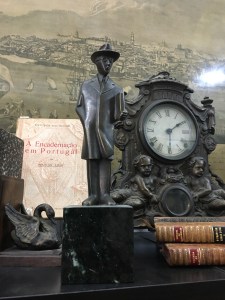
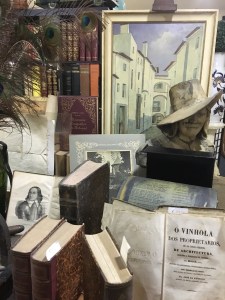
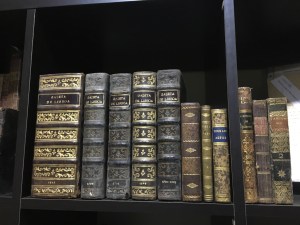
I wandered into a couple of new bookshops, but it was the old that appealed the most. These photos are of Manuel Santos Livraria.

What could be lovelier?

I have seen many antiquarian bookshops in Portugal which must say something wonderful about the Portuguese, I choose to believe!

Last days of our tour

Porto looked pretty good in daylight,

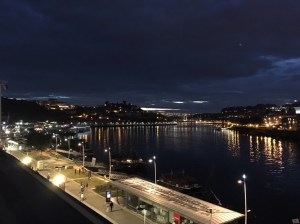
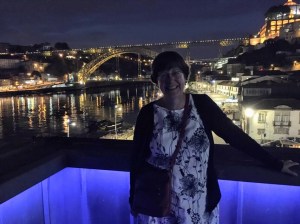
and even more amazing by night.

Even with me blocking half the view.

Or other “photo bombers” getting in on the act!

That’s Australians for you!

Today, we explored the city and discovered a bookshop which inspired JK Rowling – specifically its staircase. The shop gets so crowded you have to buy a voucher to get in, but you can take that price off the purchase of a book.

Tourism has taken off here in the last few years and you can see this in the marketing of Portuguese specialties such as bacalhau (dried cod) and canned fish.

The steampunk overtones give their style an appealing and eccentric edge.

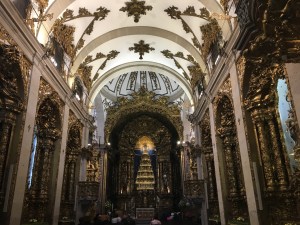
As it was Sunday, it was appropriate that we turned from material concerns to more spiritual ones. This is a Carmelite church with an uplifting, bright interior.

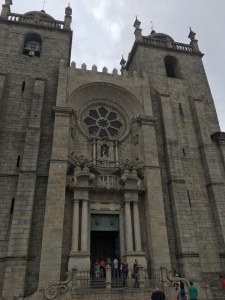
This is the Romanesque Porto Cathedral where King Joao and Philippa of Lancaster were married.

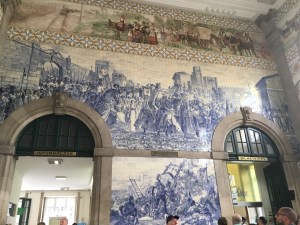
The railway station also had us lifting our eyes in admiration of blue and white hand painted tiles.

Not just the spirit but the body needed feeding, but perhaps not this much.

Thank you, Carol, for the photo! The food is a Portuguese favourite called Francesinha.

Our lunch time view did more for the soul:

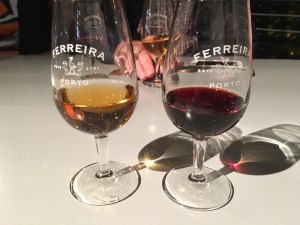
The final event on our itinerary was a port tasting.

Then we, rather sadly, parted ways.

Now I’m in a hotel where students learn the hospitality business. I did not order a drink with my salad, but the young bar staff are using me as a guinea pig for a new cocktail. Sigh.

Perhaps all this food and drink will make me as thin as the Portuguese. I think that is what is called a slim hope.

Carts

I’ve been photographing the cute carts which have various offerings. This wee mock up of a VW combi van sells yogurt ices:

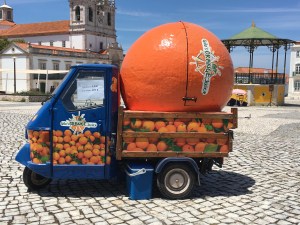
This one sells…guess what?

And here it is, ready for business:

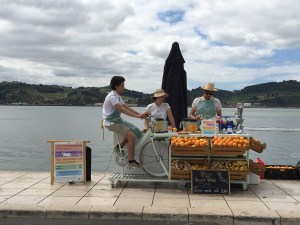
At this cart you can press your own fruit smoothie with cycle power:

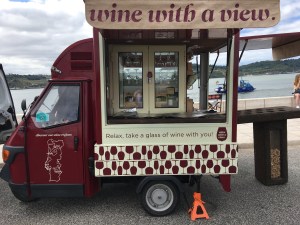
Or a stronger tipple is a possibility:

With some gourmet snacks:

This cheerful chap is selling waffles to music and has matching chairs (not shown) for his customers.

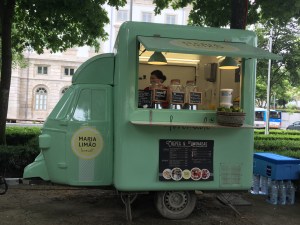
Today, in Porto, I spotted this one:

Looks like real lemonade, but the Portuguese are very fond of sugar! And they’re as thin as pins.

Quinta Aveleda

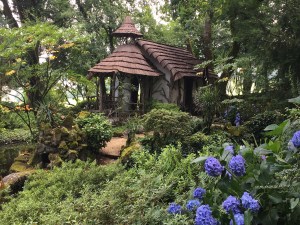
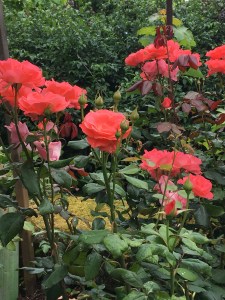
Another family Quinta, or wine estate, delighted us today. This time it was the garden which was the attraction. Everywhere you looked there was something beautiful, such as this tea house, and the deep colours of the hydrangeas.

There were goats in an amazing round stone goat house with a board walk winding up to each level. This is a baby goat:

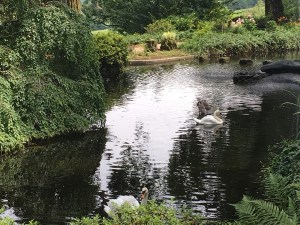
There were swans and cygnets on one of the ponds:

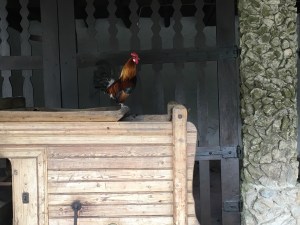
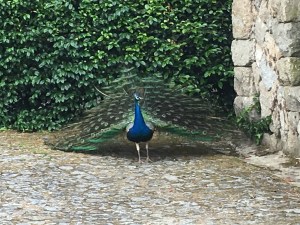
A rooster and a peacock entertained us:

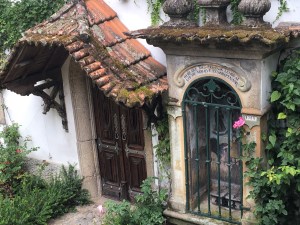
This is an old family business. The chapel in the grounds is dated 1788.

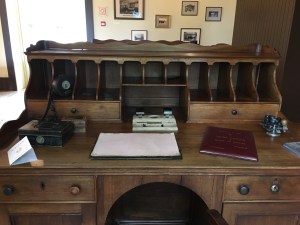
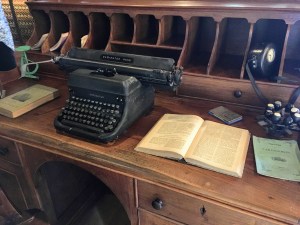
Desks from the vineyard’s past showed two time periods.

There’s a sense of humour here too:

Olives, wine and cork

These are three products from the fifth generation family business we visited between Fátima (creepy) and Tomar (nice).

The wife, Rita, is the fifth generation of the family and she and her husband welcomed us. They showed us the old steam-operated machinery formerly used to operate the olive press. This job is now done off the farm at a commercial press.

Harvest is in November, but equipment used to harvest was there to show us how it is done. They don’t use machines, but have a willing seasonal workforce of locals. This tree is over 400 years old.

We tasted their olive oils, with bread, cheese, prosciutto and their own wine as accompaniments.

Rita demonstrated the head decoration she carries in the Festa dos Tabuleiros every four years. The men walk beside them to steady the heavy baskets.

We were impressed by the hard work and knowledge of this lovely couple.

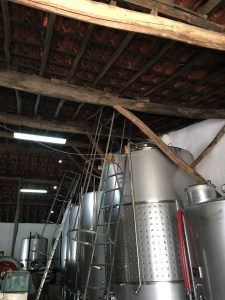
They also showed us their wine making operation. There are vats at the back of the barn for treading the grapes. This method still produces the best wine as feet are gentler on the grapes than machinery. The seeds don’t get crushed and add acidity when feet are used. The area has to be well-ventilated during the crushing as the CO2 can give you a headache. It is also a good idea to wash your legs thoroughly after treading, finishing with alcohol, to prevent itching.

If you look closely at this photo, you can see that the roof tiles of the barn are directly on the wooden rafters.

We had a wine tasting and a number of us bought wine. We all thought they needed to increase their prices, particularly for tourists, considering that their profit margin is narrow and the wine is very palatable. We were also impressed by their passion for what they do, the fact that it is a family business and that it is a valuable part of the community in providing work.

You can look at pretty villages and historic monuments and enjoy boutique hotels, but it is people who warm the heart.

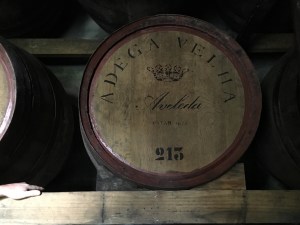
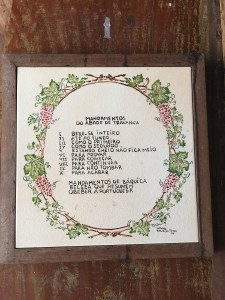
This plaque on a barrel caught my attention. It is a humorous Ten Commandments of winemaking.

Cork trees are grown on the estate and the cork is used to make corks for their wine.

They hope that their two daughters will continue the business into the next generation. One of them is particularly keen and works with her grandfather on the farm.

Obidos

The village was playing up its medieval origins with this greeting from a plague “doctor”:

After that, however, the village was charm everywhere you looked.

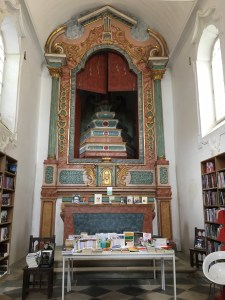
A former church is now a bookshop. Here’s the “altar”:

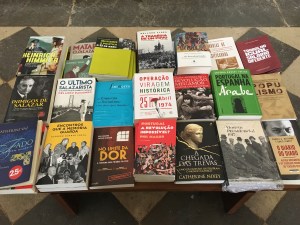
More titles to enjoy de-coding:

Traditional skills still in use: plastering and tiling.

Seen on several doors:

There was a “real” church (several, in fact).

And loads more charm:

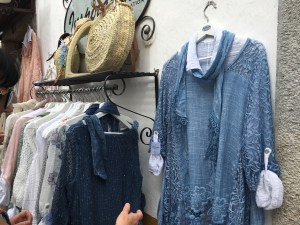
And shops. A clothes shop:

A fado shop:

And to bring us back to earth, medieval drainage, still operational, I would think.

Cooking and Nature

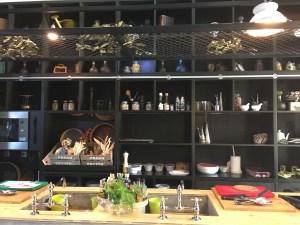
Our second hotel has the intriguing name of “Cooking and Nature Emotional Hotel” which means it’s about that word, over-used and mis-used in our work place: “wellbeing”.

Our staff would benefit from this place, however.

Each of the 12 rooms has a theme based on a movie which has achieved cult status. Guests receive a little satchel with hotel info and the DVD of the movie which they can watch in their room.

This was my theme, with a room to match:

I quickly took advantage of the pool. It is set among olive trees and old stone walls.

After swimming, we drank green wine (a local specialty, actually a rather sweet white wine) from the patio bar.

Various other lounges were available:

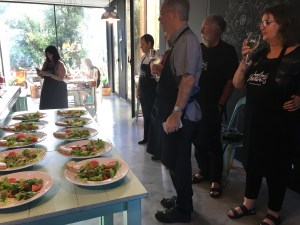
Then, we had a cooking lesson and cooked our own dinner with the guidance of a chef.

I was part of the entree, salad and dessert group. The main course was duck. A glass of wine while we cooked added to the fun.

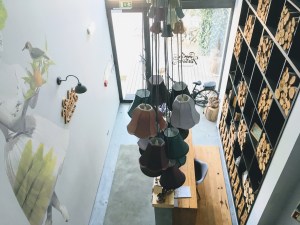
More quirky and ingenious features in the hotel include its light fittings:

Watering cans and colanders:

Dragonfly lights made from tea strainers:

Lights in the reception area:

There are bookshelves and reading spaces:

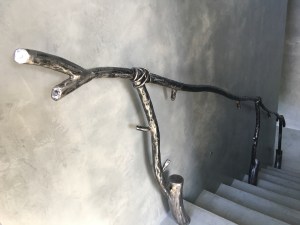
The floor is polished concrete and the hand rails reflect the nature theme.

The hotel is out in the countryside. I can hear birds and no traffic.

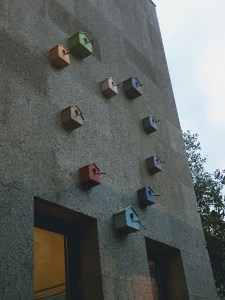
A couple of other things I spotted were these nesting boxes:

And this bucket shower beside the pool. You pull the rope and, rather than the bucket tipping over to drench you, there is a shower rose in the bottom of it to give you a gentler washing!

Heritage

I didn’t imagine I’d be blogging about the hotels we are staying in, but the boutique hotels of the Back Roads tours are worth a mention.

The first is the Heritage Hotel Avenida Liberdade, Lisbon.

The hotel has been tastefully restored and refurbished. The staff are wonderful. There’s a doorman in a red jacket.

Rather grand rooms:

Chunky bathroom ware:

Bathrobes behind the door:

In the lobby a greyhound sits by a spiral staircase

which leads to a mezzanine library – with board games you can play.

In the lobby, you can relax and enjoy, free of charge, coffee, tea, juice, snacks (including the famous Portuguese custard tarts), and a choice of Muscatel or Port wine.

These drawers behind the reception desk remain from the days the building was a herbalist’s.

Here’s a cosy corner of the lobby:

The wall tiles are original.

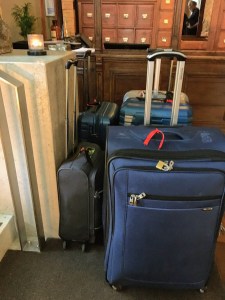
On the theme of “travelling light”, I noticed this discrepancy in luggage sizes as we checked out:

Yes, that’s my wee suitcase, hidden behind the others! At least there are only eight people on our tour, so we have room to spread out in the minibus.