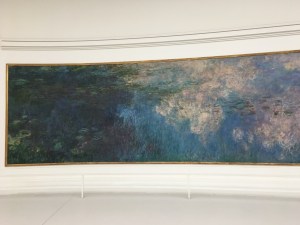
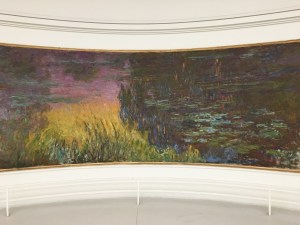
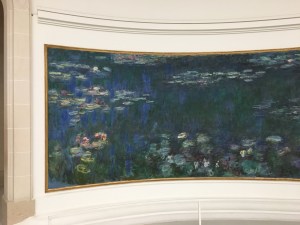
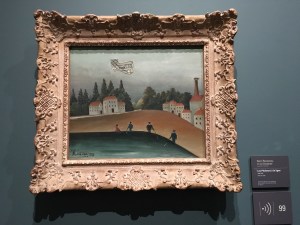
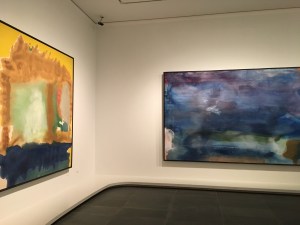
It is good advice to visit the d’Orsay in the mid-afternoon when the tours have gone (thank you DK Guide) . Thursday is late closing too, so you don’t have to feel rushed. Stamina is required, however. The museum is much more extensive than I remembered from last time (2013 I think).
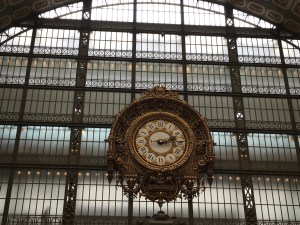
Here’s a clue that it was once a railway station:
I was keen to revisit the art nouveau section which had impressed me.
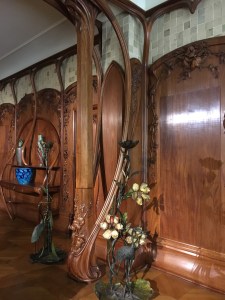
The furniture seems to follow the curves of the tree.
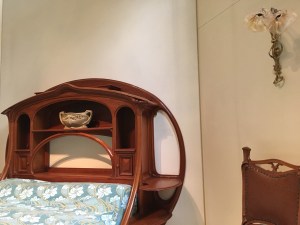
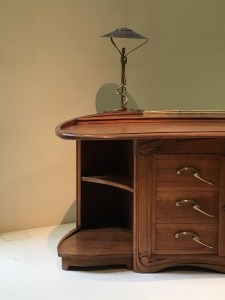
It is about the whole building, according to the audio commentary; you couldn’t place it out of context and expect a happy result. But wouldn’t you do great work at a desk like this? Look at those drawer handles!

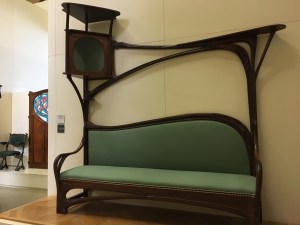
This bench was part of an art nouveau building, and you can see it needed that context:
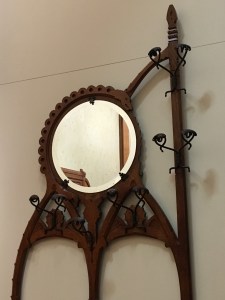
The detail is integral. Here, the hooks on this hat and umbrella stand are like vine leaves, gentle on your hat I would expect.
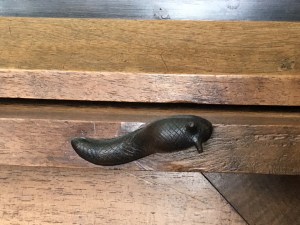
There were slug handles on a book cabinet.
And happy readers on the top:
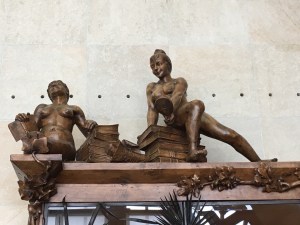
I think this was by a female artist…can anyone confirm? Reminiscent of Klimt with its gold detailing.

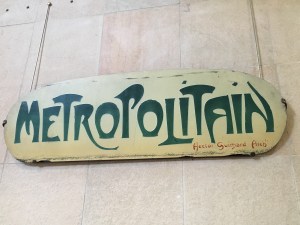
One of the designers featured was also the designer of the famous art nouveau metro signs.
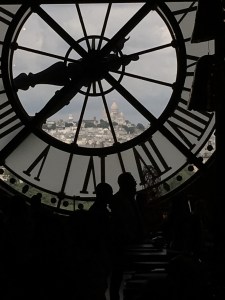
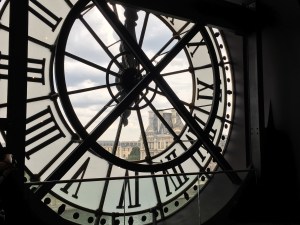
Now I am behind the clock with a view of Montmartre and the Sacre Coeur.
The Impressionist section was crowded, unsurprisingly. We have a tendency to gravitate to the familiar, to see the originals.
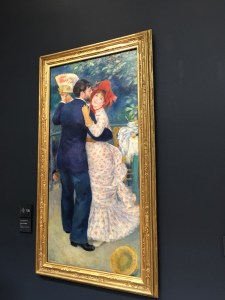
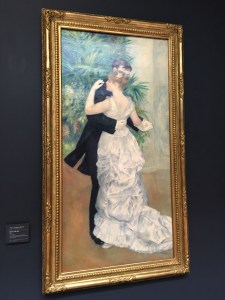
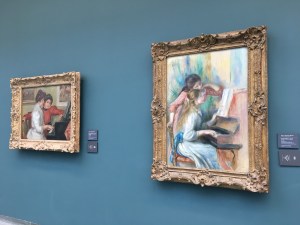
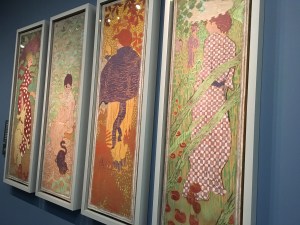
I’ve had a large block-mounted print from this Renoir series since I was a university student and can’t bring myself to part with it.
A print of the card players by Cezanne hung in the Girls’ High corridor leading to the art room when I was a student there. I was impressed only by the incongruity of a picture of men smoking and playing cards. We had some wise teachers.
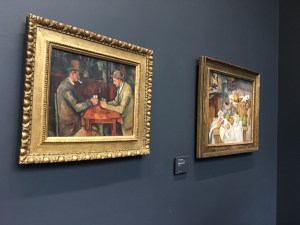
Still, I prefer the still life to the right.
Another view through the clock, this one across the Seine to the Louvre. I’m not planning to visit the Louvre this time after many previous visits – unless someone would like to change my mind…
There were sculptures, symbolist paintings, endless galleries on multiple levels and on each side of an open atrium space.
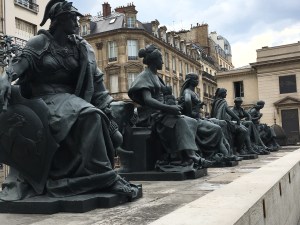
Stamina was required, as shown by these women holding up the world:
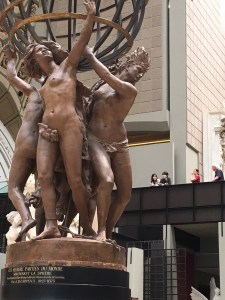
That’s Africa on the left, her chains broken to symbolise the abolition of slavery. America is on the right with the headdress.
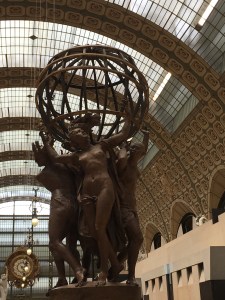
The other side shows Asia on the right, the other…the Baltic states, perhaps? My DK Guide says Oceania was left out for reasons of symmetry!
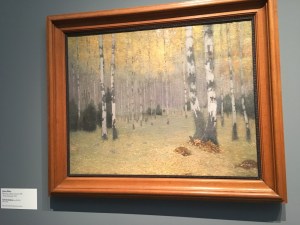
Speaking of the Baltic States, there was an exhibition of paintings from there, called Ames Sauvages. I was hoping to see some Scandinavian art, but it was mostly Estonian or Lithuanian. This birch forest reminded me of Scandinavia:
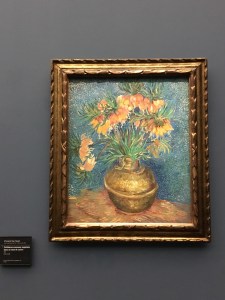
And, finally, there was Van Gogh – a troubled soul himself although this painting gives no hint of that – or are those bright flowers beginning to droop?
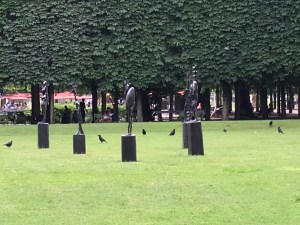
I was a little grumpy about the lack of female painters represented. It was good to see these formidable women outside:
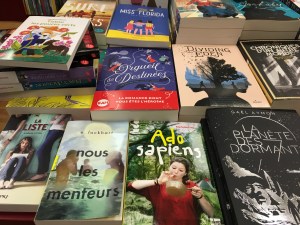
True to form, I was distracted from my walk back to the hotel by Boulevard St Germain, a bookshop,
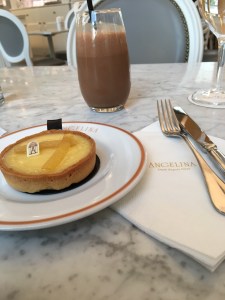
 and Angelina cafe at the entrance to Jardin du Luxembourg. It was hot, I was in need of an iced chocolate and, oh well, a citrus tart to go with it.
There were more women playing pétanque today.







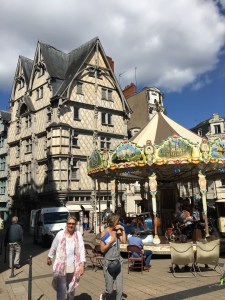


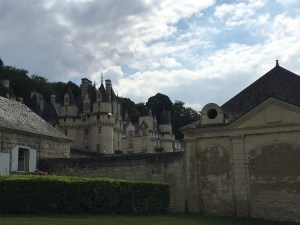

 We docked at picturesque villages, and could watch bird life – gulls, egrets, cormorants, white herons and grey herons – as we moved up or down river.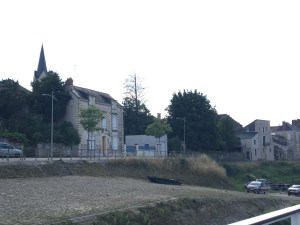
 Charolais cattle and chateaux featured in views, and wind farms.

 We went through a lock as we arrived at, and left, St Nazaire.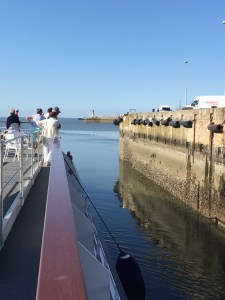
 Here we are heading out to the Atlantic before turning into the Loire again towards Nantes:
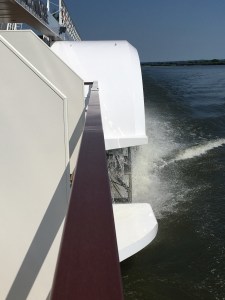
 Paddles powered our bateau. Here, they can be seen from the reception area and from my balcony:
 Here is my cabin:
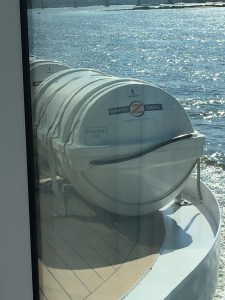
 Here are the life rafts!
 We had beautiful meals, exercises on the sun deck, a great concert by two local Breton folk singers, and well-paced, informative visits to chateaux, vineyards and gardens.
 We could book a visit to the wheelhouse. It’s a serious business negotiating sandbars, channels, bridges and tides.
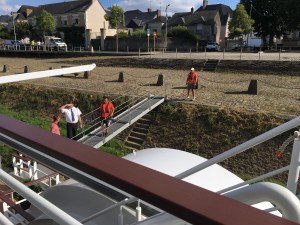
 We saw the crew in action as we docked or set off.
 A different cocktail was featured every day.
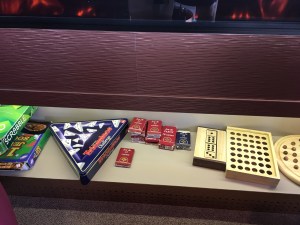
 There were books and games in the bar too.
 The crew went a little crazy on football night – as did the whole town. This is one of the chefs:
 But were highly professional otherwise.
 Now the cruise has returned to Nantes, and we disembark tomorrow.
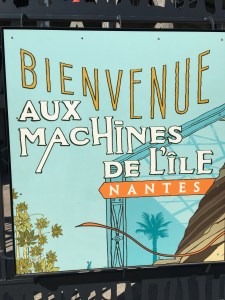 In steampunk style, creative people have assembled an array of attractions in late 18th century style but on a massive scale.
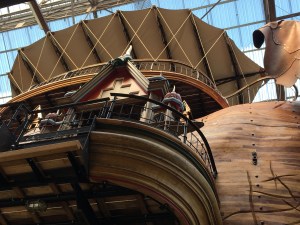
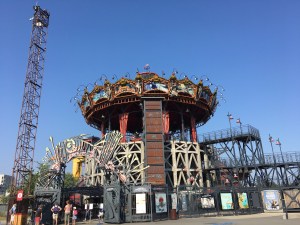 The carousel has three levels.First creatures of the seabed:
 Then, creatures which swim in the water:
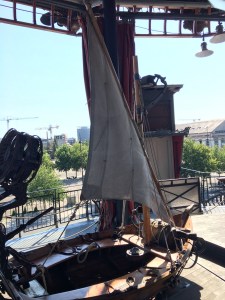
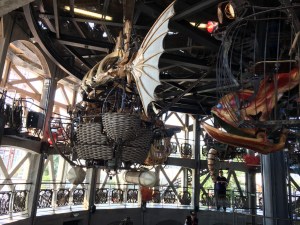 At the top, things which float on the water surface. I rode on this boat, operating the tiller, while it bucked up and down on the waves, emitting water vapour.
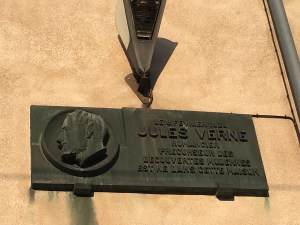
 It seems very fitting for the town where Jules Verne lived.
 I had been looking forward to seeing the huge elephant.
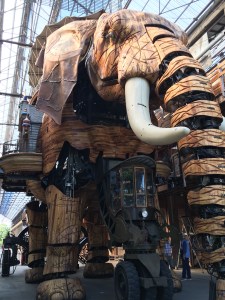 He can carry many passengers.
 Not today, however. Perhaps he’d blown a fuse?
 There were other fantastic creatures which you could see operating. An aviatrix in scarf, helmet, goggles and gloves flew a canvas and wood flying machine – too difficult to photograph. This creature is inspired by tropical plants:
 Here are some others:
 The people who develop and make the machines are planning this next:
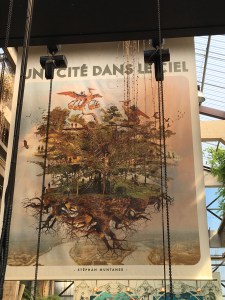 Already you can climb up into this part of it:
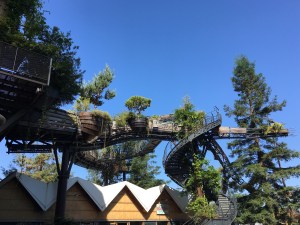 They are creating an imaginary world as Jules Verne did, inspired by the ships which visited the port bringing specimens of strange animals, insects and plants and stories of fantastic forests and undersea creatures.
 a circular stone staircase,
  charming detail in down pipes and window latches,
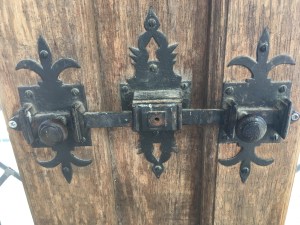 and bees and butterflies in the garden.
 Chenonceau had an immediate, warmer appeal. Perhaps it was the donkeys
  The kitchen garden – also full of bees and butterflies –
 or the Bentley in the garage,
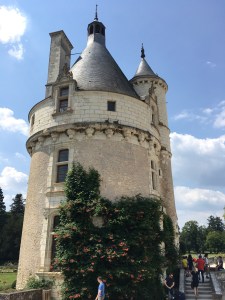
  the way it is built over a river (the Cher),
 the ancient trees,
 or the floral art in nearly every room.
 Despite the hot day, the chateau was pleasant inside with its long, bridge-like layout and windows open on each side.
 It had warmth and charm,
 some grandeur,
 but didn’t overwhelm. This is probably because it has been a women’s retreat, not designed to impress in a fist-shaking kind of way as Chambord was. The flowers had a softening effect.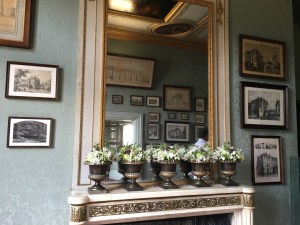
 People were boating and could pass under the chateau.
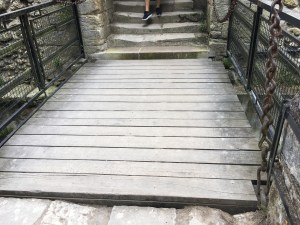
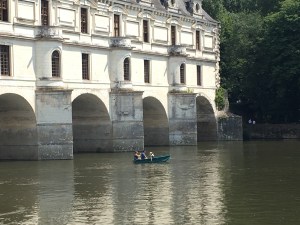 There is a drawbridge.
  An ideal holiday bach, don’t you think?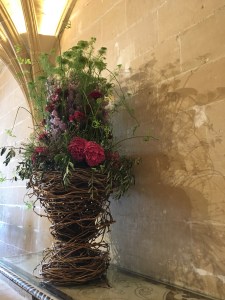
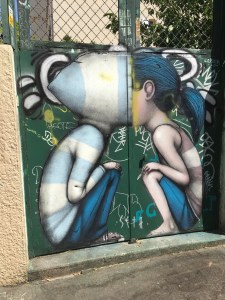 That street art was on the way, near Rue Moufftard. I loved the Botanical Gallery, particularly these lovely, detailed drawings.
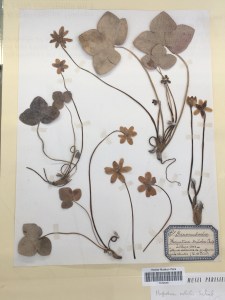

 The last one was in a section about the chemistry of plants.There was a box displaying New Zealand woods:
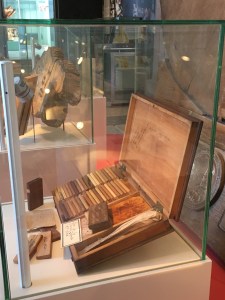 I took this picture because I liked the little lamps on the left, used to illuminate the display. Everything was very carefully done.
 The labyrinth was closed for restoration, but there was a wild garden with a bee house.
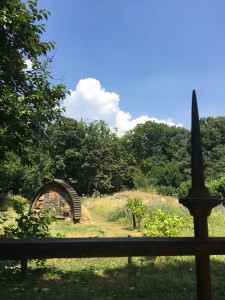 Here’s a closer view of a bee house:
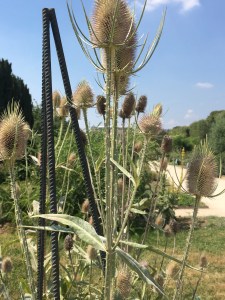
 I liked the herb garden and the prickly plants like this:
 The tropical house was impressive.
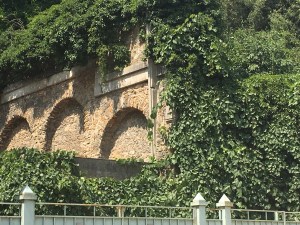
 There’s an old wall beside it, which reminds me of the Roman presence in the area, and the Roman arena nearby which I sat in for a while on the way to the gardens.
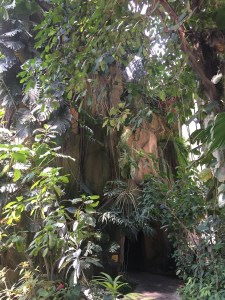
 Inside the tropical house:
 Here’s a long view of the gardens:
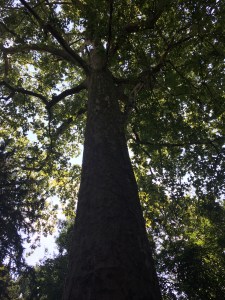
 There’s a Natural History Museum and a Zoological Garden as well, which I didn’t visit. I was impressed by this huge tree and thought sadly of our ailing kauri.
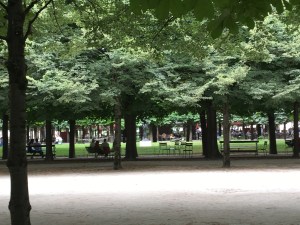
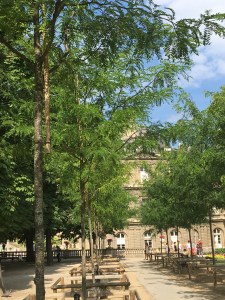
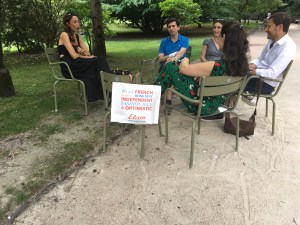
 This group of young people were declaring their principles as I walked through the Jardin du Luxembourg on the way back to the hotel.
 And finally on a botanical note, these are the flowers I gave the lovely manager/owner of my little hotel to say thank you for her help and for the enjoyable conversations we had about lots of things, but mostly about books!
 It’s a literary hotel and not just because of its library, including this:
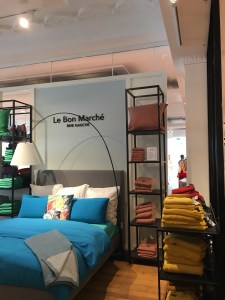
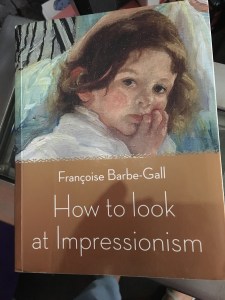 One of the night managers who turns out to be an expert on Alexander Dumas, told me about Emile Zola’s book about Bon Marche, and was reading a variety of translations of Hamlet. Somehow, once again, books become significant on this trip!